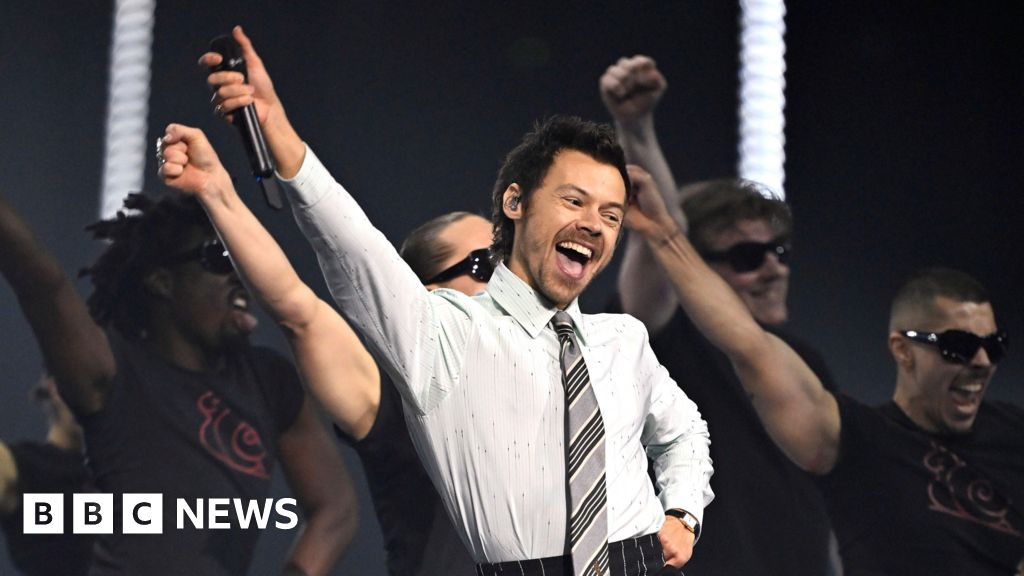

Recent events at the Brit Awards serve not merely as entertainment but as a mirror reflecting the evolving contours of contemporary culture. From Harry Styles making a fashion statement with his daring trousers to Jade’s candid confession on the red carpet, these moments encapsulate a broader dialogue about identity, tradition, and the societal narratives that shape us. Such instances underscore how culture remains inseparable from our sense of self—an ever-changing vessel that absorbs history while gestating its future.
Fashion, once confined within rigid boundaries, now emerges as a form of cultural rebellion, a way for the young, especially, to assert their sovereignty over identity. When Harry Styles defies conventional masculinity in his attire, he echoes a tradition of iconoclasts who challenged societal norms—an act reminiscent of the Romantic rebels and even tracing roots to the dandy movement. Such expressions embody a power that Ortega y Gasset might describe as the individual’s need to forge a cultural individuality, asserting that personal authenticity is a vital counterpoint to collectivist conformity. Here, fashion becomes more than aesthetics; it is a philosophical statement about the freedom of self-expression.
Meanwhile, Jade’s confession on the red carpet illuminates the ongoing tension between public performance and genuine identity, a dynamic that reaches back into the cultural fabric of modern society. In a moment of vulnerability, she exposes the often hidden struggles beneath the surface of fame, mirroring the ideas of Tocqueville on the societal importance of authentic civil discourse. Today’s stars, unfiltered and real, serve as cultural icons—mirroring society’s complex relationship with truth, authenticity, and the longing for meaning beyond superficial appearances. Their candor amplifies a collective desire to reconnect with a sense of genuine human experience in an age inundated with artificiality.
At the heart of this cultural tapestry lies the recognition that art, fashion, and public discourse function as vital expressions of societal values—touchstones that reflect our shared history and the aspirations we hold for the future. As Chesterton once observed, “Art, like morality, consists of drawing the line somewhere,” underscoring how the boundaries of taste and tradition anchor society. Yet, these boundaries are also dynamic, crafted by generations who see culture as both a conservative inheritance and a creative force. Today’s broadcasts and red carpets act as stages where this ongoing negotiation unfolds, as the youthful generation seeks to redefine the cultural narrative while remaining rooted in the stories of their ancestors.
Ultimately, culture is both our memory and our prophecy: the ongoing dialogue between what was and what shall be. The fleeting moments at the Brit Awards—be they provocative fashion choices or candid revelations—serve as reminders that the fabric of society is woven through the threads of tradition and innovation alike. As T.S. Eliot suggested, “Another side of every truth is a lie,” hinting at the intricate dance between what we uphold and what we challenge. In this dance, culture remains the steady conductor—mysterious and eternal—guiding humanity through its continual renewal towards both remembrance and aspiration, forging a future illuminated by the flame of our collective memory and prophetic hope.