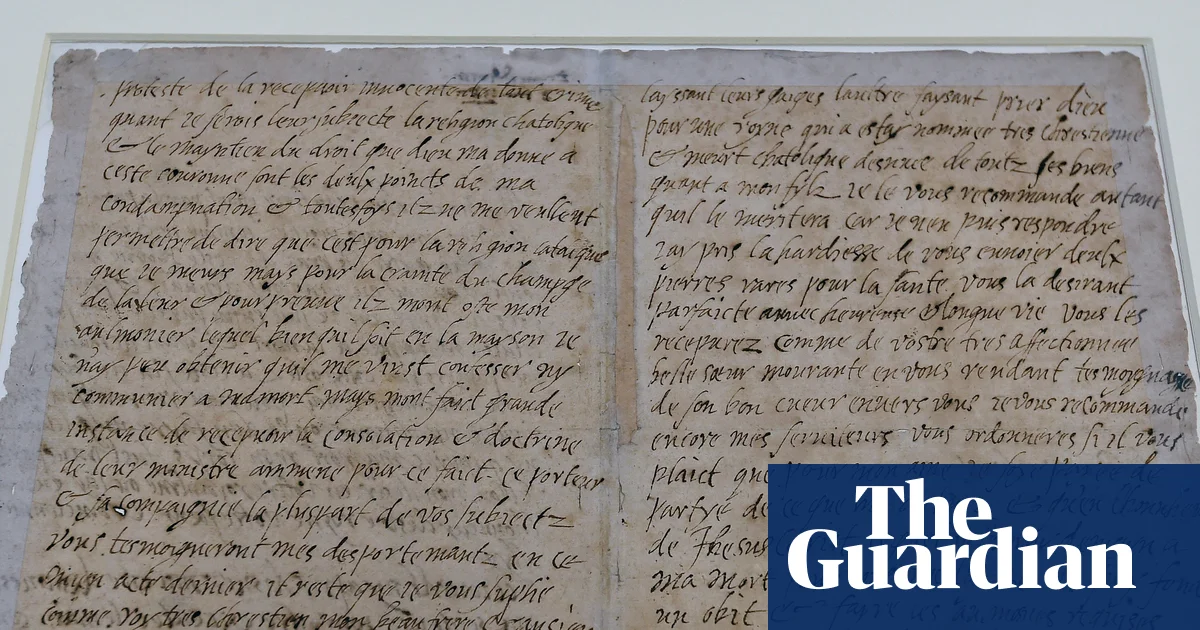

Historical Reconsideration: Mary, Queen of Scots’ Last Letter on Display in Scotland
In a remarkable event that transcends centuries, the National Library of Scotland has announced that the last letter of Mary, Queen of Scots, penned mere hours before her execution in 1587, will be showcased at the Perth Museum. This rare exhibition, which opens on 23 January 2024 and continues into April 2026, offers a visceral connection to a pivotal period in Scottish and European history. Mary’s final words, written in French, constitute a rare surviving artifact of a turbulent reign marked by intrigue, rebellion, and international diplomacy — archetypes of the age of monarchs. For scholars and the public alike, this display signifies an extraordinary opportunity to witness an integral shard of history, reminding us of the enduring influence of monarchy and the fragile fabric of sovereignty.
This event gains geopolitical significance beyond its historical value. As Scottland asserts its cultural identity through such exhibitions, it also serves to highlight the broader narrative of British history and its intertwined European history. The letter, kept under tight conservation by the National Library of Scotland, has rarely left its vaults, underscoring the importance placed on preservation amidst the age of digital and rapid consumption. The upcoming display coincides with ongoing efforts to emphasize Scotland’s unique legacy, especially as debates about independence and regional sovereignty continue. Analyzing this moment, international historians note that cultural heritage serves as a vital anchor in asserting national identity for parts of the UK, in a continent increasingly defined by regionalism and resurgence of localized histories.
In addition to Mary’s letter, the exhibition will feature a range of documents from the National Library, including early manuscripts from poets and playwrights such as Robert Burns and Liz Lochhead. These artifacts, situated within the historic context of Mary’s life—including her imprisonment, abdication, and dramatic escape from Lochleven Castle—emphasize how cultural renaissance and national memory are often interconnected. Alison Stevenson, the library’s director of collections, describes this event as a “once-in-a-generation opportunity”, highlighting that this is a moment for collective cultural reflection. The exhibition’s location at Perth, a city central to Mary’s life, transforms her story from distant history into a living, national narrative that stirs patriotic sentiment and historical consciousness alike.
Such events invoke broader geopolitical themes. As Scotland shapes its narrative within the UK, the display acts as a potent symbol of regional identity asserting itself amidst global shifts. The Scottish government recognizes the importance of heritage in fostering national pride—especially as debates over independence and sovereignty persist. The cultural secretary, Angus Robertson, stresses the lasting value of these artifacts as “a priceless record,” emphasizing that their preservation and public display matter profoundly in an era where history is often commodified or politicized. The drama of Mary’s story, with its themes of power, betrayal, and tragedy, resonates well beyond just Scottish borders, reminding the world that history is not static but a battlefield of identity and influence. International institutions such as UNESCO continue to advocate preserving such educational treasures, acknowledging their power to shape perceptions of sovereignty and cultural legacy.
The unveiling of Mary, Queen of Scots’ last letter transcends simple historical curiosity; it is a saga of resilience, tragedy, and national pride woven into the fabric of geopolitics and cultural identity. As her poignant final words are revealed, one cannot help but sense that the story of her life, and the lessons embedded within, are still unfolding—an ongoing narrative that may very well influence the course of regional and global history for generations to come. In the shadows of history’s corridors, the weight of her final notes whispers with an enduring significance, echoing through time as a silent testament to the enduring power of memory and the unending pursuit of sovereignty.