
Matox News

Truth Over Trends, always!

India’s Snabbit nets $56M as demand for on-demand home services heats up

India’s Snabbit Raises $56 Million, Accelerating Disruption in On-Demand Home Services

In a remarkable display of technological innovation and market disruption, Snabbit, the Bengaluru-based startup revolutionizing India’s on-demand home services sector, has closed a $56 million Series D funding round. Led by prominent venture capital firms such as Susquehanna Venture Capital, Mirae Asset Venture Investments’ Unicorn Growth Fund, and Bertelsmann India Investments, this funding propels Snabbit’s valuation to approximately $350 million—more than doubling its worth in just six months. As India’s bustling urban markets grapple with increasing demand for rapid, reliable household services, Snabbit’s rapid growth exemplifies how innovative business models are rewriting traditional markets.

Founded in 2024, Snabbit has swiftly scaled, processing over 40,000 daily jobs across five major cities with a network of over 15,000 workers. The company provides fundamental yet essential services—including cleaning, dishwashing, and laundry—filling a crucial niche amid India’s urban boom. Its recent financials highlight significant operational efficiencies, with the firm reducing losses per order by approximately 50% and decreasing customer acquisition costs by roughly 65%. Such strides underscore the startup’s mastery of leveraging technological innovation and data analytics to optimize delivery and customer experience, a hallmark of disruptive ventures in the on-demand economy.

Market Implications and Industry Dynamics

The surge in Snabbit’s valuation and operational scale reflects broader industry trends analyzed by global think tanks like Gartner, which emphasize the shift toward hyper-localized on-demand services driven by urbanization and smartphone proliferation. The company’s growth also illuminates a strategic pivot within the burgeoning Indian startup ecosystem, where investors are increasingly betting on disruptive business models that combine innovative technology with local market insights. The rapid rise of Snabbit has also sparked competitive interest; rival Pronto is reportedly in talks for additional funding, while publicly traded players like Urban Company report over one million monthly bookings—a testament to an industry poised for explosive expansion.

The global implications are profound: as startups like Snabbit demonstrate operational scalability and customer loyalty in the local context, established tech giants and venture capitalists are eyeing opportunities to extend similar models worldwide. With industry experts predicting that the on-demand home services sector will be worth billions globally within the next few years, the window for pioneering disruption is closing fast. Firms that fail to innovate risk losing relevance amid this fast-moving market landscape marked by relentless technological advancements and customer expectations for ultra-convenience.

The Road Ahead: Innovation as a Business Imperative

Looking ahead, the implications of Snabbit’s rapid growth underscore a critical truth: the future belongs to companies that harness innovation to outflank traditional service providers. As Elon Musk and other visionaries emphasize, disruption is the new normal, and startups must continuously evolve to stay ahead of the curve. With emerging technologies such as artificial intelligence, robot-assisted services, and predictive analytics transforming the landscape, industry leaders and investors are urged to recognize that the race for market dominance in on-demand services is intensifying. The window of opportunity is fleeting; firms that act fast—and leverage innovation—will shape the future of urban living in India and beyond.
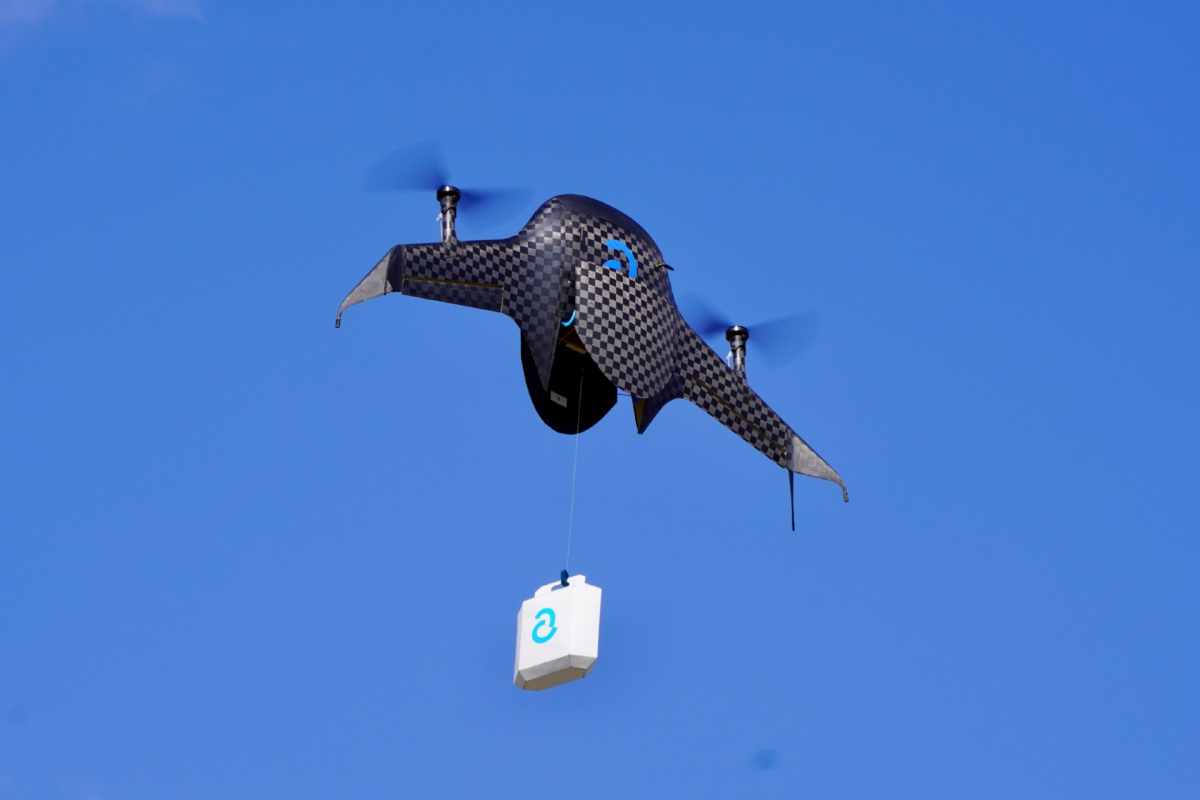

India’s Airbound scores $8.65M to launch rocket-inspired drones for ultra-cheap deliveries

Airbound’s Disruptive Drone Innovation Promises to Revolutionize Last-Mile Delivery

In a move that could redefine last-mile logistics, Indian startup Airbound has secured $8.65 million in seed funding, led by Lachy Groom, co-founder of Physical Intelligence. The fresh capital infusion signals a growing industry interest in groundbreaking drone technologies capable of achieving one-cent delivery costs, threatening traditional logistics and delivery models globally. As the company embarks on pilot programs with Bengaluru’s Narayana Health and eyes expansion into the U.S., its innovations are poised to challenge entrenched delivery paradigms, emphasizing efficiency, lightweight design, and autonomous operation.

Key to Airbound’s disruptive edge is its ultra-light, blended-wing-body aircraft, the TRT drone, engineered explicitly for small payload deliveries. Pushp, the startup’s founder and CEO, emphasizes that current drone efficiency benchmarks are fundamentally broken, citing that “drone-to-payload weight ratios” are far from optimal. “You need four kilograms of drone to lift one kilogram of payload,” Pushp explains, highlighting the critical need for innovation in aerodynamic efficiency. By focusing on reducing drone weight — the initial prototype weighs around 3.3 pounds — and improving energy usage, Airbound intends to slash energy costs by 20 times, making one-cent delivery not just aspirational but practically achievable.

This strategic focus on technological innovation and cost reduction has broader business implications. Airbound plans to vastly expand manufacturing capacity, aiming to produce over 100 drones daily by 2027 and scaling deliveries to a million daily within two years. Such ambitious growth demands a paradigm shift from traditional delivery fleets towards autonomous, highly efficient drone networks. Industry experts from institutions like MIT and analysts at Gartner recognize this trajectory as part of a broader wave of disruption, which could eventually render legacy last-mile logistics providers obsolete or force them into strategic pivots. As Pushp underscores, “logistics is intrinsically a physics problem”—emphasizing that success hinges on minimizing weight and maximizing efficiency.

The implications are profound: if startups like Airbound harness this disruptive innovation, they could accelerate a global transformation in sectors beyond medical logistics—spanning quick commerce, food delivery, and other last-mile services. This rapid evolution demands regulatory agility; Airbound is already engaging with authorities such as India’s Directorate General of Civil Aviation (DGCA) and planning to expand into the U.S., a market highly receptive but heavily regulated. Such efforts align with broader trends where regulatory technology and industry standards evolve alongside breakthrough innovations, fueling accelerated deployment. As Elon Musk and Peter Thiel have noted, the future belongs to those who innovate faster and challenge traditional industries, and Airbound’s trajectory exemplifies this ethos.

Looking forward, the race for drone supremacy is intensifying, with startups and established giants alike vying for dominance. Airbound’s strategic focus on lightweight design, energy efficiency, and cost effectiveness positions it as a frontrunner in this high-stakes arena. In the coming years, the deployment of thousands of autonomous, low-cost drones could reshape entire logistics ecosystems, forcing incumbents to adapt or risk obsolescence. As the industry approaches the cusp of mainstream adoption, it’s clear that innovation-driven disruption is here—and acceleration is imperative for those seeking to lead in the future of connected, autonomous delivery networks. The clock is ticking; the future of commerce belongs to those bold enough to harness the power of the skies.

Social Media Auto Publish Powered By : XYZScripts.com


