Matox News

Truth Over Trends, always!

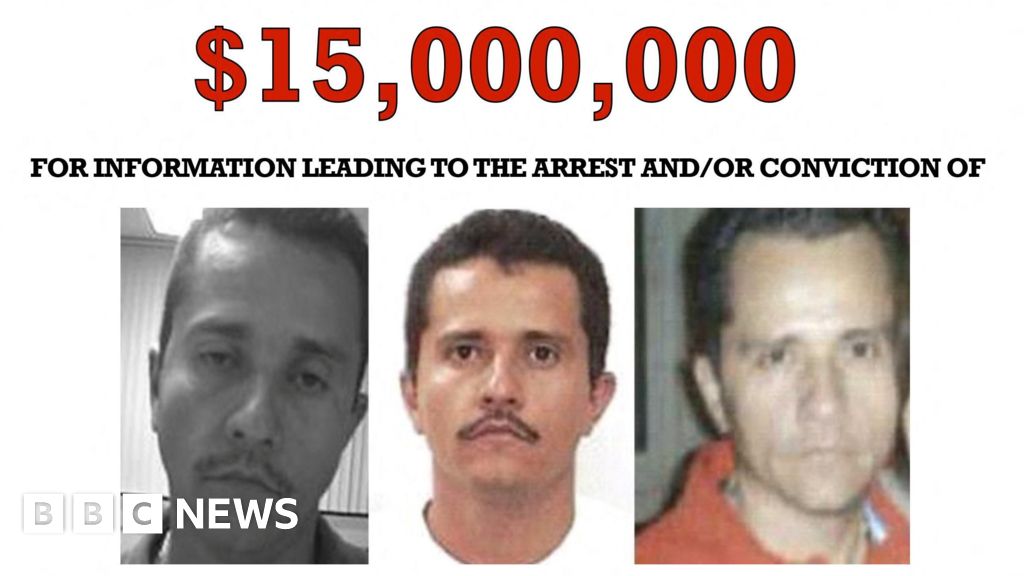
El Mencho: The Notorious Criminal Powerhouse Behind Mexico’s Most Wanted List

The international landscape of organized crime has once again demonstrated its profound influence on global stability, as the ascent of Nemesio Oseguera Cervantes, better known as ‘El Mencho’, underscores the complex interplay of violence, economics, and geopolitics shaping nations today. Originating from humble rural roots in the western state of Michoacán, Mexico, ‘El Mencho’ swiftly ascended the ranks of criminal dominance, leading the infamous Jalisco New Generation Cartel (CJNG)—a behemoth of brutality and strategic sophistication. His rise exemplifies how criminal organizations can extend their influence beyond borders, challenging law enforcement efforts and destabilizing entire regions.

The emergence of ‘El Mencho’ underscores a broader trend of criminal enterprises becoming de facto geopolitical players. Driven by ruthless ambition, CJNG has wrought havoc across Mexico, but its reach extends into the United States and Central America, affecting the socio-economic fabric of multiple societies. International organizations, such as the United Nations Office on Drugs and Crime (UNODC), warn that cartels like CJNG threaten the sovereignty of nations, facilitating not only drug trafficking but also corruption, violence, and destabilization. Analysts emphasize that these organizations often leverage political vulnerabilities, undermining state authority and complicating diplomatic efforts to restore peace and order.

Decisive moments, such as U.S.-Mexico security collaborations and Colombian anti-narcotics initiatives, highlight the ongoing global struggle to contain these shadow armies. Yet, despite increased efforts, figures like ‘El Mencho’ remain elusive, symbolizing the resilience and adaptability of criminal networks. Historians warn that these forces threaten to undo decades of progress in regional security, transforming local turf wars into international crises. As geopolitical analysts reflect on recent developments, they suggest that failure to address the root causes—poverty, corruption, and weak institutions—may serve only to prolong the chaos.

In this unfolding era, where drug cartels evolve from mere criminal syndicates into formidable geopolitical actors, the stakes have never been higher. Nations grapple with the reality that the decisions made today—be it increased security measures, intelligence sharing, or socioeconomic reforms—will determine the course of history. The story of ‘El Mencho’ exemplifies how a single figure, born in modest circumstances, can rise to threaten regional stability, transforming the fabric of nations into battlegrounds of influence. As the world watches and reacts, history continues to unfold, reminding us that in the shadows of crime, true power may ultimately be held by those who manipulate chaos to their advantage—and the consequences for societies will echo for generations to come.


Israel bans MSF from Gaza over staff list refusal

In an era marked by geopolitical upheaval and rising international tensions, the decision by Medical Sans Frontières (MSF) not to disclose its recent operational list underscores the growing complexities faced by humanitarian organizations working in the world’s most volatile regions. Citing safety concerns for its staff, MSF emphasized that sharing detailed operational information could jeopardize the lives of its personnel amidst ongoing conflicts. This stance reflects a broader awareness among NGOs that, in a fractured global landscape, the safety of aid workers increasingly depends on delicate, often clandestine, planning and secure communication channels.

The refusal to publish operational data highlights a critical shift in how aid agencies navigate conflict zones. Analysts note that, since the escalation of violence in regions such as Syria, Yemen, and parts of Africa, aid organizations face unprecedented risks—not only from hostile armed groups but also from collapsing governments and chaotic border controls. The decision by MSF also signals the urgent need for international institutions to reevaluate security protocols and reinforce the safety frameworks for humanitarian missions. Without transparency, however, the international community faces increased difficulty in assessing the scope of humanitarian needs and coordinating effective responses.

Historians and geopolitical analysts warn that these developments have a far-reaching geopolitical impact. As aid organizations retreat into silence, state actors and warring factions may interpret their silence as weakness or disorganization, potentially emboldening further aggression or territorial expansion. Furthermore, the United Nations and other multilateral bodies find themselves caught between the necessity of diplomatic engagement and the realities of dangerous operational environments. The decision by MSF underscores a growing consensus: the safety of aid workers is now an integral part of the larger geopolitical struggle for influence and stability in fragile states.

Veteran analysts warn that these trends could significantly influence future international responses to crises. Noted geopolitical strategist Jonathan Rees emphasizes that the loss of transparency could hinder diplomatic efforts—reducing international pressure on conflict parties to cease hostilities, while encouraging more clandestine and unpredictable violence. As global power dynamics continue to shift, and as nations prioritize national security concerns over international humanitarian commitments, the world stands at a crossroads. The ongoing challenges faced by organizations like MSF serve as a stark reminder: the very fabric of humanitarian work is intertwined with the volatile and often violent realities of contemporary geopolitics.

In the shadow of these unfolding events, history beckons us with a somber warning. As aid agencies grapple with the dangerous landscape of today’s conflicts, the question persists: will the international community rise to secure both the lives of aid workers and the stability of zones torn apart by war? Or will silence become the new language of diplomacy, leaving countless vulnerable populations without aid? The answer, undoubtedly, will further define our era—a chapter written in the blood and resilience of those caught in the crossfire of history’s relentless march forward.

2025 Tech Layoffs: The Must-Know List for Young Innovators

2025 Tech Layoff Wave: Disruption and Opportunities in a Shifting Industry Landscape

The persistent wave of layoffs across the technology sector in 2025 has set an unmistakable tone of disruption, signaling fundamental shifts in how industry leaders are navigating innovation and market pressures. Despite the narrative of progress driven by artificial intelligence and automation, over 150,000 tech workers faced job cuts in 2024 alone, with this troublesome trend continuing into 2025. As companies recalibrate their strategies amidst macroeconomic uncertainties and regulatory constraints, the implications for innovation, business models, and market dominance are profound. Forward-looking analysts and industry insiders caution that while layoffs may seem like setbacks, they often precede transformative breakthroughs—forcing companies into leaner, more agile frameworks that could accelerate disruptive innovations.

A closer look at the industry reveals a strategic pivot among tech giants and emergent startups alike. Companies such as Google and Meta are trimming hundreds of roles—specifically in AI and cloud infrastructure—to reallocate resources toward next-generation AI projects and infrastructure. These companies recognize that disruption is the new normal—leaving outdated business models behind in favor of intelligent automation and data-driven services that promise superior scalability and global reach. Notably, Google has cut design positions in its cloud division, signaling a focus shift that could redefine cloud-native solutions, while Meta is streamlining its Reality Labs division, potentially restructuring VR and AR markets altogether. Such moves reflect a market that demands rapid iteration, emphasizing innovation at the expense of legacy operations.

The business implications extend far beyond the layoffs themselves. Disruption is reshaping competitive dynamics, forcing smaller firms and startups to either innovate relentlessly or risk obsolescence. Disruptive startups like GupShup and Wicresoft are shedding significant parts of their workforce—up to 40% in some cases—to position themselves more strategically in emerging AI and cybersecurity landscapes. The wave of consolidation and restructuring, exemplified by Oracle, Siemens, and Brightcove, as well as the collapse of venture-backed ventures like Level, highlights an industry recalibration where only the most adaptable will thrive. Experts such as Peter Thiel emphasize that “survivability in tech künftig demands agility and relentless innovation.” This moment calls for a new breed of entrepreneurs and business leaders who leverage these disruptions as catalysts for breakthrough technologies and new business models.

Looking to the future, the industry is at a critical juncture—posturing itself either to lead or to lag behind. The significant layoffs serve as a stark warning for the importance of innovation, disruption, and strategic foresight. Companies that harness AI, automation, and digital transformation as catalysts rather than mere cost-cutting measures will determine the next wave of market dominance. With institutions like Gartner projecting that AI-driven automation will fundamentally transform customer engagement, supply chain management, and product development, the urgency for industry stakeholders to accelerate R&D investments cannot be overstated. The ongoing layoffs might be viewed as painful, but they are also a signal: the era of incremental innovation is over, and disruption is the new foundation for long-term success. For courageous entrepreneurs and investors, the window of opportunity is now—those who act swiftly in this volatile environment will define the future of tech leadership in the coming decade.

The Verge’s 2025 Gift List: 110 Must-Have Tech Picks for Young Sharers

Emerging Consumer Tech Trends Signal Broader Industry Disruption

In a landscape marked by rapid technological evolution, big tech companies are continuously redefining innovation, forcing startups and legacy players alike to adapt or face obsolescence. Recent holiday gift guides from The Verge underscore an overarching shift driven by cutting-edge gadgets—ranging from noise-canceling earbuds to retro-inspired Polaroid cameras. These products are not just consumer novelties but potent indicators of a larger trend: the convergence of hardware innovation with digital ecosystems aiming to disrupt traditional markets. The importance of these advancements extends well beyond holiday shopping, signaling fundamental transformations in consumer engagement, product development, and industry competitiveness.

At the core of this trend is the acceleration of disruptive innovation by companies like Apple and Amazon, leveraging AI, IoT, and enhanced connectivity to redefine user experiences. Analysts at Gartner note that wearable and portable devices are increasingly acting as gateways to integrated digital lifestyles, blurring the lines between hardware and software. The emergence of affordable yet sophisticated products such as portable power banks and compact gaming systems demonstrates a strategic shift: firms are prioritizing versatility, personalization, and on-the-go utility. This disruption is underscored by industry leaders’ recognition that future growth hinges on innovative hardware ecosystems capable of integrating seamlessly into consumers’ everyday lives.

From a business perspective, this wave of innovation presents both challenges and opportunities. Established giants who successfully innovate—like Google with its Nest ecosystem or Microsoft expanding its Xbox hardware—are poised to dominate future markets. Conversely, industry incumbents neglecting this wave of disruption risk being sidelined, as nimble startups leverage emerging technologies to carve out new niches. The implications extend deeply into R&D strategies, with institutions like MIT and industry analysts emphasizing that early investment in disruptive tech is essential for maintaining competitiveness. Companies that harness the relentless pace of innovation will control the next generation of consumer engagement, transforming the landscape of retail, entertainment, and communication.

Looking forward, the trajectory of connectivity, AI integration, and hardware innovation signals a future where technology becomes more personalized, intelligent, and indispensable in everyday life. Industry veterans and tech visionaries like Elon Musk and Peter Thiel continuously warn that the race for technological dominance is accelerating. The pressure to innovate is urgent, and those who succeed in developing disruptive ecosystems will shape the industries of tomorrow. For younger audiences and forward-thinking entrepreneurs, staying ahead demands not only understanding current trends but also anticipating the next wave of pioneering breakthroughs—because in this era of relentless disruption, the future belongs to those who act first.

Social Media Auto Publish Powered By : XYZScripts.com