Matox News

Truth Over Trends, always!

Living Loud: My Week Fully Off the Grid as a ‘Do Not Disturb’ Maximalist

Tech Disruption and Innovation: The Rise of ‘Do Not Disturb’ Culture Signals a Paradigm Shift in Smartphone Usage

In the fast-evolving landscape of digital technology, a notable disruption is reshaping the way younger consumers engage with their devices—namely, the growing embrace of ‘Do Not Disturb’ (DND) modes. This phenomenon not only highlights a pushback against the constant-connection norm, but signals a broader shift in user priorities that could redefine mobile engagement strategies. Tech giants like Apple and Google have long integrated DND features into their flagship operating systems, yet recent software enhancements have dramatically broadened their appeal, aligning with a youth-driven demand for greater control over digital consumption.

Analysts from firms such as Gartner suggest that this trend toward notification silencing is more than mere fad; it represents an industry-wide disruption that could alter smartphone ecosystem dynamics profoundly. While traditional metrics focused on maximizing user engagement through relentless notifications, a new segment of users—especially younger demographics—are actively seeking to minimize distractions and regain sovereignty over their attention. Amidst this evolution, innovative features like scheduled auto-silencing, customizable exceptions, and integrated sleep modes are setting the stage for a paradigm where digital wellness takes precedence. Experts like Elon Musk and Peter Thiel have long warned about the mental health implications of incessant notifications, and the market’s response indicates a possible pivot towards humane tech.

From a business perspective, this shift creates both risks and opportunities. Companies that adapt by developing distraction-management tools and prioritize privacy-centric features stand to capture the loyalty of a new generation of users increasingly wary of invasive notifications. On the downside, entrenched business models relying on data-driven engagement must recalibrate, innovating new monetization avenues that do not depend solely on relentless user interaction. This emerging landscape demands a strategic recalibration, as companies that fail to recognize this disruptive wave could find themselves left behind in an evolving tech ecosystem where digital well-being is not just a feature, but a market expectation.

Future Outlook: Innovation Meets Urgency

The ongoing development of next-generation smart devices—including AI-enabled notification filters and contextual interruption managers—will likely accelerate this trend. Academic research, such as studies published in Computers in Human Behavior, underscore the detrimental effects of constant social media notifications—causing cognitive hiccups that last approximately seven seconds—and reinforce the pressing need for innovative solutions. As digital natives continue to prioritize mental clarity and social boundaries, technological innovation must align accordingly. Within this framework, stakeholders ranging from Silicon Valley startups to legacy giants are compelled to innovate urgently.

In conclusion, the rise of the ‘Do Not Disturb’ mentality signals a momentous shift—where innovation and disruption in mobile tech are converging to redefine industry standards. Market leaders who recognize and capitalize on this profound transformation will shape not only the future of personal technology but also the broader societal conversation about healthy digital engagement. The urgency is clear: adapt now or face irrelevance in a landscape that demands respect for individual attention and privacy. As the next chapter unfolds, the tech ecosystem must navigate this disruptive tide—driven by a generation seeking control over their digital lives—to remain at the forefront of innovation and market leadership.
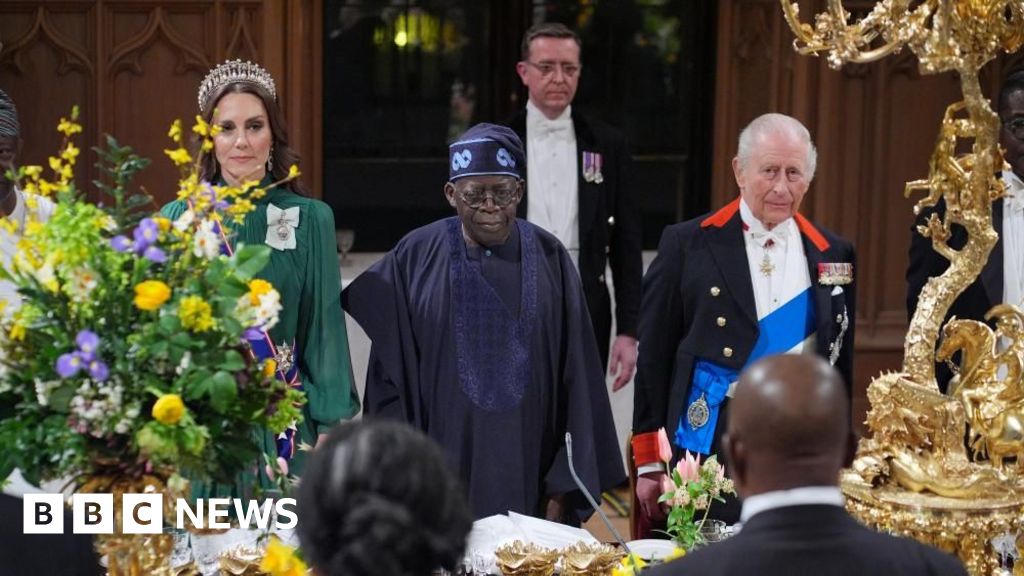
King lauds 'living bridge' with Nigeria at high-profile banquet
King lauds ‘living bridge’ with Nigeria at high-profile banquet

During a recent state banquet held at Windsor Castle, King Charles emphasized the importance of the strong partnership between the United Kingdom and Nigeria. This diplomatic gesture signals a renewed focus on fostering international alliances rooted in economic cooperation and shared values amidst a rapidly shifting geopolitical landscape. Such messages from the British monarchy underscore a broader strategy aimed at strengthening traditional ties in an era marked by disruptive global shifts.

Historically, Nigeria has been recognized as a central player in West Africa, with its burgeoning economy and strategic position making it a key partner for Western powers seeking to counterbalance increased influence from China and Russia. The UK’s diplomatic outreach, now openly celebrated with public ceremonies and high-level discourses, aims to bolster post-Brexit ties and counteract China’s expanding economic footprint in Africa. Analysts from the International Institute for Strategic Studies argue that this renewed diplomacy could serve as a blueprint for future Western engagement with Africa—emphasizing economic investment, security cooperation, and cultural ties.

The implications of this partnership extend beyond mere diplomacy. Nigeria’s rising economic influence combined with its youth demographic—over 60% under the age of 25—presents a critical arena for Western nations seeking to cultivate future markets, political alliances, and security frameworks. However, critics warn of the risks involved in such partnerships, particularly when concerns over governance, corruption, and regional instability remain unresolved. The United Nations and global watchdogs have pointed to the need for responsible engagement, cautioning that superficial alliances can overlook underlying issues that could destabilize the broader region—an outcome which could ripple across the continent.

International actors, including Heritage Foundation analysts and geopolitical strategists, highlight that the UK’s emphasis on Nigeria plays into a broader narrative of national resilience and diplomatic initiative. Decisions made today could redefine the future of UK-Africa relations; the way in which such alliances are managed will directly impact regional stability, investment security, and the socio-economic development of millions of Nigerians. As history continues to unfold, the world watches—aware that the threads of past colonial ties are interwoven with new economic ambitions, and that the stage is set for a new chapter in global power dynamics. The delicate balance of influence hangs precariously—yet the decisive moves taken now will resonate through generations, echoing in the corridors of power long after the current leaders have left the stage.

OpenAI Launches ChatGPT Ads: The Future of Smart Living Starts Now

The Future of AI and Advertising: OpenAI’s Bold Step

In an era where digital giants are continuously reshaping how we interact with technology, OpenAI has taken a notable leap forward by introducing ads inside ChatGPT. Since its inception in 2022, ChatGPT has largely operated as a distraction-free zone, prized for its pure AI-driven conversations and its anti-clutter approach. However, with this recent rollout, the landscape is shifting. Now, users are faced with a choice: embrace the new, more commercialized AI experience or opt-out in favor of a cleaner, ad-free interface. This move is emblematic of a larger trend where tech innovation is increasingly intertwined with monetization, raising questions about what it means for our future interactions with AI.

The move is not just about generating revenue; it signals a broader cultural impact on how society perceives and consumes content. Critics argue that introducing advertising into a platform like ChatGPT could erode the trust and authenticity that have made it so appealing to young users seeking a genuine, distraction-free learning tool. Yet, OpenAI is banking on a strategy that emphasizes transparency and user choice. Users who prefer to keep their experience free of sponsored content can opt for higher-tier paid plans or choose to opt out of ads altogether, including the ability to control how their data is used for ad targeting. This approach reflects an understanding that today’s digital consumers value agency in their online experience — they want control over how their data is used, especially when it comes to the AI companions they increasingly depend on.

Influencers and sociologists see this move as part of a broader societal shift. According to tech analyst Matt Vella, adding ads into AI tools like ChatGPT “foreshadows a future where AI becomes not just a tool but a marketplace, blurring the lines between utility and commerce.” Meanwhile, platforms like Anthropic have responded with satire, actively mocking the idea through high-profile campaigns like their Super Bowl LX ad, which staged conversations abruptly pivoting into sales pitches. These responses highlight that the social relevance of this trend isn’t lost on the public: it’s a reflection of a society grappling with the rise of corporate interests in spaces once viewed as sanctuaries for genuine human-AI collaborations.

This tension raises a pivotal question for the future of AI-powered services: as platforms increasingly embed advertising into their core functions, will users begin to see AI as an extension of the commercial landscape or as a trustworthy partner in their daily lives? The next big question we should be asking isn’t just about how AI will evolve but about what kind of digital world we are creating for ourselves and future generations. Is this shift toward a hybrid model sustainable, or are we walking into a new era where personalized AI assistance becomes always-already intertwined with advertising and commercial interests? As these questions unfold, one thing is clear: the future of AI is as much about societal values as it is about technological innovation.

Ritz-Carlton’s Elite Superyacht Experience Embarks — Luxury Living Reaches New Heights

In recent years, the landscape of luxury travel has expanded beyond traditional realms, with a notable shift toward _exclusivity and personalized experiences_. The latest milestone in this evolution is the debut of Ritz-Carlton’s Evrima, a flagship superyacht that exemplifies a new era for ultra-high-net-worth individuals seeking unparalleled leisure. Launched after several delays due to supply chain disruptions and the global pandemic, Evrima now pioneers a fusion of luxury cruising and yachting that caters to the modern connoisseur’s desire for both adventure and refined comfort.

Standing at 190 meters, Evrima is more than just a vessel; it is a floating sanctuary equipped with 149 suites, each with a private terrace, high-ceiling windows, and myriad amenities designed to provide a _seamless blend of relaxation and entertainment_. From its infinity pool and wine vault to the Ritz-Carlton Spa and exclusive nightclub, the yacht’s offerings are meticulously curated to maximize personal impact—whether that involves unwinding under the Mediterranean sun or exploring distant coastlines. With most journeys lasting between seven and ten nights across the Mediterranean, Caribbean, and even Central and South America, Evrima exemplifies how modern luxury encompasses _well-being, leisure, and discovery_ as interconnected pursuits.

Such ventures are redefining the traditional notion of travel, emphasizing _quality over quantity_, tailored experiences, and _wellness in motion_. Cultural references like Mark Twain’s adage, “Twenty years from now, you will be more disappointed by the things you didn’t do than by the ones you did,” resonate deeply here. The luxury yacht industry is responding by crafting itineraries that are inscribed with _insider access and highly personalized service_. As Douglas Prothero, CEO of Ritz-Carlton Yacht Collection, emphasizes, their goal is creating “unmatched getaways,” where every element is designed to transform mere travel into a journey of _self-discovery_. This is precisely the shift favored by wellness experts like Dr. Deepak Chopra, who advocates for _experiential travel_ as a means of _nurturing the soul_ while exploring the world.

  • Focus on _wellness_: indulge in spa treatments and water sports that boost _mental and physical health_
  • Emphasize _personal space_: opt for spacious suites or private charters that foster _clarity and peace_
  • Explore _unique destinations_: experience _hidden gems_ accessible exclusively via yacht

Looking ahead, Evrima is just the beginning within the luxury yachting industry, with additional vessels like Ilma and Luminara under construction at the renowned Chantiers de l’Atlantique shipyard. Notable industry players such as Four Seasons are also entering the scene, with plans for a 207-meter superyacht set to launch in 2025. This focus on _bespoke journeys_ underscores a broader cultural shift towards _conscious, curated living_, where _pursuits of health, leisure, and inspiration_ become intertwined. As young, ambitious individuals seek to _embrace a lifestyle_ rooted in _discovery and well-being_, the notion of travel is evolving into a _personal rite of passage_—one that bridges _luxury with purpose_.

In the end, the journey of lifestyle and discovery is as much about inner transformation as it is about exploring external horizons. Whether through a private yacht gliding across azure waters or by cultivating a mindful approach to daily life, the true voyage lies in embracing _possibility, personal impact_, and _the pursuit of a meaningful life_. The world’s vast and varied landscapes call for a spirit of _adventure combined with self-awareness_, a reminder that luxury is not merely material but also a pathway to _inner fulfillment_. As explorers of both lands and selves, the voyage toward a more enriched, inspired existence becomes an ongoing odyssey—one that invites each of us to chart our own course with confidence and curiosity.

Russian woman living in Karnataka cave with kids finally heads back home

Russia recently witnessed a peculiar chapter in its ongoing saga of international migration and human rights complexities, when Nina Kutina, a woman who gained global attention after her discovery living in a cave in India with her young daughters, was finally repatriated. Her case isn’t merely a story of survival; it underscores the broader geopolitical and societal implications surrounding urban migration, refugee management, and international legal responsibilities. While her situation initially drew media focus on her remarkable living conditions—residing in a remote, leaky cave—the geopolitical ramifications resonate far beyond personal hardship, affecting global diplomacy, legal protocols, and the perception of border sovereignty.

India continues to grapple with this complex incident involving Kutina and her children, as the courts navigated the delicate balance between humanitarian intervention and international legal obligations. According to reports, the High Court of Karnataka instructed the federal government to facilitate the return of the woman and her daughters to Russia, citing their lack of valid documents and the need for lawful repatriation. This legal action highlights how international treaties such as the United Nations Convention on the Rights of the Child are interpreted and applied differently across the world, especially in cases involving undocumented migrants or those who have deliberately chosen isolated lives over urban society. Analysts suggest that this case could be a precedent for how third countries respond to unusual migrant situations, especially when they cross into territory of strategic interest.

Yet, beneath the surface, the incident has exposed the underlying tension regarding sovereignty, human trafficking, and the right to self-determination. The woman’s claim of living in caves — and her subsequent rescue — prompted officials to question her motives and the factors driving her drastic choice of refuge. Her lawyer in India, Beena PK, invoked India’s commitment to international conventions to argue against immediate deportation. Conversely, government officials and legal experts pointed to her expressed desire to return to Russia, noting the importance of respecting individual sovereignty and legal extradition protocols. The decision to facilitate her repatriation—amid debates about her motives and well-being—serves as a microcosm of the ongoing global struggle to balance humanitarian concerns with national security and legal sovereignty.

This incident is emblematic of the broader geopolitical impact—highlighting how individual human stories are intertwined with larger international power plays. Navigating the pathways of migration, refuges, or illegal stays often leads to diplomatic tensions, especially when political alliances, legal frameworks, and societal narratives intersect. International organizations like INTERPOL and the United Nations continue to emphasize the importance of protecting human rights, yet their guidelines are frequently tested in such unpredictable scenarios. Historians note that in an era where borders are both vital and vulnerable, decisions made today echo in the corridors of history, shaping the narrative of sovereignty and global justice for generations to come.

Ultimately, the case of Nina Kutina encapsulates an unfolding chapter in a broader narrative of insecurity, migration, and sovereignty that the world must confront. As the woman departs for Russia and society debates her fate, the weight of history hangs heavily—reminding nations that their decisions today carve the contours of the future. The shadows of conflict, diplomacy, and the human spirit intertwine in this story, leaving the international community to ponder: in the relentless pursuit of justice and national integrity, how will the lessons of this seemingly isolated case influence the shaping of global policy? The pages of history continue to turn, and the future remains unwritten, awaiting the decisions that will define the fate of countless individuals caught at the crossroads of human rights and sovereignty.

Social Media Auto Publish Powered By : XYZScripts.com