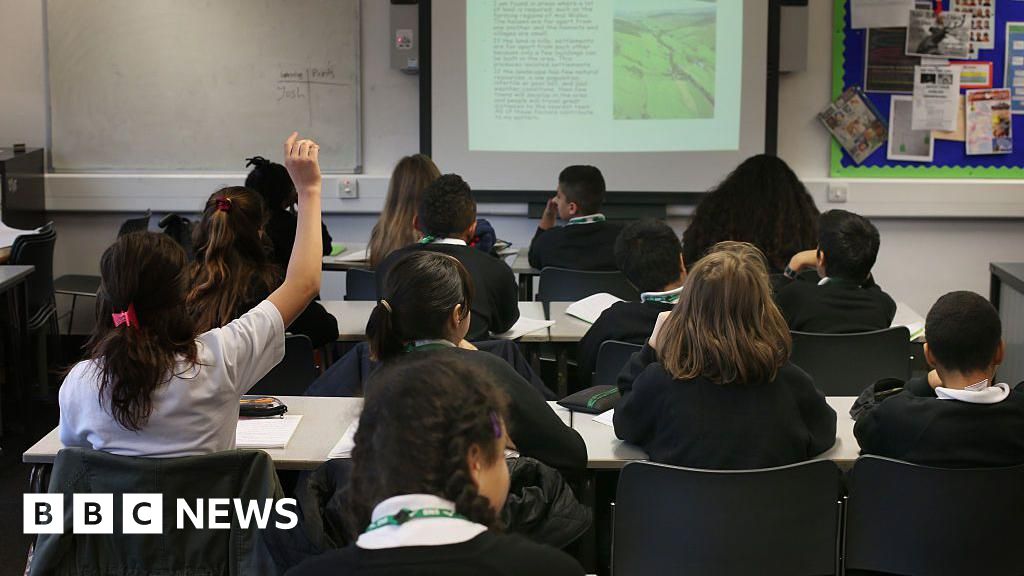

London Schools Face Decline as Demographic Shifts Threaten Community Foundations
In a striking reflection of demographic changes and societal migration patterns, London’s primary schools are experiencing a significant contraction in pupil numbers. According to a recent report by the Education Policy Institute (EPI), since 2019, the capital has seen a decline of approximately 150,000 pupils, a trend anticipated to swell to 400,000 across England by the decade’s end. This phenomenon underscores a larger societal issue: the shifting fabric of families and communities within urban centers, where declining birth rates and an exodus of residents are redefining local identities.
Historically, cities like London have been magnets for diverse populations, offering economic opportunity and cultural vibrancy. Yet, sociologists such as Saskia Sassen have documented how urban demographic shifts tend to accelerate social fragmentation when the core populations grow increasingly transient or opt to leave. The report reveals that nine of the ten local authorities with the sharpest pupil declines are in London, highlighting an urgent challenge that extends beyond education—one that impacts families, social cohesion, and the very sustainability of community institutions. For many families, these changes translate into uncertain futures, with school closures and reduced extracurricular offerings threatening the broader social fabric that binds neighborhoods together.
The financial implications of declining pupil enrollment are equally troubling. Schools are predominantly funded on a per-pupil basis; thus, losing students directly reduces resources, often forcing cuts to staff, programs, and community services. In Westminster, primary pupil numbers have fallen by nearly 16% from 2020-21 to 2024-25, while Southwark’s figures have decreased by over 12% within the same timeframe. These figures illuminate how educational institutions, traditionally seen as pillars of community, are now facing existential threats that could ripple through local economies and social support networks. The NAHT emphasizes that such unpredictable demographic shifts challenge long-term planning, urging policymakers to develop strategies that prioritize community stability rather than reactive closures and funding cuts.
‘Leaving the country’ – A Society in Flux
Experts, including Jon Andrews of the EPI, have pointed out that England’s population dynamics have fundamentally shifted since the so-called post-millennium baby boom. While the birth rate surged temporarily after 2010, recent years have witness a downturn that correlates with a wave of families choosing to move away from urban centers like London. As Andrews explains, the way funding is allocated—dependent on current pupil numbers—fails to account for these demographic realities, leading to underfunded schools and compromised quality of education.
This trend has moral and social consequences: families face upheaval, young children face the loss of community connections, and local institutions struggle to adapt to the changing landscape. The potential for schools to reduce staff or extracurricular offerings underscores a broader societal risk—namely, that education and community-building may become casualties of economic constraints and shifting populations. As sociologists and educators advocate for rethinking funding models and repurposing school spaces, society faces a moral question: How do we sustain our communities when their fundamental structures are in flux?
Innovative Responses and Renewed Hope
In response, some leaders are proposing innovative solutions, like repurposing underused school facilities to serve broader community needs. Former education secretary Damian Hinds advocates for moving beyond per-pupil funding models, suggesting a need for more flexible approaches to accommodate changing demographics. The Department of Education echoes this sentiment by increasing investments to support local authorities and create new childcare spaces, aiming to bolster family stability and community resilience. These efforts reflect an understanding that education must adapt not only to demographic shifts but also to the moral imperative of fostering inclusive, stable communities where families can thrive despite societal upheavals.
Ultimately, society’s challenge lies in recognizing that the decline in pupil numbers signals more than just a demographic trend—it mirrors the fragile state of our communal bonds. To cast aside the rising tide of social fragmentation risks leaving our future generations isolated and disconnected. But with deliberate intervention, community-focused policies, and unwavering commitment, there remains hope that the social fabric can be mended. Society stands at a crossroads, where the choices made today can either deepen divides or weave tighter bonds. The question lingers: Will we seize the moment to reshape our communities with resilience and compassion, ensuring that even amidst change, hope endures?