Matox News

Truth Over Trends, always!

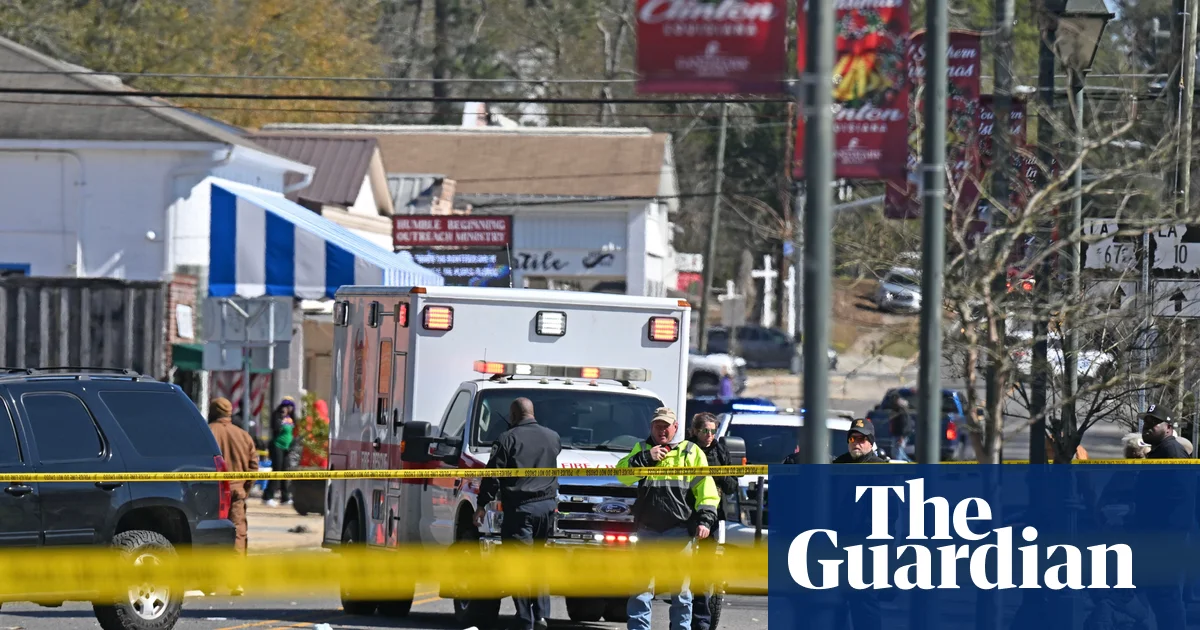
Six Hurt in Louisiana Mardi Gras Parade Shooting—Youth Crime Sparks Outrage

In a stark illustration of ongoing domestic unrest, a tragic mass shooting erupted during a local Mardi Gras celebration in Clinton, Louisiana, leaving six individuals wounded, including a child. This incident, occurring near the town’s courthouse in the heart of a tight-knit community, underscores the persistent challenges facing the United States regarding gun violence and its societal impacts. According to local officials, authorities swiftly responded, arresting one suspect and initiating a search for the vehicle believed to be used in the attack, highlighting the emergency response protocols in place amidst rising violence.

The incident is part of a disturbing trend that has alarmed both domestic and international observers. As of this year, there have been at least 24 mass shootings in the US, according to data from the Gun Violence Archive. This organization defines a mass shooting as any event in which four or more victims are wounded or killed, a threshold that underscores the scale of the crisis. Such violence not only devastates local communities but also fuels debates about the efficacy of current gun control laws, with critics arguing that congressional inaction perpetuates a cycle of insecurity. Historians and analysts warn that if the trend continues, the social fabric of American society risks further unraveling, with implications for national stability and global perception.

The failure of Congress to adopt more comprehensive gun legislation reflects broader geopolitical and societal issues. Many international partners and organizations, including the United Nations, have called for stricter gun regulations worldwide, portraying firearms as a pressing global concern. Yet, the US remains uniquely plagued by deep partisan divides and cultural entrenchment around the Second Amendment. As legislation stalls and mass shootings multiply, how decisions made at the federal level will alter the future security landscape remains uncertain. The international community watches as the US grapples with this internal crisis, highlighting a dissonance between American internal policy and the global push for peace and stability.

Across the Atlantic, European nations and Asian powers observe America’s struggles with a mixture of concern and skepticism, often contrasting their own more restrictive gun laws with the US’s persistent inaction. Some analysts warn that the inability of the world’s most powerful nation to effectively curb its gun violence could undermine its moral authority on human rights and security issues. As global institutions like the World Health Organization emphasize the importance of preventative measures, American policymakers face the profound question: will they choose to prioritize societal safety over entrenched interests? Meanwhile, the bloodshed in Clinton stands as a sober reminder of unresolved divisions and the urgent need for decisive action.

With history unfolding daily in the streets of small towns and big cities across the nation, the narrative remains clear and tragic: a society on the brink, teetering between constitutional rights and the need for security. The echoes of this latest tragedy continue to resonate, a stark reminder that the true cost of internal division extends beyond borders, shaping the fate of nations near and far. As history’s pages turn, the world is left to ponder whether the tide can be turned or if the dark chapter of American gun violence will write itself into the annals of unresolved conflicts—an enduring testament to a nation still striving, still fighting to define its future amid the shadows of its own making.


Louisiana Teen Girl, 13, Rescued from Basement in Pennsylvania

Global Implications of the Louisiana Child Trafficking Case: A Wake-Up Call for International Security

The harrowing details emerging from a multistate human trafficking investigation within the United States serve as a stark reminder of the ongoing threats posed by transnational criminal networks leveraging digital platforms. The case involving a 13-year-old girl from Louisiana, who was found alive in a sealed box at a suspect’s home in Pennsylvania, underscores a disturbing trend that resonates far beyond national borders. The involvement of multiple states, law enforcement agencies, and the use of online tools to facilitate trafficking highlights the urgent need for a coordinated international response to combat these heinous crimes.

Experts such as international security analysts and historians have long warned about the evolving tactics of human traffickers, who increasingly exploit social media and encrypted communication to groom and lure vulnerable victims. As global institutions like INTERPOL push for tighter international cooperation and digital surveillance, cases like these expose the gravity of the poorly regulated online environment that traffickers exploit. The shocking reality that a minor could be transported across multiple states and manipulated into dangerous circumstances exposes the fragile state of border security and cyber control mechanisms. The case is also a wake-up call to the societal failure in protecting its most vulnerable, especially minors, from predators who operate within the shadows of the internet.

From a geopolitical perspective, this incident underscores the interconnected vulnerabilities that threaten both domestic stability and international order. As authorities continue their investigation, questions arise about how technological advances and lax regulation chair the way for criminal enterprises to thrive. The role of global law enforcement bodies and policymakers becomes paramount in establishing measures that effectively deter and dismantle human trafficking networks. The presence of accomplices in multiple states—ranging from Georgia to Louisiana and Pennsylvania—illustrates the distributed nature of these criminal operations. This case exemplifies how criminal organizations are increasingly transnational, requiring a unified global strategy aimed at intelligence sharing, digital monitoring, and harsher penalties, according to leading criminologists.

History and analysis warn that unless significant reforms and international collaboration are implemented, such heinous crimes will continue to threaten societal fabric. As experts like Dr. Anne-Marie Slaughter remind us, the fight against human trafficking must extend beyond borders—an arduous and ongoing battle in the face of the wild west of the online world. The consequences of failure to act are profound: more minors exploited, diminished trust in digital platforms, and a weakening of societal resilience. The story of this young girl, a victim and a reminder of the dark side of the digital age, leaves us contemplating the struggle still ahead — a battle to secure the innocence of the vulnerable amidst the relentless tide of criminal ingenuity.

Louisiana issues warrant for California doctor over mailing abortion pills—state’s crackdown on reproductive rights heats up

Society at a Crossroads: The Impact of Restrictive Abortion Laws on Families and Communities

The ongoing legal battles surrounding abortion access in the United States have revealed deeply rooted societal tensions that extend far beyond the courtroom. Recently, Louisiana has issued a warrant for a California-based doctor accused of mailing abortion pills to residents in a state where virtually all abortions are banned. This development highlights the crumbling boundaries of state authority and underscores how social issues intersect with family life, education, and community stability. The case of Louisiana and other states enforcing strict anti-abortion measures illustrates a broader cultural shift that threatens to fracture the social fabric that holds families and communities together.

At the center of this legal and moral tug-of-war is the question of individual rights versus state restrictions. Sociologists such as Charles Murray have emphasized that when a society imposes rigid controls on personal choices—particularly those as morally charged as reproductive decisions—it risks alienating and stigmatizing families. The recent case of Rosalie Markezich, who decided to keep her pregnancy despite being pressured by her former partner to take abortive drugs, exemplifies how stringent laws and inaccessible healthcare create dangerous situations. Markezich’s account reveals that when women are denied moral agency and access to proper medical consultations, their health and autonomy suffer. Her story resonates as a moral reminder that society’s obligation extends to protecting the rights and safety of individuals, especially vulnerable women caught amid ideological conflicts.

Legal experts and social commentators warn that the escalation of these legal conflicts, with states like Texas and Louisiana actively pursuing or indicting doctors such as Dr. Remy Coeytaux and Dr. Margaret Carpenter, may lead to a fracture in federalism. These ongoing battles threaten to jeopardize the social stability of communities and challenge the moral foundations of American society. On one side, advocates argue that states have the right to define moral boundaries; on the other, defenders contend that the rights of individuals—families and women included—must be safeguarded against state encroachment. The potential for these disputes to reach the Supreme Court signifies a pivotal moment where societal values collide with constitutional principles. What hangs in the balance is not only access to medical care but also the future of community cohesion and the moral health of our society.

As these societal divisions deepen, the question remains: can society reconcile conflicting values while fostering environments where families thrive and communities remain resilient? Many sociologists, like Robert Putnam, warn that social trust erodes when communities are polarized by issues rooted in morality and individual rights. Nonetheless, hope exists in the form of moral resilience and societal reform. The history of social progress demonstrates that through open dialogue, respect for diverse perspectives, and the safeguarding of fundamental rights, communities can forge pathways toward justice, healing, and renewal. Society’s greatest challenge is not the legislation alone but our collective commitment to uphold the dignity of every human life and the moral integrity of the communities we cherish. As society stands at this crossroads, the future hinges on our ability to choose pathways rooted in compassion, respect, and unwavering hope for a society where families are empowered and communities are united by shared moral purpose.

Social Media Auto Publish Powered By : XYZScripts.com



