Matox News

Truth Over Trends, always!

Celebrity Spotlight: The Iconic Figures Shaping the JFK Jr. Legend—A Youthful Take on a Timeless Love Story

In the midst of a new era dominated by rapid social change and redefined notions of legacy, television continues to serve as a mirror and mold of society’s evolving values. The recently premiered FX series Love Story: John F. Kennedy Jr. & Carolyn Bessette stands out not just as a dramatized recounting of iconic 90s figures but as a definitive cultural artifact that underscores a fascinating shift in societal narratives. This series deftly intertwines celebrity, fashion, and societal expectations, bringing a nostalgic yet critical lens to the glamour and intricacies of the early ’90s—an era often romanticized for its rebellious spirit but also scrutinized for its social hierarchies.

Remarkably, the series has captured the imagination of a youth demographic increasingly obsessed with nostalgia and the trauma of social media fame. Influencers and analysts have pointed out that it’s not just a biopic; it’s a reflection of a societal obsession with legacy and celebrity culture. Through characters like Calvin Klein and Kate Moss, the series spotlights how fashion and fame interacted to create the archetype of modern celebrity: a blend of style, scandal, and societal influence. Walking the tightrope between admiration and critique, the show’s depiction of figures like Mark Wahlberg and Madonna reveals how societal shifts have affected the public’s perception of morality and success. These stories reveal how societal values are *perpetually in flux*, with youth in particular questioning what it means to truly be authentic amidst a backdrop of hyper-glamorous illusions.

The cultural impact of this series extends beyond mere entertainment; it rekindles debates about how social identities and societal perceptions are constructed through Hollywood, fashion, and politics. Scholars like Dr. Lisa Miller suggest that these portrayals serve as a lens into the *shifting social norms*—especially how gender roles and power dynamics are portrayed and challenged through the personal stories of these high-profile figures. The narrative’s focus on Carolyn Bessette’s rise amidst Hollywood’s superficial allure hints at a deeper desire among today’s youth for authenticity in a social climate often dominated by curated images and fleeting viral moments. Meanwhile, the recurring references to iconic celebrities like Michael Bergin and Kate Moss present a layered illustration of how the fashion industry’s influence on personal identity has escalated in the digital age, intensifying the societal obsession with appearance and influence.

Interestingly, the series also sets the stage for one of the most compelling questions of today’s social media-driven world: *Are we witnessing the end of traditional celebrity?* As younger audiences increasingly seek genuine connections over curated personas, the enduring legacy of these 90s icons prompts us to ask—*what does fame really mean in an age where anyone with a smartphone can be a star?* With influencers emerging as the new cultural icons and platforms amplifying authentic voices, the next big question is whether society is headed toward a renaissance of genuine, unfiltered fame or if we are merely reshaping our obsession with superficial glamour into a new digital spectacle. As the lines between reality and social media blur, the true challenge will be understanding if the future of fame will be rooted in raw authenticity or further entrenched in curated illusions.

Think You Know Romance Books? Test Your Knowledge and Unlock the Secrets of Love Literature

In an era often characterized by rapid change and shifting cultural landscapes, the enduring popularity of romance literature reminds us that stories of love, passion, and human connection are more than escapism—they are the very threads that weave together the fabric of societal identity. This genre, once dismissed as mere entertainment, functions as a mirror reflecting the timeless values and archetypes that define our civilization. As Ortega y Gasset might argue, culture is the horizon of our existence, and in romance novels, we see these horizons expressed through familiar tropes and myths that persist across generations. Whether it is the rake defying societal norms or the cinnamon roll character embodying innocence and vulnerability, these symbols serve as cultural signposts that ground us in tradition amidst a sea of modern upheaval.

The phenomenon of romance’s broad appeal underscores a fundamental truth: culture shapes identity. The stories we cherish and tell each other forge a collective memory that influences societal expectations and personal aspirations. Chesterton warned of the danger of losing touch with our roots, emphasizing that true progress involves not just innovation but a reaffirmation of tried and true principles. In romance, tropes like the one bed or happy-ever-after encapsulate shared ideals—trust, loyalty, hope—that form the backbone of our cultural narrative. These motifs are not static; they are continually reinterpreted, allowing each generation to renegotiate their significance, yet always anchored to core values that speak to human nature’s unchanging core.

Modern commentators and cultural critics recognize that beneath the surface lies a profound dialogue with the past. In T.S. Eliot’s reflection on tradition and innovation, we find a parallel to the way romance writers subvert or adhere to classic tropes to fresh effect. The genre’s ability to adapt—by exploring themes from forced proximity to spice levels—demonstrates that culture evolves while remaining rooted in its foundational stories. It is through these stories that society not only preserves its identity but also projects its hopes and fears onto future generations. Ultimately, these tales are a form of cultural memory—a repository of the collective wisdom amassed over ages, inspiring new visions of love and humanity while acknowledging the timeless human condition.

As we look to the horizon of human history, we sense that culture is both our memory and prophecy, a reflection of who we are and a promise of who we might become. The stories and symbols that endure are more than entertainment—they are the poetic echoes of our shared destiny, whispering that amid chaos, it is love, connection, and tradition that give life its deepest meaning. In the dance of culture and time, we find ourselves not only recalling our history but also shaping our future, as the enduring stories remind us that, at our core, we are creators of meaning—bound by memory, propelled by hope.

Must-See Films for Your Valentine’s Day—Whether You’re Team Love or Team Independence

In an era where the chaos of modernity threatens to erode the bedrock of tradition, culture remains a vital force in shaping collective identity. It acts as both memory and prophecy—an enduring archive of our past and a blueprint for what we might become. As historian Tocqueville observed, liberty is inseparable from the cultural virtues that sustain it. From the classics to contemporary works, culture embodies our shared values and aspirations, anchoring us in the timeless narrative of human civilization. Today, this narrative is under assault, yet it is precisely within the realm of art, film, and storytelling that we find the most potent resistance—a reflection of our enduring desire to understand ourselves and our destiny.

Consider the grotesque charm of Sam Raimi’s “Drag Me to Hell”, a film that exemplifies how modern horror can serve as a mirror to societal fears. This 2009 cult favorite transforms the ostensibly mundane act of a young woman denying an extension into a supernatural nightmare, illustrating that our moral decisions—big or small—carry weight beyond immediate comprehension. The film’s ending, which subverts the romantic comedy trope of happy endings, reminds us that refusal to confront our mistakes can lead us into a darkness from which there is no escape. Raimi’s work, like the writings of Chesterton, underscores the importance of moral clarity and the dangers of complacency in a society that often prefers the comfort of superficial narratives over profound truth.

On a different, yet equally compelling, note is “Waiting to Exhale”. While ostensibly a film about the romantic lives of four women, its true significance lies in the affirmation of self-reliance and cultural integrity amid romantic chaos. Angela Bassett’s fiery fury in the iconic scene—torching her unfaithful husband’s car—becomes a symbol of asserting one’s dignity against betrayal. It echoes the timeless message that culture is also a fortress of identity, an assertion of self in the face of external chaos. The film’s emphasis on caring for oneself before seeking fulfillment elsewhere aligns with the philosophical depths explored by Ortega y Gasset—that authentic life begins with a rooted sense of self, cultivated through the preservation of tradition and community. Culture, in this sense, is the act of defending the soul against modern erosion.

Furthermore, the bleak but honest portrayal of aging and loss in “Amour” and “Manchester by the Sea” serve as stark reminders that life’s tragedies are woven into the fabric of our cultural experience. These films illustrate how suffering, while painful, becomes a vessel for deeper understanding and resilience—values that underpin a society worth defending. As T.S. Eliot expressed, “The purpose of art is the amplification of human experience,” an idea that maintains its power amidst the darkness. These stories challenge us to confront the inevitable with dignity, reminding us that through suffering, culture both commemorates our past and illuminates future paths.

In conclusion, culture is not merely entertainment or tradition; it’s the living memory that defines who we are and the prophetic voice whispering what we might become. It anchors us in the enduring values that bind society together while offering a glimpse of the human potential that lies beyond tragedy and chaos. As if guided by an almost divine hand, the arts—through their stories of love, loss, resilience, and defiance—remind us that humanity is both the keeper of memory and the prophet of destiny, woven into the very fabric of existence itself. It is within this sacred domain—our shared culture—that we find both the roots of who we are and the seeds of what we shall become. And in that infinite dialogue between memory and prophecy, the human spirit continues its timeless journey.

The Verge’s 2026 Top Tech Gifts for Her—Feel the Love, Upgrade Your Game

Emerging Technologies and Market Disruption Signal a New Era for Business Innovation

As the technological landscape accelerates at an unprecedented pace, industry leaders are closely monitoring breakthrough innovations that threaten to reshape the global economy. Artificial Intelligence (AI), quantum computing, and biometric authentication are leading the charge, disrupting established sectors and opening pathways for new business models. According to recent analyses from Gartner and top-tier research institutions, these advancements could redefine competitive advantages across tech-driven markets. Marketers and entrepreneurs alike must prepare for a future where agility and technological literacy are no longer optional but essential for survival.

One of the most compelling shifts is led by AI-powered automation, which is rapidly transforming industries from finance to healthcare. Companies like Microsoft and Google are deploying AI systems capable of complex decision-making, dramatically reducing costs and increasing speed. Similarly, the advent of quantum computing—a domain long considered theoretical—has entered practical testing phases at institutions like MIT and tech giants such as IBM. These technologies promise to unlock processing power that can solve previously intractable problems, undermining traditional encryption and data analysis methods used by legacy firms.

The disruptive potential extends beyond operational efficiencies; it impacts competitive strategies and market dominance. Analysts warn that pioneering companies embracing these innovations will gain substantial first-mover advantages, potentially cornering major sectors and upending market share. Biometric authentication and decentralized blockchain solutions are also gaining ground, offering enhanced security and transparency. This wave of innovation enforces a shift toward a more decentralized and digitally secured marketplace, challenging the historical dominance of centralized institutions. Firms that adapt quickly will be positioned for future growth, whereas those slow to innovate risk obsolescence.

Looking forward, the convergence of these technologies suggests a future where the boundaries between digital and physical realities blur, accelerating a technological arms race that demands urgent strategic recalibration. As Elon Musk and Peter Thiel emphasize, disruption is an inevitability; the question is whether organizations will be the disruptors or the disrupted. Now is the critical moment for businesses to leverage innovation, invest in R&D, and foster a culture of agility. With market shifts occurring faster than ever, future success hinges on recognizing emerging trends early and capitalizing on disruptive opportunities before competitors do. The urgency to innovate has never been greater—those who act decisively today will define the industry standards of tomorrow.

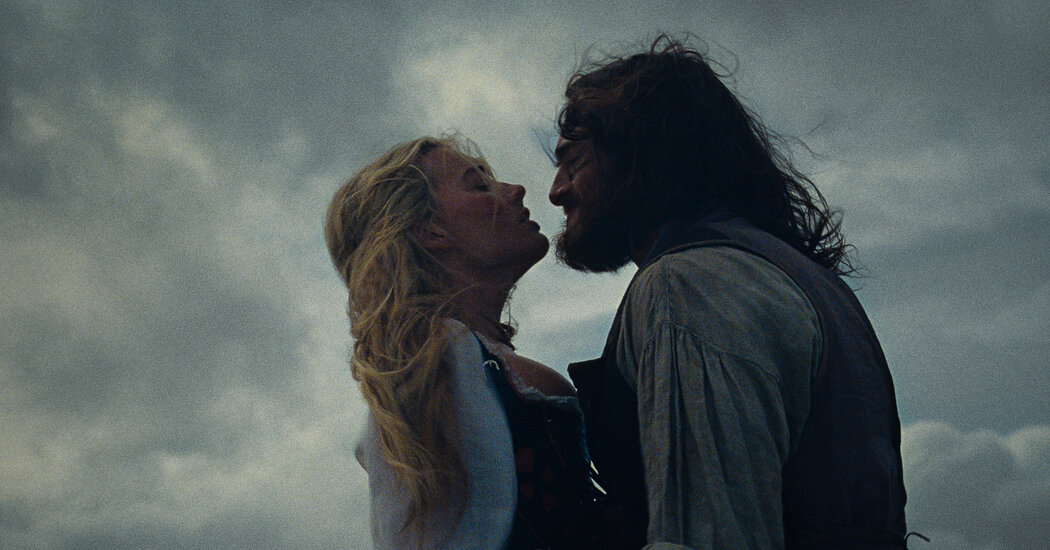
Could Emily Brontë’s ‘Wuthering Heights’ Truly Be the Ultimate Love Story for a Generation?

Since its inception, literature has served as a mirror and a forge—reflecting the values, struggles, and aspirations of society while shaping the contours of our collective identity. The timeless tale of Emily Brontë’s “Wuthering Heights”, for instance, exemplifies how stories of passion, obsession, and the wild forces of nature resonate deeply across generations. Set amidst the bleak yet profoundly beautiful Yorkshire moors, the novel embodies a culture rooted in a rugged individualism and a fierce attachment to unyielding natural and moral landscapes. It affirms that culture is not merely entertainment but a vital vessel of tradition and moral memory, capturing the primal, often chaotic, essence of human existence.

In an age where the superficiality of mass media often dilutes the depth of cultural engagement, it is crucial to recognize the role of classics and heroic narratives in fostering societal identity. As Ortega y Gasset observed, “A culture is a test in which a society measures what it is.” The enduring fascination with characters like Heathcliff and Catherine isn’t mere melodrama but a reflection of the eternal human struggle—an affirmation of the passions that animate our souls and the values that define our communities. Today’s reimagining of such stories—such as Emerald Fennell’s upcoming adaptation with Margot Robbie and Jacob Elordi—reinvigorates these archetypes, proving that even in modern cinema, the currents of tradition still carry profound significance. They serve as cultural anchors in a society that often risks drifting into relativism and nihilism when disconnected from its foundational stories, reminding us that true culture sustains our identity through shared memory and narrative prophecy.

Philosophers like T.S. Eliot have emphasized that the tradition of poetry and storytelling is integral to understanding human purpose. The love—almost divine in its intensity—that Catherine and Heathcliff share transcends their personal fates to become emblematic of a collective longing for meaning amidst chaos. The romantic obsession woven through “Wuthering Heights” exemplifies a cultural motif: that of devoting oneself to something greater than the individual—whether that be a land, a tradition, or an ideal. This powerful fusion of personal and societal meaning highlights that culture is both a memory of the past and a prophecy of the future. It encourages us to preserve the stories that define us, while daring us to envision a society rooted in the enduring values of strength, authenticity, and moral conviction. In a world increasingly swayed by transient trends, the echoes of Brontë’s passionate tumult serve as a reminder: that each cultural act, each story, is a seed of future generations—anointed with the hope that humanity’s noblest aspirations endure beyond the fleeting.

Thus, the ongoing conversation between past and present underscores that culture is the language of our collective soul. It unites us in the recognition that, beneath the stormy skies and tangled passions, lies the eternal quest for truth and love. Like a windswept moor on a tempestuous night or a silent, star-studded sky, it beckons us to remember who we are—a mosaic of memories and dreams, warriors and poets, grounded in the soil of history yet reaching toward the infinite horizon of human potential. For in the end, culture is both the memory that informs us and the prophecy that calls us forward—an enduring testament to the human spirit’s relentless pursuit of meaning amidst the chaos.

This state’s love for chiles runs so deep, they actually passed a law about them!

Across the diverse landscapes of New Mexico, a unique cultural movement thrives—centered around an ingredient as vibrant and fiery as the state itself: the chile. For many residents, this isn’t merely about flavor; it’s a way of life that permeates daily routines, social customs, and even legislative identity. The state has gone so far as to create a law to honor the significance of chiles, underscoring their deep-rooted role in local culture. This dedication reflects a broader trend where food transcends nourishment to embody community, identity, and a commitment to preservation of tradition.

Rooted in history and celebrated through an iconic question—”Red or green?”—chile consumption in New Mexico encapsulates regional pride and a celebration of local agriculture. This simple query symbolizes a cultural fork in the road—a choice that aligns with personal taste but also signifies belonging. Recognized by culinary experts and wellness advocates alike, the chile tradition embodies a balance of flavor, wellness, and cultural resilience. It invites both locals and visitors to partake in a shared ritual that strengthens community bonds while connecting individuals to the land and its history.

By embracing this fiery emblem of New Mexico’s spirit, many find a source of personal health and inspiration. Rich in antioxidants, capsicum in chiles has been hailed by nutritionists such as Dr. Michael Greger for its potential health benefits, including metabolism boosting and anti-inflammatory properties. Beyond physical wellness, the ritual of preparing and choosing between “red” or “green” fosters mindfulness and a sense of rootedness. For those seeking a lifestyle that emphasizes authentic self-expression and cultural connection, engaging with local food traditions offers a pathway tailored to both health and identity. As wellness experts like Celestine Chua highlight, authenticity in daily choices is central to personal happiness.

  • Travel Tip: Explore Santa Fe and Albuquerque, where chiles are woven into everything—from art galleries to street food stalls—offering an immersive experience.
  • Lifestyle Hack: Incorporate local ingredients like fresh chiles into your diet for a flavor and health boost that keeps you connected to your roots.
  • Key Takeaway: Let the stories behind local traditions inspire you to discover your own cultural markers, transforming everyday choices into meaningful expressions of identity.

In a world driven by rapid change and fleeting trends, New Mexico’s fiery embrace of tradition reminds us that true vitality stems from authentic connections—whether to land, culture, or self. As you reflect on the simple yet profound question of “Red or green?”, consider how embracing your roots and passions can fuel your journey of self-discovery and well-being. Ultimately, it’s about finding that perfect balance—where tradition fuels your health, flavor enriches your days, and community provides a lasting sense of purpose. In this ongoing pursuit of a vibrant life, perhaps the most powerful takeaway is that our personal and cultural stories are the most enduring recipes for fulfillment.”

Diane Keaton’s Family Thanks Fans for Enduring Love and Support Following Actress’s Passing

In the landscape of American culture, few figures evoke the essence of timeless artistry and personal authenticity as profoundly as Diane Keaton. Her recent passing at age 79, caused by pneumonia, prompts us to reflect not only on the transient nature of life but on the enduring power of arts and culture as repositories of our collective memory and expressions of societal identity. Keaton’s career, spanning more than five decades, exemplifies how *film*, as a mirror of the human condition, sustains the threads of tradition and innovation that weave our social fabric. Her portrayal of characters grounded in sincerity and wit resonates deeply within the philosophical notion, —as Ortega y Gasset might suggest—— that culture is a ‘horizon’ shaping the pursuit of individual fulfillment.

Throughout her illustrious career, Keaton became a defining icon of a cultural ethos that prizes authenticity, wit, and an unapologetic approach to style—marked notably by her trademark turtlenecks, hats, and thick-rimmed glasses. Her role in Annie Hall, which earned her an Academy Award in 1978, is emblematic of her ability to encapsulate modern existential dilemmas within a comedic, yet profound, cinematic language. Her collaborations with auteurs like Woody Allen—stars in films like Manhattan, Love and Death, and Play It Again, Sam—embody an era where intellectual undercurrents and artistic experimentation redefined American culture. These works serve as living documents of the shifting values, where tradition meets modernity, echoing Tocqueville’s observations about the American penchant for reinvention rooted in cultural foundations.

As the Western world confronts rapid social change, the importance of cultural memory becomes even more evident. Keaton’s influence stretches beyond her performances; her style and wit have become symbols of a resilient tradition that values individual expression and societal continuity. The tributes from her peers—like Goldie Hawn describing her as leaving “a trail of fairy dust,” or Bette Midler calling her “brilliant and extraordinary”—highlight the cultural reverence for those who embody a kind of artistic patriotism. These reflections serve as reminders that cultural icons are not merely entertainers but are custodians of societal values, bearings upon which a community’s identity is constructed. To quote Chesterton, culture is the thoughts we think after we’ve thought them, reaffirming the role of such figures in maintaining the continuity of shared wisdom, humor, and style.

In the end, Keaton’s legacy reminds us that culture is neither a static relic nor a fleeting trend but a living monument—both memory and prophecy. Her films, her style, her wit form a tapestry woven with threads of tradition, innovation, and human aspiration. As we consider her passing, let us hear that whisper echoing through history: culture is humanity’s living memory, a prophecy of the future yet to be realized, a testament to our constant quest for meaning amid the shifting sands of time. In embracing the essence of Keaton’s spirit, we are invited to see our shared humanity anew—not merely as individuals passing through life but as custodians of a cultural legacy that endures, inspiring the generations yet to come.

Author Chris Kraus on Conquering Fame, Navigating Drugs, and the Cultural Power of I Love Dick — An Honest Reflection

In an era saturated with distraction and cynicism, the writings of Chris Kraus serve as a compelling reminder of culture’s vital role in shaping identity, tradition, and society. Her works—particularly I Love Dick—are more than autofiction; they are acts of radical disclosure that anchor us in the complex tapestry of human experience. Kraus’s candor exposes the raw underbelly of personal and collective life, transforming personal struggle into a form of cultural reportage. Just as Ortega y Gasset emphasized that “I am myself and my circumstances,” Kraus’s honest narrative frames her life within the broader societal currents that infiltrate every human endeavor. Her storytelling demonstrates that personal memory is a vital thread in the fabric of societal identity, and that through it, we glimpse both our history and our potential future.

Much like the cultural upheavals of the past that have reset societal norms, Kraus’s work recognizes that contemporary culture is a battleground of memory and prophecy. Her recent publication, The Four Spent the Day Together, delves into her own harrowing experiences—marriage, addiction, loss, and the brutal violence that pervades American working-class communities—reflecting a society plagued by nihilism and despair. Here, Kraus uses her journalistic rigor not merely to tell her story but to spectrally comment on the underlying currents shaping our collective destiny. As T.S. Eliot observed, “The past’ness confronts us uncomfortably, since it makes us realize that our present is layered upon the ruins of what was.” Kraus’s narrative practice distills this truth, reminding us that society’s foundation rests upon the memories we choose to confront and express, shaping the future we dare to imagine.

  • Culture as memory: Kraus’s meticulous use of diaries, photographs, and court transcripts anchors her stories in tangible reality, embodying a tradition of experiential truth that echoes Chesterton’s view that “the test of a good culture is whether it endures through the ages.”
  • Culture as prophecy: Her fearless engagement with the darkest aspects—addiction, violence, societal depravity—provides a prophetic warning about the illusions of progress and the importance of confronting uncomfortable truths.
  • Historical parallels: Kraus’s illumination of the American cultural landscape echoes Tocqueville’s insights into the democratic spirit—an ongoing struggle between individual authenticity and collective self-deception, where the language of culture becomes a tool for resistance or capitulation.

In her reflections, Kraus reminds us that culture is neither static nor inert. It is the memory of what was, and the prophecy of what might be, woven into the very fibers of society’s narrative. Her work challenges us to recognize our stories as essential acts of cultural resistance—an affirmation that human life, even in its most fractured and painful moments, is meaningful. As G.K. Chesterton famously urged, “A dead thing can go with the stream, but only a living thing can go against it.” And it is through this act of cultural defiance—by bearing witness, by telling the unvarnished truth—that we forge the continuity of tradition and light the way toward future horizons. For in the end, culture remains both a memory of humanity’s profound past and a prophecy of the enduring spirit yet to come—an eternal echo and an unending call to remember and create anew.

Love Island’s Lucinda Strafford’s Au Vodka TikTok ad cut amid controversy

In an era where popular culture intertwines effortlessly with the fabric of societal influence, the recent controversy surrounding the promotion of Au Vodka by former Love Island contestant Lucinda Strafford exemplifies the persistent tension between freedom, responsibility, and the moral fabric that underpins our social contract. Her social media post, which depicted her filling a lavish gold vending machine with cans of the aforementioned vodka, was recently banned by the Advertising Standards Authority (ASA) for targeting audiences under the age of eighteen—an unequivocal breach of UK advertising laws. This incident underscores how culture acts as both mirror and message: it reflects societal values, but also pressures us to navigate them conscientiously.

The core of this debate hinges on culture’s role as a vessel of identity and societal cohesion. Historically, philosophies like Ortega y Gasset’s notion of “the revolt of the masses” warn us about the perils of superficial mimicry and the erosion of cultural standards. In our contemporary landscape, advertisers like AU Vodka appear to blur the lines deliberately, packaging their product with youthful allure—embodying a symbolism that extensions of *progressive marketing* seem to chase blindly. Yet, in striking contrast to the libertarian echoes of Chesterton’s assertion that “the true object of freedom is to give the individual room to flourish,” authorities recognize that unchecked marketing to impressionable youths damages societal struktures rooted in tradition and the shared moral fabric.

This tension is compounded by the digital age’s unique challenges. TikTok, with its ever-transforming algorithms, flattens the boundaries of age-appropriate exposure, making it all the more urgent for society to safeguard the innocence of its young. The ASA’s investigation revealed that Strafford’s followers’ demographics were uncertain; they couldn’t confirm whether minors were actively engaging with her content. As Tocqueville warned about the “tyranny of the majority,” the unchecked proliferation of youth-oriented content risks shaping a culture that venerates immediacy over truth, sensation over moral purpose. Such a milieu demands a vigilant preservation of societal values that anchor us to our shared tradition—values that serve as moral compass points amid the shifting tides of modernity.

In the quiet depths of our cultural memory, there lies a prophecy—an inheritance handed down through generations, whispering that what we nurture now will shape the society of tomorrow. Like T.S. Eliot’s concept of a tradition “being the memory of humanity,” our collective cultural output must balance responsibility with aspiration. As our ancestors looked to art, philosophy, and history to craft a resilient moral foundation, so too must we, in this moment of cultural reflexivity, cherish the enduring power of tradition—not as a static relic but as a vital, guiding current. In this dance of memory and prophecy, culture stands as both the chronicles of what has been and the blueprint of what may still become, beckoning us to ensure that our shared human story moves forward with integrity and purpose, echoing into eternity’s horizon with the lyrical promise that humanity’s destiny is written not only in history but also in the sacred language of its enduring culture.

Social Media Auto Publish Powered By : XYZScripts.com