Matox News

Truth Over Trends, always!

Unleash Your Inner Lion: The Power and Passion Behind Lunar New Year’s Daring Dancers

Celebrating Tradition and Personal Impact: Sydney’s Lunar New Year Lion Dance

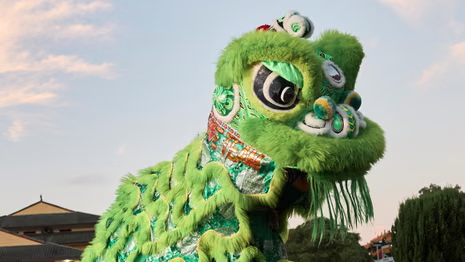
As the sun beats down on Sydney’s west, the sounds of drums and cymbals reverberate through the sun-baked concrete lot of Mingyue Lay temple. Here, amidst lion heads crafted from papier-mâché and kids energetically jumping onto poles and each other, a vibrant display of cultural resilience unfolds. The lunar new year festivities continue beyond the single day, with over 100 performances scheduled over three weeks, showcasing a tradition that holds significance far beyond mere spectacle. The upcoming celebration marks the Year of the Fire Horse, an emblematic pairing that occurs only once every 60 years, heightening the cultural and spiritual importance within the community. For Sydney, with one of the largest lunar celebrations in the southern hemisphere, these performances are a testament to the city’s multicultural vibrancy and the enduring relevance of Chinese heritage.

The dedication of the lion dance troupes, like Qing Fong Dragon and Lion dance team, exemplifies how cultural practices foster community and personal growth. Despite the relentless heat, dancers such as Long Huynh and Kelvin Tran prioritize training, embracing the mindset that “rain, hail or shine, we still train.” Their rigorous regime includes conditioning runs, dynamic stretches, and hours of practice to perfect each move. Tran’s teaching philosophy emphasizes connection, urging students to “be the lion and feel the lion through themselves.” For many young dancers, this is more than a craft; it’s a journey of self-discovery, resilience, and wonder. Training inside air-conditioned halls during the hottest days demonstrates adaptability—showing that dedication can adapt to environment while still pursuing mastery. This immersive experience nurtures confidence, teamwork, and a deep respect for tradition that extends well beyond the dance floor.

From the intricacies of costume work to the harmony between dancers, the lion dance is a masterpiece of collaboration. Each performance involves multiple moving parts: controlling facial expressions, coordinating tail and head movements, and staying synchronized with rhythmic music that encapsulates the heartbeat of Chinese culture. The dancers must trust each other implicitly, as inside the costumes, vision is limited and each movement must be precise. According to instructor Adelene Pham, the real magic of the lion dance is the trust and family that develop among performers, often lasting a lifetime. This bond is reinforced by shared meals, late-night rehearsals, and the collective goal to ward off evil spirits and invite prosperity. It’s an inspiring reminder that tradition isn’t just about preservation but transformation—fostering vital connections that energize communities and individuals alike.

As the lunar new year concludes, the momentum doesn’t pause. The troupe continues to perform at weddings, business openings, and cultural festivals, perpetuating their heritage and inspiring a new generation. The physical and emotional toll of the practice is balanced by the camaraderie and personal achievement in mastering complex routines. For many young dancers, like Nicky Phan, lion dancing represents more than an art form—it’s a personal renaissance. Whether facing the challenge of mastering a new move or simply sharing a meal after hours of practice, they embody the spirit of perseverance and resilience that defines successful lifestyle adaptation. Their journey underscores an essential truth: in embracing culture, we embrace ourselves—and in doing so, illuminate the path toward a meaningful life. The lion dance, much like a well-lived life, is about trusting others, daring to perform from the heart, and always moving forward with courage and community in mind.
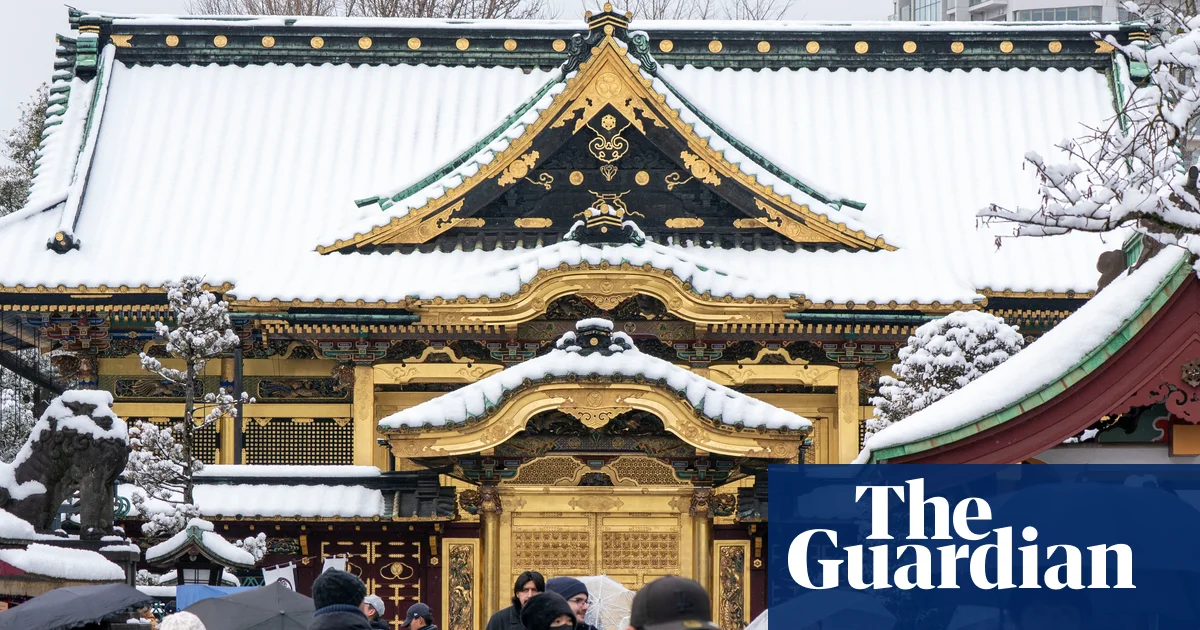
Chinese Tourists Skip Japan During Lunar New Year as Tensions Rise

The ongoing diplomatic tensions between Japan and China are unraveling not just regional stability, but also deeply affecting international economic and cultural exchanges. In the context of the broader U.S.-China rivalry and Beijing’s asserted influence in the Indo-Pacific, recent developments suggest a shift that could have long-lasting consequences for global diplomacy. The sharp decline in Chinese tourists visiting Japan, especially during the crucial Lunar New Year period, exemplifies how geopolitical conflicts directly influence societal interactions and economic interests—an observable trend noted by analysts at the International Crisis Group and historians specializing in East Asian geopolitics.

Since the end of last year, Japan’s tourist numbers from China have plummeted, nearly halving compared to previous years, with an estimated 60% decrease during major holiday seasons. This downturn is closely linked to diplomatic spats over Taiwan’s security—a matter Tokyo has publicly linked to potential military support if tensions escalate. Japanese Prime Minister Sanae Takaichi’s explicit remarks about deploying self-defense forces if China attempts to invade Taiwan have elicited angry responses from Beijing, including formal protests and accusations of militarist ambitions. Such exchanges underscore the dangerous escalation in rhetoric that echoes the darker chapters of East Asian history, prompting international observers to warn of the *risks of rekindling old hostilities*.

  • China’s Foreign Minister Wang Yi’s comments at the Munich Security Conference, accusing Japan of attempting to revive militarism and warning of “self-destruction” if Japan persists, exemplify the rising tensions.
  • China’s special representative on Korean affairs, Liu Xiaoming, further fueled fears of regional conflict by referencing Japan’s WWII past and related lessons from history, suggesting the country remains haunted by its militarist legacy.
  • The historic echoes of aggression—visually reinforced by Liu’s mention of Pearl Harbor—serve as stark reminders that the currents of history are never really past, only dormant, and that future conflicts could be a mere spark away.

In economic terms, this diplomatic war is starting to leave an imprint on the global travel scene. While **South Korea** is projected to become the primary destination for Chinese tourists during this travel surge, with an estimated 250,000 travelers—1.5 times the previous year—**Japan** is seeing its share fall sharply. The decline is not isolated; regional countries like **Thailand, Singapore, Vietnam**, and even **Russia** are benefitting from the pull of China’s outbound tourism. The geopolitical impact is clear—when diplomatic relations sour, cultural exchanges and economic benefits follow suit, threatening to reshape regional dynamics and economic interdependence.

The strained geopolitical landscape reveals the harrowing choice faced by many nations: balance national security with economic engagement. Japan has officially stated that its defensive upgrades are in response to an increasingly unstable security environment—not targeted at any specific nation. Yet, the accusations from Beijing and warnings from Chinese officials about dangers in Japan highlight how intertwined security policies and societal perceptions have become. Meanwhile, the international community is watching — with analysts noting that such rhetoric risks unleashing a spiral of mutual distrust that could fuel instability across East Asia’s strategic theater.

As history continues to unfold amidst the shadows cast by ancient conflicts and modern ambitions, the weight of decisions made today will resonate through generations. The world stands at a crossroads—whether this will be a chapter of renewed diplomacy or one of inevitable confrontation remains a question that will border on history’s greatest mysteries, with each step echoing in the corridors of power long after the last words are spoken. The future of East Asia is penned in these tense exchanges, as nations grapple with their legacies and their destinies—each move a stroke on the canvas of history, the final picture yet to be revealed.

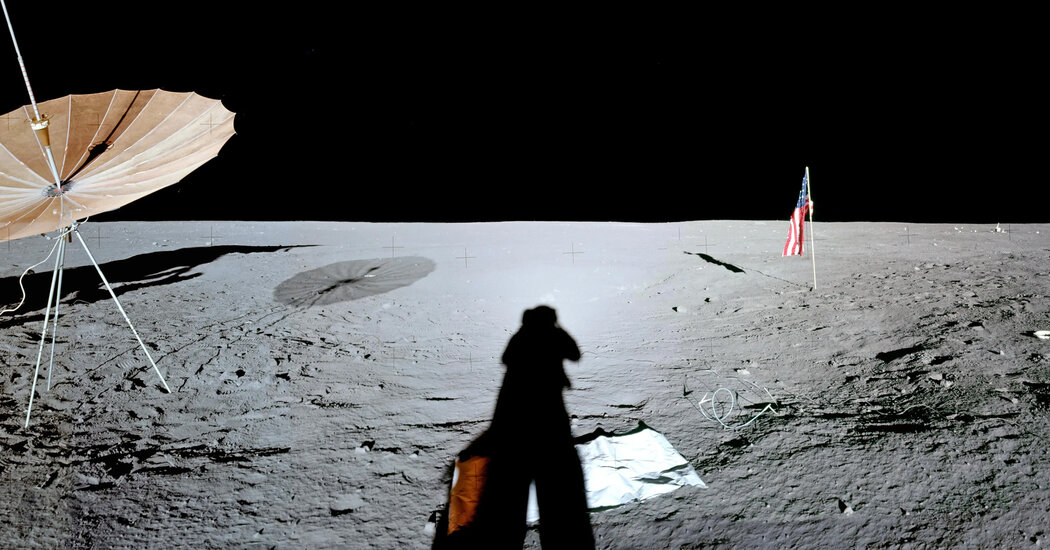
NASA’s Lunar Photography: Bridging the Gap Between the Heavens and Our World

The Celestial Canvas: Culture, Identity, and Humanity’s Perpetual Quest

Throughout the annals of history, humanity has looked upward, **drawn by the celestial vault that crowns our existence**. From the earliest star maps to the groundbreaking lunar photographs captured by NASA, our collective fascination with the Moon exemplifies the enduring human desire to understand our place in the cosmos. But beyond the realm of science, it is culture—an intricate tapestry woven with tradition, art, and philosophy—that imbues this celestial curiosity with profound significance. Like Georges Méliès’ “Le Voyage Dans la Lune”, which transformed scientific wonder into a fantastical narrative, our cultural expressions serve as a mirror reflecting how societies interpret the universe and their spiritual relationship to it. These artistic endeavors are not mere entertainment; they are the symbols of our shared identity, anchoring us in our history and pointing toward future horizons.

In contemplating the cosmic, we must recognize the role of culture as the **fundamental vessel of identity and societal continuity**. Just as Ortega y Gasset emphasized culture as the continuity of a civilization’s spirit, our collective engagement with the Moon epitomizes this continuity. The iconic lunar photographs seen in collections from NASA, the historic daguerreotypes, and artwork like Vincent van Gogh’s “The Starry Night” are more than visual records—they are monuments to our ongoing quest to comprehend phenomena that seem both distant and intimate. Culture, in this sense, acts as both memory and prophecy, each image and story echoing our ancestors’ awe and inspiring future generations to dream beyond mere survival. It is through such cultural artifacts that societies define their narratives, their hopes, and their fears—an intricate dialogue that transcends time and space, linking us to the stars and to each other.

  • The Moon has served as a canvas upon which cultural milestones are inscribed, from the initial lunar explorations to the philosophical ponderings of thinkers like T.S. Eliot, who saw in the cosmic chaos a reflection of the human condition.
  • Artworks and scientific images alike serve as rituals of remembrance and aspiration, anchoring our identity in the vast fabric of history.
  • The shared experience of gazing skyward fortifies communal bonds and fosters a sense of continuity amid rapid social change.

As Tocqueville once observed about the vital role of culture in shaping shared values, our modern lunar fascination illustrates the enduring importance of tradition in weaving the fabric of society. In an age where material progress often threatens to eclipse spiritual and cultural pursuits, the Moon remains a symbol of what it means to aspire—to reach beyond ourselves and find meaning in the mysterious. The ancient parables and the modern telescopic images converge in a common act of discovery: that humanity’s deepest treasure lies in its stories, images, and ideas—each a shard of the eternal mirror reflecting who we are and who we hope to become. Culture is both the memory that grounds us and the prophecy that propels us forward into the luminous unknown.

Thus, as the moonlight bathes the contours of our collective soul, it reminds us that our history and hopes are bound by a shared celestial heritage. Like the poetry of Chesterton, which elevates the ordinary to the divine, and the philosophical insights of Ortega y Gasset, who saw culture as the bridge connecting past, present, and future—the universe whispers of a human destiny intertwined with memory and prophecy. In this grand cosmic dance, our culture is both the shadow cast by the distant star and the spark illuminating the night’s eternal sky, guiding us with its silent, luminous promise: that in understanding the universe, we find ourselves—and in ourselves, the universe’s most enduring mystery.

Social Media Auto Publish Powered By : XYZScripts.com