Matox News

Truth Over Trends, always!

Am I Just Making a Statement? Why I’m Hitting the London Marathon in a Bold Badger Look

In the pursuit of pushing personal boundaries, a new wave of marathon runners is redefining what it means to participate in one of the world’s most grueling sporting events. These athletes aren’t just running for the finish line—they’re transforming the experience into a platform for self-expression, charity, and personal **impact**. Whether clad in a suit of armour, a giant polar bear, or a pair of symbolic testicles, these participants exemplify a lifestyle that champions **resilience**, **creativity**, and a commitment to causes larger than themselves. It’s a reminder that, for many, a marathon isn’t just about physical endurance but also about embracing the *boldness* needed to challenge societal norms and personal limitations.

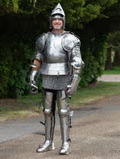
The trend toward **fancy dress marathons** is gaining momentum, fueled by the desire to combine fitness with **lifestyle** shifts that emphasize *wellness*, *leisure*, and *meaning*. Legendary figures like Jonathan Acott, a resilient cancer survivor, plans to run the London Marathon dressed in a suit of armour, symbolizing his battle against cancer and his desire to inspire others navigating health challenges. Acott’s story demonstrates how personal health journeys often become catalysts for embracing a *lifestyle* rooted in hope and perseverance. On the other hand, Fiona Betts chose to run as a helicopter, raising funds for Air Ambulances UK. Her victory wasn’t merely crossing the finish line but also elevating awareness and community participation—a vital element of a **well-lived** life. These athletes show how creativity in fitness can foster a *sense of purpose*, turning physical challenges into opportunities for personal growth and societal contribution.

Alongside these charismatic runners, many are driven by deeply personal stories that underscore the power of **lifestyle change**. Jo Robinson, running as a lobster and later planning to be an inflatable elephant, exemplifies how **fun** and *meaningful* initiatives can bridge social gaps and foster community spirit. Her journey is about more than fitness; it’s about raising awareness for type 1 diabetes through her charity, Breakthrough T1D. Similarly, Toby Freeman, running as a giant pair of testicles, blends humor with purpose—raising awareness about testicular cancer inspired by personal loss. These stories highlight how **personal impact**—whether emotional, physical, or social—becomes intertwined with the **lifestyle shifts** that fuel their passions. They reflect a growing recognition that pushing physical limits can also nurture mental toughness, community, and a sense of *well-being*.

Living with Purpose and Facing Challenges Head-On

Beyond the spectacle, these runners teach a valuable lesson: embracing the *unexpected* and accepting discomfort are crucial to **personal growth**. Acott, despite his health battles, runs marathons as a symbol of surviving—not just living—beyond illness. His foundation, The Gift of Go, reminds us that **joy** and **hope** are **necessities** in life—values that are reinforced through *challenging* ourselves in meaningful ways. Likewise, Morris’s polar bear costume in 2025 taught him that **limitation is often self-imposed**, especially when external factors like weather turn arduous. It’s about redefining what’s possible, face adversity with a smile, and find joy in the journey.

Their stories echo the importance of setting **intentional goals** that push boundaries without sacrificing **wellness**. The lesson from these trailblazers is clear: *Discipline*, *creativity*, and a *sense of purpose* transform physical activity into a **lifestyle** pursuit that fosters resilience and inner strength. As the world’s challenges grow increasingly complex, these bold adventurers demonstrate that embracing our passions in unconventional ways is not only empowering but also vital for *personal fulfillment*. Life, like a marathon, is ultimately a journey of continuous discovery—an invitation to *dare greatly*, and in doing so, find a lasting *sense of self* that transcends the finish line.

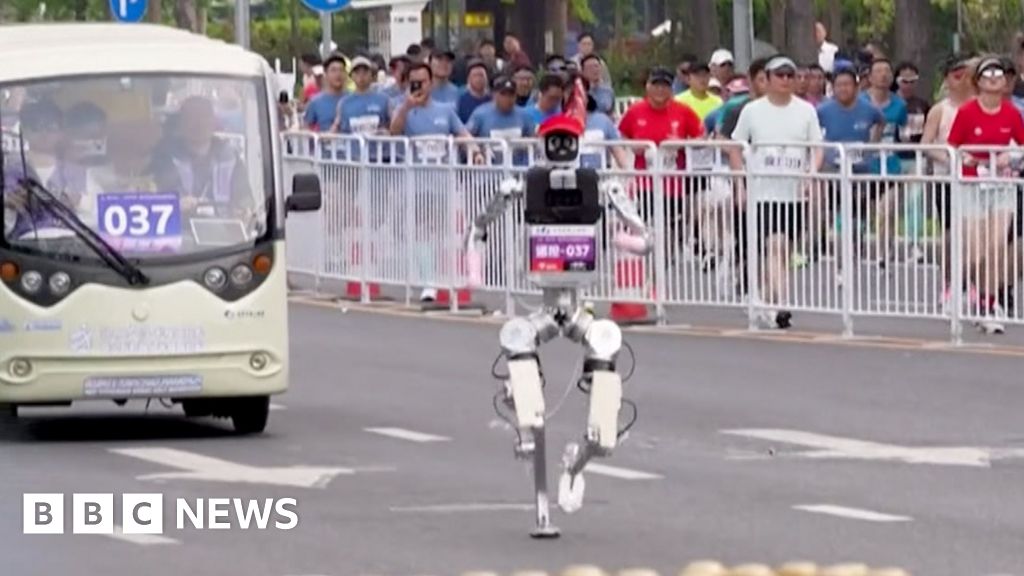
Watch: Runners face off against robots at China Half Marathon

In an unprecedented display blending athleticism with technological innovation, Beijing hosted a half marathon race where robots competed alongside human contenders. The event, held on Sunday, drew global attention to the rapid advancements in robotics and artificial intelligence. The standout was Lightning, a state-of-the-art robot developed by Honor, a renowned Chinese smartphone manufacturer. Lightning completed the grueling course in just 50 minutes and 26 seconds—shattering human rival times—and exemplifies the relentless surge of technological progress from the world’s rising powerhouses.

This development signals more than just a breakthrough in robotics; it underscores a broader geopolitical shift where nations vigorously contest technological dominance. China‘s leadership in integrating AI and robotics into public displays of prowess not only boosts national pride but also signals an intent to lead the Next Industrial Revolution. According to analysts at the International Robotics Federation, such demonstrations are strategic, serving as a form of “soft power” that extends China’s influence into the global tech sphere. Meanwhile, the race’s participation metrics—around 40% of robots racing autonomously—highlight a decisive move toward full autonomy in robotics, representing a future transcending traditional human limitations. These advancements are poised to reshape warfare, logistics, and even everyday life, compelling the world’s superpowers to rethink their position in this new era.

Additionally, the event casts a spotlight on how decisions in the technological arena have tangible consequences for international stability and economic power. The race’s timing coincides with mounting concerns over the deepening rivalry between the United States and China, with each nation striving for supremacy in emerging industries. Many experts caution that a misstep or an overinvestment in disruptive technologies could escalate into a new Cold War, just as the global community grapples with issues like supply chain resilience and cybersecurity threats. History reminds us that control over innovation has historically translated into geopolitical leverage, and as China accelerates its push, other nations are watching closely—every move a potential milestone in the shaping of the 21st-century world order.

As the dust settles on this technological showcase, the world remains on the cusp of transformation. The crowning achievement of Lightning not only demonstrates what artificial intelligence can accomplish today but also echoes a warning: the future of geopolitics will likely be forged in the crucible of technological supremacy. Will nations unite to regulate, or will they compete for supremacy? The answer remains etched in the relentless march of progress—a history still being written, with each step shaping the destiny of mankind amidst the thunderous footsteps of machines that now race ahead.

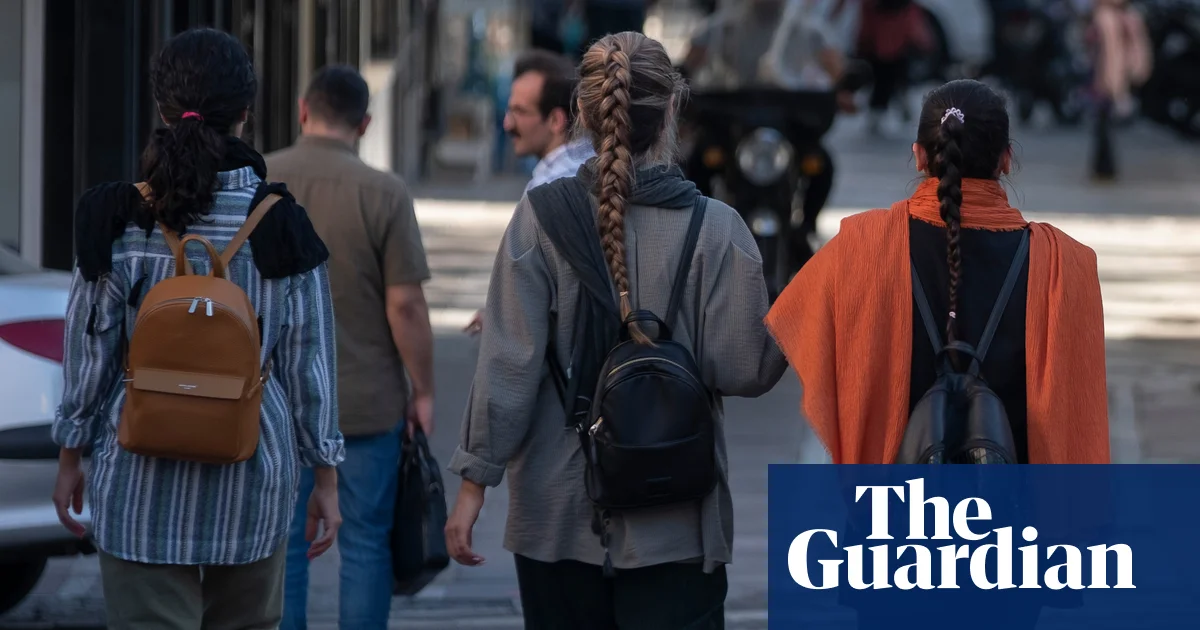
Iran arrests marathon organizers over women running unveiled

In a stark display of Iran’s ongoing internal struggles over religious conformity and societal control, recent actions by judicial authorities highlight the fragile balance the regime seeks to maintain amid mounting pressure from conservative factions. The arrest of two organizers involved in a marathon on Kish Island, after images surfaced showing women participating without hijabs, serves as both a political signal and a reminder of the strict Islamic regulations that continue to define public life in Iran. This event, seemingly routine on the surface, underscores a broader struggle over control, identity, and the country’s future direction—a struggle with profound geopolitical implications.

The involvement of Iranian authorities in cracking down on this event reflects ongoing tensions within the regime itself. The arrest of officials from both the Kish free zone and the private event organizers illustrates the regime’s attempt to enforce religious laws amid increasing criticism not only from ultraconservatives but also from segments of society demanding greater liberties. This crackdown occurs just months after the tragic death of Mahsa Amini, which ignited widespread protests and exposed the deep divisions over the country’s strict dress codes and authoritarian rule. Analysts warn that such internal conflicts threaten to destabilize the regime further, with international observers watching keenly as Iran’s internal governance becomes more volatile.

  • Authorities cite violations of “public decency” and the need to uphold religious laws, emphasizing the regime’s unyielding stance against non-conformity.
  • Conservative media outlets condemned the marathon, framing it as a breach of Islamic morality, thus amplifying internal ideological battles.
  • Recently, many lawmakers voiced discontent over the judiciary’s perceived failure to strictly enforce hijab laws, prompting calls for tighter regulation and penalties from top government officials.

The geopolitical impact extends beyond the borders of Iran. Every act of internal repression, especially concerning social and religious freedoms, signals to the outside world that the regime remains deeply committed to ideological conservatism. This stance risks isolating the nation further from Western nations and complicating diplomatic negotiations over Iran’s nuclear program, regional influence, and economic sanctions. Global institutions and Western allies have long argued that Iran’s domestic policies threaten regional stability and human rights — this recent incident accentuates those concerns.

Experts like Middle Eastern analysts warn that Iran’s internal crackdowns coincide with increased regional instability, as conservative factions seek to rally nationalist sentiments around Islamic values. The regime’s resistance to ratify legislation that would impose harsher penalties for dress code violations signals a balancing act — trying to satisfy ultraconservative factions while avoiding further unrest. Ultimately, these clandestine battles over societal norms reveal a regime deeply divided, fighting to preserve its ideological bedrock in a changing world. As history continues to unfold, every arrest, every crackdown echoes beyond its borders, signaling a country caught between the suppressive forces of the past and a future that may demand profound transformation. The question remains whether Iran’s internal strife will catalyze reform — or plunge the nation into deeper chaos, with consequences reverberating across the Middle East and beyond.

Social Media Auto Publish Powered By : XYZScripts.com