Matox News

Truth Over Trends, always!

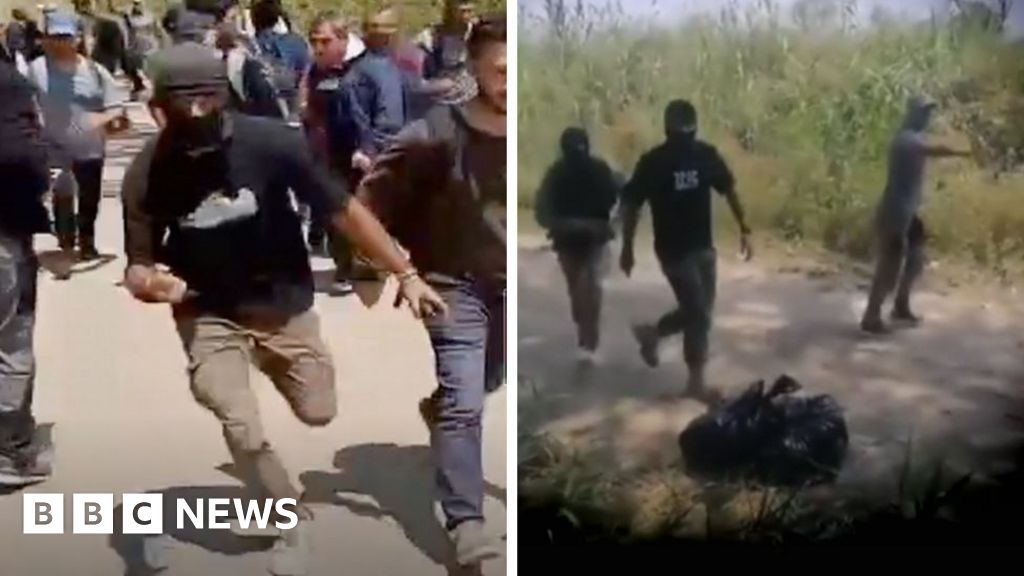
Greek police deploy masked 'mercenaries' to push migrants back at border
Greek police deploy masked ‘mercenaries’ to push migrants back at border

In a disturbing revelation that underscores the evolving nature of international conflicts, recent intelligence reports have exposed a troubling nexus between migration and militant warfare. Analysts have identified that many of the mercenaries fighting in ongoing regional conflicts are in fact migrants themselves, recruited from countries such as Pakistan, Syria, and Afghanistan. These individuals, driven by economic hardship, ideological alignment, or coercion, are increasingly being utilized as tools of proxy warfare, highlighting a complex intersection of human mobility and geopolitical destabilization.

The recruitment of these mercenaries not only complicates existing conflicts but also exemplifies how abuses of migration routes are being weaponized to further regional agendas. According to reports, these fighters are further incentivized through a form of barter—being rewarded with cash, mobile devices looted from other migrants, and essential papers that effectively enable them to travel through Greece without detection. This trafficked mobility fuels an escalation of insecurity across borders, challenging the authority of national governments and international law enforcement agencies.

  • U.S. and European intelligence agencies warn that this phenomenon feeds into a broader trend of non-state actors exploiting migration pathways for strategic gains, destabilizing fragile states, and complicating diplomatic efforts.
  • Many international organizations, including the United Nations, express concern that such recruitment methods exacerbate ongoing humanitarian crises by intertwining human suffering with geopolitical objectives.
  • Historian and geopolitical analyst Dr. Jane Foster notes that history demonstrates how non-state armed groups leverage refugee flows to embed themselves within societies, blurring lines between citizens and combatants.

The geopolitical impact of these revelations extends far beyond the immediate conflict zones. Countries like Greece and other nations along the eastern Mediterranean are experiencing a surge in migratory pressures, straining their resources and border security. As migrants-turned-combatants infiltrate more deeply into Europe, the political narrative shifts, fueling populist and nationalist sentiments that call for draconian border measures and renewed skepticism toward international institutions. Meanwhile, regional powers such as Russia and Turkey increasingly see the migrant routes as strategic corridors, manipulating them to expand influence and undermine Western diplomatic efforts in the area.

This intricate web of military, migratory, and geopolitical strategies underscores a turning point in how nations must confront the intersecting threats of terrorism and uncontrolled migration. The selective exploitation of refugee mobility to fund, arm, and position militant groups presents a challenge that is both morally disturbing and strategically destabilizing. As history witnesses these dark trends unfold, the importance of decisive, coordinated international action than ever before becomes clear. The story of migrants recruited as mercenaries is a stark reminder that in the theater of geopolitics, human lives are often the most vulnerable currency—caught in a tide of conflicts they neither sought nor fully understand.


FBI Releases Images of Masked Suspect in Savannah Guthrie's Mother Case
FBI Releases Images of Masked Suspect in Savannah Guthrie’s Mother Case

In a development that resonates far beyond the borders of Arizona, the mysterious disappearance of Savannah’s mother from her Tucson residence has ignited a wave of concern among local and international observers alike. Last seen on the night of January 31, her sudden vanishing underscores persistent vulnerabilities in domestic security and raises questions about broader geopolitical implications rooted in regional stability and societal resilience.

This incident, while ostensibly a personal tragedy, echoes the larger patterns of insecurity that ripple through many nations grappling with increasing social unrest and unpredictable threats. Analysts highlight that such cases—though often dismissed as isolated—serve as stark reminders of an underlying global trend: a weakening fabric of personal safety amid a tumultuous geopolitical landscape. The United Nations and various regional security agencies warn that domestic vulnerabilities often intersect with larger political fault lines, destabilizing societies from the ground up. Decisions taken in the corridors of power—be they policies on immigration, law enforcement, or border security—inevitably shape the safety and stability of communities like Tucson, with ripple effects reaching well beyond American borders.

Historically, America has positioned itself as a beacon of personal freedom and security; however, recent incidents reveal cracks in this narrative. Experts caution that the ongoing internal struggles over resource allocation, migration, and civil liberties are fueling a rise in unpredictable events. According to respected analysts such as those at the Cato Institute, these incidents threaten to undermine the fabric of national cohesion and challenge the perception of America as a safe haven. Meanwhile, international bodies observe that such domestic unrest can influence bilateral relations, particularly with neighboring countries that share migration corridors or economic ties with the United States.

At a time when global tensions escalate—particularly with rising powers vying for dominance—the plight of individual citizens like Savannah’s mother masks the broader geopolitical stakes. Security, stability, and societal confidence are delicate threads pulled taut by international shifts and internal decision-making. International organizations, including INTERPOL and NATO, have repeatedly warned that neglecting these domestic issues can create openings for destabilizing elements, both from within and outside national borders. As world leaders debate alliances, trade, and military strategies, the security of ordinary citizens remains an essential yet often overlooked piece of the strategic puzzle.

The unfolding story of Savannah’s missing mother is thus more than a personal tragedy; it is a symbolic chapter in the ongoing narrative of a world teetering at a crossroads. History’s pen continues to write a complex and often tragic story—one that demands vigilance, decisive action, and a recognition that today’s decisions directly shape tomorrow’s societies. As communities worldwide grapple with chaos and change, the weight of history presses heavily on the present, reminding us that every disappearance, every crisis, is a piece in a much larger and more urgent puzzle—one that will ultimately define the future of nations and civilizations alike.

Social Media Auto Publish Powered By : XYZScripts.com


