Matox News

Truth Over Trends, always!

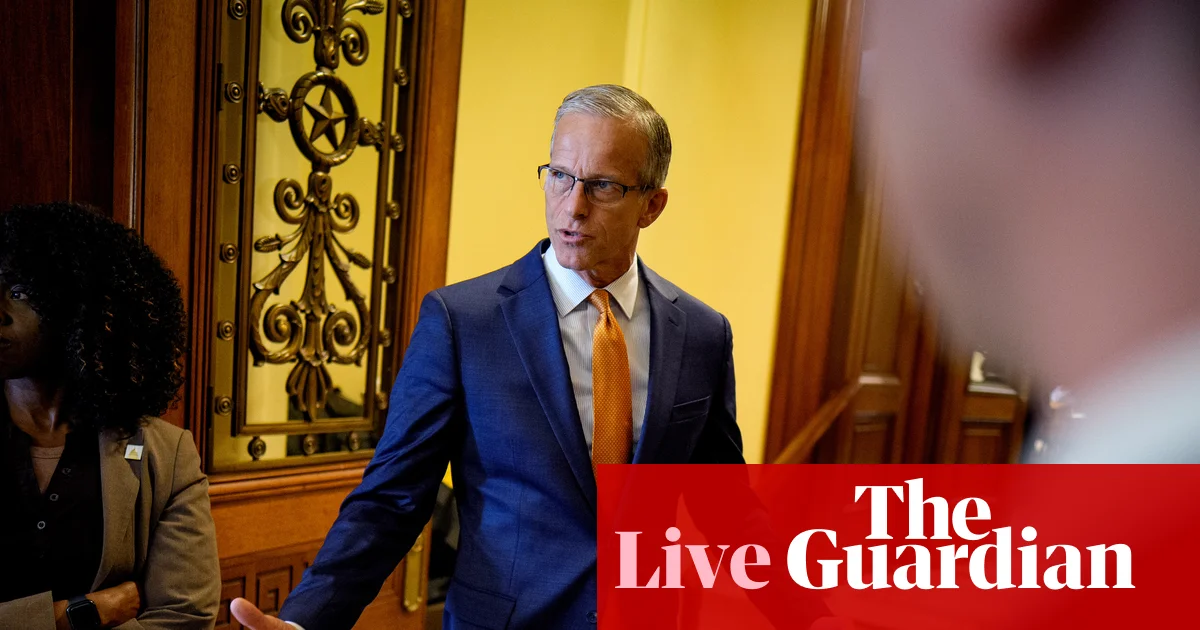
Senate OKs quick extension of surveillance law — what it means for US security and your privacy

The international landscape remains in flux as recent developments continue to reshape geopolitical power balances. In a move that highlights the escalating struggle for influence, the United States has maneuvered carefully amidst mounting tensions in the Middle East and its domestic political arena. On one front, the U.S. Senate passed a short-term extension of critical surveillance legislation, Section 702 of the Foreign Intelligence Surveillance Act (Fisa), aiming to extend intelligence gathering powers temporarily amid fierce debate over privacy and security concerns. Such policies underscore a broader narrative of balancing civil liberties against national security, a debate that resonates globally as other nations weigh their own surveillance and security measures.

Meanwhile, the Middle Eastern flashpoints have taken center stage with Donald Trump claiming that NATO has offered assistance in the strategic control of the Strait of Hormuz—an essential waterway funneling a significant majority of global oil exports. Trump’s provocative statements on Truth Social reflect a posture of unpredictability, yet they coincide with Iran’s recent announcement that the strait is open to commercial traffic, momentarily easing fears of wider conflict and oil price shocks. Analysts from international think tanks caution that these fleeting gestures do little to resolve the longstanding instabilities and may merely serve as bargaining tactics in a larger game of diplomatic brinkmanship. With oil prices dropping sharply to below $89 a barrel, global markets are nervously watching for any signs of escalation or resolution, knowing each move could tip the scales toward war or peace.

The United States’ internal divisions further complicate this complex tapestry. The Senate’s struggle to pass a bipartisan extension of surveillance laws—stalled by the need for 60 votes amidst Republican opposition—mirrors a country wrestling with its identity and worldview. Critics warn that laws allowing warrantless monitoring of Americans’ communications threaten constitutional protections, while supporters argue they are vital for security. This internal discord also mirrors broader cultural conflicts playing out on the international stage, where nations face their own battles over sovereignty, civil liberties, and the rules of engagement in the digital age.

As the showdown in Congress reveals deep fissures within American political discourse, the world watches a nation at a crossroads. The unraveling of internal consensus and the strategic maneuvers in the Middle East exemplify a larger story: a global order strained by competing interests, where alliances are tested and true power remains elusive. Historians warn that these moments—teetering on the edge of new conflicts or diplomatic breakthroughs—may mark the beginning of a new chapter in our international saga. How this sea of shifting alliances, domestic turmoil, and global uncertainty will ultimately be resolved remains the defining challenge of our era. The pages of history are yet unwritten, but their editing is already underway, with the weight of future generations hanging in the balance.

Art, Sex, Nature: Are We Chasing Means Instead of True Fulfillment? | Health & Wellbeing

Society’s Instrumentalisation Crisis: Losing the Meaning in Life

For generations, societies have cherished the pursuit of intrinsic human goods, such as genuine friendships, meaningful work, and the appreciation of art for its own sake. These core values form the fabric of a stable, cohesive community, nourishing families and shaping the moral foundation through which we find purpose. Yet, as cultural shifts driven by modernity continue to deepen, there is a disconcerting trend toward viewing everything—art, religion, even personal relationships—as mere tools. This relentless instrumentalisation strips activities of their inherent worth and threatens to turn society into a transactional arena where meaning is replaced by utility.

Peers across disciplines—sociologists, historians, social commentators—highlight how this shift has profound effects on families, education, and communities.

  • The instrumentalisation of social bonds reduces relationships to sources of emotional support or hormonal boosts, neglecting their true value as expressions of genuine care and love. When meaning is filtered through self-centered benefits, the depth and authenticity of human connection diminish.
  • Education increasingly focuses on skills that enhance marketability rather than cultivating moral and philosophical wisdom. Philosophy, once a quest for understanding life’s fundamental questions, has been transformed into a mere “transferable thinking skill”—a tool to boost productivity rather than a pursuit of higher truth.
  • Even the arts and culture are subjected to this utilitarian lens. While art can inspire and elevate the human spirit, contemporary campaigns often promote it solely for its health benefits or capacity to reduce stress, rather than for its intrinsic beauty and moral insight.

According to social critics like Roger Scruton and philosophers like Immanuel Kant, this trend toward instrumentalisation is rooted in the Enlightenment-era elevation of individual autonomy. While promoting personal freedom and self-determination, modern culture has overlooked human beings’ intrinsic social nature—an interconnectedness that cannot be summed up in individual utility. As a result, society faces the risk of atomisation, where every relationship and activity becomes a means to an end, eroding the moral fabric that binds communities together. How can families, which are traditionally rooted in unconditional love and shared purpose, thrive when their members view each other through the lens of individual benefits?

Furthermore, the reductionist mindset—parading science as the sole authority—has led to a dismissive attitude toward the richness of human experience. From forest bathing to singing, countless activities are now valued only for their immediate health benefits or psychological perks. This superficial appreciation distracts from the deeper goal: engagement with life itself, with activities that have intrinsic value. Philosopher Aristotle encapsulated this sentiment, asserting that for a life to be truly flourishing, it must be rooted in pursuits that are valuable “for their own sake,” not merely as stepping stones for future gains. When society forgets this, the danger is a spiritual impoverishment that leaves individuals and families hollow amidst material abundance.

Reclaiming meaning requires a conscious rejection of instrumentalism and a renewed focus on the intrinsic worth of our relationships and pursuits. It is about recognizing that some aspects of life—love, friendship, art, wisdom—are valuable not because they serve some purpose but because they are valuable in and of themselves. The challenge lies in resisting the pervasive notion that we are the masters of our destiny, capable of manipulating the world to fulfill every desire. Instead, true fulfillment emerges when we embrace the interconnectedness of human life and appreciate the present moment for its own sake. As society stands at this crossroads, it is essential to remember that the most profound hope for our collective future resides in the enduring pursuit of what is truly valuable—beyond utility, beyond objects, beyond the superficial. In that recognition, perhaps we will find the strength to rebuild a society that values the depth of human life in all its genuine beauty, not as a resource to be exploited but as a treasure to be cherished.

What the US-Iran Two-Week Ceasefire Means for America's Future
What the US-Iran Two-Week Ceasefire Means for America’s Future

In a significant development that underscores the fragile state of regional stability in the Middle East, a **provisional truce** has been announced, following more than a month of escalating hostilities. The conflict was ignited by **coordinated attacks launched by the **United States** and **Israel** against Iran**, actions perceived by many as an aggressive effort to weaken Tehran’s influence and deter its burgeoning regional alliances. While the terms of the ceasefire remain preliminary, this diplomatic move signals a tense but critical pause in what many analysts describe as an ongoing proxy war that threatens to reshape the geopolitical landscape.

The recent escalation began when **U.S. and Israeli authorities** declared a collective effort to curtail Iran’s nuclear ambitions and to dismantle its support networks for regional allies like **Hezbollah** in Lebanon and the **Houthis** in Yemen. Historically, these covert operations have been justified as defensive measures, yet critics argue they have deepened regional instability, provoked Iran, and invited an unpredictable cycle of retaliation. According to international security think tanks, such as the International Crisis Group, these actions have the potential to ignite broader conflict, dragging neighboring nations into turmoil and challenging the authority of global institutions tasked with maintaining peace.

Experts emphasize that the geopolitical impact of this temporary truce cannot be understated. While it may offer a brief respite, the underlying tensions remain unresolved. *Historian* Dr. Samuel Baker warns that “a fragile ceasefire in a landscape marred by longstanding animosities and external interference is more perilous than an open confrontation.” The decision by **U.S.** and **Israeli** leaders to pursue military actions could be viewed as part of a broader strategy aimed at pressuring Iran into concessions, yet it risks solidifying Iran’s resolve and deepening its alliances with **Russia** and **China**—a move that substantially shifts the balance of power within the region.”

On the international stage, organizations like the **United Nations** call for restraint, yet their influence remains limited amid heightened nationalist sentiments and emerging power blocs. UN analysts warn that if these hostilities persist or escalate, the likelihood of a much broader conflict increases, potentially destabilizing entire regions and impacting global markets. The ripple effects of continuing unrest threaten to undermine decades of efforts towards diplomatic solutions and epitomize the volatility of 21st-century geopolitics, where alliances are transient and conflicts are often fueled by external ambitions more than local grievances.

As history turns another page, the world watches with bated breath. The temporary halt in hostilities may represent a fleeting moment of calm—*a pause in the violence before the storm*—but the fundamental issues at stake remain unresolved. The decisions made today, whether towards peace or further conflict, will indelibly shape the course of history. For nations caught in this crucible, the stakes are nothing less than the future stability of the entire region—an uncertain pathway where peace hangs precariously in the balance as the players in this high-stakes game continue to maneuver, echoing the warnings of analysts who see this as only the beginning of a long and volatile chapter in world history.

Moms Say New School Means 15 Hours of Travel — Are Our Kids Being Shortchanged?

Reclaiming Humanity in Our Schools: A Call to Recognize Children Beyond Data

In a time when statistics and metrics increasingly dominate educational discourse, a poignant appeal from a parent has gained widespread attention: a plea for children to be seen as more than just a number on a spreadsheet. This plea resonates deeply within many communities, highlighting the ongoing tension between data-driven policies and the fundamental need for personalized, humane education. For decades, families, educators, and social institutions have grappled with the challenge of maintaining the human element amid rising bureaucratic oversight. As sociologists like Charlotte Perkins Gilman and contemporary social commentators argue, the transformation of children into mere data points risks eroding the essential bonds that foster growth, resilience, and community cohesion.

This cultural shift reflects broader demographic and societal changes. In many areas, resource allocation is increasingly tied to quantifiable outcomes, leading to a prioritization of test scores over holistic development.

  • Educational institutions under pressure to perform often resort to standardized testing, which can diminish individual attention and stifle creativity.
  • Children from diverse and often underprivileged backgrounds bear the brunt of this trend, facing systemic challenges that impede their full potential.
  • Parents and advocacy groups argue that such approaches overlook the human importance of nurturing emotional intelligence, moral character, and social skills.

Research by leading sociologists underscores how social issues directly impact families and community stability. When children are viewed narrowly—as measurable units—families feel increasingly alienated from the educational process, which can erode trust in societal institutions. Educators, caught between policy mandates and their desire to serve as mentors, often find themselves constrained, unable to foster the individual strengths or challenges of their students. Social commentators warn that this phenomenon not only hampers educational outcomes but also risks fracturing the social fabric. As communities become fragmented, the shared values that once held families together seem diminished, leaving behind a sense of societal disconnection that extends beyond school walls.

Addressing these pressing social issues requires a multifaceted approach. Many advocates propose

  • Rebuilding school curricula around values-centered education that emphasizes character, resilience, and community engagement.
  • Implementing policies that allocate resources toward mental health and social opportunities, recognizing their integral role in development.
  • Encouraging public dialogue about what constitutes meaningful education, ensuring that children are seen as individuals with unique dreams, fears, and potential.

As society stands at this crossroads, the challenge lies in transforming our educational models from repositories of data into havens of humanity. Historically, societies that valued human dignity and community — from ancient towns to modern neighborhoods — found strength in their shared stories and moral commitments. Embracing this wisdom, contemporary communities must ask themselves: *What future are we shaping for the next generation?* Will we allow a world where children are reduced to mere statistics, or will we reaffirm our duty to see them as whole beings — worthy of love, attention, and the chance to forge their own destiny? The answer lies in our collective resolve to preserve the heart of society amid its relentless pursuit of progress, reminding ourselves that behind every data point stands a face, a story, and a future worth fighting for.

Samsung hikes prices on Galaxy A37 and A57 — what it means for young tech fans

Samsung’s New Galaxy A Series: Innovation Amid Rising Costs

The smartphone industry continues to experience a wave of disruption driven by innovation and market pressures, and Samsung remains at the forefront. Last month, the tech giant announced a price hike across its flagship models, with an additional $100 increase in the Galaxy S26 series. Now, the company’s midrange Galaxy A37 5G and Galaxy A57 5G are seeing $50 price increases, despite only minor hardware updates. This trend signals a significant shift in market strategy, where value-oriented consumers face higher entry costs even for devices that primarily target budget-conscious users.

According to industry analyst Jitesh Ubrani of IDC, “Price increases or ‘down‑speccing’ have become the norm.” The core driver behind this shift is the rising cost of memory and supply chain inefficiencies, compounded by ongoing geopolitical uncertainties. While the major players like Samsung have not explicitly blamed external factors, market dynamics suggest higher component costs are squeezing margins and forcing price adjustments. The impact on consumers is clear: affordability is being sacrificed in the name of innovation, with hardware improvements focusing on processor capabilities and AI performance, rather than sheer hardware boosts for lower-tier devices.

Innovation Drives Hardware and AI Performance

The key upgrade with the Galaxy A57 5G and A37 5G lies in their processors. Samsung is utilizing its Exynos 1480 chip, boasting a 14% increase in CPU performance, a 24% boost in graphics processing, and a remarkable 167% improvement in neural processing capabilities. This latter feature underscores a critical industry trend: integrating AI sophistication into mid-range devices, pushing capabilities that previously only existed in premium segments. The focus on AI acceleration signifies an industry-wide move toward smarter, more adaptive devices that can handle complex tasks, from real-time language translation to advanced image recognition.

Pricing for these new models indicates a strategic shift. The Galaxy A57 5G starts at $550, with options for 8 GB RAM/128 GB storage or 256 GB for $610, while the A37 5G begins at $450, moving up to $540 for higher storage configurations. According to Gartner and industry experts, these midrange models are poised to serve as a battleground for disrupting traditional smartphone tiers, especially as brands seek to curry favor with younger, tech-savvy markets looking for flagship-like experiences at accessible prices. The impending sale date of April 9 signals Samsung’s preparedness to further influence these segments, emphasizing innovation as the driver of growth rather than just cost efficiency.

Business Implications and Future Outlook

This strategic realignment presents both challenges and opportunities. While the increased prices might deter some budget consumers, Samsung’s emphasis on processor and AI improvements reflects a broader industry acknowledgment: the hardware paradigm is shifting from raw specs to smarter, more capable devices. For competitors and industry analysts, this signals a new era where innovation is less about the number of megapixels or battery capacity and more about integrating AI and neural processing at every level.

Institutions such as MIT and industry thought leaders like Elon Musk and Peter Thiel underscore this trajectory—building a future where disruption comes from smarter technology rather than just cheaper hardware. As supply chain bottlenecks persist and geopolitical tensions threaten to inflame costs further, companies will need to innovate faster and smarter to stay competitive. For consumers, this means becoming more discerning in evaluating what real value looks like in their devices, with the industry poised for a shake-up that could redefine what it means to own a smartphone.

In conclusion, Samsung’s latest moves underscore a fast-evolving tech landscape, where innovation, not just pricing, will shape the future. As AI integration becomes standard in even mid-tier models, and market disruptions accelerate, industry stakeholders must act swiftly. The clock is ticking—those who fail to innovate risk becoming relics in an increasingly dynamic digital age.

Shutdown delays airports, but ICE stays operational—what it means for travelers

Disruption in U.S. Homeland Security Signals Transition: Tech and Policy Implications

Recent turmoil across U.S. airports, marked by hours-long security lines and staffing shortages, underlines a broader challenge confronting government infrastructure. The Transportation Security Administration (TSA), the primary agent responsible for airport security, has been hamstrung by underfunding, revealing vulnerabilities in legacy systems that rely heavily on traditional manpower. In a rapidly evolving tech landscape, this crisis underscores the imperative for disruption-driven solutions capable of streamlining operations amidst political gridlock. As the Biden administration faces a partial shutdown stemming from a deadlock over immigration enforcement, the industry is witnessing a wake-up call for integrating innovative technology to ensure resilience and efficiency.

At the core of this debate is ICE (Immigration and Customs Enforcement) and CBP (Customs and Border Protection), which currently operate with unprecedented, multiyear federal funding insulated from political pressures—more than $170 billion allocated by the controversial One Big Beautiful Bill Act. While these agencies boast cutting-edge infrastructure, the ongoing funding stalemate exposes a critical industry dissonance: the reliance on traditional enforcement paradigms and slow adaptation to technological disruption. Experts from MIT and Gartner warn that such heavy investment in physical infrastructure—like detention centers and border check-points—must be complemented with AI-powered, analytics-driven tools to preempt threats and manage resources in real-time. Firms innovating in AI, facial recognition, and distributed ledger technology stand poised to redefine enforcement, putting traditional models at risk of obsolescence.

Meanwhile, Democrat-driven reforms seek to introduce transparency and accountability measures, such as body cameras and uniform standardization, to mitigate abuses and improve public trust. However, critics argue that these policy adjustments are merely superficial fixings compared to the rapid disruptive potential of next-gen security tech. As Elon Musk and leading Silicon Valley thinkers accelerate AI development, government agencies face a binary choice: embrace disruptive innovation or remain vulnerable to operational collapse. The 2025-2026 shutdown elucidates a strategic window for integrating autonomous systems, edge computing, and blockchain-based accountability solutions into homeland security, transforming rigid bureaucracies into agile, tech-enabled entities.

The business implications of this tectonic shift are profound. Legacy government agencies, often seen as bureaucratic and slow-moving, are approaching a pivotal moment where disruption could render old processes obsolete, fostering a competitive advantage for private sector partners pushing advanced security tech. According to analyst reports from Gartner, agencies adopting a forward-looking technology strategy will not only reduce operational costs but also elevate national resilience. Waiting too long risks falling behind, leaving critical infrastructure exposed to cyber threats and operational failures. As the political climate intensifies, the urgency to blend policy reform with technological innovation signals a new era—one where the old guard must adapt or face marginalization in the face of disruption.

Future Outlook: A Call for Urgent Innovation

In the current wave of governmental upheaval, the message to industry leaders and policymakers is clear: disruption is no longer optional. The crisis at DHS exemplifies a broader evolution—where the integration of AI, blockchain, and autonomous systems will be vital for safeguarding national interests. Governments that leverage pioneering technologies now stand to redefine the landscape of security and enforcement, securing their position in the 21st-century digital economy. The clock is ticking: the choices made today will determine whether legacy agencies become relics of the past or pioneers of the future. The trajectory is unmistakable—embrace innovation boldly or risk catastrophic operational failure in the face of next-generation threats.

Leaked plans indicate support for SEND students to be reassessed after primary—what it means for our youth’s future

Reshaping Special Education Support: A Societal Reflection

Recent leaks have revealed a potential overhaul of special educational needs (SEN) and disabilities support systems within schools, igniting debates across communities about the future of inclusive education. As the fabric of society evolves, so too does the recognition that every child, regardless of their physical or learning challenges, deserves equitable access to quality education. Yet, these proposed reforms underscore ongoing tensions between institutional efficiency and the moral obligation to foster environments where diversity is genuinely embraced.

The impending changes suggest a comprehensive redesign of SEN support structures, which could significantly impact families, educators, and students. Historically, sociologists like Pierre Bourdieu have emphasized how social inequalities become embedded within educational institutions, often marginalizing students with disabilities or learning difficulties. The current conversation centers around whether these reforms will address such disparities or inadvertently exacerbate them. Many parents of children with special needs express concern that a top-down approach might diminish the personalized care and attention their children rely on, potentially reducing access to specialized resources that are crucial for their development. For families, this is more than policy—it’s a matter of justice and opportunity.

Furthermore, the proposed shifts could reshape how schools integrate students with disabilities, impacting community cohesion and educational equity. Educators face the complex challenge of balancing the allocation of limited resources while fostering an inclusive classroom environment. The history of social integration reveals that well-structured support is key to breaking down barriers of misunderstanding and prejudice. As social theorist Michael Apple notes, “education has the power either to reinforce existing inequalities or to serve as a site of social transformation.”

  • Potential reduction in tailored support services, risking increased segregation within mainstream classrooms.
  • Need for increased investment in teacher training and infrastructural accessibility to uphold inclusive standards.
  • Calls for transparent policymaking processes involving stakeholders—parents, educators, and advocates alike—to ensure reforms serve all members of society.

The societal implications extend beyond the classroom—families feel the ongoing weight of navigating bureaucratic systems that often overlook their specific needs. Children with disabilities are not mere statistics; they are individuals whose daily struggles reflect broader societal attitudes toward diversity. A failure to adequately support them undermines the moral fabric of a society that claims to value fairness and opportunity.

In the words of social historian Howard Zinn, “society is a body that can only be healthy when every part is nourished and supported.” As communities grapple with these upcoming reforms, they are compelled to reexamine the core values of inclusivity and shared responsibility. The challenge lies in implementing change that genuinely uplifts families, educators, and students, fostering a future where differences are not just accommodated but celebrated. The hope remains that, amidst society’s complexities, the collective effort to nurture a truly inclusive environment will lead to a stronger, more resilient community—one where every individual’s potential is recognized and realized.

Growing hints of rate hike as Australia’s inflation hits 3.8%—what it means for the youth and your wallet

Global Economic Tensions Rise as Australia Faces Inflation Surge

In a definitive sign of mounting economic pressures, Australia announced that its inflation rate accelerated to 3.8% in the year ending December, up from 3.4% the previous month. This uptick underscores a world increasingly wary of inflationary spirals that threaten to destabilize national economies. The latest data from the Australian Bureau of Statistics revealed sharp increases in housing costs, electricity, and consumer goods, putting immense pressure on households and prompting policymakers to consider aggressive monetary tightening.

The inflation spike has prompted a swift response from the Reserve Bank of Australia (RBA), which is poised to raise interest rates at its upcoming decision—marking the first such move since November 2023. According to leading economists, the now elevated inflation figures have shifted expectations, with all four major banks predicting a rate hike. While some analysts, like Adam Boyton of ANZ, suggest this might be a temporary “insurance” measure rather than the start of a series of hikes, the geopolitical impact remains significant. Rising rates in Australia echo broader global trends where countries are grappling with inflation caused by post-pandemic recovery, geopolitical tensions, and policy missteps.”

How Inflation and Policy Shifts Reshape The< u>global economic landscape

  • In Europe, inflation rates are also climbing, forcing the European Central Bank to consider tightening monetary policy—potentially affecting trade and investments worldwide.
  • In North America, the U.S. Federal Reserve has already begun tapering measures, but persistent inflation continues to challenge its strategies.
  • In emerging markets, rising U.S. interest rates have led to capital outflows and currency depreciation, heightening social unrest and economic instability in vulnerable societies.

International organizations like the IMF and World Bank warn that aggressive rate hikes could slow growth and escalate social pressures. Historian and economic analysts emphasize that these decisions carry a long-term legacy, shaping societal stability and geopolitical alliances. With inflation now surpassing the target range of many central banks, the risk of *stagflation*—a combination of stagnant growth and rising prices—is becoming a palpable danger on the horizon. Each policy move ripples through the fabric of global society, affecting jobs, homes, and the basic cost of living for millions.

The Broader Geopolitical Impact

As Australia’s economic incident unfolds, it mirrors a broader pattern of nations recalibrating their monetary stance amidst volatile markets. The decision-making process echoes similar dilemmas faced by global policymakers: balancing inflation control with economic growth. Historian Michael Lewis has pointed out that history frequently demonstrates how overzealous tightening can lead to recession, social unrest, and the redefinition of national power dynamics. Meanwhile, the G20 and G7 continue to monitor these developments, acutely aware that their choices could either safeguard prosperity or plunge societies into chaos.

Global markets reacted swiftly—the Australian dollar briefly surged above U.S.70 cents—highlighting the interconnectedness of competitive currencies, trade, and geopolitical influence. How nations respond to inflation will determine the trajectory of world power balance for decades to come. As the IMF warns of potential slowdown and the World Bank assesses rising debt burdens, a delicate dance unfolds—one that may well decide whether history records this era as a turning point or a descent into prolonged turmoil.

In the end, the ongoing battle against inflation in Australia and across the globe is more than economic numbers; it is a reflection of societal resilience, political will, and the enduring struggle for stability amidst chaos. The decisions taken now—by central banks, governments, and international institutions—are reshaping the landscape of international power, with the shadows of today’s choices stretching long into an uncertain future. The echoes of history remind us: in this fragile balance, the weight of the future rests heavily on what is decided today, and the stories of tomorrow remain unwritten in the unfolding fabric of history.

X Closes EU Ad Account Following Massive Fine: What It Means for Young Users and Trendsetting Platforms

In today’s interconnected world, social media platforms like X (formerly Twitter) are more than just outlets for personal expression—they are powerful tools shaping global societal dynamics. Recently, the European Commission1 imposed a historic $140 million fine on X, sparking a broader debate about the social responsibility of tech giants and their influence over regulatory norms. This action underscores a significant wave of regulatory pushback against tech’s unrestrained power, marking a turning point where policy makers are asserting dominance over digital platforms.

The European Commission’s move was rooted in concerns over what it termed deceptive design—specific to X’s infamous blue checkmark verification process—and a lack of transparency around advertising and access to public data. These issues are more than technical flaws; they symbolize broader societal questions: Who controls online identity? How transparent should platforms be about their algorithms? As sociologist Dr. Laura Chen notes, “These incidents highlight a shifting societal expectation that digital platforms cannot operate in a vacuum but must adhere to regulations ensuring fairness and transparency.”

This regulatory clash has been fueled by a shift in social behaviorthe aspiration for authentic digital influence—and this is visible in the way younger users consume content. Marketers and influencers recognize that quality engagement now depends on factors like video uploads and interactive formats, which platforms like X are manipulating to skew attention and reach. Elon Musk’s recent updates to the platform’s algorithm, favoring video content, exemplify this trend toward immersive, visual engagement—a move that critics say risks amplifying sensationalism. Notably, X’s senior product manager Nikita Bier claimed that the deceptive ad exploit was reset after being patched—a statement that raises questions about accountability and transparency.

It is increasingly clear that these trends are not driven solely by platform economics—they are also intertwined with the social fabric, influencing youth culture and societal norms. Trends such as

  • viral video challenges
  • short-form content dominance
  • cryptic algorithm manipulation

are shaping a new digital ecosystem where control is contested between regulators, influencers, and tech executives. The recent EU actions may just be the beginning of a new era—one in which tech companies are held accountable for how they influence perceptions and behaviors on a global scale.

As we watch this evolving landscape, an intriguing question lingers: Will these regulatory efforts succeed in curbing unchecked platform power, or will they inadvertently accelerate a new wave of innovation and user-driven change? In the end, the next big question might be whether society’s push for truly transparent digital spaces will redefine the very essence of influence in the digital age—an influence that ultimately shapes tomorrow’s cultural and social norms.

Here’s a revised version with a moderate right-wing, youth-oriented vibe: “Stay tuned: Senate finally agrees to release Epstein files—what it means for transparency and justice”

The recent U.S. Congress decision to mandate the release of files related to Jeffrey Epstein represents a significant turning point in an ongoing pursuit of transparency, accountability, and justice. After years of silence and cover-ups, the bipartisan bill, which cleared both chambers with overwhelming support, aims to shed light on the dark secrets surrounding Epstein’s network of influence. As the bill now awaits the signature of President Donald Trump, advocates, victims, and interested citizens alike see this as a victory—an essential step towards uncovering the truth behind one of contemporary America’s most troubling scandals. The measure demands the release of investigation files “in a searchable and downloadable format” within 30 days, promising a new chapter in the fight against corruption, elite privilege, and exploitation.

This shift towardtransparency in government documents is not just a matter of legal or political protocol; it is a profound declaration about the importance of public accountability. For many, these files symbolize the potential to expose powerful figures who might have participated or been complicit in Epstein’s heinous activities. Notably, the bill also includes material related to Epstein’s co-conspirator Ghislaine Maxwell and possible implicators among government officials, raising hopes that the truth will no longer remain hidden behind guarded secrecy. The advocates behind this push, including victims who have endured years of silence, believe that unsealing these documents is vital to healing wounds and preventing similar atrocities. As author and activist Judy Mikovits has emphasized, knowledge is empowering; in this case, it’s also imperative for justice.

However, the process isn’t without hurdles. The Justice Department is allowed to withhold sensitive information that could jeopardize ongoing investigations, which introduces a layer of complexity. Experts like Jonathan Entin, constitutional law professor at Case Western Reserve University, warn that certain documents, particularly those containing victims’ personal data or classified information, may be redacted or withheld entirely. While this protects privacy and ongoing legal considerations, it also sparks debate about how much transparency is truly achieved. Nevertheless, the collective hope persists that, once released, these files will foster a renewed faith in the institutions designed to serve and protect the public instead of hiding behind bureaucratic curtains. For many young Americans, the act of uncovering the truth about Epstein is intertwined with broader calls for integrity in governance and a rejection of elitism’s corrosive influence.

  • Travel tip: If the revelations motivate you to explore centers of political power, consider visiting Washington, D.C. to witness firsthand the halls where history is made.
  • Lifestyle hack: Engage with historical and legal discussions surrounding such cases through podcasts and documentaries—it’s a powerful way to inform and empower oneself.
  • Main takeaway: Let this process remind us that in a free society, transparency and accountability are fundamental in cultivating trust and ensuring justice for all citizens.

As the narrative unfolds, it beckons us to reflect on the enduring importance of embracing truth as a catalyst for societal renewal. Justice, after all, is not solely about punishment but about reaffirming our collective commitment to integrity and personal impact: a moral compass that guides us to stand tall against corruption and to support the brave voices demanding accountability. This moment in history, fraught with political intricacies and raw emotion, ultimately reminds us that through perseverance and diligence, the pursuit of a more transparent society remains an achievable aspiration. For young Americans eager to shape the future, this is an invitation to see the continuous journey of life as a testament to resilience—an enduring quest to turn darkness into enlightenment, and in doing so, live lives that honor truth and justice.

Social Media Auto Publish Powered By : XYZScripts.com