
Matox News

Truth Over Trends, always!

Jenni Murray’s Steady Spirit Brightens Every Morning in the Kitchen

Legendary Broadcaster Jenni Murray Passes Away, Leaving Legacy of Unwavering Integrity in Journalism

Jenni Murray, a towering figure in British media and a symbol of fearless journalism, has passed away at the age of 75. Her death marks the end of an era for BBC audiences worldwide who grew up tuning into her insightful and candid interviews. Murray’s career reflected not only her exceptional talent but also her commitment to challenging gender stereotypes and amplifying women’s voices in a predominantly male-dominated industry. Her impact extended beyond entertainment, shaping societal discourse and influencing perceptions of gender equality—an enduring legacy with global repercussions.

In her most iconic role as presenter of Woman’s Hour, Murray revolutionized the program, infusing it with her characteristic openness and unflinching honesty. Her ability to discuss complex social issues—from domestic abuse to politics—without pretense helped redefine public conversations in the UK, earning admiration from analysts and international organizations alike. She called out politicians and societal norms with an unwavering moral clarity; her probing interviews with leaders such as Margaret Thatcher and Hillary Clinton demonstrated her knack for extracting authentic responses that humanized her subjects and exposed uncomfortable truths. These moments underscore how individual media figures can influence cultural and political narratives, encouraging societies to confront difficult issues and question authority—a clear example of the power of independent journalism amid global conflicts.

  • The questioning of Thatcher on sexism and disrespectful comments marked a turning point in public discourse about gender expectations and harassment.
  • Her interview with Clinton in 2014, where she addressed Bill Clinton’s infidelity openly, challenged conventional political decorum and opened conversations about marriage, friendship, and vulnerability in public life.
  • Her advocacy for women’s rights and support for emerging feminists inspired a new generation of activists, demonstrating the critical role media plays in societal change.

International observers and historians have lauded Murray as a quintessential example of journalistic integrity. Her fearless inquiries and personal openness fostered a global understanding that genuine change begins with honest dialogue. The United Nations and other international bodies have repeatedly emphasized the importance of media figures who serve as societal mirrors, addressing issues from gender inequality to social justice. Murray’s career illuminates a broader truth: when influential voices refuse to accept the status quo, they ignite movements that ripple across nations, societies—and history itself. Her departure prompts reflection on the fragile yet powerful role of the media in shaping history’s unfolding narrative.

As history continues to unfold in a world grappling with geopolitical upheaval, new generations must ask themselves: who will stand tall with the same courage and integrity? Murray’s passing leaves a void in the landscape of international journalism. As societies worldwide face the erosion of truth and the rise of authoritarian narratives, the legacy of her fearless probing serves as a beacon—a reminder that voices of principle can alter the course of history. The question is no longer whether journalism can be a tool for societal transformation but how new voices will carry her torch forward in this ongoing story of resistance and resilience.
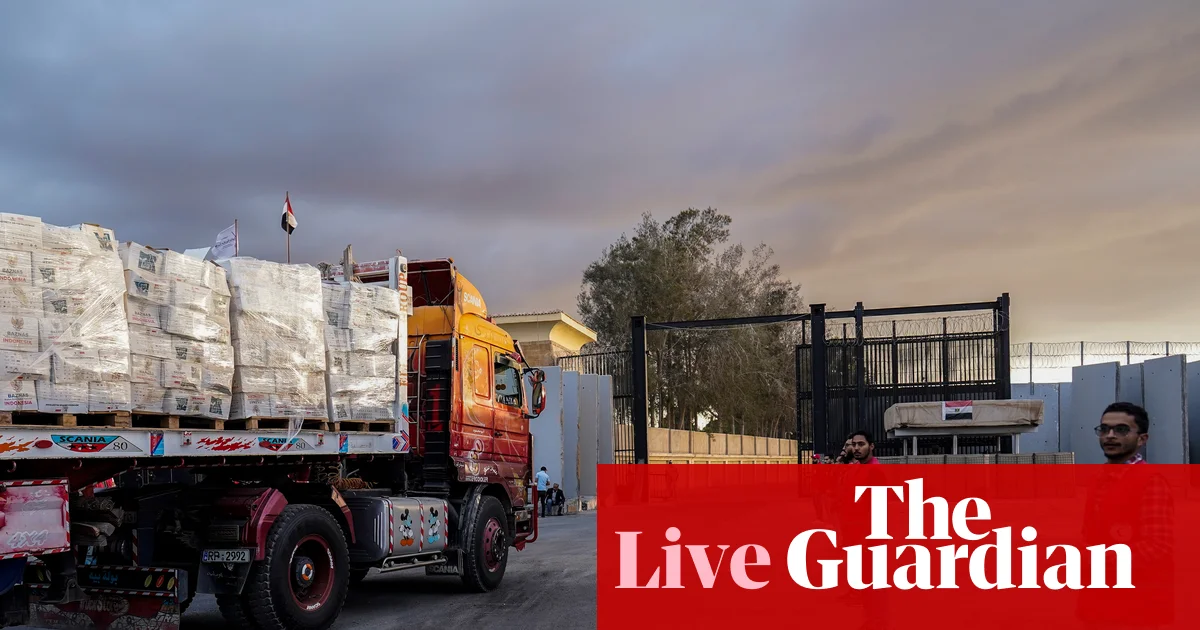

Gaza Ceasefire Update: Aid Flows Increase as Hamas Agrees to Release Israeli Hostages Monday Morning

In an unexpected turn of events, Hamas has confirmed it will commence the release of Israeli hostages held in Gaza early Monday morning, marking a significant moment amidst ongoing regional tensions. This development comes as part of a broader ceasefire agreement brokered by a coalition of influential international actors, including the United States, Qatar, Egypt, and Turkey. According to Hamas officials, the prisoner exchange will see the release of twenty Israeli captives in exchange for nearly 2,000 Palestinian prisoners, signaling a potential suspension of hostilities that have lasted for over two years.

The agreement, which Israel’s military claims to have fulfilled its first phase of withdrawal from Gaza, reflects a critical *turning point* in an otherwise tumultuous landscape. Under the ceasefire’s terms, Hamas has until noon Monday local time to release the captives, an act that scholars and analysts see as both a humanitarian step and a calculated political maneuver. This pause in violence is being watched intensely by global leaders and international organizations, with the United Nations warning that such pauses carry the risk of temporary relief but must be followed by sustainable peace efforts. The upcoming summit in Sharm el-Sheikh, chaired by Donald Trump and Abdel Fattah al-Sisi, aims explicitly to “end the war in Gaza” and “usher in a new era of regional stability.” These diplomatic efforts underscore a geopolitical landscape where regional powers recognize that the status quo must evolve, for the sake of both nations and societies.

Amid these negotiations, humanitarian aid is beginning to surge into Gaza, which has endured catastrophic destruction and widespread starvation as a consequence of blockade and relentless Israeli strikes. Aid trucks have arrived at the Rafah border crossing with Egypt, with plans to inject approximately 600 truckloads of food and medical supplies daily — a crucial relief in a region suffering from famine and disease. As aid begins to flow, the international community assesses whether this temporary ceasefire will lead to a lasting peace or merely a respite in a broader conflict. Experts warn that such fragile agreements must be closely monitored, as history has shown that ceasefires can often be manipulated or broken, leading to renewed violence that threatens regional stability.

This fragility is further exemplified by the complex dynamics of prisoner releases, particularly involving high-profile figures like Marwan Barghouti and Ahmad Saadat. While Israel plans to release approximately 2,000 Palestinians, **Benjamin Netanyahu**’s government has refused to free Barghouti, a charismatic leader seen by many Palestinians as a future successor to Mahmoud Abbas. His continued imprisonment highlights persistent divisions and the ongoing struggle for Palestinian leadership figures who symbolize resistance and potential sovereignty. The fate of long-serving prisoners like Saadat, a leader of the Popular Front for the Liberation of Palestine, continues to be a contentious issue, reflecting the deep-rooted political and ideological splits that shape the broader conflict.

Analysts and international security experts emphasize that these developments, while momentous, do not guarantee long-term peace. Historians warn that profound geopolitical shifts hinge on decisions made in these high-stakes negotiations, which will reverberate across continents and generations. The decisions taken now will determine whether the region steps toward sustainable peace or plunges deeper into chaos. The unseen shadows of past failures and the weight of unresolved grievances threaten to undo fragile agreements, as history reminds us that in the grand theatre of Middle East diplomacy, the echoes of recent decisions forge the contours of the future — a future still shrouded in uncertainty, where the echoes of past conflicts continue to define the lives of millions. As the world’s eyes turn toward Gaza and the Red Sea resort of Sharm el-Sheikh, the true extent of history’s next chapter remains unwritten, waiting to be shaped in the crucible of diplomacy or chaos.

Social Media Auto Publish Powered By : XYZScripts.com


