Matox News

Truth Over Trends, always!

Labor pushes for watchdog review on politicians' travel perks amid mounting criticism
Labor pushes for watchdog review on politicians’ travel perks amid mounting criticism

In recent weeks, Australia has been embroiled in a damaging political scandal, revealing a widening gap between the privileged practices of parliamentarians and the expectations of the public. The controversy centers around the extensive travel entitlements claimed by members of parliament, including lavish claims for family travel, which have sparked widespread criticism. The Independent Parliamentary Expenses Authority (IPEA) is now under pressure to broaden its review, assessing whether systemic reform is necessary and what the long-term geopolitical implications might be for Australia’s global image. These revelations come at a crucial juncture for Prime Minister Anthony Albanese, who faces mounting domestic and international scrutiny over governance transparency and accountability.

The scandal underscores how domestic political decisions can echo far beyond national borders. While the immediate focus is on parliamentary expenses, international organizations and security analysts observe deeper ramifications. Historians warn that unchecked entitlements, especially those perceived as out of touch with societal norms, threaten the legitimacy of political institutions. Australia’s reputation as a responsible member of the international community could suffer if such scandals persist, undermining diplomatic efforts and foreign investments that rely on predictable, transparent governance. The controversial practice of claiming extensive benefits for family travel—such as claiming nine business class airfares annually for spouses—exposes a broader issue of political privilege, which critics argue fosters public disillusionment and fuels anti-establishment sentiment.

Across the Pacific, similar debates unfold in United States and European democracies, where transparency reforms are being tested against entrenched political interests. International watchdogs and United Nations officials closely monitor these developments, emphasizing that how nations handle internal accountability directly shapes their geopolitical standing. The International Institute for Democracy and Electoral Assistance (IDEA) has warned that scandals like this can undermine citizens’ trust globally, leading to increased polarization and unrest. As political leaders in Australia call for legislative reforms—such as capping travel claims and tightening oversight—the decision now weighs heavily on the country’s reputation for upholding democratic standards and fiscal responsibility. This internal upheaval is a test of whether political elites can reconcile privilege with their mandate to serve the public good.

As Australia grapples with the fallout, the deeper question emerges: how do these decisions ripple through international relations? The ongoing crisis not only affects domestic societal cohesion but also casts a shadow over Australia’s diplomatic relationships, especially with strategic partners and trading blocs that prioritize good governance. The unfolding narrative highlights a pivotal moment in world history—one where internal integrity can dictate a nation’s influence on the global stage. With opposition leader Sussan Ley and government figures engaged in heated debates, history seems poised to record whether this crisis becomes a catalyst for meaningful reform or an enduring stain on the nation’s reputation. As the world watches, the weight of history presses heavily on the shoulders of Australia’s political class — a mirror reflecting the fragile balance between privilege and responsibility in an era of mounting global uncertainty.
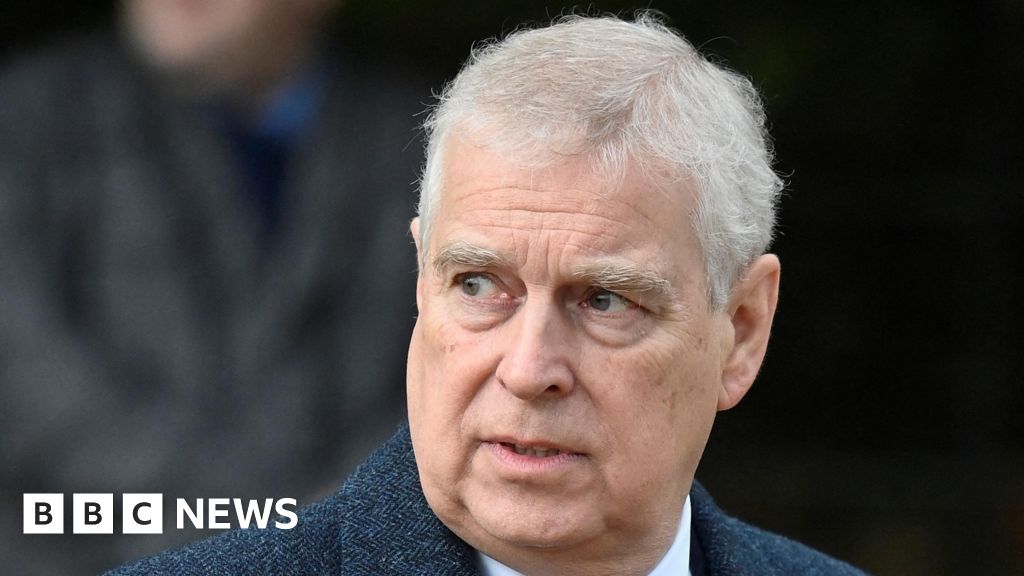
Prince Andrew steps back from Duke of York title amid mounting scrutiny

In recent weeks, the British monarchy has endured a turbulent chapter that underscores the enduring significance of cultural tradition as both a reflection and a unifying force within society. Prince Andrew’s decision to relinquish all royal titles, including the Duke of York, amidst persistent scandal and moral scrutiny, echoes a broader narrative of decline and adaptation that has characterized royal institutions across history. While critics may hastily dismiss this as a mere crisis of individual morality, it profoundly illuminates how culture shapes identity and societal cohesion. As Ortega y Gasset observed, societies are not merely collections of individuals but living organisms whose collective spirit sustains its vitality through shared symbols, values, and rituals. The monarchy, historically a custodian of tradition, now finds itself at a crossroads where the erosion of aristocratic privilege confronts a need for renewal rooted in and sustained by cultural continuity.

The controversy surrounding Prince Andrew is not simply a scandal but a lens into the shifting moral landscapes that challenge the authoritarian-prescriptive era of the past. His associations with Jeffrey Epstein and subsequent allegations have dragged into the light uncomfortable truths about privilege, power, and the perils of a world disconnected from the ordinary citizen’s moral compass. As Tocqueville warned, democracy’s strength lies in its capacity to hold institutions accountable, ensuring that a new form of civic virtue replaces aristocratic immunity. The prince’s decision to step down, therefore, is a symbolic gesture—a recognition that the fabric of societal trust must be woven anew, with threads of responsibility, humility, and accountability. This moment reverberates beyond personal failings, calling into question the very nature of authority and the ethical foundations upon which modern societies are built.

Culture, as Chesterton championed, acts as a “moral space”—a repository of memory, a prophecy of hopes. The Royal Family’s evolution in the midst of scandal underscores the vital role of tradition as both a safeguard and a force of renewal. As society’s guardians, cultural icons and institutions must adapt without losing sight of their vital role in shaping collective identity. The monarchy’s present trial reveals that the future of tradition depends on its ability to remain rooted in the moral truths of the past while daring to confront the complexities of today. In this tension between memory and prophecy, culture becomes a dynamic dialogue—an ongoing act of storytelling that sustains the soul of a nation. As T.S. Eliot once said, “The historical sense involves a perception, not only of the pastness of the past, but of its presence.” The history of the monarchy—the continuity through upheaval and moral challenge—serves as a mirror reflecting that the soul of a society is both its memory and its prophecy.

In the final analysis, the narrative is not merely about titles or scandals but about the enduring power of culture to define who we are and who we aspire to be. The royal upheaval signifies more than a personal fall—it symbolizes a society’s relentless quest for authenticity, moral integrity, and rootedness amidst changing tides. Culture remains the language through which a community negotiates its identity, negotiates its ideals, and projects its hopes into the horizon. It is both the memory that sustains us and the prophecy that beckons us forward, a testament to humanity’s eternal dance between memory’s rootedness and prophecy’s ascent—an enduring testament that the heart of civilization beats strongest where history and hope intertwine.

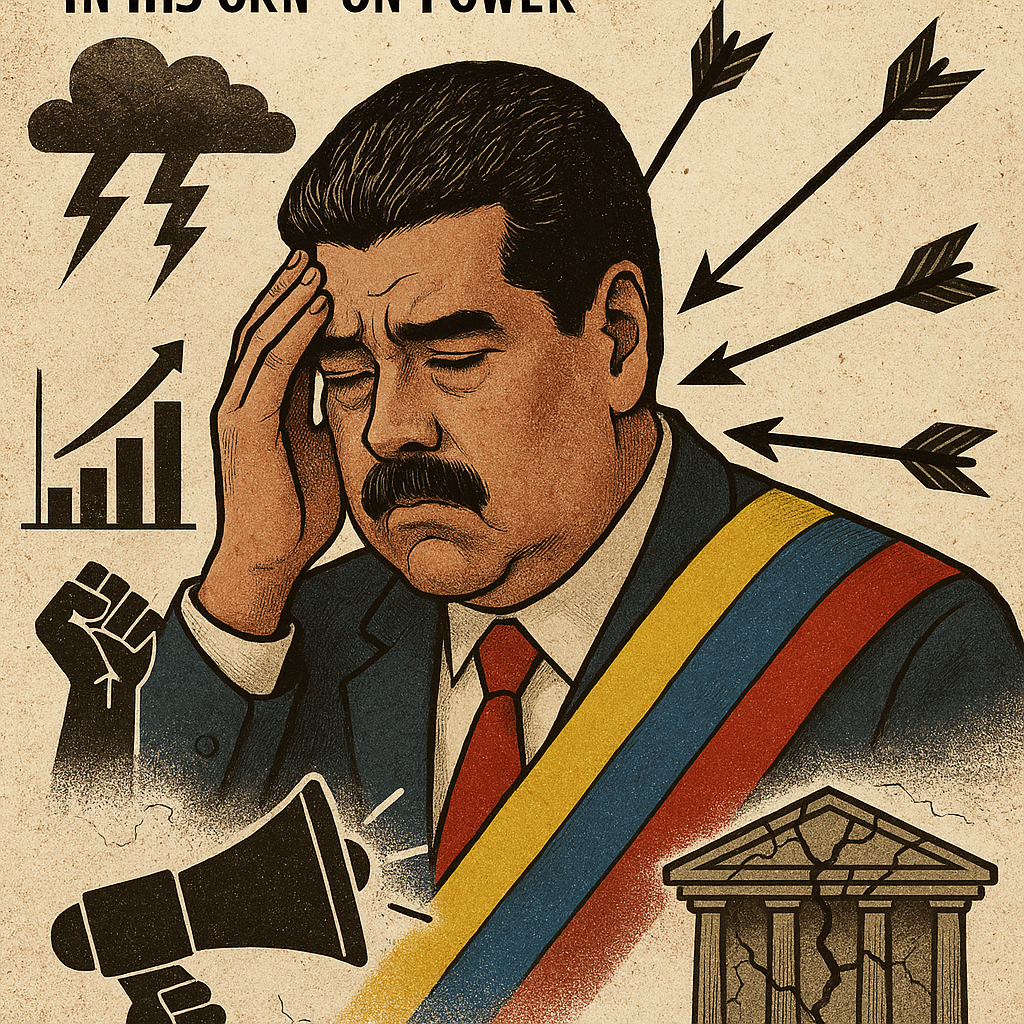
Nicolas Maduro faces mounting challenges in his grip on power

Within the tumultuous landscape of Latin American politics, Venezuela’s President, Nicolás Maduro, faces a critical juncture emblematic of the broader crisis threatening the very fabric of democratic legitimacy. Once heralded by some as a champion of socialist ideals, Maduro now finds himself entangled in a relentless power struggle that echoes the classic conflicts between authoritarian resilience and revolutionary resurgence. The whispers of international condemnation, combined with growing domestic unrest, suggest that Maduro is increasingly running out of options, with each decision echoing deeper into the nation’s destiny.

Maduro’s recent measures signal a potential shift that many political analysts see as an attempt to consolidate power amidst mounting challenges. The decision to tighten control over opposition-led institutions, coupled with crackdowns on dissent, mirrors historical tactics used by populist regimes seeking to strengthen the grip on the levers of power. As constitutional experts dissect these moves, parallels arise with regimes of the past that prioritized centralized authority over democratic accountability. The question remains: are these reforms defensive acts designed to preserve Maduro’s tenure, or are they the harbingers of an irreversible slide into authoritarianism?

Furthermore, the socio-economic fallout of these power struggles extends far beyond Caracas. The Venezuelan people, caught in a relentless struggle for survival, are often seen as pawns in a grand political chess game. The decisions made in the palace corridors—whether to hold new elections, amend the constitution, or suppress opposition voices—directly shape the life chances of millions. This reflects an age-old truth in political theory: where power resides, so too does the capacity to shape societal destiny. As the regime tightens its grip, it raises a fundamental question rooted in historical parallels — will the nation’s sovereignty be dictated by the ambitions of a solitary leader, or will it ultimately pivot back to the sovereignty of the people?

As the global community observes, the internal fractures within Venezuela serve as a stark reminder of how power struggles define history’s course. Whether Maduro manages to prolong his hold on power or succumbs to internal dissent and external pressure, the unfolding crisis underscores a timeless truth: politics is the arena where the fate of nations is decided, and where the future is written with each decision made in the corridors of power. With each passing day, Maduro’s dwindling options reveal that in the theater of sovereignty, the stage is set for either resurgence or ruin—only history can truly reveal the scripts yet to be enacted.

Social Media Auto Publish Powered By : XYZScripts.com