Matox News

Truth Over Trends, always!

Pritzker warns of Trump sending National Guard to Chicago amid shooting incident at border patrol—Youth voice demands action

Unrest and militarization escalate within United States: A nation at a crossroads

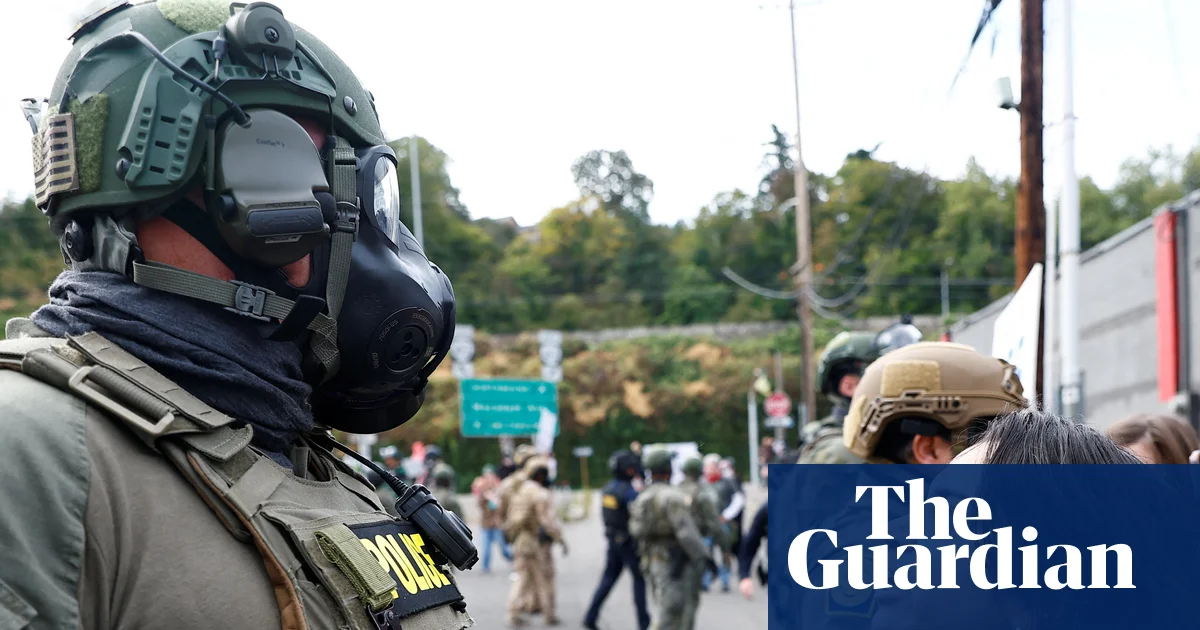
The recent decision by President Donald Trump to deploy over 300 federal National Guard troops in Illinois amidst mounting internal conflicts marks a pivotal moment in the history of American sovereignty and civil liberties. This move, announced by Illinois governor JB Pritzker, has ignited a fierce political debate, characterized by allegations of overreach and threats to fundamental constitutional principles. Pritzker’s vehement opposition underscores a broader rift within the country, pitting federal authority against local governance and civil rights.

As the Trump administration intensifies its immigration enforcement, with ICE agents conducting aggressive operations across Chicago, the urban unrest appears to be more than a routine law enforcement campaign. The recent deadly shooting of a woman by federal agents—initially claimed to be *defensive*—raises serious questions about the escalation tactics employed, especially as the woman’s name reportedly appeared in a threat bulletin against ICE. Historians warn that such incidents reflect a dangerous shift toward militarized domestic policing, reminiscent of authoritarian states more than a democratic republic. “This is a turning point where the use of military force within the U.S. is increasingly normalized,” said Dr. Annette Morgan, a political analyst specializing in civil-military relations.

Meanwhile, high-ranking officials like Kristi Noem and Gregory Bovino have announced bolstered troop deployments, framing federal intervention as necessary to control alleged surges in local violence and disorder. Yet, critics argue that much of this narrative is inflated or outright false, aiming to justify an aggressive federal footprint within American cities. The deployment of troops to cities such as Los Angeles and Washington D.C. signals a troubling trend: the encroachment of military authority into realms traditionally reserved for civilian law enforcement. Such actions threaten the very fabric of American constitutional democracy and may set dangerous precedents for future administrations.

Geopolitical Impact and Future Consequences

The international community watches these developments with concern. Many analysts, including top officials at NATO and the United Nations, have issued cautious statements emphasizing respect for national sovereignty and civil liberties. However, China and Russia are observing with strategic interest, eager to exploit perceived internal chaos to undermine the United States’ global influence. The continuous militarization of domestic affairs could weaken America’s image as a beacon of freedom worldwide, transforming its internal conflicts into a potential pretext for external interference or sanctions.

Furthermore, historians warn that this internal strife could have far-reaching consequences for American society. If unchecked, the increased deployment of military force against civilians could erode trust in democratic institutions and pave the way for a government comfortable with authoritarian methods. Such a trajectory risks transforming the United States into a nation where protests are met with suppression rather than dialogue—a dangerous slide toward internal instability that threatens to reshape the global order.

The Weight of History and Humanity’s Unfolding Future

As the United States faces this tumultuous chapter, the weight of history presses heavily on the shoulders of its citizens. Each decision to deploy military force on American soil echoes with echoes from darker chapters—when nations descended into chaos and lost sight of the principles that once made them great. The world watches in tense anticipation, aware that the choices made today may determine the destiny of generations to come. Will the United States reinforce its founding ideals of liberty and justice, or will it succumb to a new era of internal conflict and military dominance? Only time will unveil the next chapter in this unfolding story of power, resistance, and the enduring struggle for a free society.

Embracing Cultural Roots: The Key to National Identity

In an era characterized by relentless globalization and technological upheaval, the significance of cultural roots as the foundation of national identity cannot be overstated. Critics argue that the rapid spread of Western ideals and the homogenization of cultures threaten the unique traditions that define a nation’s soul. Historically, nations have thrived by nurturing their distinct cultural narratives—whether it be the resilience of Japan’s samurai ethos or the enduring spirit of European renaissance. These cultural elements serve not merely as relics of the past but as living conduits of collective memory, shaping a nation’s worldview and guiding its future trajectory.

Economists such as George Friedman and Samuel Huntington emphasize that a strong national identity rooted in cultural heritage fosters social cohesion and resilience in times of crisis. When citizens share a common understanding of their history, values, and traditions, they are more inclined to unite against external threats and internal divisions. The erosion of this shared cultural fabric, critics warn, paves the way for fragmentation and a loss of sovereignty. As Huntington suggested in his seminal work The Clash of Civilizations, the future geopolitical order depends heavily on how well nations preserve their unique cultural identities amidst the external forces seeking to erase them.

Reclaiming cultural roots does not imply a retreat into insularity, but rather an empowering recognition of diversity within a shared national narrative. It involves championing traditional language, customs, and histories as vital components that shape a sense of purpose and belonging. Movements advocating for the preservation of indigenous languages, regional histories, and cultural practices highlight a collective desire to resist cultural dilution. Furthermore, embracing one’s heritage fosters a youthful sense of pride and authenticity, crucial for inspiring future generations to carry forward their cultural legacy. Such efforts often generate innovative cultural rebirths that bridge old traditions with modern realities, thus enriching the national tapestry rather than impoverishing it.

Amidst these developments, policymakers and cultural leaders must acknowledge that preservation and innovation are not mutually exclusive. The challenge lies in cultivating a balanced approach where cultural roots are celebrated and revitalized without becoming an obstacle to progress. As historian Yuval Noah Harari notes, humanity’s greatest achievements have often sprung from a profound understanding of shared stories and myths—a testament to the enduring power of cultural narratives. When a nation recognizes its cultural origins as a source of strength rather than chain, it embarks on a journey towards a resilient, authentic identity that can weather the storms of modern change. It is within this sacred act of remembrance and renewal that the true essence of a nation endures, whispering through the ages as a timeless echo—a reminder that, in embracing our roots, we embrace the very foundations upon which our future is built.”

Rising Stars Shine: Youth Athletes Break Records at National Championships

Quarterbacks in Focus: A Look at the Future of College Football

As the college football season progresses, fans and analysts have begun to assess the performance and potential of key signal-callers, including Arch Manning and Beau Pribula. Both quarterbacks are drawing significant attention, not just for their schools but for their transformative potential in the sport. With the future of college football increasingly dependent on the prowess of its quarterbacks, this season offers a glimpse into the next generation of stars.

Arch Manning, the highly-touted recruit and grandson of legendary quarterback Archie Manning, serves as a focal point in conversations surrounding quarterback talent in college football. As he steps onto the field, fans look for the poise and dynamics that will shape his career. In his recent game against Texas A&M, he exhibited exceptional vision, completing 25 out of 34 passes for a whopping 320 yards. His decisive touchdown throws underscored his potential to lead his team through tough competition. As commentator Tim Tebow puts it, “Manning carries the weight of expectations, but he’s shown he can rise to the occasion.”

On the other hand, Beau Pribula of Penn State continues to show promise as well. His recent performance against Ohio State demonstrated his agility and ability to adapt under pressure. Pribula connected on 18 of 27 passes for 245 yards, which helped keep his team’s spirits high despite the challenging matchup. Coach James Franklin praised his quarterback’s growth, stating, “Beau has the skills to lead this team, and he’s proving it week after week.”

In summarizing the standout performances, here are some key takeaways:

  • Arch Manning showcased an outstanding ability to read defenses.
  • Beau Pribula demonstrated adaptability and poise under pressure.
  • Both quarterbacks are shaping up to be pivotal figures for their respective teams.

As the season unfolds, both Manning and Pribula stand as prime examples of the young talent transforming college football. Their journeys highlight the sport’s essence, illustrating that it serves as a unifying force beyond mere scores and statistics. Fans from across the nation will rally behind these young athletes, eager to see how their respective stories will contribute to the rich tapestry of college football. As each game adds to their narratives, one thing remains clear: the future of football is bright, and it will be shaped by these emerging stars.

Source link

StrongDefense: Ensuring National Security in a Changing World

StrongDefense: Ensuring National Security in a Changing World

As global geopolitics shift with unprecedented rapidity, the imperative for nations to adopt a robust and adaptable security posture has never been more critical. Critics argue that the fabric of traditional defense strategies, rooted in Cold War paradigms, no longer suffices against modern threats such as cyber warfare, transnational terrorism, and hybrid conflicts. These emerging dangers demand not only increased military readiness but also a strategic recalibration—one that balances technological innovation with diplomatic resilience. Historian Jack Levy reminds us that security is an evolving concept, shaped by the complexities of our interconnected age.

Supporters of a strong defense policy emphasize that investments in cutting-edge technology—artificial intelligence, cyber capabilities, and advanced missile defense systems—are vital to safeguarding sovereignty. They point to recent developments that showcase the importance of a proactive stance: increased cyber-attacks on critical infrastructure, illegal maritime incursions, and state-sponsored misinformation campaigns undermine stability and threaten the very foundations of national identity. Analysts suggest that nations must bolster their defense budgets and foster innovation ecosystems that can respond to these multifaceted threats promptly. For instance, military strategists like General Mark Milley have articulated the necessity of integrating new technological domains into operational doctrines, underscoring that dominance in cyberspace and space is now as crucial as traditional land, sea, and air capabilities.

Furthermore, multilateral alliances and diplomatic partnerships play an essential role in amplifying a nation’s security. Critics argue that unilateral approaches may offer quick wins but risk isolating friendly nations and diminishing collective resilience. Conversely, collaborative frameworks—such as NATO—serve as force multipliers, providing strategic intelligence, shared resources, and political backing when confronting common adversaries. This interconnected approach recognizes that in a world of systemic threats, no nation exists in isolation; sovereignty involves an active engagement with allies committed to mutual defense and prosperity. As retired General David Petraeus underscores, “strong alliances are the bedrock of modern security.”

Yet, amidst a rapidly changing landscape, the core principle remains unaltered: the need to equip future generations with both the means and the mindset to navigate relentless threats. Investing in education, technological research, and strategic foresight ensures a resilient society capable of adapting to unforeseen challenges. Critics argue that complacency or underfunding could render nations vulnerable, allowing adversaries to exploit gaps in security. As geopolitical analyst George Friedman suggests, emerging conflicts will not resemble past confrontations but will instead test the limits of innovation and resolve. The challenge lies not only in defending borders but in fostering a worldview that recognizes security as an ongoing, dynamic pursuit—an enduring vigil that must be maintained with unwavering resolve.

Ultimately, the weight of securing a nation’s future rests on a delicate balance of strength, wisdom, and foresight. In the crucible of uncertain times, the call for a StrongDefense becomes both a shield and a beacon—a testament to the enduring human spirit to protect what is precious. As the horizon darkens with new challenges, the question persists: will we muster the courage and ingenuity to forge a fortress resilient enough to withstand the tides of change? Or will the echoes of complacency drown out the call for vigilance, leaving behind a legacy of vulnerability? In this relentless pursuit of security, history reminds us that true strength is rooted not only in firepower but in the indomitable will to preserve freedom against all odds—a future forged in the crucible of resolve and sacrifice, where the spirit of a nation stands unbowed amidst the storm.

Rising Stars Shine as Teen Athletes Break Records at National Championships

Tyreek Hill’s Recovery: A Game-Changer for the Dolphins

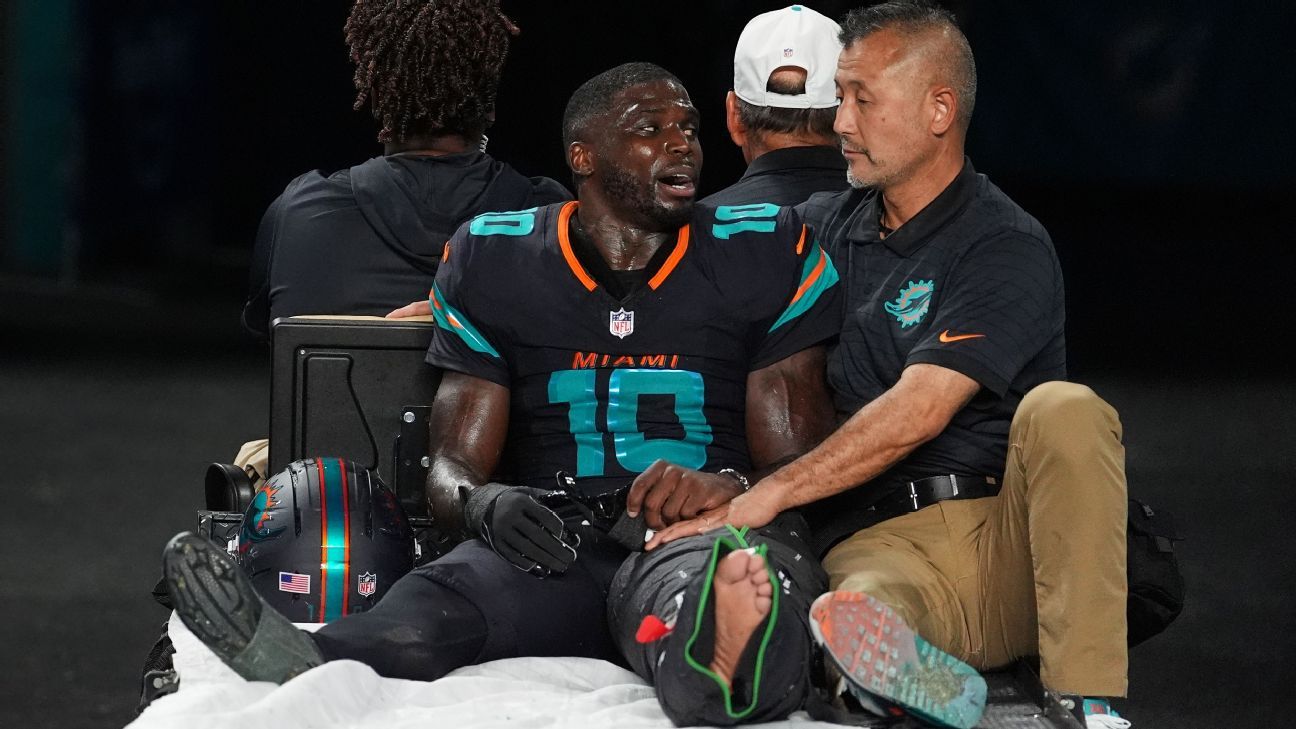
In a significant turn of events for the Miami Dolphins, star wide receiver Tyreek Hill will not undergo another surgery following a major procedure to address his dislocated left knee and multiple torn ligaments. Agent Drew Rosenhaus confirmed the news to ESPN’s Adam Schefter, bringing a sigh of relief to fans and teammates alike as the Dolphins gear up for a crucial phase in their season.

Details of the Procedure

Hill’s surgery, which took place this past Tuesday, was deemed successful, significantly reducing any fears of prolonged recovery time. This announcement marks a pivotal moment for the Dolphins, as Hill has been instrumental in their offensive strategy, bringing not only his electrifying speed but also a veteran presence that cannot be overstated.

What This Means for Miami

The implications of Hill’s recovery are profound. With his return imminent, fans can expect enhanced offensive dynamics as the Dolphins look to strengthen their playoff positioning. Coach Mike McDaniel stated, “Tyreek is a leader both on and off the field. His resilience inspires everyone in the locker room.” The necessity to rally around a healthy player of Hill’s caliber could be the catalyst for a late-season surge.

Match Highlights and Takeaways

  • Hill’s Impact: Averaged 95.5 receiving yards per game prior to injury.
  • Upcoming Matchups: Dolphins set to face key rivals in upcoming weeks.
  • Playoff Aspirations: Team currently ranks within striking distance of postseason contention.

In the grand scheme, Hill’s journey symbolizes more than just a personal battle against injury; it underscores the resilience of athletes and the indomitable spirit of sports. Every game played and every yard gained fosters a sense of belonging and triumph, uniting fans and players alike. As the Dolphins look ahead, Hill’s return not only bolsters their roster but also rekindles the fire of hope and community, proving once again that sports transcend the confines of the scoreboard, embodying a powerful narrative of perseverance, unity, and triumph over adversity.

Source link

Rising Stars Shine as Young Athletes Dominate National Championships

Gridders Rise and Fall: Cincinnati and Denver in Focus

In a captivating clash that echoed through the sports world, the Cincinnati Bengals faced the Denver Broncos amid a backdrop of fluctuating fortunes. The Bengals, reeling from the injury to their star quarterback, Joe Burrow, have now suffered two consecutive losses, marking a significant shift in their early-season aspirations. Conversely, the Broncos managed to halt their two-game losing streak, with their recent victory shining a glimmer of hope in an otherwise challenging campaign.

The impact of Burrow’s absence cannot be overstated. Coach Zac Taylor acknowledged the sheer weight of the quarterback’s leadership during a press conference, stating, “We’re in a tough spot without Burrow. His presence on the field changes everything.” The team’s first two losses since his injury highlighted how deeply the Bengals are tied to their quarterback’s performance. Cincinnati’s offense struggled to find rhythm, leading to crucial turnovers and missed opportunities that culminated in defeat.

On the other side, the Broncos have weathered the storm of inconsistency. Under the guidance of Coach Nathaniel Hackett, the team turned their two-game skid into a notable victory, showcasing resilience and determination. As commentator Joe Buck noted, “The Broncos needed this win not just for the standings, but for morale.” Key players pulled through, with the defense asserting itself in a manner reminiscent of their glory days, providing the necessary support for a solid offensive push.

  • Quarterback Performance: The Broncos’ quarterback threw for two touchdowns, echoing a sense of renewed confidence.
  • Defense Stats: Cincinnati’s defense, once a stronghold, allowed too many points, underscoring the effects of Burrow’s absence.
  • Coaching Strategies: Both coaches emphasized adjustments made, but only one could walk away victorious.

As the season progresses, this juxtaposition of triumph and turmoil speaks volumes about the nature of professional sports. Beyond mere numbers and wins, the heart of football lies in the bonds forged on and off the field. The exhilarating highs and devastating lows create a sense of unity among fans and players alike, reinforcing that the love for the game transcends any individual score. Sports, at their core, are a tapestry of shared experiences, rallying communities in a quest for greatness, and reminding us all why we’re drawn to the thrill of the gridiron.

Source link

Army deployed to secure Etosha National Park amid rising threats

Namibia’s Etosha National Park Fires: A Critical Test for Sovereign Response and Global Conservation

The recent devastating wildfire that engulfed a third of Namibia’s renowned Etosha National Park marks a significant moment in Africa’s ongoing battle to preserve its natural heritage amid mounting environmental challenges. According to the country’s environment minister, Indeleni Daniel, the fire has been “now contained”, but the ramifications of this natural catastrophe underscore the fragile balance between ecological conservation and geopolitical stability. This incident has ignited international attention, highlighting the role of national sovereignty in addressing environmental crises that transcend local borders.

Historically, Etosha has been a pillar of conservation, home to critical species such as the critically endangered black rhino and an array of migratory birds. The fire, which spread for more than a week across approximately 22,935 square kilometers, has not only devastated vital wildlife habitats but also threatened the socio-economic backbone of Namibia’s tourism industry. With some 200,000 visitors annually, the park’s economic significance reflects how environmental health directly influences national income and community well-being. Analysts from the United Nations Environment Programme have warned that such wildfires, exacerbated by climate change and mismanaged response strategies, could escalate into regional instability if not effectively contained.

In response to the crisis, Namibia mobilized a substantial firefighting effort, deploying helicopters and hundreds of soldiers to combat the flames. The government’s decision to send more than 500 troops highlights a shift towards a more militarized, coordinated approach to natural disaster management—a move that could serve as a precedent for other nations facing similar threats. Underlining the gravity of the situation, opposition voices, such as MP Likando Rodrick, have criticized the government’s preparedness, arguing that past responses were insufficient, and calling for more comprehensive long-term strategies to prevent future outbreaks.

The wildfire’s regional implications extend beyond Namibia’s borders, with authorities reporting that the flames have spread into bordering regions of Angola, threatening both ecosystems and local communities. This raises urgent questions about cross-border cooperation and the role of external agencies in protecting vital transnational ecosystems. As international analysts point out, the event underscores an unsettling reality: climate change is not just an environmental issue but a geopolitical challenge that tests the resilience and sovereignty of nations. The wildfire’s aftermath serves as a stark reminder that ecosystems, wildlife, and local economies are interwoven into a complex web of national identity and international diplomacy, demanding coordinated efforts that transcend borders and political differences.

As aerial imagery begins to reveal the full extent of destruction, the incident remains a potent symbol of the urgent need for adaptive, resilient environmental policies that can withstand the pressures of a warming planet. The unfolding story of Namibia’s fight against nature’s fury is a chapter still being written, but one thing remains clear: in the wake of these flames, the path toward sustainable coexistence with our environment has become more critical—and more uncertain—than ever before. The question now is whether global leadership will rise to the challenge or whether this disaster will simply serve as another mark in history’s long, tumultuous struggle between humanity and the forces of nature.

Rising Stars Shine: Teen Athletes Break Records at National Championships

Grizzlies’ Clarke Faces Procedure, Stars on the Mend

In the latest developments from the Memphis Grizzlies, forward/center Brandon Clarke is set to undergo a significant procedure aimed at resolving ongoing knee issues. This news has left fans concerned, as the Grizzlies look to fortify their roster for the upcoming season. Coach Taylor Jenkins expressed his support for Clarke, stating that the organization will be with him every step of the way during his recovery.

On a more optimistic note, both Zach Edey and Jaren Jackson Jr. are making headlines as they have been cleared to begin ramping up their basketball activities. Edey is recovering from an ankle injury, while Jackson Jr. has been battling a toe concern. This duo’s return could be pivotal, offering both skill and depth as the season approaches. Coach Jenkins noted, “Both players are integral to our plans, and their return to form will be critical in our pursuit of success.”

  • Brandon Clarke to undergo knee procedure, raising questions about depth.
  • Zach Edey and Jaren Jackson Jr. cleared for basketball activities, indicating a positive trend.
  • Coaching staff remains optimistic about the upcoming season, focusing on teamwork and resilience.

The news surrounding the Grizzlies evokes a range of emotions among fans and analysts alike. As young athletes, Clarke, Edey, and Jackson Jr. stand to benefit from the rigorous training and support extended by their coaching staff. While Clarke’s procedure poses challenges, the collaborative spirit within the locker room reinforces the idea that the team can overcome adversity. Famous commentator Jeff Van Gundy remarked, “In sports, the mental game is just as important as the physical. The Grizzlies have that mindset.”

As the Grizzlies prepare for the season ahead, sports continue to serve as a unifying force. Each player on the roster, regardless of injury or recovery, embodies the spirit of resilience and teamwork. This season will not only test their skills but also their resolve. In the grand arena of athletics, where victory is celebrated and losses are shared, it is the spirit of unity and hard work that will win the day. Let’s rally behind them, as the scoreboard is only part of the story; it is the camaraderie forged through the trials of competition that truly defines the essence of sportsmanship.

Source link

Respecting Our Roots: A Pillar for Modern National Identity

In the pursuit of progress and adaptation, societies often face the peril of losing sight of their foundational narratives. Respecting our roots is more than a nostalgic nod to history; it is a fundamental pillar for cultivating a cohesive and resilient national identity. As critics argue that globalism and rapid modernization threaten traditional values, it becomes clear that maintaining a connection to our history is essential for fostering a sense of unity rooted in shared heritage. This connection is not an impediment to growth but a framework within which sustainable progress can flourish.

National identity is deeply intertwined with cultural memory, historical landmarks, language, and collective experiences. As renowned historian Yale’s John Lewis Gaddis suggests, “A nation that forgets its past is condemned to repeat its mistakes and lose its purpose.” In essence, respecting our roots helps safeguard the values, stories, and lessons that shape societal continuity. For young generations navigating a rapidly changing world, understanding their history offers a grounding point—a lens through which to assess modern challenges. It enables them to recognize that the liberties they enjoy are often rooted in past struggles, sacrifices, and moral victories. Dismissing these connections risks creating a disjointed identity, susceptible to manipulation or apathy, which ultimately weakens the very fabric of nationhood.

Furthermore, the preservation of cultural and historical heritage strengthens national pride and social cohesion. Analysts highlight that societies with a strong sense of their foundational stories tend to have higher civic participation and resilience in times of crisis. By honoring our past, we create a collective narrative that transcends individual differences, fostering a sense of belonging and shared destiny. While critics may advocate for deconstructing traditions as a way to embrace diversity, responsible respect for our roots embraces diversity as a natural extension of a rich, storied history. It anchors new ideas within a framework of enduring principles, ensuring that progress does not become reckless or directionless.

Ultimately, the challenge is to strike a balance—embracing innovation while honoring our historical roots. As economist Thomas Sowell emphasizes, “Progress occurs best when rooted in an understanding and appreciation of earlier efforts.” This balance empowers younger generations to innovate without losing sight of the moral compass forged by their ancestors. By respecting our roots, nations invest in a durable identity capable of weathering the storms of globalization, ideological shifts, and societal upheavals. The future of any nation depends on its ability to carry its history forward—like a torch passing from hand to hand, illuminating the path through shadows of uncertainty. And as that flame flickers in the winds of change, it leaves behind an enduring legacy: the unyielding strength of a people who refuse to forget where they came from, knowing that their roots are the silent, indomitable anchors of their infinite horizon.”

Reaffirming National Identity in a Globalized World

In an era where globalization seamlessly intertwines economies, cultures, and ideologies, the resurgence of national identity emerges as both a reaction and a necessity. Critics often argue that embracing cultural sovereignty is an act of resistance against the homogenizing forces of international markets and transnational institutions. Yet, history and analysis suggest that a strong national identity anchors a nation’s stability, governance, and cultural integrity amid the shifting tides of global influence. Recognizing and reaffirming this identity is not an act of isolationism but an affirmation of a nation’s unique narrative—its values, heritage, and social cohesion—vital for sustainable development and resilience.

Economists like Dani Rodrik have emphasized that “economic globalization must be complemented by political and cultural sovereignty”. Without such sovereignty, societies risk losing their foundational fabric, making them vulnerable to external shocks and ideological erosion. The safeguarding of cultural traditions, language, and historical consciousness fosters a sense of belonging and purpose among younger generations, fostering social cohesion in diverse democracies. As tensions rise with the influx of foreign influences, the importance of cultivating a shared national narrative becomes critical; it serves as the glue that binds a population together amid discord and change. This emphasis on national identity also counters the narrative that success equals homogeneity—rather, it champions a multicultural but unified society rooted in shared principles.

Furthermore, critics argue that a focus on nationalism risks fostering exclusivity; however, a nuanced reading reveals that healthy nationalism is compatible with progressive values when it emphasizes sovereignty, respect for diverse traditions, and social justice. Historians such as Samuel P. Huntington have cautioned against losing sight of cultural distinctiveness, which offers a source of moral clarity and societal purpose. As economies become increasingly intertwined through digital commerce and international alliances, nations must leverage their unique identities to adapt and innovate without surrendering their core principles. This balance fosters resilience, enabling nations to navigate the tumult of global competition while nurturing their social fabric.

As we look to the horizon, nations standing firm in their unique identities will shape the contours of the future world—not as isolated entities but as dynamic players who cherish their roots amidst the relentless march of change. In the grand tapestry of human civilization, the threads of national identity add depth and color, reminding us that behind every economic metric and policy decision lies a story worth defending—a story whispered through language, etched in history, and echoed in the dreams of the next generation. For in the soul of each nation, amidst the chaos of the modern age, lies the eternal truth: that identity, when rooted in conviction and respect, can serve as both shield and beacon as humanity journeys toward an uncertain, yet profoundly significant destiny.

Social Media Auto Publish Powered By : XYZScripts.com