Matox News

Truth Over Trends, always!

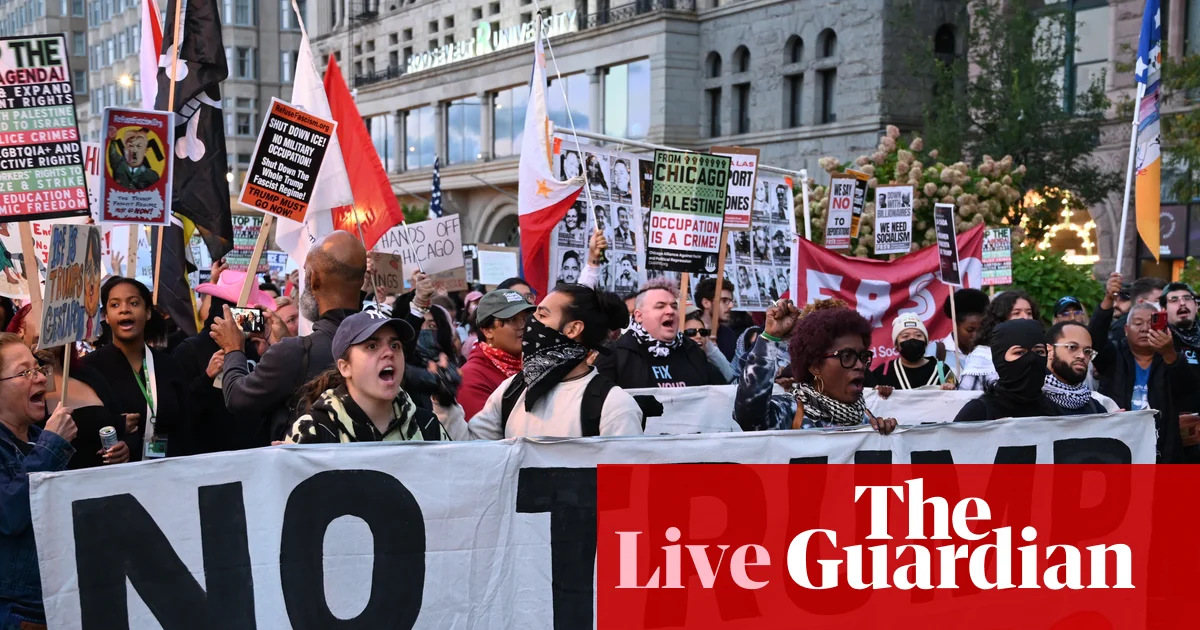
National Guard Deployed to Shield ICE and Federal Sites in Chicago — US Politics Live

Geopolitical Shifts and Domestic Turmoil: The Rising Tide of U.S. Security Interventions

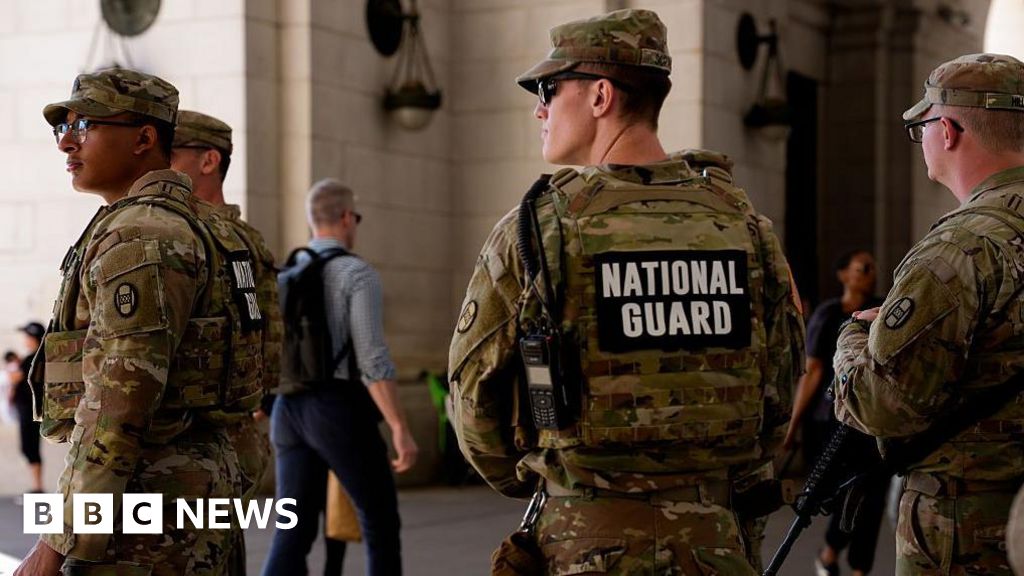
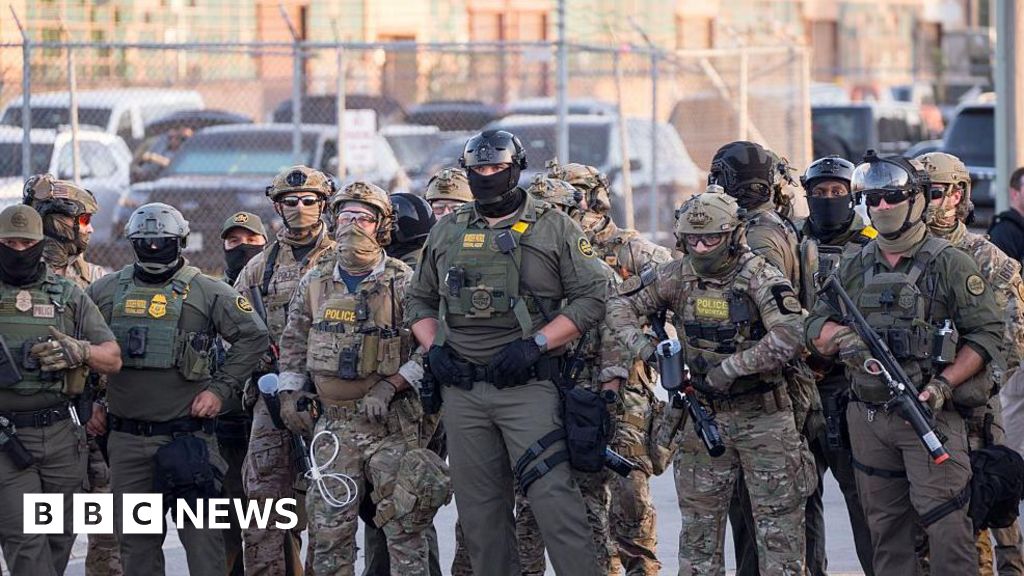
In an unprecedented move that underscores the intensifying internal divisions within the United States, recent reports reveal the deployment of National Guard troops in Chicago and Memphis, tasked with protecting federal property amid mounting violence and political unrest. The Biden administration’s decision to activate approximately 500 troops—200 from Texas and 300 from Illinois—for a 60-day operation signifies a significant escalation in the direct federal intervention in domestic affairs. This deployment, aimed at securing Immigration and Customs Enforcement (ICE) facilities and other federal assets, has ignited a fierce political debate, with critics viewing it as a troubling overreach by federal authorities, while supporters frame it as necessary for national security.

The domestic destabilization has further polarized the political landscape, with figures like former President Donald Trump calling for the imprisonment of Chicago’s mayor Brandon Johnson and Illinois Governor JB Pritzker, accusing them of outright neglect toward law enforcement officers. Trump’s rhetoric, posted on Truth Social, blamed local officials for alleged failures to safeguard ICE personnel, further politicizing what many see as an erosion of state and local autonomy. The deployment of troops despite protestations from Illinois officials raises serious question marks about federal-state relations, highlighting the widening divide in governance philosophies. Historians warn that such actions echo past moribund episodes of federal overreach, threatening the delicate balance that underpins American federalism.

On the international stage, U.S. President Donald Trump announced a “tentative deal” between Hamas and Israel aimed at halting Gaza hostilities and securing the release of prisoners. While praise poured in from Republican lawmakers celebrating a purported breakthrough in Middle Eastern peace efforts—some suggesting Trump’s candidacy for a Nobel Peace Prize—Palestinian Americans and Middle East analysts expressed deep caution. The agreement includes an Israeli withdrawal from Gaza and involves a complex prisoner exchange, but many experts underscore the fragility of such ceasefires, especially without addressing underlying grievances. The Middle East, a geopolitical cauldron, demonstrates the unpredictable consequences of American diplomatic interventions that oscillate between efforts at peace and the risk of reigniting regional conflicts.

Simultaneously, in the hemisphere, Brazilian President Luiz Inácio Lula da Silva revealed that U.S. Secretary of State Marco Rubio contacted Brazil’s foreign minister concerning tariffs—an example of U.S.-Latin America diplomatic maneuvering. Lula’s surprise at the call reflects ongoing tensions over trade policies, highlighting how U.S. economic diplomacy continues to influence Latin American affairs. As the global order faces mounting challenges—from destabilized regions in the Middle East to internal divisions in the U.S.–the ripple effects threaten to reshape alliances, trade, and stability. Historically, international analysts emphasize that these decisive moments in foreign diplomacy cast long shadows on future prospects for peace and power dynamics.

As Congress and courts across the nation grapple with questions about the legality of deploying military personnel domestically, the weight of history presses heavily on the unfolding events. The deployment in Chicago and Memphis signifies a pivotal point—either a step toward restoring order or a warning sign of descending chaos. The decisions made today will reverberate for generations, determining whether the United States remains a nation rooted in constitutional principles or plunges into a conflict fueled by internal discord and external entanglements. The pages of history are turning, and what emerges on the other side will define the destiny of a nation caught between the weight of its ideals and the harsh realities of a fractured society.

Somalia adopts Swahili in schools to strengthen cultural ties and boost national pride

In a move that highlights a broader shift toward regional integration and cultural identity, Somalia has announced plans to incorporate Swahili into its national curriculum. This development unfolds amid a backdrop of decades of conflict, social fragmentation, and evolving regional dynamics. Historically, Somalia’s education system has been dominated by English at higher levels and Arabic at Islamic schools, reflecting colonial and religious influences. The decision to emphasize Swahili, the lingua franca of East Africa, signals a recognition that language is power—an asset for families, teachers, and communities seeking to rebuild trust, expand economic opportunities, and forge regional bonds.

  • The adoption of Swahili aims to foster regional integration, making Somalia more connected with its East African neighbors and facilitating trade, diplomacy, and education exchanges.
  • Swahili, spoken by over 200 million people, is among the world’s top ten most spoken languages, representing a significant cultural and linguistic bridge for Somalia’s youth and working families.
  • Increased use of Swahili is already evident along Somalia’s southern coast and among refugees in Kenya, many of whom learned the language as part of their adaptation after fleeing violence.

This cultural shift underscores a profound demographic and social transformation. Decades of civil war, which erupted in 1991, have led to social dislocation and an erosion of traditional authority, forcing communities—and especially the youth—to adapt in unpredictable ways. The proliferation of Swahili in everyday life, particularly among those who have crossed borders or served in regional peacekeeping missions, exemplifies how social bonds are evolving outside conventional national boundaries. Leaders like President Hassan Sheikh Mohamud emphasize that cultivating Swahili at academic institutions—especially at the Somali National University—will promote regional cooperation and integrate Somalia’s economy more closely with East Africa’s emerging markets.

Critics and social commentators warn that such rapid cultural shifts could ripple through families and societal structures, challenging long-held identities rooted in language and religion. As Historians note, language is often intertwined with cultural sovereignty; thus, the push to prioritize Swahili may provoke tensions among those who cling to Arabic or English as symbols of religious and colonial heritage. However, proponents argue that this multilingual approach could foster a new generation of citizens equipped to navigate a multi-lingual world—one where economic empowerment and social cohesion depend on linguistic adaptability. Education Minister Farah Sheikh Abdulkadir envisions Swahili replacing English as the dominant language of trade and learning, a move seen as both pragmatic and strategic.

Ultimately, how families, schools, and communities adapt in the coming years will determine whether this linguistic pivot bolsters national unity or deepens cultural fissures. It is a testament to society’s ongoing battle between preserving identity and embracing progress—a confrontation familiar across many nations shaping their destinies amidst modern global challenges. As the sun sets over Mogadishu and a new chapter begins, society stands at a crossroads: will it forge a resilient, inclusive future by harnessing the power of language, or will it find itself divided by the echoes of a past reluctant to fade? In this fragile moment, society’s resilience lies in its ability to envision transformation, not just as empty rhetoric but as a tangible hope—an enduring testament to the human spirit’s capacity to reinvent itself amid chaos and change.

Green groups slam move to weaken protections for English national parks

In a move that has ignited fierce debate across the United Kingdom and raised concerns among environmentalists worldwide, the government is considering revisions to planning laws that could significantly weaken protections for iconic national parks such as Dartmoor and the Lake District. This proposed shift, driven by the Treasury and championed by Chancellor Rachel Reeves, aims to facilitate the construction of 1.5 million new homes and major infrastructure projects, purportedly to plug a £30 billion fiscal gap. However, critics warn that this decision is a “kneejerk bid for growth” that threatens the very essence of the natural heritage cherished by millions and has far-reaching geopolitical impact beyond Britain’s borders.

Originally established by the postwar Labour government under Clement Attlee in 1949, national parks in the UK were designed to conserve natural beauty, wildlife, and cultural heritage while promoting access and recreation. Yet, recent governmental discussions threaten to upend this legacy. A key change being proposed would remove a duty that mandates public authorities to “seek to further” environmental and cultural aims within these protected areas. Critics, including prominent environmental organizations like the RSPB and the Wildlife Trusts, argue that the move is not evidence-based and will accelerate environmental degradation, undermining decades of conservation efforts.

The controversy underscores a broader, global concern: how economic pressure often trumps environmental stewardship. Historians and analysts have long noted that the deliberate creation of national parks was a conscious effort to balance economic development with the preservation of natural landscapes. Now, as international organizations like the United Nations reflect on climate and biodiversity crises, the UK’s potential rollback serves as a warning to other nations contemplating similar relaxations in environmental protections. The decision threatens to diminish Britain’s standing as a global leader in conservation, impacting international reputations and policies aimed at the biodiversity crisis.

  • The UK ranks poorly in European comparisons regarding green space sacrifice to development, with thousands of sites at risk under the new proposals.
  • Over 170 organizations, including major NGOs and conservation groups, have publicly condemned the plans, emphasizing the economic and social value of preserved landscapes, which attract millions of visitors and generate billions in revenue annually.
  • Analysts warn that sacrificing green spaces for short-term economic gains could lead to irreversible damage, affecting public health, climate resilience, and cultural heritage.

As the debate rages in Westminster, international voices caution against complacency. Renowned environmental historian Dr. Emily Howard warns that “history teaches us that once natural landscapes are sacrificed, they rarely recover.” The proposed legal amendments could serve as a precedent, emboldening other nations to prioritize economic growth over environmental integrity, further destabilizing fragile ecosystems on a global scale. The unfolding political drama emphasizes that decision-makers must grapple with a fundamental question: whether the pursuit of immediate economic benefits can justify the erosion of the very natural resources that sustain societies across generations.

The weight of history presses heavily on today’s legislators. The UK’s national parks, born from postwar recovery and a vision of national renewal, now stand at a crossroads. Will future generations inherit a legacy of preservation or a landscape scarred by shortsighted development? As the legislative clock ticks toward a critical vote, the world watches with bated breath. The outcome will not only determine the fate of these treasured lands but will also send a powerful message about the values that shape nations and societies in our tumultuous era. In this moment, history is writing itself, with each decision echoing across borders and time — a testament to the enduring struggle between progress and preservation.

Rising Stars Shine: Young Athletes Break Records at National Championships!

Florida on the Hunt for Another Cup: The Competition Heats Up

As the championship playoffs approach, the question on everyone’s mind is: Will Florida clinch the coveted Cup yet again? After a season filled with drama and exceptional talent, the Florida Panthers are positioned as strong contenders, but they will face fierce competition from teams eager to claim victory.

Head Coach Paul Maurice has successfully molded the team into a formidable force, combining seasoned veterans with young, hungry talent. Star player Aleksander Barkov has been instrumental on the ice, accumulating an impressive 38 goals and 45 assists this season. When asked about Florida’s journey, Maurice stated, “We are focused and ready. Every team in this league can present a challenge, but we believe in our talent and work ethic.”

However, the path to the Cup will not be a walk in the park. Notable challengers include the Tampa Bay Lightning, who are known for their playoff experience and tactical prowess. Coach Jon Cooper has emphasized the importance of consistent performance in crucial moments, stating, “You have to bring your A-game when it counts the most.” Additionally, the Colorado Avalanche are also a force to be reckoned with, showcasing a balanced roster fueled by young talent and veteran experience.

  • Florida has secured a league-leading 50 wins this season.
  • Key player stats: Barkov (38G, 45A), Sam Reinhart (28G, 35A).
  • Top competitors: Tampa Bay Lightning and Colorado Avalanche.

As the playoffs loom closer, fans and experts alike will be keeping a close eye on Florida’s strategy, potential adjustments, and how their teamwork will unfold. But beyond the statistics and team rivalries lies the heart of sports: a community united by a common goal. In classic fashion, the season reminds us that the power of competition transcends mere numbers on a scoreboard. It brings together diverse communities and fosters an unbreakable spirit, reminding us all that in the world of sports, sheer determination and teamwork can lead to triumphs that resonate far beyond the arena.

Source link

Why is Trump pushing to send National Guard troops into American cities?

In an era marked by growing internal unrest and a contentious political landscape, the United States finds itself embroiled in a complex debate over the deployment of the National Guard. Under the leadership of President Donald Trump, federal authorities have taken unprecedented steps to involve military reserves in domestic law enforcement, primarily citing a need to quell violence and support immigration enforcement policies. As cities like Chicago, Portland, and others become flashpoints of protest, the legal and constitutional ramifications of these actions are raising alarms far beyond American borders. Prominent judicial figures, legal analysts, and international observers are scrutinizing whether these moves threaten the stability of civil liberties and the rule of law, or are a necessary assertion of federal authority in a fractured nation.

Legal Battles and Federal Powers in Question

  • The core of the controversy lies in 10 US Code § 12406, a rarely invoked clause that grants the president the authority to federalize National Guard units in cases of invasion or rebellion. President Trump has leveraged this law multiple times, deploying troops under the guise of defending national security, yet critics argue these justifications are stretched thin. California and Oregon have already filed lawsuits challenging these deployments—California’s governor, Gavin Newsom, labeling Trump’s actions as an attempt to ‘manufacture crises.’
  • Federal judges in Oregon, including Judge Karin Immergut, have temporarily blocked Trump’s efforts, ruling that such deployments amount to the imposition of martial law, which conflicts with the constitutional framework that limits military involvement in civil matters. These legal challenges underscore the delicate balance of power between the executive and judiciary, highlighted by the fact that the Posse Comitatus Act explicitly restricts military actions on American soil.

Through these court rulings, constitutional principles and legal boundaries have been thrust into the spotlight, exposing the tension between presidential authority and states’ rights. The ongoing legal saga reflects a broader geopolitical concern: how a nation handles internal dissent can ripple through international relations, especially as other nations watch a superpower at this pivotal crossroads.

Geopolitical Impact: A Nation Divided and Under Scrutiny

The unfolding crisis in the United States carries profound geopolitical implications. As the world’s leading superpower grapples with internal unrest, allies and adversaries alike are observing closely. China and Russia have seized upon the chaos, pushing narratives that portray the U.S. as increasingly unreliable and unstable—a narrative that could undermine the global influence of the West. Meanwhile, foreign leaders and international organizations warn that a fractured America risks losing its moral authority, especially when employing military force against its own citizens.

Some analysts warn that the perception of a nation willing to deploy armed forces within its borders to suppress dissent could set a dangerous precedent, emboldening authoritarian regimes worldwide. Historians specializing in American civil-military relations have noted that these actions echo past episodes of internal crisis where constitutional insurrection was met with military intervention—an epoch-shaping moment that redefines the country’s societal fabric.

The decisions made now, whether by judicial courts or the executive branch, will irrevocably influence the geopolitical landscape. Each deployment, each court ruling, and each political statement echoes in the corridors of power across continents, shaping history and the global perception of American resolve, stability, and adherence to constitutional principles.

The Unfolding Saga: A Nation in Transition

As the legal clashes continue and the National Guard remains a contentious symbol in the political arena, the weight of history presses heavily upon the present moment. With the world watching, the very essence of what it means to uphold liberty and justice is being tested. The choice of the United States—to deploy its armed forces in times of internal chaos—will echo through generations as either a reaffirmation of constitutional order or a shadowed chapter of authoritarian overreach. The story of this ongoing crisis remains unwritten, as history’s pen continues to document a pivotal chapter—a nation caught between preserving its founding principles and confronting the turbulence of its own making.

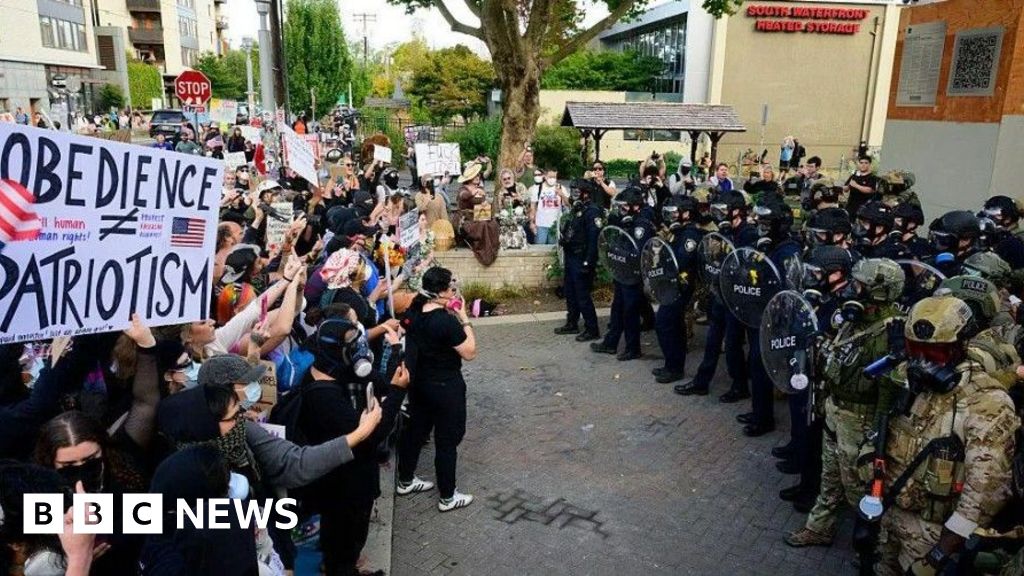
Judge blocks Trump’s attempt to send California National Guard to Portland

In an unprecedented turn of events, United States federal judiciary has stepped into a contentious battle over the deployment of National Guard troops across domestic borders, marking a significant moment in the ongoing struggle between federal authority and state sovereignty. The recent decision to temporarily block the Trump administration from dispatching troops from Texas and California to Portland, Oregon underscores the deepening cracks within American federalism. The ruling, delivered by US District Judge Karin Immergut, signals a notable restraint on executive power, emphasizing the importance of local consent and constitutional boundaries in deploying military force domestically. As tensions escalate, this judicial intervention warns of the delicate balance required when confronting chaos and unrest. It also raises crucial questions about the limits of presidential authority, especially when political disputes threaten to spiral into military occupations, altering the social fabric of cities already strained by protests and crises.

The controversy centers on the Trump administration’s effort to use the National Guard as a tool to quell protests linked to immigration enforcement and leftist activism, with Portland becoming the focal point of these efforts. The administration’s assertion that troop deployments are necessary to restore order clashes with legal interpretations that argue such actions infringe on state rights and could set dangerous precedents for federal overreach. The judge’s decision to authorize a temporary restraining order until at least October 19 reflects concern over the potential for militarized responses to inflame social tensions and undermine the sovereignty of local governments. Analysts warn that resorting to military force in urban centers risks transforming peaceful protests into battlegrounds, with lasting impacts on civil liberties and community trust.

This legal tussle reveals a broader geopolitical impact—a nation struggling to resolve internal divisions while its leaders attempt to project strength through military deployments. International organizations and historical experts have cautioned against the normalization of military interventions in American cities, warning that such actions could destabilize the domestic landscape and inspire similar strategies amidst other democracies facing unrest. The White House’s outspoken denouncement of the judge’s ruling, coupled with rhetoric portraying legal limits as “constitutional violations,” signals an alarming willingness to bypass judicial oversight in pursuit of a law-and-order agenda. Meanwhile, the proliferation of lawsuits from states like Illinois and the vocal opposition from state officials exemplify the intense federal-state power struggle, echoing historical conflicts over control, authority, and the rights of citizens.

As the situation unfolds, the spectacle of political tit-for-tat, legal battles, and security measures leaves a nation on the precipice of a pivotal chapter in its history. The decision to deploy or restrain military force amidst civil unrest will have profound and lasting consequences—not only for America’s social order but also for its global image. Today’s internal conflicts threaten to redefine the boundaries of power between state and federal authorities, shaping the course of democracy itself. The weight of history presses heavily on this moment, as the world watches from afar—will the United States uphold its founding principles or succumb to a new era of militarized governance? Only time will tell, but one thing remains certain: the unfolding saga is a stark reminder that the true battleground lies not only in the streets but also in the very fabric of national sovereignty and the enduring quest for constitutional justice.

Future Stars Shine: High School Athletes Make Waves in National Championships

From Disappointment to Dominance: L.A.’s New Closer Finds October Glory

The postseason is a time for redemption, and for the Los Angeles Dodgers, their new ninth-inning sensation epitomizes that narrative. After a disastrous MLB debut earlier in the season, this young arm has catalyzed the team’s playoff surge, leaving fans and analysts alike in awe of his transformation. What sparked this remarkable turnaround? A meticulous reflection on his mechanics and the mental fortitude that comes with the pressure of October baseball.

Much of his resurgence can be credited to pitching coach Rick Honeycutt, who emphasized finer details in the rookie’s delivery. “It’s not just about throwing hard,” Coach Honeycutt noted. “It’s about execution and confidence.” This advice has clearly resonated. Since the regular season wrapped up, the closer’s fastball has seen a notable uptick in velocity, reaching up to 99 mph, complemented by a devastating slider that seems to have hitters baffled.

  • Performance Highlights:
    • Fastball velocity: Up to 99 mph
    • ERA in postseason: 0.00
    • Strikeouts in October: 12 in 8 innings
  • Crucial Moments:
    • Game 2 of the NLDS: Earned a save against the Atlanta Braves with three strikeouts
    • Secured a pivotal win against the San Diego Padres in the NLCS

The numbers are staggering, but what truly stands out is the transformation in mentality. When facing the media, the closer shared, “I had to learn to trust myself and my stuff. When the game is on the line, I feel more alive.” This statement encapsulates the essence of sports—overcoming adversity through trust and teamwork, essential qualities that make the postseason compelling.

In a world often divided, the thrilling uncertainty of sports serves as a reminder that passion and perseverance can overcome any obstacle. Whether it’s the roaring crowds in Dodger Stadium or the silent tension of the ninth inning, moments like these unify fans. As the Dodgers push forward in their quest for a championship, they do so with a renewed sense of hope, resonating with the spirit of what it means to compete. Indeed, amid the chaos of October, the game remains a celebration of resilience, a testament to the belief that anything is possible.

Source link

Georgia youth rally to defend national sovereignty at Tbilisi presidential palace

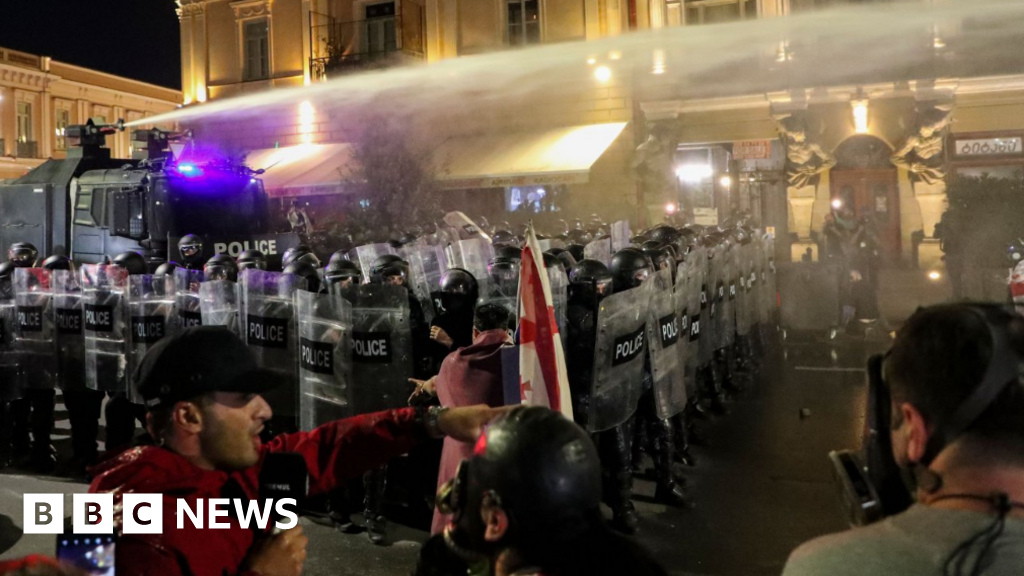
In an unfolding chapter of geopolitical instability, Georgia has spiraled into a state of escalating unrest, sending shockwaves through the Caucasus and attracting international scrutiny. The recent clashes in Tbilisi, characterized by police firing water cannons and pepper spray at thousands of protesters, mark a critical turning point in the nation’s ongoing struggle over sovereignty, democracy, and alignment with Western institutions. The crisis began when the ruling Georgian Dream party claimed victory in last year’s election—an outcome the pro-European opposition dismisses as fraudulent, sparking mass protests that culminated in attempts to storm the presidential palace. These events symbolize not only domestic dissent but also deeper geopolitical tensions that threaten to redraw regional alliances.

The protests, mobilized by a broad segment of Georgians demanding the release of political prisoners and fresh elections, have been accompanied by a significant crackdown—a pattern of repression highlighted by health injuries observed among police officers and protesters alike. The opposition, led by figures like opera singer Paata Burchuladze, and an energized youth contingent have overtly accused the government of succumbing to Russian influence and stifling democracy. The government’s response, including the use of aggressive crowd control tactics and the detention of opposition leaders, raises serious concerns about the future of democratic institutions in the country. Commentators such as analysts from the European Union warn that Georgia’s political crisis could destabilize the entire region, which remains a highly sensitive area amid ongoing conflicts and shifting alliances.

Since the suspension of talks on joining the European Union last November, the country has plunged into chaos. The decision was a pivotal warning shot for Western nations, illustrating how internal upheaval can influence broader regional stability. Many in the international community fear that the Georgian government’s tightening grip on opposition voices could pave the way for further authoritarian moves. Indeed, some historians argue that the current unrest echoes the early signs of deep-rooted societal divisions, with urban youth and regional supporters divided on Georgia’s direction towards Europe or Russia. The international organization EU and NATO have expressed concern over the potential for regional destabilization. As Georgia’s future hangs in the balance, the world watches, knowing that this struggle for democracy is more than just a local dispute—it is a mirror of the shifting global order.

As night falls on Tbilisi, the city remains a symbol of resilience amid chaos, with protesters solemnly declaring their resolve to reclaim their nation. The scene is emblematic of a broader battle—one where democracy and sovereignty are at stake, echoing through the corridors of international power. The decisions made beneath the turmoil hold the potential to shape not just the destiny of Georgia but to influence the geopolitical landscape of the Caucasus for generations to come. History, it seems, is watching as ordinary citizens and political elites alike confront the monumental forces that threaten to define the era, reminding viewers that sometimes the most pivotal moments in history are etched in the blood and tears of those daring to challenge the status quo.

Trump authorizes National Guard deployment to protect Chicago's streets
Trump authorizes National Guard deployment to protect Chicago’s streets

U.S. Domestic Unrest Sparks International Debate Over Military Deployment

The United States continues to navigate a tumultuous chapter of its history, as federal authorities increasingly resort to military measures to address rising civil unrest and escalating crime. President Donald Trump recently authorized the deployment of 300 National Guard troops to Chicago, citing concerns over what he describes as “out-of-control crime.” However, this decision underscores a deeper rift within the American geopolitical landscape, raising serious questions about the limits of federal power and the sovereignty of individual states.

While Chicago faces mounting protests over immigration enforcement, authorities reported escalate violence, including a shooting incident involving an armed woman whose vehicle rammed into law enforcement and immigration vehicles. These events occurred amidst a backdrop of political division and mounting legal pushback. A federal judge in Portland, Oregon—another Democratic stronghold—temporarily blocked the Trump administration’s attempt to deploy 200 soldiers, warning that such actions risk “blurring the line between civil and military federal power.” Judge Karin Immergut’s ruling highlights concerns among legal analysts that the unilateral deployment of troops for domestic issues threatens the constitutional balance enshrined in U.S. law.

Legal and Constitutional Struggles Mark Biden Administration’s Response

The deployment efforts by the Trump administration have ignited a fierce debate across legal and political circles. Critics argue that using the military to manage civil unrest compromises the foundational principles of American federalism. According to historical scholars, such large-scale domestic military involvement is unprecedented in recent decades—raising alarms about the potential for authoritarian overreach. The National Guard, traditionally under the command of state governors, is now being mobilized by federal authorities, thus challenging the established legal frameworks that limit military intervention within domestic borders.

International organizations like Human Rights Watch warn that such deployments could inflame tensions, undermine civil liberties, and create dangerous precedents. Opposing voices, including Illinois Governor JB Pritzker, accuse Trump of “attempting to manufacture a crisis.” This political fight over control of the public space is more than local; it reflects a broader ideological struggle about the role of government, security, and the rights of citizens. Such policies risk setting a dangerous precedent where law enforcement, backed by military force, could gain extraordinary powers that threaten democratic accountability.

Geopolitical Impact and Societal Consequences

The international community watches keenly as this internal conflict unfolds. The United States, once a bastion of democratic stability, appears increasingly divided, with its federal institutions tested by executive actions that bypass traditional legal channels. Analysts from the Council on Foreign Relations warn that the chaos could weaken America’s global standing, as allies question the stability of a nation where military power is wielded domestically under a partisan banner. The image of bustling cities like Chicago and Portland turning into militarized zones sends a troubling signal, not just to Americans, but to nations watching from afar, questioning whether the U.S. remains a beacon of constitutional governance.

Historians warn that such internal strife risks provoking wider conflicts, both political and social, that could reshape the socio-economic landscape of the nation for decades. As emerging generations of Americans are confronted with scenes of military presence on streets once reserved for peaceful protests, the fabric of civil society faces profound strains. The decisions made today will undoubtedly influence how governments across the world interpret the boundaries of authority, security, and civil liberties in the 21st century.

As the standoff intensifies and the weight of history marches forward, one thing remains clear: how the United States manages its internal tensions will leave an indelible mark. Will it uphold the principles of restrained governance and respect for civil rights, or will it succumb to authoritarian impulses cloaked in the guise of national security? The answers lie in the unfolding story—a story that continues to shape the course of not only American history but the future of liberty itself.

Judge halts Trump’s attempt to send National Guard to Portland

US Federal Court Blocks Deployment of National Guard to Portland

In a pivotal legal decision that echoes across the United States, a federal judge has halted the Trump administration from deploying the National Guard to Portland, Oregon. This move ignited a fierce political debate about the use of military forces in domestic civil unrest. The court’s intervention highlights the ongoing struggle between federal authority and local sovereignty, with profound geopolitical impact that extends well beyond the Pacific Northwest. The administration had announced on 27 September its intention to send troops, claiming it was necessary to restore order amidst protests outside a federal immigration enforcement office. However, local officials and the state’s legal representatives argued that the situation was misrepresented, pointing to the city’s relatively calm protest activity in recent days. This legal setback underscores a broader narrative: the clash over federal intervention in domestic protests has become a microcosm of larger ideological battles,” explained Dr. Helena Strauss, a political analyst specializing in US civil-military relations.

The decision by Judge Immergut was based on a contention that the deployment would violate both the US Constitution and federal law. Critics argue that the Trump administration’s narrative paints Portland as a city embroiled in chaos, with Attorney General William Barr emphasizing the threat from “vicious and cruel radicals” that must be subdued with federal force. Conversely, local voices and Oregon’s attorney general declared that these claims are exaggerated; protests in Portland have largely been peaceful, sometimes comprising fewer than a dozen demonstrators. The court’s ruling not only halts the immediate deployment but also signals a warning against the unchecked use of force in what many see as a contentious effort to politicize law enforcement amid a highly polarized national climate.

This legal defeat for President Donald Trump marks a significant moment in the ongoing narrative of federal overreach. Since the start of his presidency, Trump has portrayed certain American cities—particularly those governed by Democrats—as lawless zones in need of military intervention. His designation of Antifa as a “major terrorist organization” was a deliberate move to stigmatize a loosely connected ideology opposed to fascism, but one that historically resists centralized control. Critics argue these labels serve to justify aggressive crackdowns, while supporters contend they are necessary to restore order. The international community watches as the US grapples with internal unrest, with many analyzing whether this pattern reveals a deeper strain within American democracy or an overreach by executive power in the guise of preserving law and order.

The geopolitical consequences are manifold. With China and Russia observing a nation in apparent disarray, the American image as a beacon of democratic stability is under strain. Historians warn that persistent federal overreach and internal conflicts risk undermining the U.S. global standing, especially in a world where soft power is crucial. The divisions exposed in Portland and other cities are not confined within borders—they threaten to reshape international alliances, weaken the American-led liberal order, and embolden adversaries who seek to exploit internal vulnerabilities. As observers like Dr. Samuel Ortega, an international relations scholar, note, “the difficulties faced in Portland are emblematic of a nation at a crossroads, where internal discord threatens to spill into the global arena, testing America’s role as a leader of stability and freedom.”

In this unfolding chapter of history, the struggle over Portland is more than a regional dispute; it is a sovereign test for the United States’ commitment to federalism, civil liberties, and democratic norms. As courts weigh in and protesters mobilize, the trajectory of this conflict will influence how nations perceive American resilience and resolve. The future remains uncertain, but the weight of history continues to press forward—an indelible reminder that the decisions made today will echo through generations, shaping the fabric of the free world itself.

Social Media Auto Publish Powered By : XYZScripts.com