Matox News

Truth Over Trends, always!

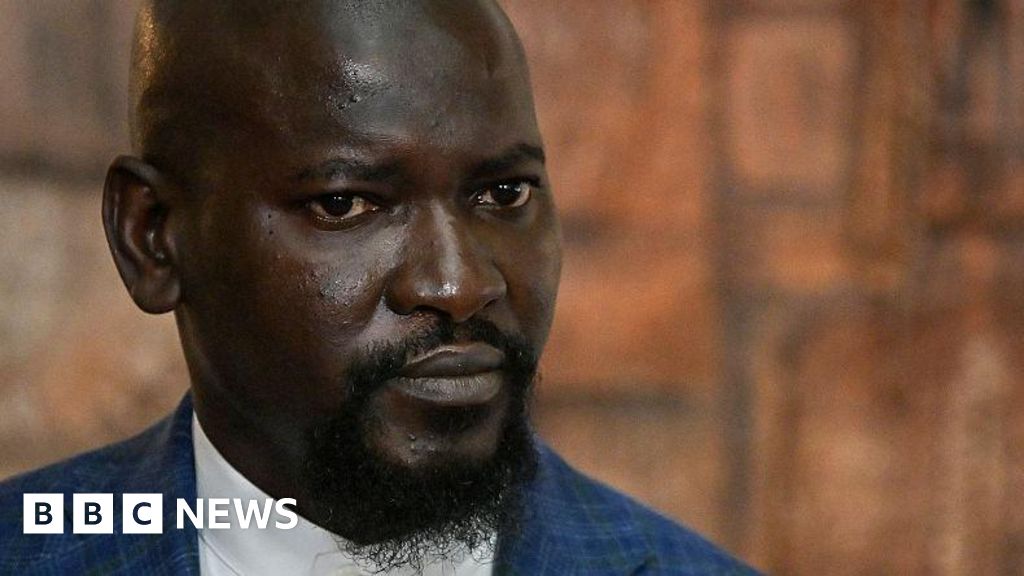
Coup chief Mamady Doumbouya officially Launches Bid for Guinea’s Presidency

In Guinea, a nation still reeling from recent upheavals, a pivotal moment is unfolding that could redefine the country’s future trajectory. The military commander Col Mamadi Doumbouya, who seized power in a coup four years ago, has shattered his earlier promise to facilitate a transition to civilian rule by announcing his candidacy for president. His submission at the Supreme Court, flanked by soldiers and cloaked in anonymity with sunglasses, raises profound questions about the political integrity of upcoming elections. This move not only signals a consolidation of military influence but also challenges longstanding international expectations for Guinea’s democratic processes.

Despite initial pledges to hand over power, Doumbouya’s decision to compete in December’s electoral contest underscores a pattern witnessed across parts of Africa where military regimes manipulate political systems amidst promising rhetoric. The exclusion of major opposition parties—such as RPG Arc en Ciel and UFDG—by electoral authorities further diminishes the legitimacy of these elections, fueling concerns from international watchdogs like the Economic Community of West African States (ECOWAS) and analysts who warn that these developments threaten regional stability. The situation exemplifies the rise of authoritarian tendencies under the guise of democratic transition, with critics emphasizing that Guinea’s political space is narrowing under the weight of authoritarian governance disguised as constitutional reform.

The electoral process itself has become a battleground for credibility, highlighted by a controversial deposit requirement of 875 million Guinean francs ($100,000), which many consider a barrier designed to limit political participation. While the previous deposit was nearly comparable, the increased financial threshold has sparked outrage among ordinary Guineans, who see it as an obstacle to genuine democratic contestation. Historically, African nations have wrestled with such manipulations—where economic hurdles serve as tools for entrenched elites to maintain power—yet the international community remains cautious in its response, wary of fueling instability. As historians and analysts observe, this election reflects a broader geopolitical trend: authoritarian strongmen cloaked in transactional democracy to insulate themselves from accountability and opposition.

Under Col Doumbouya‘s rule, Guinea has seen a crackdown on dissent—media outlets have been suspended, internet access restricted, and street protests violently suppressed. Such tactics evoke memories of how military regimes across Africa have often justified repression by citing the need to stabilize the nation and eradicate corruption, despite evidence to the contrary. Yet, the very justification used by Doumbouya—accusations of rampant corruption and human rights abuses under his predecessor—appears to be increasingly exploited as a pretext for consolidating power rather than as a genuine crusade for reform. The geopolitics of the region are sensitive, with neighboring powers and international organizations watching closely, wary of a possible slip into prolonged autocracy that could undermine regional security and economic stability.

As Guinea’s political theater prepares for this decisive chapter, history hangs in the balance, leaving the wider world to ponder: Will this election herald the dawn of renewed civilian governance, or will it serve as yet another chapter in Africa’s ongoing struggle with military entrenchment? The influence of veterans’ testimonies and regional diplomatic efforts emphasizes the necessity of vigilance, for in the shadows of this unfolding contest, the future of Guinea—and perhaps West Africa—may be decided not just by ballots, but by the enduring power of agreement, influence, and the weight of history-bearing decisions still to come.
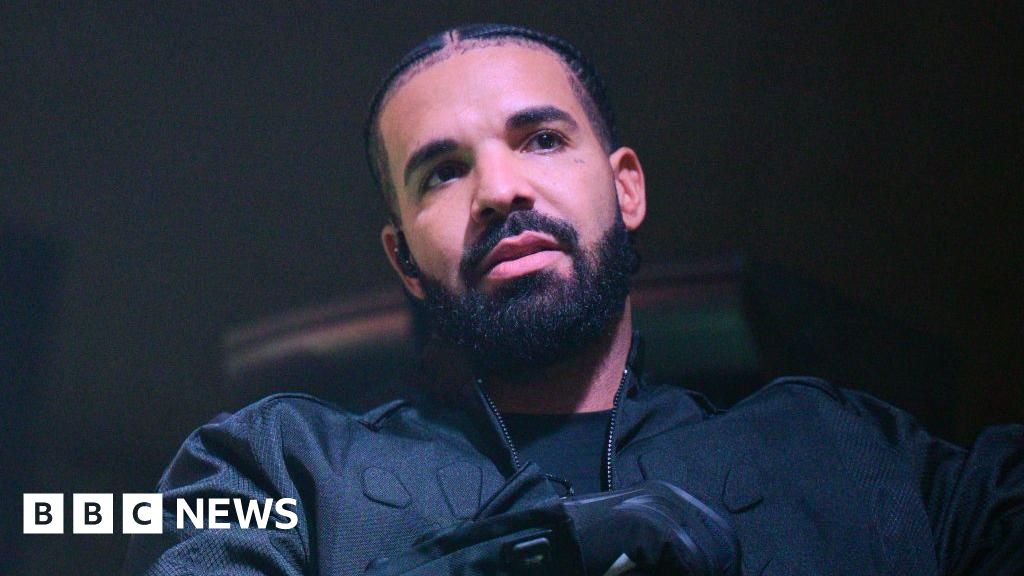
Drake’s Lawsuit Challenging Kendrick Lamar Diss Track ‘Not Like Us’ Officially Dismissed

In the ongoing saga of modern rap, the recent legal battle between Drake and Kendrick Lamar underscores a broader cultural pivot that is noteworthy for anyone who values the strength of tradition, the integrity of artistic expression, and the societal importance of cultural memory. The dispute, which culminated in a decisive judge’s ruling dismissing Drake’s defamation lawsuit against Universal Music Group over Lamar’s provocative track Not Like Us, exemplifies how contemporary artists are navigating the treacherous waters of free speech, fame, and societal expectation. It isn’t merely a personal squabble; it is a reflection of a deeper, ideological contest about what constitutes truth, honor, and the moral fabric of society—topics that thinkers like Ortega y Gasset would suggest are at the core of how culture sustains the collective identity.

“The artists’ seven-track rap battle was a ‘war of words’ that was a ‘most infamous in the genre’s history,’”

the judge noted, illustrating the intense scrutiny and media frenzy surrounding the feud. This courtroom verdict hinges on the fundamental distinction between *opinion* and *fact*, a topic that philosophers and legal theorists like Tocqueville have long explored. The judge deemed Lamar’s lyrics, even if incendiary and offensive, as *nonactionable opinion*, emphasizing that in the realm of cultural expression, hyperbole, metaphor, and rhetoric often serve as the mediums through which artists explore societal truths rather than literal accusations. Lamar’s Not Like Us not only became the most-talked-about moment of his Super Bowl halftime show but also symbolized a cultural landmark, reminding us how art functions both as *memory* and *prophecy* — tools to preserve the past and challenge the future simultaneously.

The case also highlights the dangerous trend of institutional overreach into artistic discourse—an affront to artists, as UMG’s spokesperson articulated—placing full reliance on the courts to police creative language. The claim that Lamar’s lyrics perpetuated false allegations about Drake, without recognizing the altamente stylized nature of rap, reveals a misunderstanding of music’s purpose as a form of symbolic rebellion. It echoes Chesterton’s assertion that true liberty in art is rooted in the poetic license that allows creators to speak powerfully, if provocatively, in the service of societal reflection. Lamar’s lyrics, laden with hyperbole and incendiary epithets, serve as a cultural mirror—a reflection of a social landscape saturated with scandal, hyperbole, and the mythos that undergird the rap genre’s identity.

As we examine this controversy through a cultural lens, it becomes clear that the battle extends beyond the courtroom into the very heart of what society values. It challenges the public to reconsider the role of truth in art—whether it is to be measured by accuracy or by its capacity to provoke thought. Lamar’s performance at the Super Bowl and the lyrical warscape it encapsulated are emblematic of the enduring power of artistic tradition, which must be protected to preserve the societal fabric against the encroachments of censorship. Ultimately, culture—like memory—serves as a repository of human strength, resilience, and hope, threading the past with visions of the future. It whispers a timeless truth: that humanity’s most profound acts of creation are both echoes of what was and visions of what might yet come, urging us forward into a future where the soul remains unbowed by the hand of repression, ever vibrant in its pursuit of meaning and harmony.

Social Media Auto Publish Powered By : XYZScripts.com



