
Matox News

Truth Over Trends, always!

Understanding Ofsted: What the New School Ratings Mean for Our Future Students

Society Challenges and Opportunities Amid Ofsted’s New School Inspection System

In a landscape of escalating societal pressures and shifting educational priorities, the recent overhaul of Ofsted’s school inspection grading system marks a pivotal moment. The Office for Standards in Education, Children’s Services and Skills has transitioned from a simplistic, often polarizing judgment model to a more nuanced, detailed approach. Gone are the days of single-word grades—such as outstanding or inadequate—replaced by a comprehensive report card highlighting multiple areas like curriculum quality, inclusion, student wellbeing, and leadership. This transformation aims to provide parents and communities with a clearer picture of a school’s strengths and weaknesses, theoretically fostering better-informed choices and heightened standards across the board.

However, critics warn that this new system, introduced amid emotional and social turmoil, continues to impose overwhelming pressure in an already strained education sector. The tragic death of Ruth Perry, a headteacher devastated by an adverse Ofsted report, propelled protests demanding change. Her story echoes the experiences of countless educators who feel caught between maintaining high standards and coping with an unforgiving inspection regime. Experts such as sociologist Dr. Emma Williams argue that the relentless focus on inspection outcomes can exacerbate social tensions, especially within vulnerable communities where educational inequality persists. With each inspection day, schools bear the weight of societal expectations, affecting not only teachers’ mental health but also the stability of the families they serve. As the new system introduces localized support teams and more frequent oversight, the fear remains that pressure will deepen rather than diminish, impacting families’ trust in educational institutions and community cohesion.

Furthermore, the controversy extends beyond the classroom. The reforms, while designed to foster fairer and clearer assessments, have prompted legal challenges from teacher unions and community groups who fret that the reforms may lead to premature closures or destabilize already struggling schools. With families in marginalized areas often relying heavily on Ofsted ratings to determine the best educational options, misinterpretations or misjudgments can have profound social consequences. The current debate underscores a broader concern—how do we balance accountability with human compassion in education? While proponents argue a more detailed report system will support targeted improvements, social commentators like historian David Wakefield warn that systemic oversight needs to prioritize the human element—children’s mental health, family stability, and community resilience.

The Road Ahead: Society’s Collective Responsibility

The challenge that remains is how to bridge the gap between high standards and social well-being. Education must serve as a foundation for community strength, not just a metric for bureaucratic evaluation. As society grapples with issues of inequality, mental health, and demographic shifts, the role of schools extends beyond academic achievement. They are the heartbeats of entire communities, shaping not only individual futures but also the ethical fabric of society itself. Sociologists like Anthony Giddens emphasize the importance of ensuring that reforms uphold *human dignity* and foster a sense of communal belonging and purpose.

Ultimately, society stands at a crossroads—whether to continue refining inspection systems that can inadvertently contribute to social fractures or to adopt a holistic approach that recognizes the human stories behind the grades. The hope lies in forging an educational future where standards are not just measures of performance but beacons guiding moral growth and community solidarity. As families, educators, and social leaders reflect on society’s collective journey, one truth remains: transformation is possible when rooted in empathy and shared responsibility. Society’s future depends on nurturing not only capable students but resilient communities where every child’s potential can flourish amid the enduring hope of societal renewal.

Head teachers to be consulted on strike threat over Ofsted reforms

The Rising Tensions Behind England’s New School Inspection System

In a landscape where cultural shifts in education and societal pressures collide, the recent decision by Ofsted to implement a new, color-coded inspection framework has ignited fierce debates among educators, parents, and social commentators. The restructure aims to bring a more nuanced assessment of school environments, broadening the scope beyond traditional academic metrics to include areas such as wellbeing, inclusion, and safeguarding. Yet, beneath the surface of these well-intentioned reforms lies a complex web of social tensions that threaten to undermine the very fabric of our communities and the stability of families across the nation.

Critics, notably the National Association of Head Teachers (NAHT), have voiced concerns that this overhaul might inadvertently harm the mental health of school leaders and staff. Their challenge culminated in a legal battle that was recently dismissed, yet the underlying issues remain unresolved. The union argued that the new grading system, which categorizes schools into five distinct levels—urgent improvement, needs attention, expected standard, strong standard, and exceptional—could foster undue pressure and distort the true quality of education. It’s a debate that cuts deep into how society perceives educational success and whether the current focus on graded judgments aligns with the humanistic values that should underpin our approach to social development and community cohesion.

Adding to the controversy, the tragic case of Ruth Perry—a head teacher whose death was linked to the stresses induced by Ofsted’s inspection process—has cast a long shadow over the reforms. An inquest revealed that the inspection contributed to her untimely death, sparking widespread outrage and calls for re-evaluation of inspection practices. This stark reminder underscores how social issues in education extend beyond students; they profoundly impact families, community stability, and the moral fabric of our society. While Ofsted insists that wellbeing remains a priority and that their new framework seeks fairness and transparency, many voice concerns that the systemic pressure to meet certain standards risks reducing education to a series of numbers and grades, often at the expense of human dignity and mental health.

Historically, educational sociologists like Pierre Bourdieu have warned against the ossification of social hierarchies through metrics and judgments that fail to account for cultural and socio-economic contexts. As societal divisions deepen, so too does the risk of reinforcing demographic disparities within schools, which serve as microcosms of larger societal tensions. The fight over inspection standards exemplifies this struggle—balancing the need for accountability with the imperative to nurture inclusive, resilient communities. Moving forward, the challenge lies in developing a system that recognizes the multifaceted nature of education, one that safeguards not only students’ achievements but also their wellbeing, and by extension, the moral strength of their families and communities.

Ultimately, society stands at a crossroads where the priorities we choose today will determine the moral and cultural integrity of future generations. As the echoes of past social upheavals remind us, the true strength of a nation lies in its capacity to nurture holistic human development. As we grapple with these reforms, the enduring hope is that society will not lose sight of its core moral obligation: to foster communities where families can thrive, educators can find purpose, and each child can grow not just in knowledge but in resilience, compassion, and hope. The path forward is not predetermined; it is one we must continually forge with courage, clarity, and an unwavering commitment to the moral fabric that binds us all.”

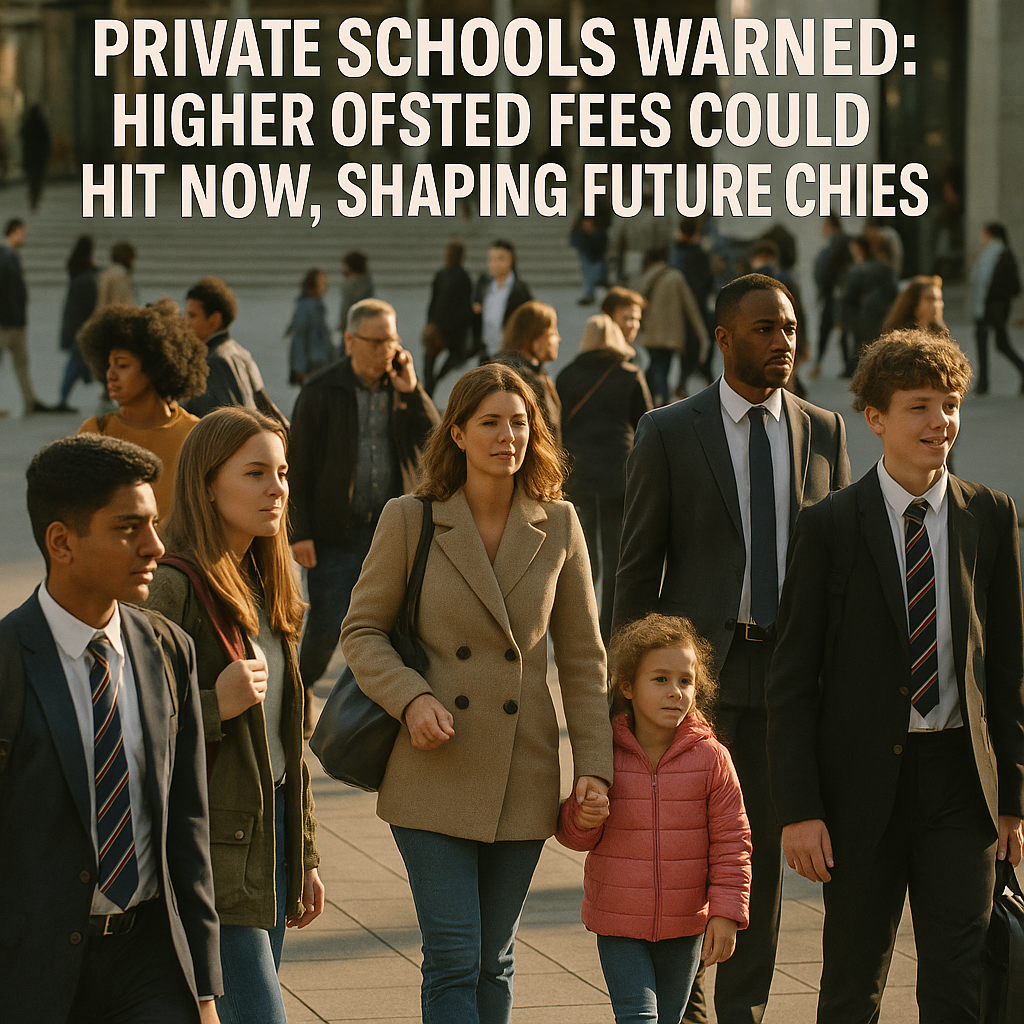
Private Schools Warned: Higher Ofsted Fees Could Hit Now, Shaping Future Choices

Societal Divide Deepens: The Impact of Private School Policies on Families and Communities

In recent months, the fractures within the fabric of British society have become more evident, as government and educational authorities grapple with the future of private education. The Department for Education (DfE) has proposed increased fees for Ofsted inspections of private schools, a move seen by many as a step toward economic fairness but criticized by others as a threat to exclusive community benefits. Currently, the regulator’s inspection costs are partially subsidized by taxpayers; however, the DfE suggests that private institutions should shoulder more of this burden, claiming that the taxpayer shouldn’t be subsidizing private businesses in this way. This policy shift raises questions about the social cohesion of communities and the role of private institutions within the broader society, especially given their historic role in perpetuating class distinctions and access to elite education.

Private schools inspected by Ofsted—those classified as “non-association”—comprise a significant portion of England’s independent educational landscape, with nearly half the 1,150 inspected institutions being specialized schools catering to pupils with disabilities and special educational needs. These smaller institutions serve as vital anchors for families seeking tailored education for their children—but looming financial pressures threaten their sustainability. The DfE’s proposal to increase fees over the next five years, climbing for schools with 150–399 pupils from £2,500 to £3,300, is part of a broader initiative to channel additional funds into **state school excellence**. Education Secretary Bridget Phillipson insists this approach is aimed at “driving up standards for children in state schools,” but critics argue it risks widening the social divide—thereby impacting family choices, community stability, and the very fabric of local life.

  • The financial burden on private schools could escalate, potentially making it more difficult for families already under economic strain to access these institutions.
  • Such shifts may incentivize educational consolidation, reducing the diversity of school options within communities.
  • The ongoing VAT on school fees and legal disputes over discrimination allegations compound the economic pressures faced by families and institutions alike.

This evolving landscape underscores how social and economic policies directly influence families and community dynamics. The higher fees could deepen existing inequalities, positioning private institutions as increasingly exclusive enclaves while challenging the principles of equal opportunity. Experiencing socioeconomic and cultural transformations, society faces the challenge of balancing meritocracy with accessibility. Sociologists like Charles Murray have long argued that education serves as a cornerstone of societal mobility; yet, policies that threaten to make private education more inaccessible risk entrenching disparities that threaten to undermine social cohesion. As families navigate these shifting currents, their choices and opportunities are being reshaped, impacting generations to come.

Reflecting on these societal shifts demands more than policy adjustments; it calls for a collective moral reconceptualization of what it means to foster an equitable society. The true test lies not merely in economic recalibrations but in nurturing a social fabric where opportunity and dignity for every family remain attainable. However, as history reminds us, societal transformations are seldom smooth, and the resilience of community bonds will be challenged amid economic austerity and cultural shifts. Yet, with deliberate effort and moral clarity, society can forge pathways that bridge divides, ensuring that future generations inherit not a fragmented landscape but a resilient, inclusive, and hopeful society.

Social Media Auto Publish Powered By : XYZScripts.com



