Matox News

Truth Over Trends, always!

UAE Leaves OPEC, Boosts U.S. Energy Power and Limits Global Cartel Control

The recent decision by the United Arab Emirates to exit the Organization of the Petroleum Exporting Countries (OPEC) marks a significant geopolitical shift that signals the evolving landscape of global energy dominance. After six decades of unwavering membership, this move underscores a redefinition of strategic priorities within the Gulf region and the broader international arena. It is a calculated step aligned with the UAE’s long-term vision to forge a more independent energy policy—one that grants the Gulf state greater flexibility amid mounting regional tensions and the ongoing global energy crisis. The departure not only casts a shadow over OPEC’s influence but also intensifies the ongoing debate about the role and dominance of petro-states in shaping the world’s financial and political stability.

The geopolitical impact of this decision resonates profoundly across international markets and alliances. OPEC, for decades, wielded substantial control over global oil prices through collective production management, primarily stabilizing the economies of member states—most notably Saudi Arabia. However, the UAE’s exit symbolizes a divergence from traditional cooperation, motivated by internal frustrations with the cartel’s limits and the desire to harness its ample spare capacity—estimated at roughly 4.8 million barrels per day—to accelerate its transition into a low-carbon future. The move comes amidst persistent regional conflicts, heightened tensions with Iran, and the strategic recalibration prompted by the ongoing US-Israeli support for regional stability. Analysts argue that the UAE’s departure could lead to a more fragmented oil market, diminishing OPEC’s ability to influence prices and potentially emboldening other non-cartel producers to pursue independent strategies.

This shift also benefits the United States in its broader geopolitical objectives. Former President Donald Trump’s administration has long criticized OPEC for allegedly “ripping off the rest of the world” by artificially inflating oil prices through production limits. The UAE’s decision can be interpreted as a win for this pro-market, free enterprise approach and signals a possible realignment in global energy politics. Reports of ongoing discussions between US and UAE financial authorities—such as potential currency exchange agreements in times of regional crises—highlight an increasingly strategic partnership aimed at counterbalancing regional adversaries and maintaining global supply chains. While such measures focus on stabilizing regional conflicts, they also serve to diminish OPEC’s power, favoring a more open and competitive energy market controlled by strategic alliances aligned with Western economic interests.

Comments from analysts, including Jorge León of Rystad Energy, emphasize that the UAE’s move may usher in a “structurally weaker OPEC,” with many members becoming more dependent on their domestic policies rather than collective cartel strategies. The importance of this shift cannot be understated—it alters the delicate balance of global oil reserves and production leverage. The risk is clear: without the unified front of OPEC, global oil prices could become more volatile, and geopolitical conflicts could become more entrenched in the control of energy resources. As the world grapples with record-high oil prices and supply disruptions—exacerbated by the ongoing conflict between the US, Israel, and Iran—the UAE’s independence in energy policy sets a precedent, signaling that future disruptions may be met with a more assertive, uncooperative stance from Gulf producers. This unfolding chapter in international energy history proclaims a future where the old order of cartel-driven control diminishes, and new alliances—both geopolitical and economic—emerge from the shadows of regional conflicts, leaving history to decide whether this fragmentation leads to greater stability or chaos in the global energy system.
UAE Boldly Steps Away from OPEC, Prioritizing Energy Independence

In a move that could redefine the global energy landscape, the United Arab Emirates (UAE) has announced its withdrawal from OPEC+, the influential cartel of major oil-producing nations. This unprecedented decision signals a shift in the delicate balance of global oil supply and could have far-reaching implications for international geopolitics and energy security. As one of the world’s leading oil exporters, the UAE’s withdrawal not only questions the stability of OPEC+ but also signals a new strategic calculus for the nation as it seeks greater autonomy over its resource management.

Experts and analysts have described the move as a potential game-changer. Historically, OPEC and its allies—most notably Russia within OPEC+—have wielded enormous influence over oil prices, often coordinating output cuts to boost global oil prices amidst fluctuating demand. The UAE, which has traditionally been a stabilizing force within the group, now appears to be charting a different course—aiming for a more flexible, market-driven approach. According to officials, this decision is rooted in a desire to maximize revenues amid increasing global competition and to leverage its own strategic reserves without being bound by cartel constraints. Importantly, this move echoes broader shifts among Gulf Cooperation Council (GCC) members, hinting at a possible reevaluation of regional cooperation in the context of shifting energy economics.

The geopolitical impact of this announcement cannot be overstated. It is expected to introduce a new layer of uncertainty into the global oil markets, which are already volatile due to ongoing geopolitical tensions, the transition to renewable energy, and the unpredictable demand patterns post-pandemic. More significantly, this could embolden other non-OPEC oil producers to follow suit, challenging the fragile cartel consensus and potentially unleashing a more fractured, competitive global oil industry.  For global policymakers, particularly those in oil-importing nations, such shifts could mean escalated prices, economic instability, and a reassessment of energy security strategies. The decision also raises questions about the sustainability of current global climate commitments, which heavily depend on predictable oil supply dynamics.

The decision by the UAE has garnered varied reactions. Some analysts, like James S. Hurst, a renowned geopolitical scholar, argue that the move reflects the emerging trend of resource-dependent nations seeking strategic independence amid a multipolar world. Conversely, critics warn of potential chaos, emphasizing that such a break from OPEC+ could escalate tensions among existing members, especially Saudi Arabia and Russia, who have historically coordinated to stabilize markets. International organizations such as the International Energy Agency (IEA) have called for calm, urging countries to heed the importance of coordinated policies for global stability. Yet, the decision underscores a broader narrative: that resource-rich nations are increasingly asserting sovereignty, challenging the dominance of traditional energy giants, and reshaping the geopolitics of oil in ways few expected just a decade ago.

As the world watches with bated breath, history seems poised to record whether the UAE’s bold move will usher in a new era of energy independence or plunge global markets into chaos. The echoes of this decision will reverberate through diplomatic corridors and economic capitals alike—reminding us all that, in the theater of international power, control over resources remains a decisive battleground. The unfolding chapters of this geopolitical saga will determine not only the future of energy but the very fabric of global influence in an increasingly volatile world.

Iran Hits Kuwait’s Oil Assets Ahead of OPEC+ Supply Talks

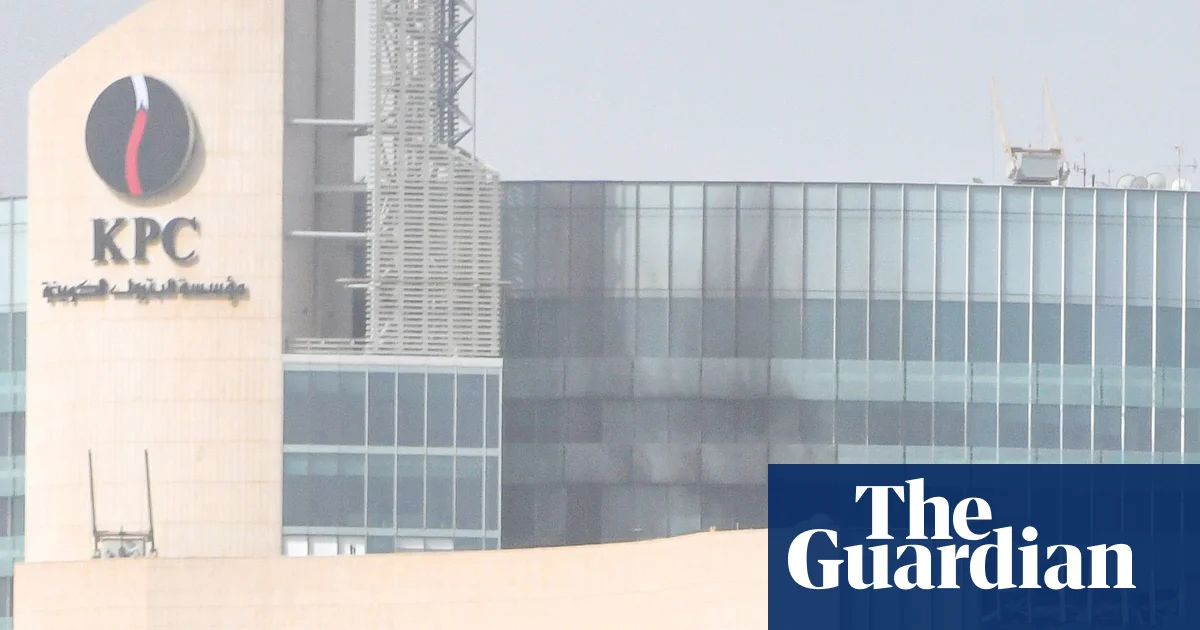
In a stark demonstration of the escalating tensions in the Middle East, Iranian drones have recently struck vital Kuwait oil infrastructure, inflicting “severe material damage” and threatening to further destabilize global energy markets. The attacks targeted petrochemical facilities, power and water desalination plants, and government offices, causing fires, damage, and potential long-term disruptions. The Islamic Revolutionary Guard Corps claimed responsibility, asserting that these strikes form part of Iran’s broader response to ongoing regional hostilities. These developments underscore the fragile security environment in the Gulf, where strategic interests and regional rivalries continually threaten the stability of global oil supplies.

This assault comes on the heels of a series of aggressive moves by Iran amid a tense backdrop of conflict involving the US and Israel. Just hours before the attack, members of OPEC+—the cartel of major oil-producing nations—convened to discuss measures to bolster oil output, ostensibly to counter the effects of Iran’s recent tightening of the Strait of Hormuz. Yet, Iran’s effective blockade, which prevents about 20% of global crude oil from passing through the strategic waterway, remains a major obstacle to stabilizing the world’s energy markets. Analysts warn that the damage inflicted on critical infrastructure could take months or even years to repair, with the geopolitical impact reverberating through markets and societies worldwide.

Meanwhile, the broader regional conflict is intensifying, with Iran rejecting ultimatums—such as the one issued by Donald Trump—threatening to destroy Iranian infrastructure if Tehran refuses a peace deal. Israeli strikes in Iran’s petrochemical sector have already resulted in casualties, while Iran retaliates by striking targets across neighboring nations like Qatar and Oman. This cycle of aggression risks spiraling into a regional crisis with worldwide consequences. The ongoing violence and ongoing U.S.-backed sanctions further exacerbate Iran’s resolve, and many international observers—including historians like Robert Kaplan—warn that this is a turning point that risks transforming the Middle East into a prolonged theater of conflict, with oil being a pivotal prize.

While the OPEC+ nations have acknowledged the immense costs and logistical hurdles in restoring damaged facilities, they continue to press for increased oil output—initially agreed upon at a modest 206,000 barrels per day—hoping to keep global markets from tipping into chaos. However, the underlying issue remains Iran’s blockade of the Strait of Hormuz, which, even with increased production, cannot fully compensate for the disruptions caused by war and sabotage. The surging oil prices—up more than 50% year-to-date—have already driven energy costs sky-high in the UK, US, and beyond, inflating everyday expenses from fuel prices to heating bills, and fueling political debates. As energy costs tighten economic pressures on consumers and governments alike, the stakes are clear: this is more than a regional conflict; it’s a crisis with the potential to reshape international power dynamics.

As the world watches a specter of chaos unfold in the Persian Gulf, the question remains whether diplomacy can stem the tide of violence or if history will record this moment as the beginning of a new era of rivalry and resource conflict. The geopolitical chessboard is shifting rapidly, with each move echoing across continents: from the streets of London to the corridors of the United Nations, where the weight of history presses heavily. In a future yet unwritten, this struggle for control over energy routes and regional influence could determine the fate of nations, societies, and the global order—if it is not already too late to steer away from the precipice.

Social Media Auto Publish Powered By : XYZScripts.com



