Matox News

Truth Over Trends, always!

OpenAI Launches ChatGPT Ads: The Future of Smart Living Starts Now

The Future of AI and Advertising: OpenAI’s Bold Step

In an era where digital giants are continuously reshaping how we interact with technology, OpenAI has taken a notable leap forward by introducing ads inside ChatGPT. Since its inception in 2022, ChatGPT has largely operated as a distraction-free zone, prized for its pure AI-driven conversations and its anti-clutter approach. However, with this recent rollout, the landscape is shifting. Now, users are faced with a choice: embrace the new, more commercialized AI experience or opt-out in favor of a cleaner, ad-free interface. This move is emblematic of a larger trend where tech innovation is increasingly intertwined with monetization, raising questions about what it means for our future interactions with AI.

The move is not just about generating revenue; it signals a broader cultural impact on how society perceives and consumes content. Critics argue that introducing advertising into a platform like ChatGPT could erode the trust and authenticity that have made it so appealing to young users seeking a genuine, distraction-free learning tool. Yet, OpenAI is banking on a strategy that emphasizes transparency and user choice. Users who prefer to keep their experience free of sponsored content can opt for higher-tier paid plans or choose to opt out of ads altogether, including the ability to control how their data is used for ad targeting. This approach reflects an understanding that today’s digital consumers value agency in their online experience — they want control over how their data is used, especially when it comes to the AI companions they increasingly depend on.

Influencers and sociologists see this move as part of a broader societal shift. According to tech analyst Matt Vella, adding ads into AI tools like ChatGPT “foreshadows a future where AI becomes not just a tool but a marketplace, blurring the lines between utility and commerce.” Meanwhile, platforms like Anthropic have responded with satire, actively mocking the idea through high-profile campaigns like their Super Bowl LX ad, which staged conversations abruptly pivoting into sales pitches. These responses highlight that the social relevance of this trend isn’t lost on the public: it’s a reflection of a society grappling with the rise of corporate interests in spaces once viewed as sanctuaries for genuine human-AI collaborations.

This tension raises a pivotal question for the future of AI-powered services: as platforms increasingly embed advertising into their core functions, will users begin to see AI as an extension of the commercial landscape or as a trustworthy partner in their daily lives? The next big question we should be asking isn’t just about how AI will evolve but about what kind of digital world we are creating for ourselves and future generations. Is this shift toward a hybrid model sustainable, or are we walking into a new era where personalized AI assistance becomes always-already intertwined with advertising and commercial interests? As these questions unfold, one thing is clear: the future of AI is as much about societal values as it is about technological innovation.
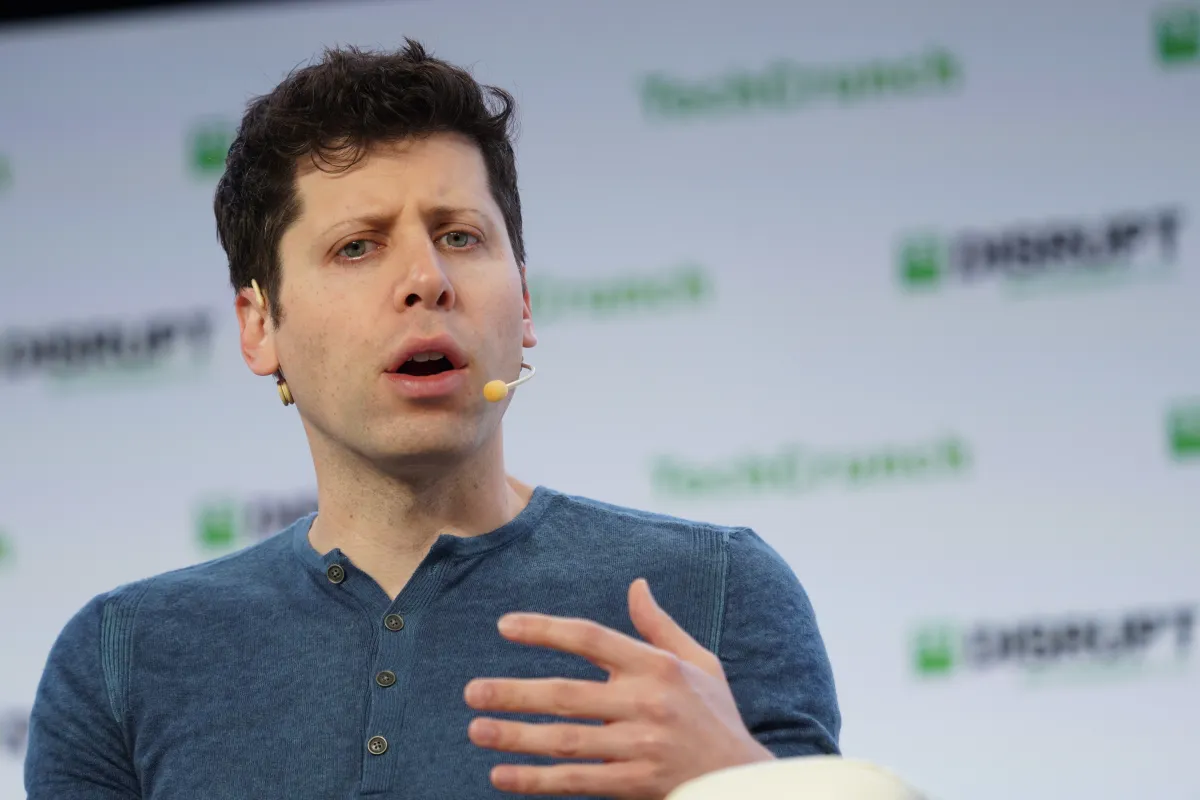
Sam Altman Bristles Over Claude’s Super Bowl Ads—Tech War Heats Up

AI Industry Shakeup: Anthropic’s Bold Moves and the Future of Disruption

The AI landscape is swiftly evolving, driven by fierce competition and relentless innovation. Anthropic, a rising star founded by former OpenAI experts dedicated to “responsible AI,” has made headlines with a provocative Super Bowl commercial that takes direct aim at OpenAI’s ChatGPT. This campaign underscores a shifting industry dynamic—the emergence of disruptive advertising strategies that highlight not just technological prowess but also evolving market narratives and competitive positioning. By boldly mocking targeted ads within AI chatbots, Anthropic is signaling its intent to redefine expectations for transparency, user trust, and responsible innovation amidst heated rivalry.

The commercials themselves are an innovative form of tech marketing, leveraging humor and cultural commentary to resonate with a younger, tech-savvy audience. One ad depicts a man seeking relationship advice from a chatbot, which then abruptly interjects with an outlandish ad for a fictitious dating site, Golder Encounters. Another features a young man receiving a height-increasing insole ad after asking for fitness tips. These narratives cleverly highlight concerns over advertising saturation in AI, a topic that has sparked significant debate since OpenAI announced plans to integrate targeted ads into ChatGPT. Analysts from Gartner warn that such moves could either enhance user engagement or erode trust if not executed transparently, making the strategic stakes higher than ever.

Business Implications and Industry Disruption

The disruption caused by Anthropic’s campaign extends beyond marketing tactics—raising pertinent questions about industry standards and the future of AI monetization models. While OpenAI maintains that its planned ads will be clearly labeled and non-intrusive, critics argue that the mere testing of conversation-specific ads could blur lines of user trust and lead to **”surveillance capitalism”** in AI interactions. “The core concern lies in how these ads could influence or manipulate conversations,” warns Dr. Lisa Smith, AI policy expert at MIT. The industry faces a fork in the road: pursue monetization aggressively or prioritize ethical considerations, a debate that will define the next decade.

  • Anthropic’s ads exemplify a shift toward limited yet impactful marketing—mocking the very strategies of its competitors to carve out market identity.
  • OpenAI’s commitment to ‘separate and labeled’ ads reflects a cautious approach that aims to balance revenue generation with user trust.
  • The rising importance of AI-driven advertising signals a potential industry-wide change—one where monetization becomes embedded within conversational AI’s very fabric.

Looking Ahead: The Need for Strategic Vigilance

The rapid growth of AI tools has attracted investment from industry giants like Elon Musk and Peter Thiel, emphasizing the massive business potential replacing traditional tech sectors. Yet, with this opportunity comes a critical responsibility: to innovate ethically and maintain user trust, even amid cutthroat competition. As AI firms scramble to out-innovate each other, the industry must navigate the fine line between disruption and regulatory oversight. The next chapters in this story will test whether companies like Anthropic can lead with responsible innovation or capitulate to the allure of quick profits at the expense of integrity.

The future of AI is unmistakably **fast approaching**, where technological disruption is intertwined with profound societal implications. Business leaders, policymakers, and technologists must act decisively—embracing innovation without compromising fundamental principles. The trajectories set today will determine whether AI remains a tool for progress or devolves into a new frontier of manipulation and control. For the ambitious, poised and strategic action in this space is no longer optional but essential—because the clock is ticking, and the future waits for no one.

Nvidia Surges Into Model Market with Nemotron 3 Breakthrough

Nvidia’s Bold Move: Revolutionizing Open AI Models and Industry Disruption

In a significant strategic pivot, Nvidia has transitioned from primarily supplying chips for artificial intelligence development to becoming a frontrunner in open model innovation. The chipmaker’s recent release of the Nemotron series signals an ambitious push towards democratizing AI technology, emphasizing transparency, customization, and scalability. This move has profound business implications—it challenges the traditional proprietary approach championed by major US tech firms and hints at a new epoch of open, disruptive AI ecosystems rooted in innovation acceleration.

Unlike its Western rivals that lean toward closed, tightly guarded models, Nvidia’s approach with Nemotron embodies a disruptive openness that seeks to empower developers and startups. By releasing the training data and tools alongside the models, Nvidia aims to lower the barriers for AI experimentation and fine-tuning. The platform supports a hybrid latent mixture-of-experts architecture designed to facilitate scalable AI agent creation capable of interacting with web environments or executing complex computer actions. The models arrive in three configurations—Nano (30 billion parameters), Super (100 billion parameters), and Ultra (500 billion parameters)—highlighting Nvidia’s commitment to flexibly address a vast spectrum of enterprise needs. This scale of transparency and accessibility moves against industry norms and could set a new standard in how AI development is conducted globally.

Industry analysts, including those from Gartner and MIT, recognize Nvidia’s initiative as a potential game-changer that disrupts the status quo of AI R&D. As Kari Ann Briski, Nvidia’s vice president of generative AI software, emphasizes, “Open source is making AI more adaptable, fostering innovation, and ultimately powering the global economy.” This stance contrasts sharply with the recent trend among US firms, exemplified by Meta’s open models which have recently shifted towards secrecy. The move toward proprietary models reflects a strategic effort to safeguard competitive advantages, but it may also hinder rapid innovation and collaboration essential for maintaining technological leadership.

Looking forward, the industry faces a critical juncture. Traditional AI giants may find themselves increasingly marginalized if they fail to leverage open innovation channels or adopt more transparent practices. Nvidia’s model suggests the future perhaps belongs to ecosystems where open collaboration accelerates breakthroughs—yet it also exposes the risks of commoditizing advanced AI and breaking the barriers that once protected innovation. As Elon Musk and Peter Thiel have often warned, the real disruptive power lies in harnessing the energy of open, competitive industries. The race is on, and the stakes couldn’t be higher for those who want to dominate the next frontier of technological progress. Companies that embrace this new paradigm—focusing on transparency, customization, and scalable innovation—will shape the future of AI and economic growth in the era ahead.

Altman unveils OpenAI’s new AI gadget—more chill and peaceful than the iPhone.

OpenAI & Jony Ive Set to Redefine Consumer Tech with Revolutionary AI Hardware

The tech industry is witnessing an unprecedented infusion of innovation as OpenAI announces a groundbreaking partnership with renowned designer Jony Ive on a new AI hardware device set to redefine how individuals interact with technology. Although details remain under wraps, early reports suggest the device will be pocket-sized and potentially screenless, signaling a paradigm shift in personal AI interfaces. The collaboration integrates OpenAI’s cutting-edge AI algorithms with Ive’s mastery of minimalist design, promising an experience that emphasizes simplicity, usability, and contextual awareness.

This development carries profound business implications, especially as it positions OpenAI at the forefront of the next wave of disruption in consumer technology. Since acquiring Ive’s design startup, Io, earlier this year for $6.5 billion, OpenAI has clearly aimed to democratize AI accessibility beyond the realm of savvy developers and enterprise users. By leveraging Ive’s signature approach—where solutions are both elegant and intuitive—the company intends to craft an interface that seamlessly integrates into daily life, echoing the revolutionary impact of the iPhone. As Altman reflected, the iPhone remains the “crowning achievement” of consumer products, and this new device aspires to surpass even that milestone in relevance and utility.

Industry analysts from Gartner and MIT’s Media Lab emphasize that this venture exemplifies the shift towards personalized, contextually aware AI tools. The device aims to filter distractions, prioritize meaningful interactions, and adapt intelligently to users’ routines. Notably, Altman envisions a product capable of building a trust-based relationship over time, where the AI gains a holistic understanding of users’ lifestyles. Such capabilities could streamline digital interactions and reduce information overload—a persistent concern in today’s hyper-connected environment.

  • Enhanced filtration of notifications and alerts
  • Context-sensitive cues that anticipate user needs
  • Long-term AI-user relationship building

Consequently, this innovation could set new standards for privacy and user control, shifting the industry focus from mere functionality to meaningful, trust-based engagement.

The timeline for commercialization appears promising, with Ive confirming the device’s availability within less than two years. As the industry anticipates this launch, the broader market faces unprecedented disruption, risking the obsolescence of existing (often distractive) gadgets and interfaces. The implications extend further—if successful, this innovation could catalyze a new breed of ultra-portable, AI-driven personal assistants, disrupting not only consumer electronics but also sectors like healthcare, education, and enterprise productivity.

In a landscape already transformed by Elon Musk’s Neuralink and Peter Thiel’s investments in AI-driven startups, this new venture underscores the urgent need for companies and investors to stay ahead of the curve. The convergence of innovation, disruptive design, and strategic partnerships signals that the next frontier of technology will prioritize meaningful human-AI relationships. As industry leaders and startups race to develop smarter, more intuitive devices, the outcome of this bold collaboration will shape the future of personal tech for years to come. For those who wish to lead rather than follow, now is the time to recognize that the era of simplistic yet profound AI interfaces is just around the corner—change is inevitable, and the clock is ticking.

Larry Summers quits OpenAI board amid Epstein email scandal

In a period where global power dynamics are shifting at an unprecedented pace, recent developments highlight how personal scandals can ripple through the fabric of international influence and technological advancement. The resignation of former US treasury secretary Larry Summers from the board of OpenAI follows the release of emails linking him to Jeffrey Epstein, the convicted sex trafficker whose network reached into the highest echelons of society. Although Summers emphasizes his desire to “rebuild trust,” this controversy underscores an ongoing narrative of transparency and accountability that is reshaping the societal landscape, especially among the youth who are increasingly mindful of ethical leadership and institutional integrity.

Moreover, the broader geopolitical impact stems from the U.S. Congress passing legislation requiring the release of Epstein-related files, which now moves toward President Donald Trump‘s desk. As the bill’s passage signals a shift towards more stringent accountability, it simultaneously reveals deeper divisions within American political and social institutions. Analysts suggest that this move could expose more high-profile figures involved in Epstein’s circle, potentially shaking the foundations of global elites’ influence and prompting a reevaluation of the power structures that have long operated behind closed doors. The release of these documents may serve as a catalyst for broader societal introspection, questioning the integrity of those in power—especially those who have maintained close ties to controversial figures. While some see this as a step toward justice, others warn that exposing too much could destabilize long-standing networks and alliances critical to America’s geopolitical strategy.

Meanwhile, the internal shifts at OpenAI reflect a similar tension within the technological and ideological frontiers. Summers’s departure, following his appointment amidst internal conflicts over leadership, is emblematic of a broader struggle in the industry: the balance between innovation and ethical responsibility. How nations and societies respond to such moral dilemmas will determine the future trajectory of AI development and global influence. As AI companies continue to push the boundaries of technological adoption, the potential geopolitical ramifications become ever more complex—particularly as rival powers like China and Russia seek to dominate AI-driven supremacy for strategic advantage. The decisions made today about regulation, transparency, and moral accountability will have lasting effects on how the world navigates power, influence, and technological sovereignty in the decades ahead.

History is now at a turning point where the revelations surrounding figures like Summers serve as a sobering reminder: the intertwined nature of global leadership, technology, and clandestine networks can reshape the course of nations. From the corridors of Washington to the Silicon Valley boardrooms, the question remains—how will societies, inspired by generations of youth eager for justice and transparency, respond to the emerging revelations? As the weight of history bears down on these unfolding narratives, the world stands at a crossroads, where the outcome could either reinforce the foundations of responsible leadership or reveal deeper fissures in the global order. The story of the 21st century continues to be written, and the choices made today may well echo through the corridors of history for generations to come.

4 Must-Have Tools Fueling the Next Tech Bubble

Tech Giants Accelerate Capital Expenditures Amid AI Boom

In a clear signal of disruption in the technology sector, leading companies are channeling unprecedented levels of capital into expanding their infrastructure, particularly focusing on artificial intelligence (AI) capabilities. During this earnings season, industry analysts have observed a notable trend: corporations like Google, Microsoft, and Amazon are aggressively increasing their capital expenditures (CapEx) to build out data centers and AI-specific infrastructure. This shift not only underscores their commitment to dominance in next-generation tech but also signals a strategic move to redefine competitive landscapes across digital ecosystems.

The implications are profound. As Lauren Goode from WIRED highlights, tech firms are not merely sitting on piles of cash—they are actively deploying these resources into expansive infrastructure projects, focusing heavily on AI hardware and data processing capabilities. Industry giants recognize that the future of tech hinges on the ability to process exponential data loads while enabling real-time, AI-driven decision-making. This aligns with insights from Gartner analysts who forecast that AI-driven data infrastructure will constitute over 50% of enterprise IT spending by 2025, challenging existing hardware paradigms and accelerating the disruption of traditional data center models.

Technological innovation is at the heart of this surge, with companies leveraging advances in semiconductor fabrication and edge computing. Disrupting established players like Cisco or traditional server providers, new entrants are pioneering energy-efficient and scalable AI hardware solutions designed to meet the massive computational demands of modern machine learning workloads. Experts such as Elon Musk have long emphasized that the next wave of tech supremacy depends on autonomous systems and AI infrastructure, pushing companies to pour billions into infrastructure that can support a future dominated by intelligent, autonomous systems.

  • Massive investments in data centers tailored for AI workloads
  • Development of custom AI chips to improve processing efficiency
  • Integration of edge computing to reduce latency and enhance real-time insights
  • Strategic partnerships with semiconductor firms to accelerate innovation

This dynamic shift signifies more than just infrastructure buildup; it bears the potential to __________________ the tech business model itself. Companies capable of scaling AI capabilities quickly will gain significant market share, disrupt traditional industries, and create new revenue streams. Critics warn that such rapid investment could inflate valuations and foster a tech bubble, but current industry trajectories suggest bold moves are necessary for those seeking dominance in an increasingly AI-centric world.

Looking ahead, the accelerated CapEx cycle in tech signals that the race for AI supremacy is more urgent than ever. Industry leaders and smaller innovators alike must adapt swiftly or risk being left behind as the foundational architecture for tomorrow’s digital economy takes shape. Disruption is imminent, and the companies that push the boundaries now will set the tone for the industry’s future. Those with the foresight and agility to innovate will define the next chapter of technological progress, making it clear that the era of AI-driven infrastructure is just beginning—and the stakes have never been higher.

Sora turbocharges AI videos—pay more, create bigger!

OpenAI Advances AI Video Platform Sora: Monetization Sparks Industry Disruption

In a bold move towards business model innovation and industry disruption, OpenAI has announced new paid options for its AI-powered video platform Sora. As part of its strategic pivot, the company is phasing out unlimited free usage and introducing a pay-per-generation model targeted at high-volume creators. This shift underscores the platform’s burgeoning role in shaping the emerging AI creator economy, where monetization, user engagement, and technological innovation intersect with intense market competition.

Bill Peebles, head of the Sora team at OpenAI, emphasized that the current system’s economics are “completely unsustainable,” citing growing demand from power users who generate hundreds of videos daily. The new model offers ten extra video generations for $4, with costs varying based on factors such as resolution and length — a clear signal that high-scale content creation will soon be driven primarily by paid usage. This transition aligns with the company’s broader strategy to turn Sora into a lucrative revenue stream by attracting professional creators and content studios eager for seamless, AI-driven video generation capabilities.

Disruptive Innovations and Market Implications

OpenAI’s integration of paid credits not only signals a shift towards sustainable operations but also exemplifies disruptive innovation in AI-assisted content creation. For tech giants and startups alike, this move sets a new industry standard—transitioning from free, limited access towards scalable, pay-as-you-go models reminiscent of cloud computing services and subscription platforms. This opens up lucrative business implications:

  • Emergence of a Creator Economy: The platform’s features such as clip stitching, leaderboards, and deepfake avatar creation foster a competitive environment favoring professional and semi-professional creators who are willing to pay for enhanced capabilities.
  • Market Differentiation: Sora positions itself as a pioneer in AI-based video content, likely prompting other players to innovate or price competitively, thus intensifying market rivalry.
  • Potential Legal and Ethical Concerns: With functionalities like deepfake creation, the industry must reckon with societal impacts and legal frameworks—areas closely monitored by institutions like MIT Media Lab and industry watchdogs.

By emphasizing transparency about upcoming changes and future paywall thresholds, OpenAI aims to build trust amidst rapid disruption. The company’s move echoes strategies advocated by industry veterans such as Peter Thiel, who emphasize the importance of sustainable business models that enable continuous innovation.

Future Outlook: Urgency for Stakeholders and Industry Watchers

The burgeoning AI-powered creator economy remains in its infancy, but the direction is unmistakable: AI content generation will soon become a high-stakes, monetized industry requiring strategic agility. As OpenAI ramps up its paid offerings, competitors will be under pressure to innovate or risk obsolescence. Industries reliant on digital content—media, entertainment, marketing—must adapt swiftly to these technological shifts. Experts at Gartner predict that within the next few years, platforms like Sora could redefine content pipelines, with AI-driven videos surpassing traditional methods in cost, speed, and scale.

This ascending wave of AI innovation signals that staying ahead of the curve will require an acute understanding of emerging business models, legal landscapes, and technological breakthroughs. For stakeholders eager to capitalize on this disruptive landscape, the window to innovate is closing rapidly. The future belongs to those who grasp the urgency of proper integration: the next decade promises unprecedented transformation fueled by AI’s potential to revolutionize entire industries.

OpenAI gears up to launch game-changing generative music tool for young creators

OpenAI’s Latest Innovation: AI-Generated Music Signals a New Era of Creative Disruption

Leading AI pioneer OpenAI is reportedly developing a groundbreaking tool capable of generating music from text and audio prompts, a move that could redefine the boundaries of creative content production. According to a report by The Information, this technology aims to facilitate seamless integration of AI-driven music into videos, personalized entertainment, and even interactive applications. Such innovation exemplifies the escalating trend of disruption within the digital content industry, threatening traditional pathways of music composition and licensing.

The proposed tool could radically enhance how content creators, from amateur vloggers to major streaming platforms, source and produce music. By enabling generation of original soundtracks tailored to specific scenes or emotional tones, OpenAI is shaping a future where AI becomes an integral partner in creative workflows. Moreover, the collaboration with students from the Juilliard School to annotate musical scores indicates a strategic investment in high-quality training data, underscoring the company’s commitment to elevating the sophistication of AI-generated compositions. These advancements signal a shift toward democratizing music production, potentially lowering barriers for aspiring artists and redefining the economic landscape for musicians and record labels alike.

Business Implications and Competitive Landscape

This development positions OpenAI as a formidable disruptor in the burgeoning field of generative music, a market already populated by players like Google and Suno. While OpenAI’s prior models concentrated on text and speech synthesis, the new focus on music marks a strategic expansion into a lucrative segment worth billions globally. Industry analysts from firms like Gartner emphasize that advancements in AI-powered audio are poised to revolutionize personalized entertainment, advertising, and even live performances, where AI can generate real-time accompaniments or remix tracks on the fly.

However, the market also faces significant challenges. Intellectual property rights, ethical considerations, and the potential for market saturation pose hurdles that could impact the adoption and commercialization of these tools. Still, the innovation underscores a broader industry trend: as AI technology matures, companies capable of combining creativity with computational power will dominate future markets. The capability to instantly craft custom compositions gives businesses a strategic edge, accelerating their ability to adapt to shifting consumer preferences and content consumption habits.

The Future of AI-Generated Music and Industry Outlook

Looking ahead, industry insiders and technologists warn that the pace of AI innovation is only accelerating. As Elon Musk and Peter Thiel have repeatedly emphasized, *”disruption is inevitable”*, urging stakeholders to prepare for a near future where AI-generated content becomes ubiquitous. OpenAI’s push into music signifies more than just a new feature; it heralds a paradigm shift in what is possible within entertainment, advertising, and gaming sectors. The race to dominate this next frontier is already underway, with societal, legal, and technological implications that demand urgent attention.

The momentum behind generative AI indicates that we are on the cusp of a transformation that will challenge existing structures and unlock unprecedented creative possibilities. Businesses, creators, and investors who recognize these trends early will be best positioned to leverage the full potential of AI-driven innovation. As AI continues to evolve, staying ahead of the curve will be vital—those who act now may shape the very fabric of tomorrow’s digital economy.

OpenAI teases ChatGPT Atlas, new profiles, ad blocker, and more for its innovative AI browser

OpenAI’s ChatGPT Atlas: A Bold Step Toward Disrupting Google’s Dominance

In a move that sharply accelerates the ongoing **disruption of the traditional internet landscape**, OpenAI has unveiled ChatGPT Atlas, an innovative AI-powered web browser designed to challenge the entrenched position of Google Chrome. According to Adam Fry, Atlas’s lead, the development team is already engaged in rapid iteration to refine the browser’s features, signaling a proactive approach to capturing market share through **cutting-edge AI integration**.

The introduction of Atlas marks a major strategic *shift* in how next-generation browsers could transform the internet interface. Unlike traditional browsers, Atlas leverages natural language processing to deliver an experience that’s not merely about navigation but about intelligent interaction, opening the door for **future enhancements that prioritize user customization, privacy, and efficiency**. With plans to unveil features such as **profiles, tab groups, and an opt-in ad blocker**, OpenAI aims to make Atlas a versatile tool that meets the evolving needs of today’s digital natives.

Innovation and Business Implications for Market Disruption

This move from OpenAI exemplifies a **disruptive innovation** that could catalyze a fundamental shift in how users engage with online content. As Tech giants like Google and Microsoft face innovative threats from AI-driven solutions, industry analysts such as Gartner warn that legacy browsers risk obsolescence unless they adapt swiftly to **intelligent automation and personalized experiences**. By integrating sophisticated AI features directly into the browsing experience, Atlas could significantly **alter the competitive landscape**, pushing traditional browser makers to rethink their strategies or risk losing relevance.

  • Feature-rich AI driving personalized web experiences
  • Potential to minimize reliance on Google’s ecosystem
  • Key milestone in AI-browser convergence

Moreover, the announcement underscores **OpenAI’s ambition to expand its ecosystem**, hinting at potential integrations with other tools like 1Password, which management recognizes as vital for securing user data amid increased digital threats. While the team has kept certain features under wraps, the **focused development effort** suggests a future where AI might seamlessly **secure, customize, and optimize** user workflows, thus **disrupting incumbents** and raising the stakes for competitors.

Forward-Looking Perspective: Prepare for a New Era in Web Interaction

The rapid pace of innovation exemplified by Atlas’s development indicates that **the future of the internet is intertwined with AI-driven interfaces**. Experts from MIT and Elon Musk’s Neuralink have long emphasized the **potential for AI to redefine human-computer interactions**, and Atlas appears poised to lead this revolution. As **AI-powered browsers** become more sophisticated, *early adopters* could enjoy **significant productivity gains** and tighter security, while laggards risk falling behind in a landscape that favors agility and innovation.

In conclusion, the release of ChatGPT Atlas underscores an urgent call for established players to accelerate their **innovation cycles**. The era of passive browsing is ending; the future belongs to those who leverage **disruptive AI solutions** to craft **more intuitive, secure, and personalized online experiences**. As market shifts accelerate and new players like OpenAI position themselves as **industry disruptors**, the question remains: who will lead the next wave of transformation—and who will be left behind?

OpenAI Unveils ChatGPT Atlas: A New Web Browser Powered by ChatGPT for Young Tech Enthusiasts

OpenAI Launches AI-Powered Browser, Sparks Geopolitical Ripples

In a move that signals the escalating influence of artificial intelligence on global digital infrastructure, OpenAI unveiled ChatGPT Atlas, an innovative AI-enhanced web browser. This development has sent shockwaves through the tech world and geopolitical spheres alike, with critics and analysts quick to recognize its potential to reshape online navigation and information dissemination. The new platform, integrated with ChatGPT, promises a personalized browsing experience, empowering users to interact with websites via a sidebar that can summarize content, analyze data, and even modify text—features that could redefine user engagement worldwide.

This launch, albeit primarily technological, extends far beyond the realm of software. In the context of rapidly evolving AI capabilities and digital sovereignty debates, it underscores a new chapter in the competition for technological dominance among the world’s superpowers. As OpenAI makes Atlas available globally on Apple’s Mac OS and prepares for launches on Windows, iOS, and Android, glimmers of a digital arms race emerge in the shadows. Tech giants like Google, which recently integrated its Gemini AI into Chrome, are not sitting idly by. Shares of Google fell immediately after the announcement, reflecting investor fears that OpenAI could challenge Chrome’s supremacy, the world’s most used browser. This shifting digital landscape demonstrates how AI innovation is intrinsically linked to economic power and geopolitical influence.

World analysts, including those from Oxford’s Future of Humanity Institute and the United Nations’ digital policy division, warn that the race for AI-driven browsing tools could become a new battleground for international influence and control. Countries like China and Russia are reportedly ramping up investments to develop their own AI-driven web technologies, aiming to neutralize Western dominance in digital infrastructure.

  • For the United States, the emphasis on AI as a competitive edge in global innovation is paramount, with policymakers strategizing to secure digital sovereignty and protect critical infrastructure.
  • Meanwhile, European nations are calling for stricter regulation on AI, fearing the potential erosion of privacy rights and the emergence of a new “digital divide”.

In this context, decisions taken now — such as OpenAI’s push into the browser market — will shape who controls information flow and technological standards in the decades to come.

Historians of technology emphasize that past innovations, from the printing press to the internet, have always been catalysts for profound societal change and geopolitical shifts. Today’s AI-powered browsers mark a similar turning point, weaving digital sovereignty, economic dominance, and societal control into a complex tapestry that will define the future of international relations. As the global community watches unfold this new chapter, the stakes could not be higher: an uncharted landscape where the line between technological innovation and geopolitical power blurs, leaving history to judge those who dared to lead the charge into the unknown.

Social Media Auto Publish Powered By : XYZScripts.com