Matox News

Truth Over Trends, always!

OpenAI’s New SDK Boosts Enterprise Agents for Safer, Smarter Tech

OpenAI Launches Enhanced SDK, Paving the Way for Safer, More Disruptive AI Agents

In a strategic move poised to reshape the landscape of autonomous AI systems, OpenAI has unveiled a significant upgrade to its Agents SDK. This latest iteration introduces advanced sandboxing capabilities, enabling developers to deploy AI agents within tightly controlled environments. This innovation addresses longstanding concerns about the unpredictability of autonomous agents when run without supervision, a risk frequently discussed in industry circles among leading researchers and futurists. By isolating agents in secure, siloed workspaces, OpenAI is setting new standards for reliability and security, ensuring that cutting-edge AI tools can operate safely in real-world applications.

Fundamentally, this upgrade signals a departure from traditional, monolithic AI deployment. The SDK now allows integrations with frontier models, which are regarded as the most powerful and versatile AI models available today, according to analysts at Gartner and MIT. These models operate within an in-distribution harness, thereby enabling real-time processing and testing within user environments. The provision of such capabilities opens the door for long-horizon AI tasks, complex multi-step operations that were previously challenging or impossible to manage effectively. Innovators and startups focusing on automation, robotics, and intelligent systems now have the tools to disrupt their respective industries more aggressively, leveraging frontier models without compromising security.

Image Credits:OpenAI

Karan Sharma from OpenAI’s product team explained, “This launch is about compatibility—making our SDK adaptable across various sandbox providers, so developers can build with the infrastructure they prefer.” The integration aims to empower enterprise-level innovation, enabling companies to deploy AI agents that can consider unfolding scenarios over extended periods, thus ushering in a new paradigm of disruptive automation and decision-making. With these technological strides, businesses can now develop AI solutions that perform multi-layered tasks—ranging from advanced analytics to autonomous operations—more efficiently and securely than ever before.

The significance for industry is profound: disruption on a global scale is imminent as startups and tech giants race to leverage these capabilities for competitive advantage. The new features will be accessible via API with standard pricing, ensuring broad adoption among the developer community and enterprise clients alike. This democratization of sophisticated AI tools accelerates the timeline for industry transformation, compelling traditional companies to innovate or risk obsolescence. Experts like Peter Thiel emphasize the importance of such technological breakthroughs, warning that those who fail to adapt to these disruptive trends could be left behind in an increasingly AI-driven economy.

Looking ahead, the deployment of sandboxed, frontier AI agents marks a critical juncture in the evolution of autonomous systems. As the capabilities expand, we can expect a wave of innovative applications—ranging from autonomous vehicles to personalized AI assistants—that will redefine productivity and operational efficiency. But with this acceleration comes urgency: stakeholders must not only embrace innovation but also proactively manage ethical and safety considerations. The industry stands at a crossroads where the next decade could see AI transitioning from disruptive niche technology to integral infrastructure—making the race for mastery not just strategic but existential.


OpenAI’s economic ideas spark debate in D.C.—what young innovators need to know

In the rapidly evolving landscape of artificial intelligence, OpenAI has recently taken a notable stance with the release of a comprehensive 13-page policy paper outlining its vision for AI’s impact on the American workforce. Touted as a blueprint for responsible progress, OpenAI proposes a series of disruptive innovations designed to reshape the economic framework and accelerate the integration of AI into society. Among the proposed initiatives are a public wealth fund, a four-day workweek financed through “efficiency dividends,” and government-led transitional programs focused on shifting human labor into “human-centered” domains. These measures, theoretically, aim to harness the abundance brought by AI, fostering a future of prosperity and resilience. However, industry insiders and critics alike question whether such proposals are actionable or merely aspirational—highlighting the vital importance of innovation that disrupts traditional business models while aligning with a pragmatic regulatory landscape.

The timing and credibility of OpenAI’s policy initiatives, however, are under scrutiny. The very day the document was published, a meticulous New Yorker investigative report exposed a pattern of deception by Sam Altman and his leadership team, casting doubt on their sincerity in promoting responsible AI governance. The article details how Altman’s public advocacy for federal oversight has often clashed with hidden efforts to suppress legislation that would impose necessary safety standards. Critics point to a history of clandestine lobbying and legal tactics aimed at diluting regulatory efforts—further fueling fears of business-driven disingenuousness.

  • While the policy paper features forward-thinking ideas—such as reliance on AI-generated abundance and government-supported worker transition programs—its viability remains uncertain amidst past corporate behaviors.
  • Experts like Malo Bourgon of MIRI warn that visionary statements risk becoming “just a piece of paper” unless actual political and corporate influence aligns with these promises.
  • Additional skepticism stems from OpenAI’s complex history with regulatory engagement—initial advocacy for oversight contrasted by clandestine efforts to weaken legislation once political winds shifted.

The broader implications for business disruption are immense. Industry giants and startups alike are racing to harness AI’s potential, but regulatory mooring is more critical than ever. The disruption of established work paradigms—from automation to universal income ideas—demands entrepreneurs to move swiftly. As renowned analysts from Gartner and MIT emphasize, the next decade will be crucial for deploying AI ethically and effectively, lest global markets become destabilized by a lack of coordinated governance. Underpinning this urgency is a field characterized by relentless innovation, where firms like OpenAI threaten to redefine sector boundaries, yet are often hindered by political treachery and corporate greed.

Looking ahead, the trajectory of AI regulation and business integration will define the coming era. The window of opportunity to harness AI’s disruptive power — without succumbing to unchecked corporate or political machinations — is narrowing. For visionary entrepreneurs and resilient policymakers, the challenge remains to translate aspirational policy into tangible results amid the chaos of conflicting interests. Accelerating innovation, demanding transparency, and fighting for pragmatic regulation will be pivotal. The tech world stands at a crossroads: the decision made today will echo through the decades, determining whether AI becomes America’s ultimate toolkit for prosperity or its most potent source of instability. Time is of the essence, and urgency is essential — the future belongs to those who act decisively to seize AI’s disruptive promise while safeguarding societal integrity.

U.S. Court Blocks OpenAI’s ‘Cameo’, Unveiling Battle Over AI Power

Legal Victory and Industry Disruption: Cameo Wins Battle Against OpenAI Over Trademark

In a landmark decision that underscores the escalating tensions between innovation and intellectual property rights, a federal district court in Northern California has ruled decisively in favor of Cameo, the prominent platform specializing in personalized celebrity video messages. The court ordered OpenAI to cease using the word “Cameo” in its AI-driven products and features—a move that sends ripples through both the AI and creator economies. This ruling not only affirms the importance of protecting established brands in a rapidly evolving digital marketplace but also redefines the legal landscape for AI developers and content creators.

Following a temporary restraining order granted last November, OpenAI promptly rebranded its feature from “Cameo” to “Characters,” showcasing a swift, albeit cautious, response to legal pressures. However, the court’s decision reaffirmed the uniqueness of the Cameo brand, emphasizing that intellectual property rights remain a critical battleground in the disruption-driven AI industry. CEO of Cameo articulated confidence in this victory: “This ruling is a critical victory not just for our company, but for the integrity of our marketplace and the thousands of creators who trust the Cameo name.” Nonetheless, OpenAI publicly expressed disagreement, with a spokesperson asserting that “anyone can claim ownership over the word ‘cameo,’” illustrating the ongoing tension between innovative AI product development and legacy branding.

Surge of Legal Challenges Reflects Broader Industry Shifts

While the Cameo case captures headlines, it is part of a broader wave of legal disputes threatening the trajectory of AI and digital media innovation. In recent months, OpenAI has faced multiple lawsuits over intellectual property infringements, including the recent dropping of “IO” branding for new hardware and a suit from OverDrive over its “Sora” video app. This litany of legal challenges highlights a fast-changing industry where market dominance is increasingly intertwined with ownership of content, trademarks, and cultural assets.

Industry analysts from firms like Gartner and MIT warn that these legal disputes could temper the rapid disruption we’ve seen in AI and digital content. Despite the setbacks, the opportunities for disruptive innovation remain vast. Companies that can navigate the legal terrain and protect their intellectual property will secure competitive advantages, paving the way for an era where AI-driven content platforms redefine interaction, entertainment, and creator-driven economies.

Implications for the Future of AI and Content Creation

The legal tussles signal a

*bigger shift in how digital rights, branding, and AI capabilities will coexist.* The disruption caused by this case underscores a need for new frameworks of engagement, emphasizing the importance of respecting cultural and intellectual property boundaries while pushing innovation forward. As Elon Musk and Peter Thiel have often emphasized, the future belongs to those who master the intersection of technology and rights management.

Looking ahead, one thing is clear: the next generation of AI tools and platforms will be shaped by how companies adhere to, and challenge, current legal and market norms. Market leaders and startups alike must accelerate their strategic defenses against infringement claims or risk losing vital ground in this rapidly expanding digital arena. With new legislation and AI capabilities converging, the industry faces a pivotal moment, where innovation, legal acumen, and brand integrity will determine the winners and losers in the technology race of tomorrow.

Altman unveils OpenAI’s new AI gadget—more chill and peaceful than the iPhone.

OpenAI & Jony Ive Set to Redefine Consumer Tech with Revolutionary AI Hardware

The tech industry is witnessing an unprecedented infusion of innovation as OpenAI announces a groundbreaking partnership with renowned designer Jony Ive on a new AI hardware device set to redefine how individuals interact with technology. Although details remain under wraps, early reports suggest the device will be pocket-sized and potentially screenless, signaling a paradigm shift in personal AI interfaces. The collaboration integrates OpenAI’s cutting-edge AI algorithms with Ive’s mastery of minimalist design, promising an experience that emphasizes simplicity, usability, and contextual awareness.

This development carries profound business implications, especially as it positions OpenAI at the forefront of the next wave of disruption in consumer technology. Since acquiring Ive’s design startup, Io, earlier this year for $6.5 billion, OpenAI has clearly aimed to democratize AI accessibility beyond the realm of savvy developers and enterprise users. By leveraging Ive’s signature approach—where solutions are both elegant and intuitive—the company intends to craft an interface that seamlessly integrates into daily life, echoing the revolutionary impact of the iPhone. As Altman reflected, the iPhone remains the “crowning achievement” of consumer products, and this new device aspires to surpass even that milestone in relevance and utility.

Industry analysts from Gartner and MIT’s Media Lab emphasize that this venture exemplifies the shift towards personalized, contextually aware AI tools. The device aims to filter distractions, prioritize meaningful interactions, and adapt intelligently to users’ routines. Notably, Altman envisions a product capable of building a trust-based relationship over time, where the AI gains a holistic understanding of users’ lifestyles. Such capabilities could streamline digital interactions and reduce information overload—a persistent concern in today’s hyper-connected environment.

  • Enhanced filtration of notifications and alerts
  • Context-sensitive cues that anticipate user needs
  • Long-term AI-user relationship building

Consequently, this innovation could set new standards for privacy and user control, shifting the industry focus from mere functionality to meaningful, trust-based engagement.

The timeline for commercialization appears promising, with Ive confirming the device’s availability within less than two years. As the industry anticipates this launch, the broader market faces unprecedented disruption, risking the obsolescence of existing (often distractive) gadgets and interfaces. The implications extend further—if successful, this innovation could catalyze a new breed of ultra-portable, AI-driven personal assistants, disrupting not only consumer electronics but also sectors like healthcare, education, and enterprise productivity.

In a landscape already transformed by Elon Musk’s Neuralink and Peter Thiel’s investments in AI-driven startups, this new venture underscores the urgent need for companies and investors to stay ahead of the curve. The convergence of innovation, disruptive design, and strategic partnerships signals that the next frontier of technology will prioritize meaningful human-AI relationships. As industry leaders and startups race to develop smarter, more intuitive devices, the outcome of this bold collaboration will shape the future of personal tech for years to come. For those who wish to lead rather than follow, now is the time to recognize that the era of simplistic yet profound AI interfaces is just around the corner—change is inevitable, and the clock is ticking.

Lehane’s Challenge: Navigating OpenAI’s Bold New Frontier

OpenAI’s Quest for Disruption Treads a Fine Line Between Innovation and Ethical Controversy

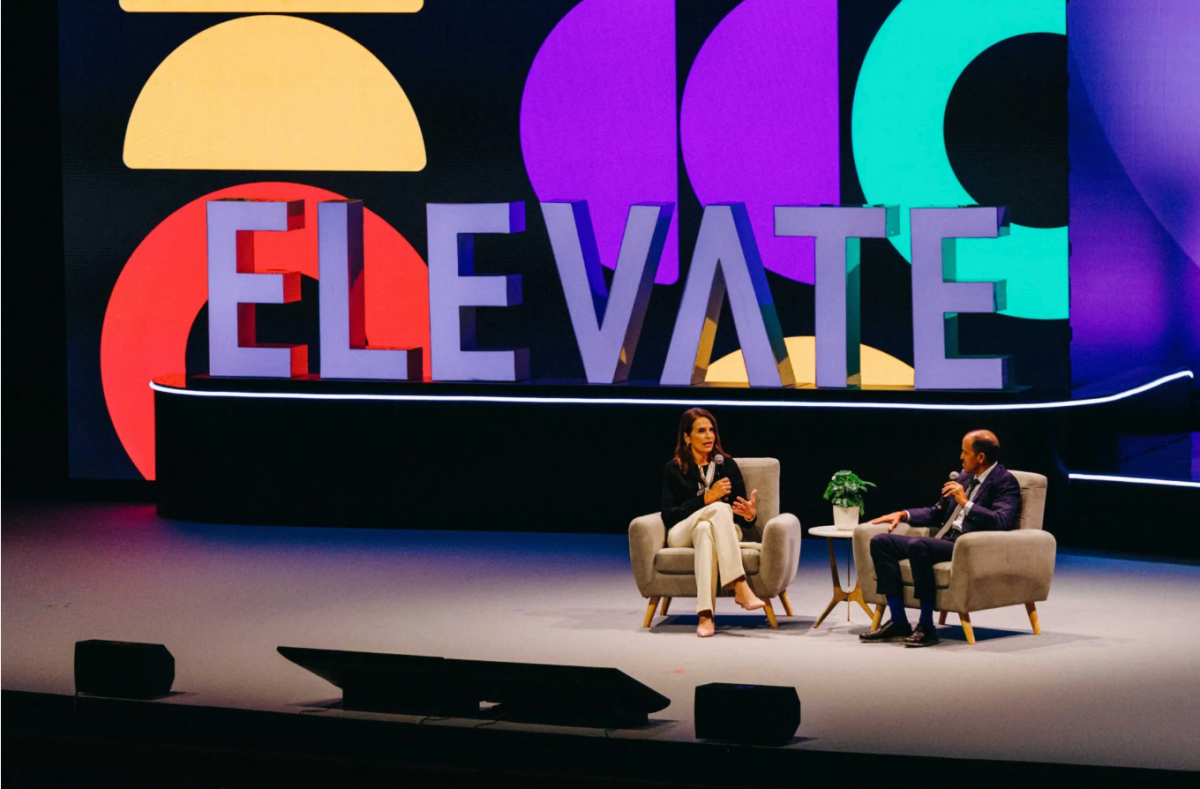
OpenAI continues to redefine the artificial intelligence landscape through groundbreaking innovations, yet behind the scenes, it faces mounting questions about ethical boundaries and societal impact. During a recent Elevate conference in Toronto, insiders observed a company grappling with contradictions—striving to lead a technological revolution while contending with concerns over misuse, energy consumption, and legal intimidation tactics. The company’s push for disruptive AI tools, such as advanced video generation systems, underscores its commitment to innovation but also raises alarms about sustainability and morality.

Technological progress driven by OpenAI’s models demonstrates an unprecedented merger of utility and power. From generic chat assistants to hyper-realistic deepfakes, the innovations threaten to redefine the very fabric of digital communication. While experts like Gartner and MIT recognize AI as a catalyst for economic modernization, critics warn that these breakthroughs could be detrimental if deployed irresponsibly. AI’s energy footprint—particularly for high-intensity tasks like video synthesis—poses a formidable business challenge, requiring massive energy inputs that could exacerbate climate concerns. As exemplified by recent estimates, AI operations can consume gigawatts of energy weekly, with comparable figures cited from China’s recent nuclear build-up. This reality compels a re-evaluation of AI’s sustainability while solidifying the necessity for a competitive energy infrastructure, especially for democratic nations vying to lead the AI race.

Corporate Strategies and Legal Battles Signal a Shift Toward Coercion and Control

Amid the innovation, OpenAI finds itself embroiled in controversy over its aggressive legal tactics against critics. When nonprofit advocate Nathan Calvin was served a subpoena as he discussed AI policy at the California legislature, it exposed a darker aspect of the company’s strategy—weaponizing legal influence to silence dissent. Critics argue that these actions hint at a broader effort to consolidate AI dominance through intimidation, potentially stifling opposition from academia, regulators, and independent voices. Such heavy-handed tactics could undermine the company’s credibility, especially among a growing base of younger tech consumers who value transparency and corporate responsibility.

This internal conflict is echoed by startling admissions from senior staff. As reported by TechCrunch, high-level employees like Josh Achiam openly questioned whether OpenAI’s trajectory risks transforming it into a “frightening power” rather than a “virtuous” leader—an admission that signals a profound crisis of conscience from within. This internal discord highlights an industry-wide reckoning: are the benefits of AI innovation worth the societal costs and ethical dilemmas it creates?

Future Outlook: The Race to AI Supremacy Is a Call to Action

The narrative unfolding around OpenAI signifies a pivotal moment for the tech industry. With its race toward artificial general intelligence (AGI), the stakes have never been higher—not only in terms of technological dominance but also global influence over energy policies, regulatory frameworks, and societal norms. Industry analysts argue that the company’s strategies—be they energetic resource investments or legal maneuvering—are setting the tone for how AI will integrate into daily life. As Elon Musk and others caution about unchecked AI power, the question remains: will OpenAI and its competitors manage to balance innovation with responsibility? Or will the pursuit of disruptive tech threaten to spiral into a new era of corporate overreach and societal upheaval?

The contemporary landscape demands urgent attention from policymakers, business leaders, and technologists alike. The window to shape a responsible AI future narrows, and as skeptics and advocates clash, the global community must act decisively. The coming years will determine whether this technological revolution elevates humanity or ensnares it in unforeseen consequences—making it imperative that innovation is paired with ethical vigilance and strategic foresight.

Social Media Auto Publish Powered By : XYZScripts.com