
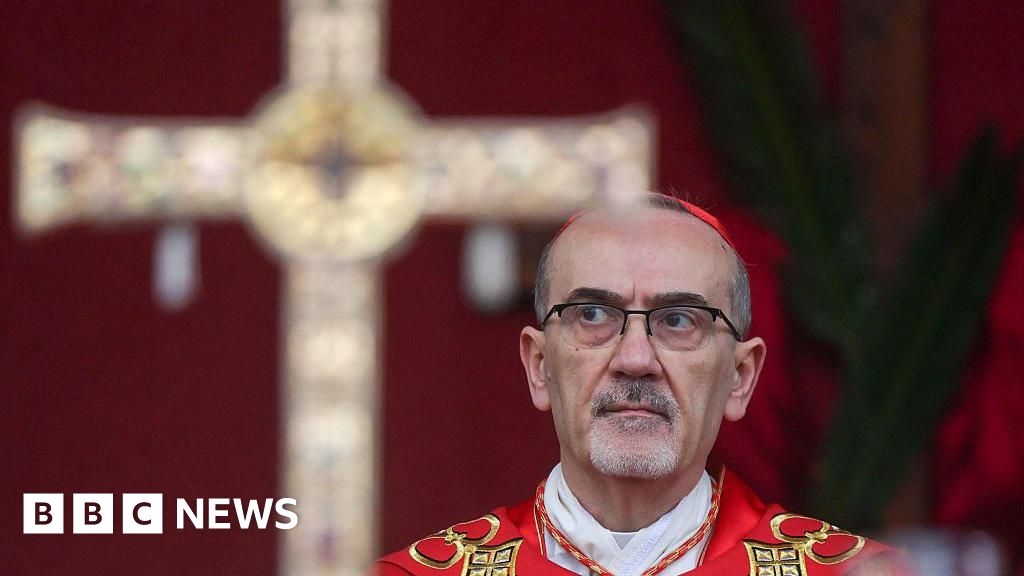

In a striking development that echoes beyond the sacred walls of Jerusalem, Cardinal Pierbattista Pizzaballa, the Latin Patriarch, alongside the Reverend Francesco Ielpo, was reportedly prevented from entering the Church of the Holy Sepulchre—a site revered worldwide as the crucifixion and resurrection point of Jesus Christ. According to church authorities, this incident occurred amidst mounting tensions that highlight ongoing struggles over control and access to one of the world’s most contested religious and historical sites.
This seemingly localized event carries profound geopolitical impact, reflecting a broader shift in regional power dynamics, religious authority, and international diplomacy. The Palestinian Authority and Israeli security forces have continually struggled to manage the complex tapestry of religious rights, sovereignty, and political influence that surround Jerusalem. The incident involving high-ranking religious figures not only underscores these frictions but also signals how fragile the status quo remains, even during sacred observances like Holy Week. Historians and analysts warn that such confrontations may serve as precursors to larger destabilizations, especially as tensions with regional and international stakeholders escalate.
International organizations, including the United Nations and various EU bodies, have repeatedly called for respecting religious freedoms and maintaining peace at sites of religious significance. However, recent events suggest that diplomatic efforts are often undermined by local political pressures and emerging alliances. Experts contend that the decision to block religious leaders from the Holy Sepulchre may be yet another sign of how the struggle for influence over Jerusalem intensifies, with different factions vying for control—not only over territory but also over the narrative of faith and history itself. As the geopolitical chessboard recalibrates, every move at this sacred crossroads has ramifications that resonate across continents and societies, threatening to ignite broader conflicts.
Historic and contemporary analysts observe that the tension surrounding Jerusalem can serve as a barometer for regional stability. Different governments, from Turkey to Egypt, have stakes in the city’s future, often leveraging its religious significance to bolster their geopolitical ambitions. The incident involving senior church figures thrust into the spotlight a critical question: How long can the delicate balance be maintained before these religious and political tensions spill over into open conflict? The answer remains uncertain, yet the weight of history reminds us that the city’s future hinges on more than politics—it is a battleground for the soul of the world’s major faiths, and a symbol of the enduring human struggle over identity, sovereignty, and faith.






