Matox News

Truth Over Trends, always!

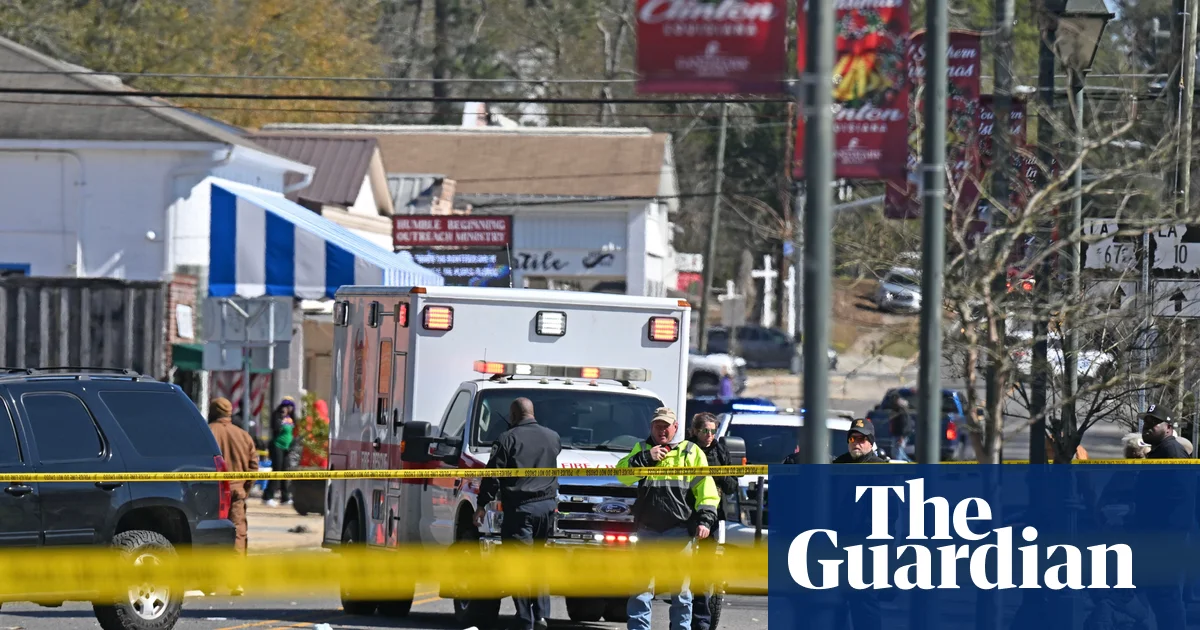
Six Hurt in Louisiana Mardi Gras Parade Shooting—Youth Crime Sparks Outrage

In a stark illustration of ongoing domestic unrest, a tragic mass shooting erupted during a local Mardi Gras celebration in Clinton, Louisiana, leaving six individuals wounded, including a child. This incident, occurring near the town’s courthouse in the heart of a tight-knit community, underscores the persistent challenges facing the United States regarding gun violence and its societal impacts. According to local officials, authorities swiftly responded, arresting one suspect and initiating a search for the vehicle believed to be used in the attack, highlighting the emergency response protocols in place amidst rising violence.

The incident is part of a disturbing trend that has alarmed both domestic and international observers. As of this year, there have been at least 24 mass shootings in the US, according to data from the Gun Violence Archive. This organization defines a mass shooting as any event in which four or more victims are wounded or killed, a threshold that underscores the scale of the crisis. Such violence not only devastates local communities but also fuels debates about the efficacy of current gun control laws, with critics arguing that congressional inaction perpetuates a cycle of insecurity. Historians and analysts warn that if the trend continues, the social fabric of American society risks further unraveling, with implications for national stability and global perception.

The failure of Congress to adopt more comprehensive gun legislation reflects broader geopolitical and societal issues. Many international partners and organizations, including the United Nations, have called for stricter gun regulations worldwide, portraying firearms as a pressing global concern. Yet, the US remains uniquely plagued by deep partisan divides and cultural entrenchment around the Second Amendment. As legislation stalls and mass shootings multiply, how decisions made at the federal level will alter the future security landscape remains uncertain. The international community watches as the US grapples with this internal crisis, highlighting a dissonance between American internal policy and the global push for peace and stability.

Across the Atlantic, European nations and Asian powers observe America’s struggles with a mixture of concern and skepticism, often contrasting their own more restrictive gun laws with the US’s persistent inaction. Some analysts warn that the inability of the world’s most powerful nation to effectively curb its gun violence could undermine its moral authority on human rights and security issues. As global institutions like the World Health Organization emphasize the importance of preventative measures, American policymakers face the profound question: will they choose to prioritize societal safety over entrenched interests? Meanwhile, the bloodshed in Clinton stands as a sober reminder of unresolved divisions and the urgent need for decisive action.

With history unfolding daily in the streets of small towns and big cities across the nation, the narrative remains clear and tragic: a society on the brink, teetering between constitutional rights and the need for security. The echoes of this latest tragedy continue to resonate, a stark reminder that the true cost of internal division extends beyond borders, shaping the fate of nations near and far. As history’s pages turn, the world is left to ponder whether the tide can be turned or if the dark chapter of American gun violence will write itself into the annals of unresolved conflicts—an enduring testament to a nation still striving, still fighting to define its future amid the shadows of its own making.
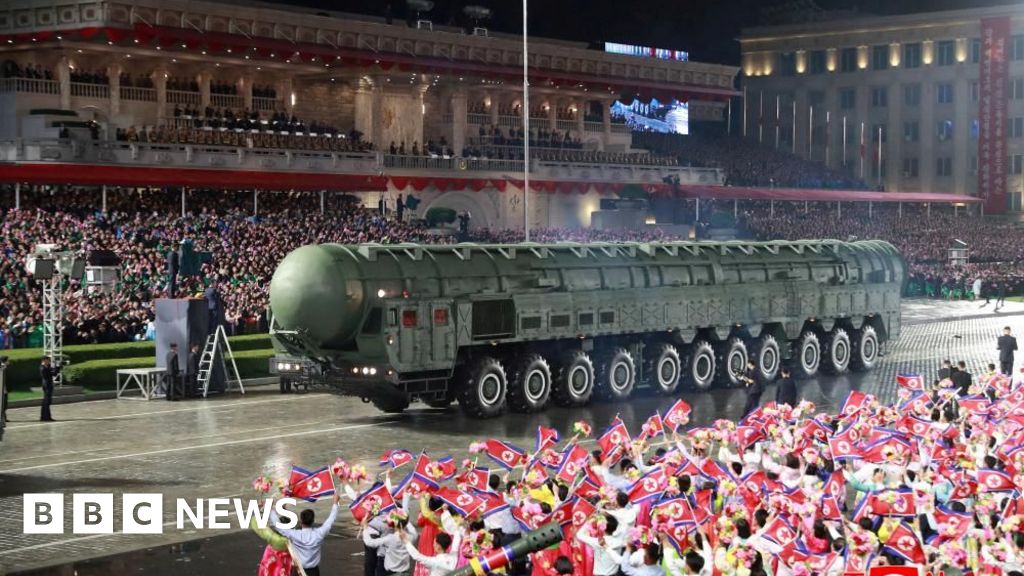

Rocket display steals the show at North Korea parade

In a clear demonstration of its advancing military capabilities, North Korea unveiled its latest intercontinental ballistic missile (ICBM), the Hwasong-20, during a grand military parade in Pyongyang commemorating the 80th anniversary of its ruling party. The event, broadcast widely on state television, displayed a confident Kim Jong Un overseeing the event—sending a stark message to the world about the regime’s ongoing pursuit of nuclear and missile prowess. The timing and content of this reveal signal an increasingly assertive stance in North Korea’s quest for strategic parity, and potentially, superiority.

The Hwasong-20‘s impressive size strongly indicates its capability to carry multiple nuclear warheads. This advancement marks a notable escalation in Pyongyang’s missile program, which has persisted despite numerous international sanctions and diplomatic efforts to curb its proliferation. Analysts from institutions such as the Council on Foreign Relations warn that this development could fundamentally alter regional security calculations, particularly in South Korea, Japan, and the broader Asia-Pacific region. For the West, this serves as a reminder of North Korea’s resilience and its commitment to maintaining a nuclear deterrent—regardless of diplomatic prospects and economic sanctions.

Ever since Kim Jong Un’s rise to power, North Korea has pursued a dual strategy of nuclear development and diplomatic brinkmanship. However, these latest tests and displays underscore a shift toward greater military self-reliance and readiness to challenge international norms. Some experts suggest that this move complicates efforts by the United Nations and other global institutions to impose meaningful restrictions, and underscores the limitations of *diplomatic engagement* with a regime that views nuclear weapons as essential to its survival. The proliferation of such advanced missile technology not only elevates North Korea’s geopolitical standing but also deepens regional instability, forcing neighboring nations to reconsider their security alignments and military postures.

This escalation is not occurring in isolation. China and Russia, both strategic allies of Pyongyang, have shown mixed reactions that reflect broader shifts in their own geopolitical goals. Some analysts suggest that Beijing and Moscow are tacitly accepting North Korea’s missile tests as part of a complex pushback against perceived Western encroachment and U.S. dominance in the Indo-Pacific. Meanwhile, the international community faces mounting warnings from security experts who emphasize that further advancements in North Korea’s arsenal could spark an arms race on the Korean Peninsula, or even ignite conflict if miscalculations occur. The latest developments serve as a stark reminder that global peace remains fragile, heavily dependent on strategic dialogues and the restraint—or lack thereof—of a regime that appears increasingly willing to test the limits of diplomacy.

Historians like Bruce Cumings and military analysts warn that these technological milestones might mark a pivotal chapter in East Asian geopolitics. The struggle to contain North Korea’s nuclear ambitions is a saga that history may view as a precursor to a broader, more dangerous confrontation. As the world watches, the stakes couldn’t be higher; the balance of power teeters on the edge of a new era where technological advancements wield the potential to reshape conflicts—and societies—forever. In the shadow of this emerging threat, nations must grapple with unsettling questions: Will diplomacy prevail, or will this be the beginning of a new, perilous arms race?”

Social Media Auto Publish Powered By : XYZScripts.com


