
Matox News

Truth Over Trends, always!

Arlo Parks Reflects on the Absence of Late-Night Conversations in Smoke-Filled Spaces: Embracing the Hedonistic Spirit of Her Bold New Album

In an era where the relentless pace of modern life threatens to drown out the echoes of tradition and the deeper currents of cultural memory, Arlo Parks emerges not merely as a pop phenomenon but as a testament to the enduring power of culture as the foundation of individual and societal identity. Her journey—from an early fascination with GarageBand confessions to commanding the stage at Glastonbury—illustrates a profound truth: that beneath the surface of popular music lies a dynamic narrative about who we are, where we come from, and where we are headed. As Ortega y Gasset once noted, “Culture is not an accessory but the very substance of society”; Parks’s evolution exemplifies this, highlighting how contemporary artists continue to redefine and uphold this vital link through their works.

Throughout her career, Parks has shown an unwavering commitment to authenticity, intertwining her personal truths with a collective history of musical and cultural innovation. Her early releases, laced with references from Nick Cave to Erykah Badu, revealed a young artist unafraid of confronting the chaos of mental health struggles and romantic rejection—a mirror to the complexities of human existence. Yet, her rise is also emblematic of a broader cultural shift wherein the boundaries of societal acceptance are expanded, allowing voice to the queer community and those traditionally on the margins. Her embrace of electronic music and nightclub culture in her latest album, Ambiguous Desire, harks back to a collective quest for liberation in spaces that historically have served as sanctuaries for outsiders. Here, Parks’s work is not just entertainment but a reclaiming of cultural spaces—akin to what Tocqueville observed about America’s penchant for creating voluntary associations—as arenas where individual spirits find community, expression, and defiance against societal conformities.

Artistically, Parks embodies a necessary rebellion against superficiality, consciously distancing herself from the temptations of commercial success that often threaten to dilute genuine cultural expression. Her deliberate turn to the night-time in her latest album, capturing the euphoric surge of clubbing and rave culture, echoes Chesterton’s assertion that “art is the most beautiful of all lies,” in that it often reveals deeper truths about human longing and societal yearning. In her song Heaven, inspired by the transcendent moments of life and music, Parks taps into the eternal human pursuit: to find meaning and connection in fleeting moments. Her acknowledgment that she explores these realms not to adopt a persona but to understand herself—”who am I now?”—speaks to the philosophical inquiry that underpins genuine cultural expression: it is a mirror and a prophecy, reflecting our current realities while sketching the contours of future identities.

Ultimately, Parks’s narrative underscores a vital idea: that culture remains the living, breathing memory of our collective humanity and the prophetic voice guiding us forward. Whether through the revival of club culture or her unapologetic discussions of desire and queerness, she exemplifies an artist who recognizes that identity is both rooted in tradition and open to renewal. And as T.S. Eliot poignantly observed, “The future is always a certainty of the imagination.” In the poetic silence between her melodies and the vibrant chaos of her soundscapes lies the promise that culture, in all its forms, persists as humanity’s continuous conversation—an echo of the past and the whisper of what yet may be, shaping and being shaped by the new generations who dare to listen and create in the ever-unfolding mystery of existence.
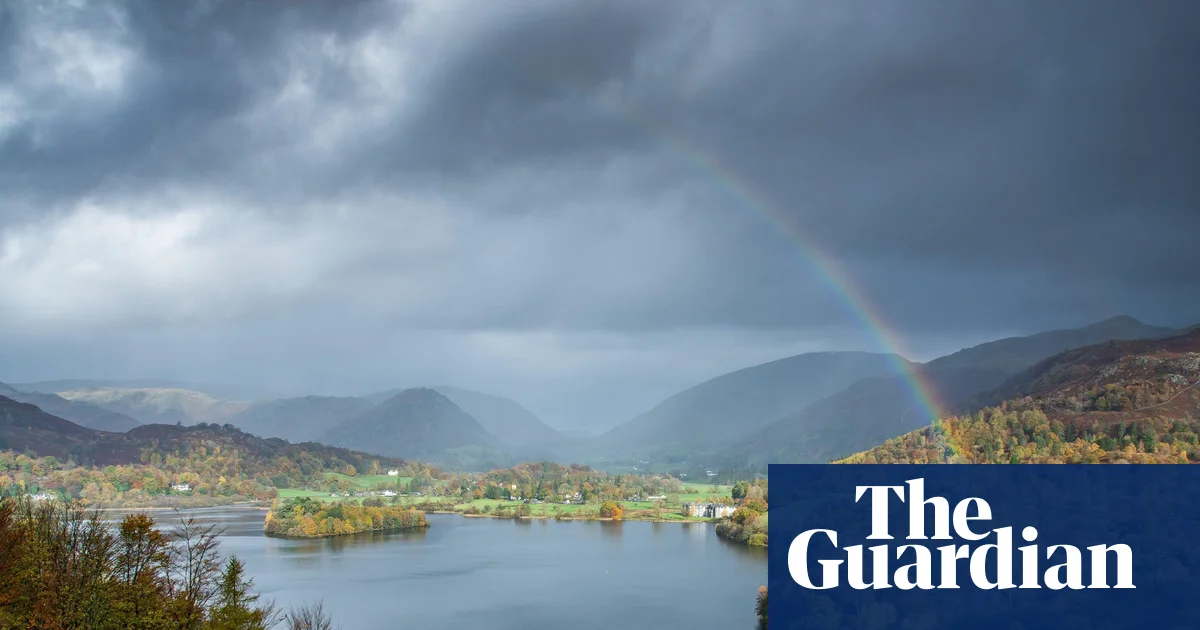
Green groups slam move to weaken protections for English national parks

In a move that has ignited fierce debate across the United Kingdom and raised concerns among environmentalists worldwide, the government is considering revisions to planning laws that could significantly weaken protections for iconic national parks such as Dartmoor and the Lake District. This proposed shift, driven by the Treasury and championed by Chancellor Rachel Reeves, aims to facilitate the construction of 1.5 million new homes and major infrastructure projects, purportedly to plug a £30 billion fiscal gap. However, critics warn that this decision is a “kneejerk bid for growth” that threatens the very essence of the natural heritage cherished by millions and has far-reaching geopolitical impact beyond Britain’s borders.

Originally established by the postwar Labour government under Clement Attlee in 1949, national parks in the UK were designed to conserve natural beauty, wildlife, and cultural heritage while promoting access and recreation. Yet, recent governmental discussions threaten to upend this legacy. A key change being proposed would remove a duty that mandates public authorities to “seek to further” environmental and cultural aims within these protected areas. Critics, including prominent environmental organizations like the RSPB and the Wildlife Trusts, argue that the move is not evidence-based and will accelerate environmental degradation, undermining decades of conservation efforts.

The controversy underscores a broader, global concern: how economic pressure often trumps environmental stewardship. Historians and analysts have long noted that the deliberate creation of national parks was a conscious effort to balance economic development with the preservation of natural landscapes. Now, as international organizations like the United Nations reflect on climate and biodiversity crises, the UK’s potential rollback serves as a warning to other nations contemplating similar relaxations in environmental protections. The decision threatens to diminish Britain’s standing as a global leader in conservation, impacting international reputations and policies aimed at the biodiversity crisis.

  • The UK ranks poorly in European comparisons regarding green space sacrifice to development, with thousands of sites at risk under the new proposals.
  • Over 170 organizations, including major NGOs and conservation groups, have publicly condemned the plans, emphasizing the economic and social value of preserved landscapes, which attract millions of visitors and generate billions in revenue annually.
  • Analysts warn that sacrificing green spaces for short-term economic gains could lead to irreversible damage, affecting public health, climate resilience, and cultural heritage.

As the debate rages in Westminster, international voices caution against complacency. Renowned environmental historian Dr. Emily Howard warns that “history teaches us that once natural landscapes are sacrificed, they rarely recover.” The proposed legal amendments could serve as a precedent, emboldening other nations to prioritize economic growth over environmental integrity, further destabilizing fragile ecosystems on a global scale. The unfolding political drama emphasizes that decision-makers must grapple with a fundamental question: whether the pursuit of immediate economic benefits can justify the erosion of the very natural resources that sustain societies across generations.

The weight of history presses heavily on today’s legislators. The UK’s national parks, born from postwar recovery and a vision of national renewal, now stand at a crossroads. Will future generations inherit a legacy of preservation or a landscape scarred by shortsighted development? As the legislative clock ticks toward a critical vote, the world watches with bated breath. The outcome will not only determine the fate of these treasured lands but will also send a powerful message about the values that shape nations and societies in our tumultuous era. In this moment, history is writing itself, with each decision echoing across borders and time — a testament to the enduring struggle between progress and preservation.

Storm Amy hits UK: London’s royal parks shut, Scotland faces blackouts and travel chaos

Storm Amy’s Global Impact: A Shattering Force of Nature and Its Geopolitical Consequences

As Storm Amy sweeps across northern Scotland, Ireland, and Scandinavia, its destructive power has transcended mere weather phenomena, revealing the vulnerabilities and resilience of modern societies. With wind speeds reaching record-breaking levels—such as the slip of Baltasound into the lowest pressure ever recorded in the UK—this tempest underscores a new chapter in climate variability. According to the Met Office, the storm broke overnight pressure records, signaling a menacing escalation in storm strength that meteorologists and climate scholars are closely monitoring. The storm’s ferocity has led to widespread flooding, power outages, and transportation chaos, emphasizing how nature’s fury is reshaping the geopolitical landscape and how nations respond to environmental crises.

Across Ireland, the storm’s wrath has caused the loss of power for hundreds of thousands, with officials warning that recovery could take days—particularly in counties like Donegal and Galway. Irish police reported the tragic death of a man in County Donegal as a direct result of this weather event, intensifying the human toll amidst the chaos. The Irish Meteorological Service’s yellow and amber warnings highlight the dangerous scale of Wind gusts exceeding 90 mph, which have already toppled trees, torn down power lines, and triggered floods in coastal regions. Similar scenes of devastation have been reported in Scotland, where more than 170 incidents have been logged by Network Rail, including fallen trees obstructing railways, leading to transport bans and economic disruptions. Once seen as unpredictable yet localized, such environmental catastrophes are now evidence of an increasingly volatile climate—a development that is inexorably linked to geopolitical strategies in the 21st century.

Beyond the British Isles, Storm Amy’s reach extends into Scandinavia, striking Sweden, Denmark, and Norway. Heavy gusts have caused power outages in tens of thousands, alongside flooding and damage to infrastructure. The European response reveals a continent on edge, with authorities in Norway issuing flood warnings and warnings for large waves threatening coastal areas. International traffic and maritime routes are severely impacted, showcasing how extreme weather patterns are stirring an urgent reevaluation of geographic vulnerabilities. Historians and climate analysts warn that these storms are consistent with the patterns forecasted by climate change models, heralding a new era where geopolitics will increasingly contend with the instability introduced by increasingly frequent and intense environmental disasters.

Geopolitical Impact: A Testing Ground for Resilience and Cooperation

The widespread devastation from Storm Amy exposes the fragile fabric of modern society’s infrastructures—transport, power, and communication networks—yet also tests the mettle of international cooperation. Governments scrambled to respond, with disruptions affecting everything from regional train services in Scotland to ferry routes in Ireland. The frequent suspension of critical transportation—such as the postponement of rugby matches in Galway and the halting of Scotland’s rail networks—illustrates how environmental shifts threaten economic stability and social cohesion. Analysts at the United Nations warn that failure to adapt to these climate pressures will deepen geopolitical tensions, especially in regions where resources are already stretched thin.

In particular, the storm’s ferocity serves as a sobering wake-up call to Western nations, prompting discussions on infrastructure resilience, emergency preparedness, and climate diplomacy. Governments are now forced to confront the reality: climate change is no longer a distant threat but an immediate challenge with profound geopolitical ramifications. Countries are increasingly entering alliances focused on climate adaptation, energy security, and shared responses to natural Calamities. According to climate scientists, delays in investing in adaptive infrastructure threaten to exacerbate social divides, fueling migration pressures and resource conflicts in vulnerable regions. Even international institutions like the European Environment Agency have voiced concern, emphasizing that the storm’s impacts are a stark illustration of a changing climate demanding immediate international action.

The Unfolding Canvas of History: An Era Marked by Nature’s Wrath

As the storms continue to batter Europe and the British Isles, history reminds us that such events are not isolated but interconnected with the larger currents of environmental and geopolitical change. The images of fallen trees, flooded roads, and power outages are the visuals of a new reality forged by climate shifts—reality in which nations must reshape their policies, their economies, and their very understanding of security. Indeed, as analysts warn, the escalating frequency and intensity of storms like Amy threaten the stability of societies and international order itself. The chaos wrought by this storm is a stark reminder that in an age of rapid environmental change, the lines between nature and geopolitics are irrevocably blurred, and history itself is being rewritten by the power of the elements.

Social Media Auto Publish Powered By : XYZScripts.com