Matox News

Truth Over Trends, always!

A New Beginning for Sundance: Fresh Perspectives and What’s Ahead for the 2026 Film Festival

The Evolving Spirit of Sundance: A Reflection on Culture, Identity, and the Promise of New Horizons

Once heralded as the heart of independent American cinema, the Sundance Film Festival has long embodied more than mere entertainment; it is an emblem of cultural authenticity, tradition, and societal identity. Founded by the iconic Robert Redford, Sundance was initially a celebration of the rugged frontier spirit, a platform for filmmakers who dared to challenge the mainstream and craft stories rooted in authenticity and local color. As Ortega y Gasset observed, “A culture is the incarnation of the ideals, troubles, aspirations, and contradictions of its people.” Sundance’s identity has always been intertwined with this philosophy—an ongoing dialogue between art and life, challenging the uniformity of Hollywood and fostering the distinct voices that shape a nation’s soul. As the festival shifts from Park City to Boulder, questions arise about whether this migration signifies a recalibration of cultural priorities, or a necessary evolution in an era demanding resilience and reinvention.

The festival’s historical relevance extends beyond the arts into the very fabric of societal change. It has historically celebrated films that grappled with American values, social justice, and identity politics, echoing Tocqueville’s insights on the importance of local cultures as the foundation of democracy. Films like Little Miss Sunshine or Whiplash serve as milestones—not just for their cinematic artistry but for their reflection of American resilience and the unyielding pursuit of excellence amidst adversity. Yet, today’s Sundance faces a paradox: while technological advancements have democratized film production, making independent filmmaking more accessible, access to distribution and slots in the festival are tightenings of a gate increasingly guarded by economic interests and corporate financiers. This shift underscores Gasset’s assertion that culture, once a collective expression, is now often filtered through economic and ideological lenses, risking the dilution of authentic voices in favor of market-driven narratives.

The Cultural Shift: From Authenticity to Commercial Opportunism

Recent years have witnessed a transformation, wherein the historic Sundance ideal—an incubator for raw, unpolished stories—has become entangled with the commercial pursuits of streamers and studios. The festival now often reflects a stratification: the real films that challenge convention and inspire discourse, versus those crafted within a calculated, factory-like process aimed at pleasing a broad, attention-starved audience. Philosophers like Chesterton warned of the danger of losing sight of the true in pursuit of the merely entertaining, and modern Sundance seems caught at this crossroads. The remarkable success of films like Josephine, which tackles harrowing subjects with originality, exemplifies the enduring relevance of art that speaks to the human condition beneath the veneer of commercial appeal. Such films remind us that culture is the memory of society and the prophecy of its future, a prophetic voice echoing through the shadows of contentious and uncomfortable truths.

As critics and audiences grapple with shifting tastes, the festival’s market dynamics reveal an underlying tension: the blurred lines between artistic integrity and financial viability. The absence of broad studio backing and limited sales post-festival reflect a conservative climate, where risks are minimized, and content is scrutinized through the lens of profitability. Yet, hope persists in the form of genuine cinematic art—films like Josephine—a film that not only confronts a tough subject yet does so with profound originality—embodying the quintessential Sundance spirit: challenging, daring, and purposeful.

Looking Forward: A New Horizon for Sundance and Society’s Cultural Mission

As Sundance prepares to relocate to Boulder, echoes of historical parallels resonate: just as great movements in art and thought have sought new ground—be it the Renaissance’s movement from Florence to Venice or the Harlem Renaissance’s cultural revival—so too must the festival redefine its cultural mission. The debate surrounding what Sundance should be—an incubator for authentic storytelling or a marketplace of commercially viable content—reflects a broader societal inquiry: what is the role of culture in forging identity and guiding society? To quote T.S. Eliot, “The progress of an artist is a continual self-sacrifice,” emphasizing that true cultural progress requires sacrifice, honesty, and resilience. The festival’s move offers an opportunity not merely for geographical change but for a renewal of purpose—balancing the demands of visibility and commerce with an unwavering commitment to the truthful and original voices of tomorrow.

In the end, culture remains a vital thread linking our past and future—a tapestry woven with memory, hope, and prophecy. Sundance, in its evolving form, may yet remind us that the true power of cinema lies not in its commercial success but in its ability to mirror humanity’s deepest struggles and aspirations. As we stand on the cusp of this new chapter, the enduring question remains: will we heed the wisdom of our cultural memory and listen for the prophetic voices whispering from the shadows? Perhaps, in their echoes, lies humanity’s most profound future—an enduring testament that from the ashes of change rises the future of art and identity intertwined in the sacred dance of tradition and innovation.
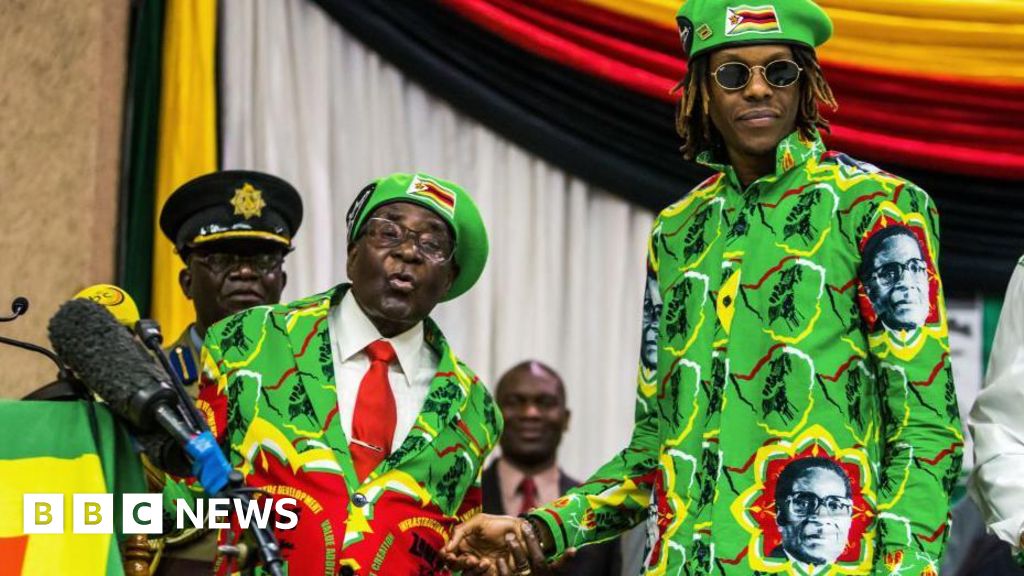
Mugabe's Son Faces Drug Charges in Court—Youth Perspectives Shift Buhari, but Justice Must Prevail
Mugabe’s Son Faces Drug Charges in Court—Youth Perspectives Shift Buhari, but Justice Must Prevail

Zimbabwe’s Political Legacy Faces New Scrutiny as Mugabe’s Son Encounters Legal Troubles

The recent arrest of Robert Mugabe Jr., the son of the late Zimbabwean ruler Robert Mugabe, has sent ripples through the nation’s fragile political landscape and raised questions about the lingering influence of his family’s dynasty. Mugabe Jr., aged 33, appeared in a Harare court on charges of drug possession after police intercepted him for driving the wrong way on a one-way street. Authorities claimed they discovered small sachets of cannabis in his possession—a detail contested by the defendant’s legal team—highlighting ongoing issues of law enforcement and judicial transparency that continue to shape Zimbabwe’s internal stability.

This incident is not isolated but part of a broader pattern that underscores the tumultuous ongoing struggle for political legitimacy and social control within Zimbabwe. The police reported arresting five alleged members of a criminal syndicate linked to Mugabe Jr., who purportedly possessed five sachets of marijuana and six ecstasy pills. Such allegations, although currently under investigation, bear important symbolic weight—they illustrate how the nation’s recent history of political upheaval, economic hardship, and social unrest remains intertwined with the Mugabe legacy. Analysts warn that these events may serve as pretexts for factional power struggles, especially as Zimbabwe navigates its post-Mugabe era, with current leader Emmerson Mnangagwa attempting to consolidate authority amid economic and political uncertainty.

Historically, Zimbabwe has been marked by a mix of liberation and repression. Its founding father, Robert Mugabe, was celebrated for his heroic role in ending colonial rule but later condemned for implementing policies that led to economic decline, hyperinflation, and widespread social discontent. International observers, including the United Nations and several regional organizations, have repeatedly called for transparency and reform, yet the country’s political culture remains deeply entrenched in patronage and corruption. With Mugabe Jr.’s incidents now coming to light, some analysts see it as a reflection of the persistent influence his family continues to wield behind the scenes, subtly shaping Zimbabwe’s geopolitics and internal dynamics.

In the broader scope of regional geopolitics, Zimbabwe’s internal upheavals hold implications for southern Africa’s stability. As South Africa, Zambia, and other neighboring states keenly observe shifting alliances and political factions, the specter of unresolved historical grievances looms large. How Zimbabwe handles these internal crises—particularly in terms of justice, transparency, and leadership accountability—will influence regional cooperation and investor confidence alike. Scholars suggest that Mugabe’s legacy remains a cautionary tale about the perils of authoritarianism and economic mismanagement. Looking forward, the decision of Zimbabwe’s judiciary regarding Mugabe Jr.’s bail and potential conviction will test the country’s commitment to the rule of law and its capacity for genuine political reform. As history continues to unfold, the nation faces a pivotal crossroad—whether to reconcile its past or allow echoes of a turbulent past to determine its future.

In the shadows of these unfolding events, the world watches with bated breath. The fate of Zimbabwe may not define the entire continent, but its trajectory carries profound implications for the resilience of democracy and the ongoing quest for justice in a nation scarred by decades of conflict. As Mugabe’s legacy persists, the question remains: will the currents of change finally break the cycle of repression, or will history once again be written in the blood and tears of Zimbabwe’s people? The answer lies ahead, but one certainty endures—history’s weight presses heavily on Zimbabwe’s shoulders, and the world stands witness to a nation still searching for its true destiny amid the shadows of its past.

Springsteen: Deliver Me From Nowhere – A Gritty, Authentic Biopic That Navigates Between Tradition and Fresh Perspectives

In an era saturated with biographical renditions, the musical biopic has become both a commonplace and a mirror of society’s collective identity—an artifact reflecting our fascination with genius, struggle, and the mythos of artistic creation. As Timothée Chalamet rightly observes, the formulaic patterns of this genre can breed skepticism; yet, it is precisely within these familiar frames that culture reveals its deeper, enduring significance. The stories told through film serve not only as entertainment but as an extension of societal memory—reverberating past triumphs and failures, shaping present perceptions, and foreshadowing future possibilities. Here, the biopic functions as a vessel for cultural continuity, anchoring the individual’s journey to the collective destiny of society itself.

This connection is vividly exemplified in recent portrayals of icons like Bruce Springsteen. Films such as Deliver Me from Nowhere venture into the depths of the artist’s creative and personal turmoil, revealing a terrain where genius is often cloaked in fragility. Seen through the lens of thinkers like Ortega y Gasset, culture is a living organism, embodying the <vital spirit of a society>—a blueprint for identity, resilience, and the ongoing quest for meaning. Springsteen’s story, set amidst the turmoil of his early 30s and the cultural upheavals of the early 1980s, underscores this relationship. His artistic pursuit—shaped by the raw realities of blue-collar America and inspired by narrative voices like Flannery O’Connor—transcends mere entertainment; it is an act of cultural affirmation, a way for society to confront its own shadows while aspiring toward renewal.

Within this cinematic reflection, there emerges a narrative of resilience against homogenization, of the importance of preserving the traditions and memories that form the backbone of societal identity. Like Chesterton’s view that “the modern mind is a mind of escapism,” the danger lies in losing sight of the deep roots that anchor us. Whether it is the recording of Bruce’s acoustic demos, capturing the blue-collar heartbeat of America, or the intimate portraits of his family life, the essence of these stories lies in their candid acknowledgment of human vulnerability. They remind us that culture is a living dialogue, a bridge between the history that shapes us and the foresight that guides us. In this way, the artist’s journey becomes less a mythic narrative and more a testament to the unending pursuit of authenticity amid the noise of success.

As the poetry of human memory and prophecy of hope intertwines, it compels us to see culture not merely as a reflection, but as a catalyst for the future. The stories of singers, poets, and prophets, captured in film and song, serve as the grooves of our collective record. Their relevance is timeless, reminding us that in understanding the echoes of the past, we reveal the contours of our shared destiny. Culture, therefore, is neither static nor insular; it is the living archive of our identity, an ongoing composition that bears witness to our wounds and aspirations alike—ever echoing, ever evolving, and forever speaking the language of humanity.”

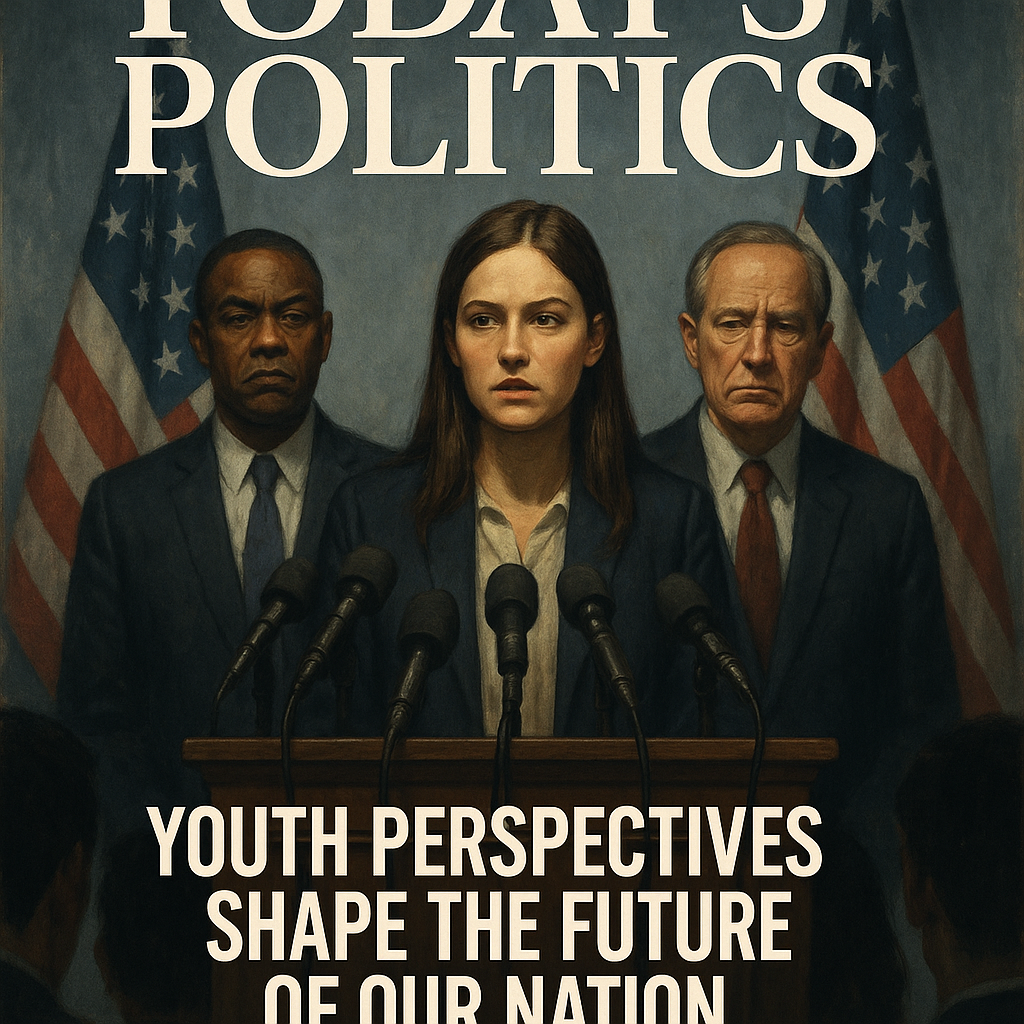
Today’s Politics: Youth Perspectives Shape the Future of Our Nation

In the current landscape of American politics, the decisive battle for the soul of the nation continues to unfold amidst mounting power struggles that determine the direction of future policy and influence. At the center of this evolving tableau is President Joe Biden, whose administration endeavors to project authority while navigating the turbulent waters of division and discontent. The confrontations between the executive branch and legislative bodies reveal much about the undercurrents shaping American governance—where policy reforms are not merely legislative acts, but battlegrounds for ideological supremacy.

The Biden administration’s push for broad reforms—ranging from economic recovery to social equity—has been marked by an ambitious agenda that echoes traditional Democratic objectives. Yet, these initiatives often encounter fierce resistance from Republican-led legislatures and conservative interest groups desperate to preserve their influence. This dynamic not only underscores the power dynamic in play, but also raises questions about who truly holds sway over the policy outcomes that will shape the lives of millions. Here, the narrative echoes the enduring philosophical debate on who determines the governance of a nation—the voters, the elites, or the institutions.

Historical parallels are instructive. Like the fierce constitutional debates during the New Deal era or the more recent battles over healthcare and executive power, today’s political climate signals a struggle over constitutional interpretation. Constitutional scholars and theorists such as **Ronald Dworkin** and **A.V. Dicey** remind us that the document—while framed in the 18th century—serves as a battleground for contemporary ideologies. The very fabric of the U.S. Constitution is being tested as executive orders clash with legislative statutes, and questions around *who* wields *ultimate authority* become increasingly contentious. When institutions clash, it becomes clear that the ruling power defines the destiny of democracy itself—placing the social contract under continuous renegotiation.

In this constant push-and-pull, the decisions of today forge the societal landscape of tomorrow. Policy shifts—be they related to immigration, economic reform, or civil liberties—are rooted in broader ideological conflicts that resist simple resolution. The stakes transcend mere legislation; they shape the identity of the nation. As political theorist **Carl Schmitt** argued, sovereignty resides in the ability to decide on the exception, and in such moments, the true supremacy of power is revealed. The question remains: who will define the narrative from this stage of history? Will it be the advocates of order or the champions of change? Ultimately, the stage is set, and history is watching—to see who will write the final chapter in this ongoing saga of power and destiny.

Social Media Auto Publish Powered By : XYZScripts.com