
Matox News

Truth Over Trends, always!

Consultancy Co-Founded by Peter Mandelson Hits Rock Bottom, Files for Administration

The recent collapse of Global Counsel, a prominent UK-based consultancy co-founded by Peter Mandelson, signals more than just a corporate failure—it highlights the far-reaching effects of personal associations and geopolitical reputation in the global arena. Once regarded as a leading public affairs firm with influence spanning Brussels, Berlin, Doha, and Singapore, the company’s downfall underscores the interconnected nature of domestic scandals and international affairs. As administrators from Interpath confirmed the company’s imminent liquidation, the ramifications resonate beyond business, exposing vulnerabilities in trust, reputation, and diplomatic influence.

The immediate trigger for this collapse traces back to public revelations that linked Mandelson to controversial figures1. Specifically, it emerged that Mandelson had sought advice from convicted offender Jeffrey Epstein in 2010—shortly after leaving office following Labour’s defeat in the general election. Despite efforts to dissociate the firm from Mandelson’s controversial past, client confidence evaporated virtually overnight, with many cutting ties amidst fears of reputational damage and unwanted scrutiny. This incident reveals how individual histories of prominent political figures can have direct consequences on the fortunes of their ventures—consequently impacting the broader political landscape, especially in the UK’s ongoing struggle to project influence through soft power.

Analysts and international organizations warn that such events have symptomatic significance: they reflect the fragility of alliances built on reputation rather than substantive policy. Historians, like Dr. Emily Johnson of the London School of Economics, argue that discrete episodes involving influential figures often ripple through the geopolitical fabric—altering perceptions, deterring foreign investment, and undermining diplomatic initiatives. The fallout from this scandal not only affects Britain’s soft power, but also casts a shadow of uncertainty across global policy corridors. Many see this as a warning that in today’s interconnected world, personal conduct of elites can become an external stressor capable of destabilizing departments of influence, especially those engaged in international consultation and policy advisory roles.

  • Client withdrawals and loss of trust have led Global Counsel to cease trading, with the loss of approximately 100 jobs in the UK alone.
  • Despite efforts to distance themselves, the scandal’s ripple effects impacted client confidence on an unprecedented scale, illustrating how reputational crises can quickly escalate into institutional failures.
  • The case poses questions about accountability within elite networks and the accountability mechanisms of global influence operations, echoing broader debates on transparency and ethical standards in public affairs.

As Wegg-Prosser resigned earlier this month, the collapsing empire of a once-renowned consulting firm underscores a larger truth: the age of unaccountable influence is waning, revealing cracks in the fortress of diplomatic and corporate discretion. This incident serves as yet another chapter in the ongoing story of how individual histories and personal scandals can reshape not only corporate trajectories but also the geopolitical narrative. Moving forward, nations and societies will increasingly scrutinize the personal backgrounds of those entrusted with shaping policy. History is watching, and the window for opaque influence is closing fast. As the global chessboard continues to shift, the question remains: in a world where reputations are currency, who will be the next to falter beneath the weight of history’s relentless gaze?
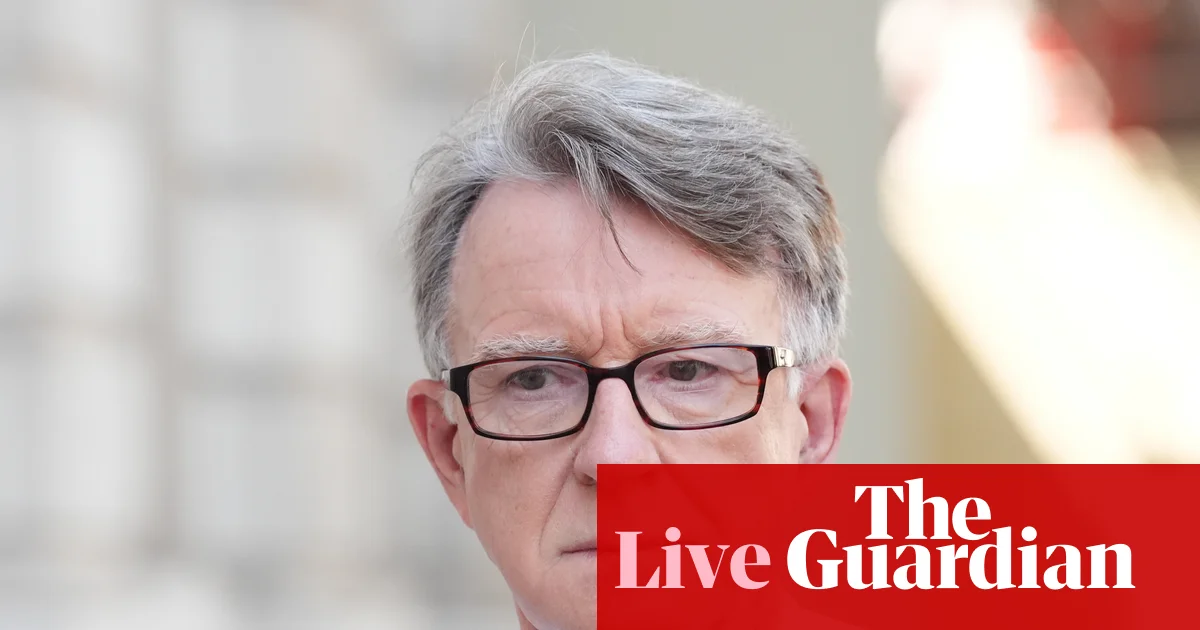

Foreign Office to probe Peter Mandelson’s controversial ambassador payoff – UK politics in focus

International Power Play and the Political Aftermath of Mandelson’s US Payoff

In a move that underscores how geopolitical decisions are increasingly intertwined with domestic controversies, the case of Peter Mandelson has taken center stage in British political discourse. Once a leading figure in UK politics, Mandelson’s recent fallout over a taxpayer-funded payoff—reportedly up to £55,000—after being sacked as ambassador to the United States has sent shockwaves through Westminster. The controversy hinges on his association with Jeffrey Epstein, the late accused child sex offender, raising serious questions about judgment and integrity within the ruling circles. This incident is not just a domestic scandal but a test case for how international relations and internal political stability are now dangerously linked in an era of shifting global alliances and transparency demands.

While the Foreign Office claims proper procedures were followed in Mandelson’s termination, the revelation of his sizeable payoff—whose details are still to be fully disclosed—poses a critical question of cost and morality for government transparency. Analysts warn that such payouts, especially in high-profile diplomatic posts, can undermine public trust and usher in a wave of political instability. The incident also casts a shadow over Keir Starmer’s leadership, as he struggles to navigate a political landscape riddled with ongoing scandals. The international community watches with keen interest, knowing that in the ripples of this controversy lie repercussions for alliances, trade negotiations, and diplomatic reputation.

Prominent voices—including Pat McFadden, the Work and Pensions Secretary,—have called for Mandelson to return or donate the payoff to charity, emphasizing the moral duty in these turbulent times. European and transatlantic analysts suggest that this domestic scandal comes at a concomitant moment of geopolitical realignment. With Rising Powers like China and Russia recalibrating influence, Western nations are under increasing pressure to demonstrate strength and integrity. The question remains: Will such incidents weaken Western diplomacy or serve as a catalyst for tougher scrutiny of government officials’ conduct in the age of international transparency?

Historians like Sir John Bew and geopolitical analysts argue that how Western democracies handle scandals of this nature will define their global standing for decades to come. The ongoing review by the Foreign Office, which aims to reassess Mandelson’s pay and conduct, signals an understanding that the failure to uphold standards can embolden competitors. In a world where public opinion is increasingly shaped by scandals and transparency, the weight of history presses down on leaders who must decide whether to embrace accountability or risk history’s verdict of corruption and ethical failure. As the case unfolds, the question remains: Will this be a moment of reflection and reform or a harbinger of more unrest as international affairs grow ever more complex and unforgiving?

Police raid linked homes of Peter Mandelson in Epstein scandal probe

Surging Political Unrest in the United Kingdom: An International Perspective

The recent police searches linked to Peter Mandelson, a prominent former UK politician, mark a destabilizing moment in Britain’s political landscape. As the Metropolitan police target properties connected to allegations of passing market-sensitive information to crime figure Jeffrey Epstein, the incident underscores not only domestic scandal but also the enduring shadow of international machinations that threaten to reshape alliances and power structures. The investigation revolves around accusations against Mandelson, a man who held significant influence during his time as a government minister, raising serious questions about misconduct in public office and national security concerns.

Analysts such as Dr. Emily Carter from the International Institute of Political Stability warn that such internal scandals reverberate well beyond London. The timing coincides with a broader European backdrop of political volatility, where scandals involving dealings with hidden financiers and global power brokers have destabilized governments and fractured public trust. The UK, once regarded as a bastion of stability in international affairs, now finds itself embroiled in a narrative of covert operations and clandestine networks that threaten to undermine its diplomatic credibility on the world stage. Furthermore, the revelations of Mandelson’s potential financial ties to Epstein between 2003 and 2004, and allegations of leaking market-sensitive information in 2009, point to vulnerabilities in the UK’s regulatory and political systems that many international observers argue have been exploited by covert actors.

How Decisions Shape Nations and Societies

This political crisis, intensified by the controversy surrounding Labor leader Keir Starmer and his controversial appointment of Mandelson, highlights how internal decisions about personnel and alliances carry profound geopolitical consequences. The public outcry and calls for leadership change reflect growing societal unrest and mistrust towards elite policymaking. Tensions within Britain’s political hierarchy serve as a microcosm for broader upheavals across the West, where transparency and accountability are increasingly questioned amidst the shadows cast by global elites. The involvement of international organizations, such as the United Nations and interpol, in scrutinizing these events underscores the interconnectedness of local scandals and global stability.

The situation exemplifies a critical turning point, where domestic political integrity is intertwined with international reputation. Historians like Prof. David Hamilton warn that these moments are “once-in-a-generation opportunities for either reform or further decline.” As Europe watches, and allies recalibrate their diplomacy, the fallout may accelerate shifts in power, diplomatic alignments, and even economic sanctions. The question remains: will the revelations serve as a catalyst for meaningful reform, or will they deepen divisions and embolden rival powers seeking to exploit Britain’s fragility?

The Unfolding History

As the world observes the unfolding scandal with growing concern, the weight of history presses down on London. The ongoing investigation and the potential for high-profile arrests signal a moment of reckoning—one that could redefine the country’s political landscape and its role in the international arena. The fate of Britain’s institutions and the adherence to rule of law may hinge on how this crisis is navigated in the coming weeks. With each revelation, the boundaries of power, truth, and justice are tested, and the global community must ask itself: are we witnessing the unraveling of a once-esteemed nation’s moral fabric, or the dawn of a new era of accountability and transparency?

Thursday Brief: Will Epstein Files Tarnish Peter Mandelson’s Legacy?

In an era where power dynamics are rapidly shifting, the recent revelations surrounding Lord Mandelson signify more than mere scandal; they underscore profound vulnerabilities within the Western political establishment. The release of classified files by the US Department of Justice implicates Mandelson in contacts with Jeffrey Epstein, a convicted financier notorious for his alleged crimes and clandestine influence networks. The files detail contact with Epstein that, if proven to involve leaked or market-sensitive information, could fundamentally undermine trust in the integrity of public officials at the highest levels, prompting wide-ranging questions about accountability, judgment, and the opaque corridors of power.

While investigations by the Metropolitan Police are ongoing into allegations of misconduct in public office, what is striking is that Mandelson remains a member of the House of Lords. Such a situation exemplifies the persistent loopholes and ambiguous standards that allow influential figures to retain their titles despite serious allegations. Renowned analysts and legal experts recognize that the ‘good chap’ code—an undefined and largely subjective marker of personal integrity—still governs peer conduct. Historically, peers like Mandelson, with their extensive influence and strategic roles, are often shielded from the consequences that would swiftly befall lesser-known officials, emphasizing a double standard reflective of entrenched elite impunity.

Geopolitical impact of elite scandals

The scandal surrounding Mandelson extends well beyond domestic politics, threatening to destabilize international relations. Mandelson’s brief tenure as UK ambassador to Washington symbolized a strategic bridge between the two nations. The controversy now calls into question transatlantic trust and the integrity of diplomatic appointment processes. Global institutions and foreign partners, notably in the United States and European Union, are watching closely as this case exemplifies the broader issues of corruption, influence peddling, and accountability. Such vulnerabilities could be exploited by rival powers seeking to undermine Western cohesion, especially amid current geopolitical tensions with Russia and China. Accordingly, the Mandelson case has the potential to be exploited as a propaganda tool, emphasizing fragility within Western liberal democracies.

International organizations such as Transparency International have long warned that the erosion of trust in political elites fuels populist movements and destabilizes geopolitical balances. Historians and strategists recognize that these scandals serve as_warning_ markers of systemic decay, capable of igniting political crises that ripple across borders. How Western countries respond—either by addressing these breaches decisively or allowing them to fester—will shape the geopolitical landscape for years to come. In the shadow of this scandal, the challenge lies not just in safeguarding individual reputations, but in reaffirming societal trust in institutions designed to serve the public good.

Concluding thoughts: The weight of history

As history continues to unfold, the Mandelson scandal serves as a stark reminder that the forces of power and corruption often operate in tandem, threatening to erode the foundations of democratic accountability. The decisions made in the coming weeks—whether to press charges, reform peer conduct, or reinforce existing immunity—will determine if the tide of elite impunity persists or if the call for transparency and justice finally gains ground. The choice is clear: the fate of nations and societies hinges on whether those in power will be held accountable, or if the pages of history will record yet another chapter of entrenched privilege triumphing over justice. For now, the weight of history presses down, and the outcome remains uncertain, waiting for the actions of policymakers to define the course of the future.

Hi-Fi Vibes: How Sound System Culture is Dominating UK Art and Fashion — Peter Doig on the Beat

The Rising Cultural Power of Sound Systems in Art and Fashion

In recent years, high-end sound system culture has transcended its roots to become a defining element of contemporary art and fashion scenes. From Peter Doig’s innovative “House of Music” exhibition at the Serpentine Gallery to collaborations with iconic brands like Dior and Valentino, the integration of sophisticated audio technology is reshaping sensory experiences. Doig’s installation, which features vintage Western Electric and Bell Labs speakers alongside bespoke Klangfilm Euronor speakers acquired from Kraftwerk’s Florian Schneider, embodies this shift. His concern that visitors might question the purpose of music-enhanced art underscores a broader societal debate: is the fusion of auditory and visual culture merely a trend, or does it signal a profound cultural transformation?

This trend is aligned with a wider movement where the gallery space is no longer purely visual but becoming a listening environment. Across the UK, museums and galleries like Liverpool’s Walker Gallery and platforms such as V&A East are hosting sessions that emphasize the re-emergence of sound system culture—originally born in Jamaica in the 1950s and propelled into the UK by the Windrush generation. These sound systems are now acting as social catalysts, fostering community engagement and cultural dialogue. Sociologist Julian Henriques from Goldsmiths highlights that such initiatives are not only expanding audience reach but also challenging the traditionally male domain of sound system culture, paving the way for a more inclusive and diverse cultural landscape.

Beyond the art world, fashion houses have embraced high-fidelity audio as a symbol of modern prestige. Valentino’s flagship store in New York hosted a ten-hour listening session, while Stone Island’s collaboration with Friendly Pressure showcased the integration of sound systems into the fabric of design and retail experiences during Milan’s design week. This convergence of fashion and sound recalls Doig’s 2020 runway collaboration with Dior, where towering speaker stacks loomed over models on the runway, turning a simple walk into a sensory spectacle. As culture critic Suze Webb notes, speakers have become status symbols; “sound systems and quality hi-fi have over the last few years become cool and aspirational,” fueling a desire among the youth to embed sound into their social identities.

The Cultural Impact and Social Relevance

The increased visibility of sound system culture is not accidental but reflects a deeper social shift. More Black and Caribbean creatives are now in key roles within the global cultural economy, bringing authentic understanding and appreciation for the roots of this movement. Prof Julian Henriques emphasizes that while some of the radical roots may be fading, the widespread interest signals a positive cultural evolution. It’s about making sound a central medium of expression—reminding us that audio isn’t just background noise but a potent tool for resistance, presence, and community-building.

Influencers like Virgil Abloh, who was a DJ before transforming fashion, and emerging spaces like Devon Turnbull’s OJAS Listening Room, exemplify how deep-listening experiences are becoming mainstream. The question remains: as high-fidelity audio continues to grow in popularity, will we see a redefinition of social and cultural status centered around sound? Or will this wave of auditory innovation challenge our perceptions of art, identity, and even societal divides? In a culture obsessed with visual spectacle, one thing is clear—listening and sound are poised to become the next frontier in shaping collective identity and cultural power. The next big question might just be: how will society harness this heightened importance of sound in constructing a more unified or divided cultural future?

Social Media Auto Publish Powered By : XYZScripts.com