Matox News

Truth Over Trends, always!

Trump kicks off first phase of Egypt deal, signaling bold new move

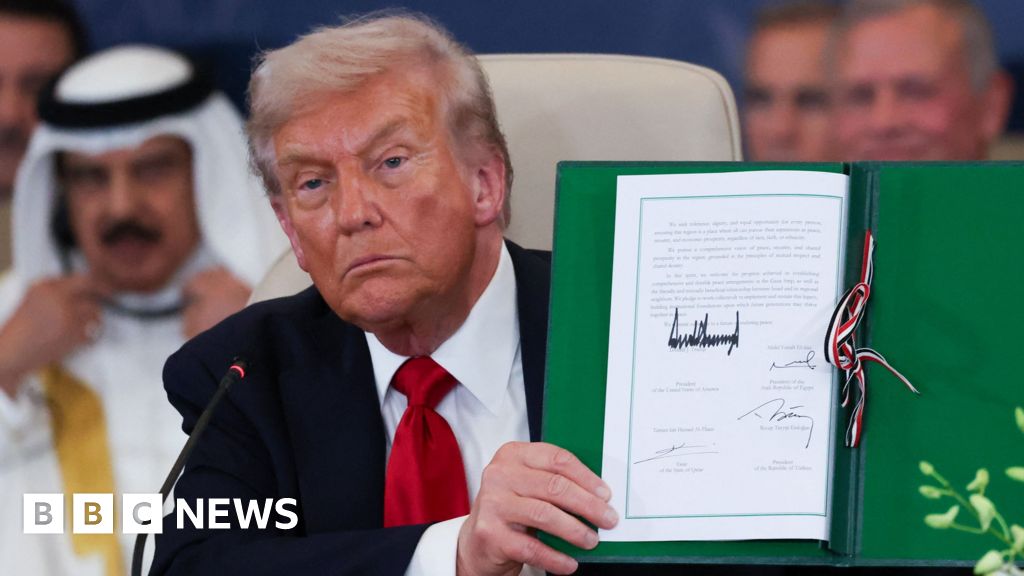
In a significant milestone for Middle Eastern geopolitics, US President Donald Trump along with other key world leaders convened in Egypt to sign the groundbreaking first phase of a ceasefire agreement in Gaza. This diplomatic breakthrough follows a period marked by intense violence, hostages, and longstanding tensions. The summit, hosted by Egypt’s President Sisi, was carefully orchestrated to serve as a turning point—an effort to forge a new path toward peace in a region historically plagued by conflict. The agreement’s signing marked a notable moment, not just for the immediate ceasefire, but for what analysts argue could be a foundation upon which a broader peace process might be built.

The symbolism was palpable. Trump posed proudly in front of a banner reading “Peace 2025,” signifying a forward-looking vision that aims to secure stability over the coming years. During the summit, Trump, Sisi, Qatar’s Emir Tamim bin Hamad Al Thani, and Turkey’s President Erdogan all signed the document, explicitly endorsing the initial phase of peace. The gathering’s optics signaled a rare moment of international consensus on the necessity of renewing dialogue in a tumultuous region that has endured decades of conflict. The involvement of key players exemplifies a recognition that international cooperation remains crucial for the stability of the Middle East, and that only through unified effort can progress be achieved.

Furthermore, the release of Israeli hostages and Palestinian prisoners prior to the signing could be seen as a pragmatic step toward de-escalation—an acknowledgment that confidence-building measures are essential for any meaningful peace. As historians and international analysts point out, this phase could set a precedent, emphasizing that even amidst enduring conflicts, diplomacy remains an indispensable tool. The United Nations and various international organizations have cautiously welcomed the progress, highlighting that the road ahead remains fraught with challenges. Yet, this effort demonstrates that the collective will of regional and global powers can, at least temporarily, override the divisions that have long defined the landscape.

The geopolitical impact of this development extends far beyond Gaza. The outcome may influence U.S.-Middle Eastern relations, reshape alliances, and impact broader regional stability. Countries such as Turkey and Qatar, often viewed as regional mediators, are positioning themselves as pivotal stakeholders in a peace process that could redefine traditional power balances. For Israel and the Palestinian Authority, this is a moment of immense hope and uncertainty alike—an opportunity to build on momentum or risk slipping back into cycle of violence. As the international community watches closely, experts warn that real peace will depend on sustained negotiations and tangible changes on the ground.

Yet, history has shown that the path to peace in the Middle East is seldom straightforward. The looming question remains whether this first phase signifies a true turning point or merely a fragile pause in a long-standing saga. As the dust settles on the summit, the world’s gaze remains fixed on a region where each decision—each handshake and promise—could rewrite the narrative of conflict. The future of the Middle East holds its breath, as the weight of history continues to unfold with every diplomatic gesture, every scrap of hope offering a glimpse of what could be, if only the will persists.

Trump claims Israel and Hamas both agree to first phase of Gaza ceasefire

Potential Breakthrough in Gaza: A New Chapter in Middle East Peace Efforts

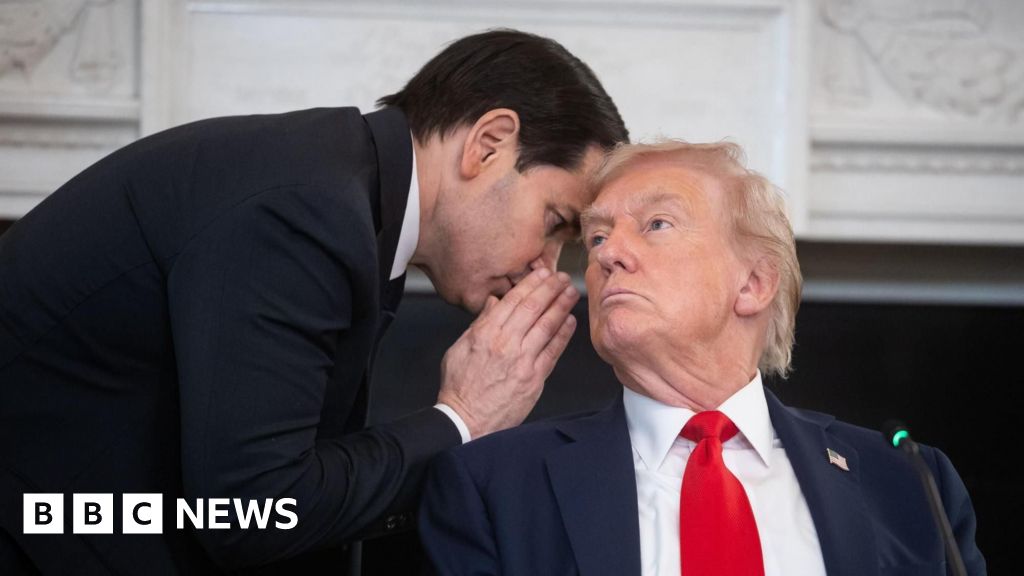
Amid ongoing conflict and deep-rooted hostilities, the Middle East appears to be witnessing a rare glimmer of hope. US President Donald Trump has announced that Israel and Hamas have reached an initial agreement on the first phase of a peace process following constructive indirect negotiations in Egypt. According to Trump, both parties have “signed off” on the plan, which foresees the *release of all hostages* and the *withdrawal of Israeli troops to an agreed-upon boundary*, marking the beginning of what officials are calling a potential path toward a *“strong, durable, and everlasting peace.”* The announcement promptly drew confirmation from both sides. While details remain complex and negotiations ongoing, the official statements indicate a pivotal moment that could reshape the geopolitical landscape.

International observers have been watching the developments closely. This agreement, part of a broader diplomatic effort mediated by Egypt, Qatar, Turkey, and the US, could mark a *significant turning point*—a fragile glimmer of stability after years of violence. The negotiations, which lasted three days, reflect an effort to break free from what some analysts describe as a seemingly endless cycle of conflict. However, concerns persist about unresolved issues such as Hamas’s disarmament and the future political governance of Gaza. The conditions for a lasting peace remain uncertain, with critics warning that any misstep could cause this fragile accord to unravel. Nonetheless, the international community remains cautiously optimistic, with UN diplomats and regional allies emphasizing the importance of implementing and sustaining these initial agreements.

Yet, beneath the diplomatic optimism lie the grim realities of war. Gaza’s health ministry reports a persistent toll — with at least 8 casualties over the last 24 hours, the lowest in recent memory, but still a stark reminder of the ongoing suffering. The Israeli military reports that it has neutralized “several terrorists,” reaffirming its assertion that it remains engaged in *counter-terrorism operations* meant to protect its citizens. Still, the conflict’s toll amounts to over 67,000 deaths, with tens of thousands of civilians, including nearly 20,000 children, victims of relentless military campaigns. Despite Netanyahu’s repeated denials of a famine, reports from the UN-backed Food Security Phase Classification indicate widespread malnutrition, underscoring how the war continues to devastate local societies. As the ceasefire dialogue advances, the weight of previous atrocities and the ongoing humanitarian crisis demonstrate just how precarious hope truly is in this war-torn region.

Geopolitical Shifts and Future Ramifications

This potential peace agreement doesn’t only mark a local development; it signals a **possible shift in regional dynamics** that could influence global geopolitics for years to come. Historian Victor Davis Hanson and others warn that such breakthroughs are fragile and often short-lived without sustained international support and internal political will. Many analysts believe that the alignment of multiple regional powers and the involvement of the US has created a unique window for peace, but caution that the underlying causes—territorial disputes, political ideologies, and historical grievances—must be addressed comprehensively. Turkey and Qatar have positioned themselves as key mediators, while Israel’s internal political landscape remains tense, with Prime Minister Benjamin Netanyahu urging the government to ratify the agreement swiftly. The broader implications *extend beyond Gaza,* affecting the security calculus of neighboring countries like Lebanon, Syria, and Egypt, all of which have vested interests in stability or chaos.

Furthermore, these developments are happening against the backdrop of broader geopolitical shifts. With Russia and China expanding their influence in Middle Eastern affairs, the United States seems intent on recalibrating its strategy in the region—aiming to bolster its allies while containing Iran’s ambitions. International organizations like the United Nations emphasize that *lasting peace requires not only ceasefire agreements* but a fundamental transformation of governing structures and security guarantees.However, history reminds us that peace in this volatile region remains a delicate dance, with the shadows of past failures lurking.

Conclusion: The Unfolding Page of History

As the international community holds its breath, the unfolding story of this fragile peace process continues to write itself into history. The potential end of hostilities in Gaza signifies more than just a temporary pause; it embodies the hope for a future where nations once again navigate the treacherous waters of diplomacy. But the scars of prior conflicts linger, and the full realization of peace remains an uncertain horizon. The world watches—waiting for the next chapter that will determine whether this promising pause will evolve into years of stability or once again succumb to the relentless tides of chaos. The weight of history bears down on each decision, and only time will reveal whether the lessons learned can forge a lasting peace in one of the world’s most enduring conflicts.

Social Media Auto Publish Powered By : XYZScripts.com


