
Matox News

Truth Over Trends, always!

Fang-tastic! Deutsche Börse Photography Prize Shortlist Revealed – A Visual Showcase for Young Creatives

In an era where technology relentlessly reshapes our perception of reality, the contemporary artistic landscape remains a vital sanctuary for culture’s role in defining identity, tradition, and societal values. This year’s shortlist for the prestigious Deutsche Börse Photography Prize, with its provocative blend of retro imagery manipulated by AI and urgent social commentary on women’s prisons, exemplifies the enduring power of art to reflect and critique the zeitgeist. As the critic G.K. Chesterton once observed, “the fundamental task of art is to set before us the truth of human existence in its most earnest guise.” The chosen works stand as a testament to the persistent dialogue between history, memory, and contemporary morality.

Historically, culture functions as a vessel for collective memory, a mirror held up to society that both preserves our roots and beckons us toward future horizons. Philosophers like Ortega y Gasset have emphasized that our “sense of reality is deeply rooted in the cultural narratives which weave our shared experience.” Today, this is evident in the innovative use of AI to revive and reinterpret visual histories, challenging notions of authenticity and artistic mastery. These manipulations, far from frivolous, serve as the digital extension of the human desire to grasp the intangible essence of history—an extension of our cultural memory that is both reconstructed and reimagined. This process echoes Tocqueville’s insights on democracy’s role in democratizing art and ideas—making the conversation accessible, urgent, and vital across societal divides.

The spotlight on the series examining women’s prisons underscores how art remains a crucial arena for societal critique, exposing the raw, often uncomfortable truths about justice, gender, and power structures. Such works become a form of cultural resistance, a means of asserting that tradition does not fade but evolves through confrontation and reflection. As T.S. Eliot remarked, “Our civilization is a participating beauty, not a static heritage.” These images challenge viewers to reconsider myths of progress and the true foundations of social cohesion. They serve as urgent reminders that culture must confront its shadows if it is to guide us toward authenticity and moral clarity.

In this light, the artistic acts of today—whether through digital renaissance or social examination—are akin to poetic prophecies, whispering that culture is not merely a reflection but a vital force shaping human destiny. As Chesterton envisioned, “We do not rest content with history; we live within it, and through our art, we anticipate its unfolding.” Just as ancient myths and ancestral stories codify the character of civilizations, modern images and narratives serve as a living scroll, inscribed with both memory and prophecy. The future of culture, therefore, lies in our capacity to remember bravely and to imagine boldly—both the stories we have inherited and those we dare to forge anew. In this continuous relay of human experience, culture emerges as the eternal guardian and visionary of mankind’s enduring quest for meaning, truth, and beauty.
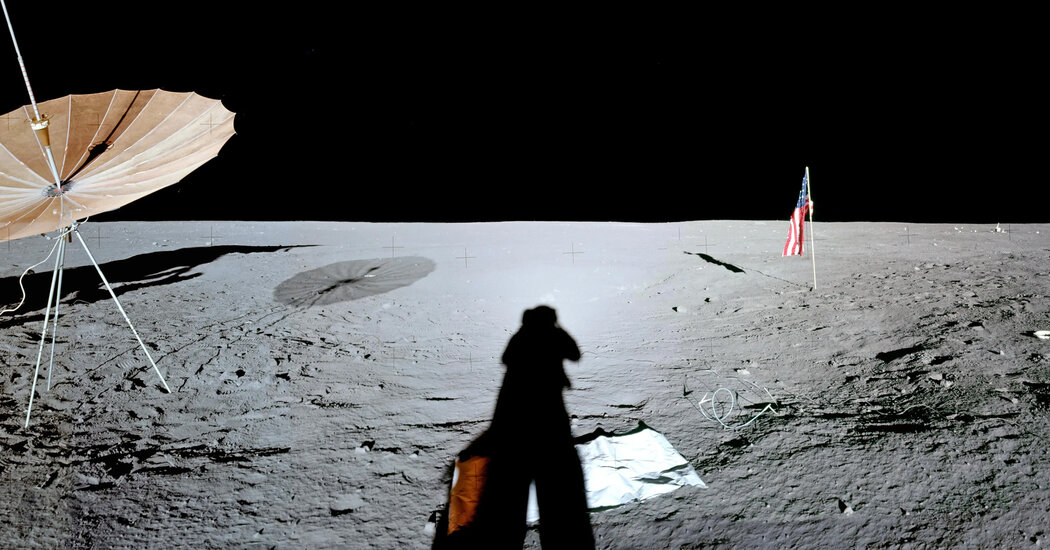

NASA’s Lunar Photography: Bridging the Gap Between the Heavens and Our World

The Celestial Canvas: Culture, Identity, and Humanity’s Perpetual Quest

Throughout the annals of history, humanity has looked upward, **drawn by the celestial vault that crowns our existence**. From the earliest star maps to the groundbreaking lunar photographs captured by NASA, our collective fascination with the Moon exemplifies the enduring human desire to understand our place in the cosmos. But beyond the realm of science, it is culture—an intricate tapestry woven with tradition, art, and philosophy—that imbues this celestial curiosity with profound significance. Like Georges Méliès’ “Le Voyage Dans la Lune”, which transformed scientific wonder into a fantastical narrative, our cultural expressions serve as a mirror reflecting how societies interpret the universe and their spiritual relationship to it. These artistic endeavors are not mere entertainment; they are the symbols of our shared identity, anchoring us in our history and pointing toward future horizons.

In contemplating the cosmic, we must recognize the role of culture as the **fundamental vessel of identity and societal continuity**. Just as Ortega y Gasset emphasized culture as the continuity of a civilization’s spirit, our collective engagement with the Moon epitomizes this continuity. The iconic lunar photographs seen in collections from NASA, the historic daguerreotypes, and artwork like Vincent van Gogh’s “The Starry Night” are more than visual records—they are monuments to our ongoing quest to comprehend phenomena that seem both distant and intimate. Culture, in this sense, acts as both memory and prophecy, each image and story echoing our ancestors’ awe and inspiring future generations to dream beyond mere survival. It is through such cultural artifacts that societies define their narratives, their hopes, and their fears—an intricate dialogue that transcends time and space, linking us to the stars and to each other.

  • The Moon has served as a canvas upon which cultural milestones are inscribed, from the initial lunar explorations to the philosophical ponderings of thinkers like T.S. Eliot, who saw in the cosmic chaos a reflection of the human condition.
  • Artworks and scientific images alike serve as rituals of remembrance and aspiration, anchoring our identity in the vast fabric of history.
  • The shared experience of gazing skyward fortifies communal bonds and fosters a sense of continuity amid rapid social change.

As Tocqueville once observed about the vital role of culture in shaping shared values, our modern lunar fascination illustrates the enduring importance of tradition in weaving the fabric of society. In an age where material progress often threatens to eclipse spiritual and cultural pursuits, the Moon remains a symbol of what it means to aspire—to reach beyond ourselves and find meaning in the mysterious. The ancient parables and the modern telescopic images converge in a common act of discovery: that humanity’s deepest treasure lies in its stories, images, and ideas—each a shard of the eternal mirror reflecting who we are and who we hope to become. Culture is both the memory that grounds us and the prophecy that propels us forward into the luminous unknown.

Thus, as the moonlight bathes the contours of our collective soul, it reminds us that our history and hopes are bound by a shared celestial heritage. Like the poetry of Chesterton, which elevates the ordinary to the divine, and the philosophical insights of Ortega y Gasset, who saw culture as the bridge connecting past, present, and future—the universe whispers of a human destiny intertwined with memory and prophecy. In this grand cosmic dance, our culture is both the shadow cast by the distant star and the spark illuminating the night’s eternal sky, guiding us with its silent, luminous promise: that in understanding the universe, we find ourselves—and in ourselves, the universe’s most enduring mystery.

Social Media Auto Publish Powered By : XYZScripts.com


