Matox News

Truth Over Trends, always!

Thieves Make Off with Eight Matisse Pieces from Brazilian Library—A Bold Hit to Cultural Heritage

Armed Robbery at São Paulo Library Raises Global Alarm Over Cultural Security

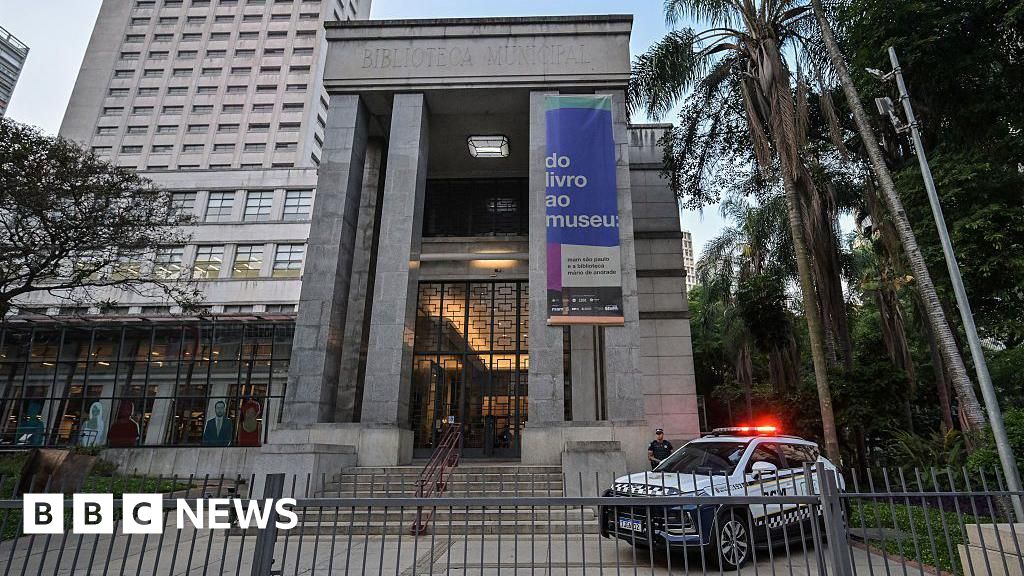
In a startling display of audacity and sophistication, two armed men executed a high-profile heist at the Biblioteca Mário de Andrade in São Paulo, Brazil, Sunday afternoon. The perpetrators targeted an exhibition titled From Book to Museum, part of a collaborative display with the São Paulo Museum of Modern Art, stealing eight valuable engravings by the renowned French artist Matisse and at least five by the iconic Brazilian painter Cândido Portinari. This brazen attack not only epitomizes the ongoing threat to cultural heritage worldwide but also underscores the vulnerabilities of even the most technologically guarded institutions.

According to Brazilian officials, the robbers intruded during the library’s operating hours, promptly holding up a security guard and an elderly couple, before fleeing on foot with their ill-gotten gains. The immediate responses from authorities were swift; within hours, they identified a vehicle used in the escape and arrested one of the suspects. However, the real significance of this event extends beyond immediate law enforcement actions. It sheds light on broader issues of cultural security and international art theft, which have become increasingly prevalent in our interconnected world.

Analysts and international organizations have voiced grave concern regarding the cultural implications of such thefts. The artworks stolen include a collage Matisse made for the exclusive edition of his jazz-themed art book, valued by critics as incalculable in worth. The significance of the stolen Portinari engravings is similarly profound, as they vividly depict Brazil’s rural labor scene and are considered national treasures. Historians warn that these works are irreplaceable “symbols of cultural identity,” and their loss resonates far beyond the art world. The heist’s timing—right before the exhibition’s closure—appears calculated to maximize impact and evade detection, echoing recent high-profile international art thefts, including the Louvre break-in just two months prior.

This theft exposes the fragile veneer of cultural preservation in a global landscape increasingly susceptible to illicit trade and organized crime. Officials point out that despite the presence of advanced facial recognition technology and extensive security camera networks, such plotters still managed to execute their plan, raising questions about vulnerabilities in both physical and digital security systems. Expert opinions emphasize that this is a clarion call for nations to reevaluate their protective measures for priceless cultural artifacts, especially as thieves become more organized and technologically savvy. As international institutions like UNESCO continuously warn of the rising tide of cultural theft, this incident in Brazil exemplifies the urgent need for reinforced defenses and coordinated global responses.

As the dust begins to settle, the weight of history presses heavily on the shoulders of society. This audacious act in São Paulo is more than a theft—it’s a reminder that the battle for cultural heritage is ongoing. It reflects a broader struggle where national identity, history, and art intersect with the dark underbelly of global organized crime. How nations respond to these attacks will determine whether they can protect their soul from the corrosive effects of greed and lawlessness, or if they will watch as their cultural legacy is relentless stripped away—moment by moment, artifact by artifact—until nothing remains but echoes of what once was.


First in 320 Years: Lost Pieces Make Historic Return

Historical Discovery Reshapes the Legacy of Johann Sebastian Bach

In an extraordinary revelation that transcends centuries, two previously unknown organ compositions by Johann Sebastian Bach have been unveiled in Germany for the first time in over 320 years. This discovery has not only thrilled music historians and enthusiasts worldwide but also holds significant geopolitical impact by reaffirming Germany’s stature as the cradle of classical Western music. These works—titled Chaconne in D minor BWV 1178 and Chaconne in G minor BWV 1179—were first identified in 1992 during a cataloging effort by researcher Peter Wollny, who, after three decades of investigation, confirmed their authenticity.

The pieces were hidden within the archives of the Royal Library of Belgium, their untitled and unsigned status cloaking them in mystery. As historians and analysts study their stylistic nuances, it is clear they echo Bach’s early composition style, likely created during his tenure as an organ teacher in Thuringia, around 1705. The confirmation that they were written by Bach raises profound questions about the scope of his earlier catalog of works and the artistic mysteries still lurking beneath historical obscurities. Such revelations bolster Germany’s cultural prominence, drawing renewed global attention to its musical heritage amidst contemporary geopolitical tensions.

Global Significance of the Discovery and Cultural Legacy

Performed at the St Thomas Church in Leipzig—an enduring monument to Bach’s legacy—these works were brought to life for audiences thanks to the masterful Dutch organist Ton Koopman. His rendition illuminated the high artistry of these compositions, described as “of a very high quality” and adaptable to smaller organs—making them accessible for both historical and modern performances. The unveiling of these works is not merely a local achievement but a cultural milestone, acknowledged by Germany’s Cultural Minister, Wolfram Weimer, who called it a “great moment for the world of music.”

Many international scholars—including the Bach Archive in Leipzig—have underscored the unique stylistic characteristics that distinguish these works from Bach’s other compositions.

  • They underscore Bach’s evolving compositional techniques during his early years—an era little understood until now.
  • They also offer new insights into the pedagogical environment of Bach’s youth, shedding light on the influence of his pupils, such as Salomon Günther John.

Furthermore, the discovery serves as a stark reminder of how intertwined the cultural heritage of Germany is with its broader national identity, especially amidst threats to global stability. As international organizations warn of ongoing geopolitical shifts, the continued preservation and celebration of classical traditions serve as anchors of cultural resilience. Historians warn that such heritage, if lost or overlooked, diminishes the collective memory of a civilization.

Unfolding Threads of History in a World on the Brink

As the world watches these revelations unfold, one must consider how such discoveries animate the ongoing narrative of history—reminding us that the past is never truly dead but constantly evolving. The uncertainties of international diplomacy and the shifting alliances threaten to reshape the geopolitical landscape, yet cultural achievements like this echo across nations, reinforcing the enduring power of shared human achievement.

Indeed, as the legacy of Johann Sebastian Bach continues to influence generations, today’s societies find themselves at a crossroads—where decisions made in quiet archives or sunlit concert halls can echo through history’s halls. The unfolding story of these newly discovered works is a testament to our perpetual search for understanding and the unyielding resilience of cultural identity amidst the chaos of global politics. It is a poignant reminder that, in the shadows of conflict and upheaval, the timeless melodies and the stories they carry still have the power to shape the future—a future still being written, note by note, in the grand symphony of history.

Social Media Auto Publish Powered By : XYZScripts.com


