Matox News

Truth Over Trends, always!

Karex Warns Iran Conflict Could Push Condoms’ Cost Up 30%, Impacting Youth’s Family Planning

In an era of unprecedented social challenges, the stability of essential supplies such as contraceptives has become a vital indicator of societal resilience. Malaysia’s Karex Bhd, the world’s leading producer of condoms, exemplifies how geopolitical conflicts and global supply chain disruptions ripple through communities, impacting families, education, and public health. As international tensions, notably the Iran war, continue to strain energy and commodity flows from the Middle East, companies like Karex face rising costs and shrinking inventories—issues that ultimately threaten the accessibility of vital health resources across the globe.

Social commentators and sociologists highlight that the disruption in the availability of contraceptives brings into sharp focus the intersection of public health, family planning, and cultural stability. The recent surge in demand—approximately 30% this year—coupled with prolonged shipping delays, has led to a significant decline in stockpiles, especially in developing nations where access to healthcare commodities is often already fragile. With shipments to regions like Europe and the United States taking nearly double the usual time—up to two months—families and educational institutions are experiencing tangible impacts on sexual health education and family planning initiatives. Such shortages threaten to reverse hard-won progress in reproductive health, as delays and shortages can foster unintended pregnancies, increase the spread of sexually transmitted infections, and undermine social stability.

The economic implications are not confined to health alone. As Karex’s CEO, Goh Miah Kiat, describes, cost increases linked to raw materials such as synthetic rubber and nitrile—a direct consequence of the conflict—are inevitably transferred to consumers. This dynamic exemplifies how global geopolitical crises translate into local social issues: increased prices can restrict access, placing additional burden on families and marginalizing those with limited resources. Historically, sociologists like Loïc Wacquant have argued that such disruptions disproportionately impact vulnerable populations, who bear the brunt of supply shortages and rising costs, thereby widening existing inequalities within communities and impeding equitable health outcomes.

  • Despite current supplies being adequate for the immediate future, the long-term outlook remains uncertain if supply chain bottlenecks persist.
  • The decline in international aid, such as reduced foreign aid contributions, exacerbates the crisis by limiting resource flow to countries most in need of reproductive health supplies.
  • Global logistics issues threaten to destabilize longstanding social efforts aimed at promoting sexual health and responsible family planning.

Addressing these challenges requires comprehensive community engagement, strategic resource management, and renewed emphasis on local production capacities. Societies must recognize that protecting access to essential health products is not merely a matter of economics but a moral imperative that sustains the fabric of families and the integrity of educational efforts. As social commentators underscore, society’s well-being depends on safeguarding these fundamental rights, especially during turbulent times. In this climate of upheaval, it is imperative to reflect on whether societal resilience can be built not only through technological innovation but through a collective moral commitment to prioritize health equity and uphold the dignity of every individual. In a world fraught with conflict and disruption, hope lies in our capacity to adapt, to unite, and to envision a society where every family and community can thrive amid adversity—transforming current crises into catalysts for enduring social renewal.

Developers Cabinet-Approved Planning Bill After Dozens of Meetings, While Environmental Groups Were Lockout — Labour Criticizes

International Ramifications of National Housing and Environmental Policies

In an era marked by escalating climate change, rising inflation, and geopolitical strain, domestic policies that appear to prioritize rapid development over environmental conservation are drawing international scrutiny. The United Kingdom’s recent planning and infrastructure bill, which promises to fast-track the construction of 1.5 million homes by the end of this parliamentary term, exemplifies a broader trend among powerful nations eager to boost economic growth at the potential expense of natural ecosystems. While advocates tout these measures as essential for addressing housing shortages and stimulating economic revival, the core question remains: at what cost to the natural world, and consequently, to global stability?

It is revealing that behind the scenes, lobbying efforts from developers have been intense at the highest levels of government. As detailed by independent analysts, meetings between ministers and property giants such as Vistry, Barratt, Taylor Wimpey, and others have been prolific—conducted with near impunity. Conversely, environmental groups and ecologists seeking dialogue report difficulty in securing even preliminary discussions with key ministers, highlighting a troubling imbalance of influence. This disparity underscores a broader pattern of governmental favoritism that threatens to undermine efforts at sustainable development across borders. Such internal dynamics within the UK may serve as a cautionary tale for other nations in Europe and beyond, where similar conflicts over land use and environmental protection are simmering.

Globally, the implications are profound. International organizations such as the United Nations repeatedly warn that disregarding ecological considerations in pursuit of growth can lead to irreversible loss of biodiversity, destabilizing local and regional climates. The UK’s case underscores a global tendency to dismiss ecological expertise—despite extensive research from historians, economists, and scientists advocating for integrated planning that recognizes the foundational role of environmental resilience. As the UK fast-tracks development projects like the controversial bulldozing of ancient wetlands near Newton Abbot, other countries watch keenly, pondering whether they will follow suit or stand firm in protecting their biospheres. The decisions made today will shape the geopolitical landscape of the future, potentially fueling regional instability if ecological degradation breeds social unrest or economic downturns.

As history threads a narrative of humanity’s often destructive relationship with the environment, the outcome of Britain’s legislative debates looms large. If the bill’s supporters succeed in downplaying the importance of ecological safeguards, the precedent set might reverberate, emboldening similar policies worldwide. Yet, the voices of ecological advocates and international observers serve as warnings that quick fixes often worsen pre-existing crises. The world teeters on a precipice: will it prioritize growth over sustainability, or will it recognize that true progress depends on a delicate balance? As the final votes hover and the dust of political debate settles, history continues to unfold—its chapters yet unwritten, waiting for the choices future generations will be forced to confront.

US warns Hamas planning urgent attack on innocent civilians

Global Tensions Surge as Israel and Hamas Vie for Control Amid Fragile Gaza Ceasefire

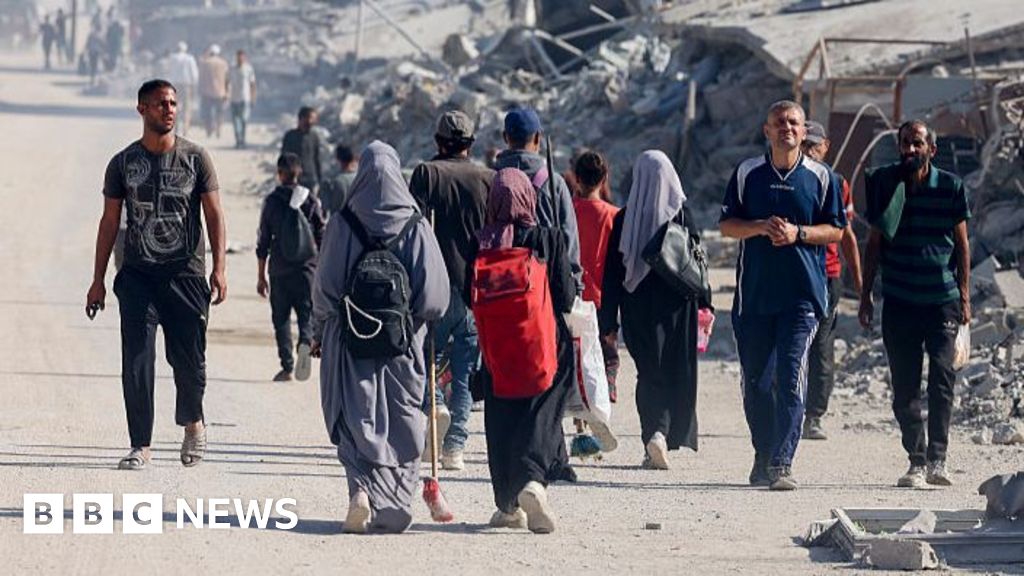
The international arena is once again on edge as the United States warns of a possible imminent attack by Hamas on civilians in Gaza. According to the US State Department, credible intelligence suggests that the militant group is planning a breach of the current ceasefire agreement, an alarming move that could undermine months of diplomatic efforts. This warning comes amidst a tense and complex context where Israel and Hamas face off not just militarily, but ideologically, with the fragile ceasefire hanging by a thread. The State Department emphasized that such an attack would violate the agreement, which saw the release of all hostages and the return of bodies, marking what some analysts call a *”significant, yet precarious, step”* toward potential peace.

Underlying these warnings is a deeper geopolitical struggle involving regional guarantors such as Egypt, Qatar, and Turkey, all of whom were integral in mediating the initial ceasefire deal. Washington’s diplomatic push aims to ensure that Hamas upholds its commitments and refrains from restoring hostility. Analysts emphasize that *”the decision by Hamas to act in bad faith could escalate the conflict, drawing in neighboring nations and intensifying a regional crisis.”* Meanwhile, Israel continues its efforts to consolidate security, releasing prisoners and rescuing remains of hostages, but the threat of renewed violence presents an ongoing challenge. The potential for a collapse of the ceasefire threatens to plunge the Gaza Strip back into chaos, risking a wider regional conflict with unpredictable consequences.

Escalation and Violent Provocations Compound a Regional Crisis

Recent events indicate an escalation in violence and lawlessness. Graphic videos authenticated by BBC Verify reveal disturbing footage of a public execution carried out by Hamas gunmen, a stark reminder of the brutal tactics employed by the group. These acts have alarmed international observers and hardened Western narratives about Hamas’s commitment to peace. Furthermore, reports have emerged of civilian casualties, including the deadly incident where 11 members of a Palestinian family were killed by Israeli fire—a tragic outcome amid ongoing military operations. The Israeli military argues that its forces responded to a suspected threat crossing the demarcated boundaries in Gaza, although questions remain about the opacity of these trust-breaking zones.

The broader picture underscores a conflict deeply rooted in historical grievances, with UN reports accusing Israel of genocide—a characterization rejected vehemently by Jerusalem. Such accusations add fuel to the fire, complicating international diplomacy and stirring regional and global public opinion. With over 68,000 deaths in Gaza since October 7th, the toll of violence is unimaginable, overshadowing diplomatic negotiations. The *”battle for Gaza”*, as some analysts describe it, is more than a military engagement; it is a cultural, ideological, and geopolitical struggle defining the future of the Middle East.

Decisive moments shaping the course of history

As the world watches with bated breath, the fate of Gaza hangs in the balance. Officials warn that a failure to uphold the ceasefire could ignite a full-scale regional conflict, dragging neighboring countries into an unpredictable and devastating war. The diplomatic efforts of Egypt, Qatar, Turkey, and others serve as a fragile line of defense against chaos. Resilient hope persists that negotiations, driven by international powers, will forestall further bloodshed. But history warns us that the choices made in these pivotal moments—whether of reconciliation or recrimination—will define the legacy of our time. The weight of history is heavy, and the unfolding events in Gaza continue to rotate on a knife’s edge, threatening to carve a new chapter of turmoil or a rare dawn of peace—if only the global community can find the wisdom and resolve to steer the course.

Meet the startup co-founded by NBA star Russell Westbrook, redefining end-of-life planning for the next generation

AI-Driven Innovation Disrupts End-of-Life Planning Industry with Eazewell’s Vision

In a remarkable display of technological innovation and market disruption, Eazewell, an AI-powered platform dedicated to simplifying end-of-life and funeral planning, has entered a traditionally fragmented industry. Founded in 2024 by Donnell Beverly Jr.—whose personal loss catalyzed the venture—Eazewell leverages cutting-edge artificial intelligence to automate tasks that once weighed heavily on grieving families. This initiative exemplifies the seismic shifts occurring as AI begins to redefine how life’s final transitions are managed, with significant business implications for sectors ranging from funeral services to digital estate management.

The core innovation behind Eazewell is its AI agent, available around the clock, which empowers families to effortlessly coordinate funeral arrangements, manage paperwork, and even cancel credit accounts on behalf of the deceased. This automated approach resolves longstanding inefficiencies within the industry, often plagued by manual, time-consuming processes. The platform’s recent rollout of an enterprise solution for hospice providers, senior living facilities, and insurers further extends its disruption. By integrating seamlessly into existing software ecosystems, Eazewell positions itself as a market-changing enabler for enterprise-level stakeholders, promising to transform industry standards.

Market Implications for Traditional and Emerging Players

According to leading analysts from firms like Gartner, the integration of AI-driven automation into sensitive segments such as end-of-life planning is a strategic game-changer with broad implications. Already, Eazewell reports assisting over 100,000 families, a testament to the scalability of its approach. As the platform broadens to include digital asset management—an increasingly vital concern in a digital-first era—the industry is poised for a fundamental shift. The ongoing digital transformation hints at a world where legacy management and estate planning become seamlessly integrated into everyday digital life, challenging established traditional players resistant to technological evolution.

The Broader Context of Disruption and Innovation

Disruptors like Elon Musk’s Neuralink and Peter Thiel-backed startups have demonstrated the enormous potential of AI to overhaul deeply rooted industries. Eazewell’s focus aligns with this trajectory by highlighting how AI’s influence extends well beyond the here and now, into the posthumous realm. The company’s forward-looking vision, including managing digital assets and inheritance, exemplifies how innovation is converging with industry standards of trust and security. Notably, industry experts and forecasters see these advancements as not just improvements but essential evolutions for businesses seeking resilience amid changing consumer expectations and technological norms.

The significance of this evolution transcends mere convenience: it heralds a new era where disruption can unlock new revenue streams, reduce operational costs, and elevate service standards. As AI and automation continue to mature, competition will intensify, compelling entrenched industries to innovate or face obsolescence. The urgency for stakeholders—whether traditional funeral service providers or emerging digital estate managers—is clear: adapt rapidly or be left behind in a rapidly transforming landscape that demands technological agility and disruptive thinking.

Future Outlook: An Urgency for Strategic Adoption

Looking ahead, the potential of AI to revolutionize end-of-life services signifies more than just a niche innovation; it foreshadows a broader societal shift. Industry visionaries and technology leaders emphasize that the pace of change necessitates proactive engagement. Experts from institutions like MIT forecast that AI-driven end-of-life management will become a standard component of digital identity and estate planning platforms within the next decade. This evolution presents a crucial call to action for investors and businesses alike: position strategically now to harness the impending wave of disruption, leveraging innovation to serve a growing demand with compassion and efficiency.

As the industry broadens its horizons, it becomes evident that disruption is inevitable. The integration of AI into sensitive life-stage services embodies both a technological leap and a philosophical shift—one where technology’s role is to ease burden, empower families, and fundamentally reimagine what legacy means in a digital age. The race for innovation is on, and those who move decisively will shape the future of a trillion-dollar industry—and redefine how society handles its most profound moments.

Social Media Auto Publish Powered By : XYZScripts.com