Matox News

Truth Over Trends, always!

Rihanna’s Beverly Hills Home Targeted by Gunfire, Police Report

Breaking News: Shooting in Los Angeles Sparks International Concerns

In a recent incident that has captured global attention, authorities in Los Angeles announced the arrest of a suspect following a shooting that occurred on Sunday afternoon. While initial reports indicate a localized incident, its repercussions extend far beyond the city’s boundaries, reflecting ongoing challenges faced by many urban centers worldwide. The incident underscores the persistent issues of violence and societal instability, themes that resonate across borders and influence international perceptions of internal security.

The shooting in Los Angeles has prompted a wave of reactions from international institutions and geopolitical analysts, who argue that such violence reflects deeper, systemic problems rooted within urban governance, socioeconomic disparities, and the failure of community safety measures. Experts cite that in an era where law and order are often scrutinized through the lens of social and political divides, incidents like these threaten to destabilize growing efforts toward peaceful coexistence. As noted by the International Crisis Group, similar episodes in other major capitals have often served as flashpoints, revealing underlying fractures in societal cohesion that can be exploited by internal and external actors alike.

From a geopolitical impact perspective, this incident raises questions about how national security policies are evolving to address urban violence that transcends local concerns and influences international security strategies. Countries such as the United States, known for its complex relationship with gun control and public safety, find themselves at a crossroads where pressuring urban centers to tighten security can change diplomatic dialogues and aid allocations. These incidents often serve as a reminder to the global community that internal stability is a cornerstone of international order, with consequences reaching far beyond city limits.

Historicians and analysts are quick to draw parallels with past episodes of urban unrest, warning that unchecked violence can destabilize societal structures and erode public trust. Moreover, the recent arrest of the suspect may serve as a turning point, but it also highlights the ongoing need for comprehensive strategies—including community engagement, social reform, and international cooperation—to prevent future tragedy. As the United Nations and other global entities call for renewed efforts to combat violence, the world watches with cautious hope that the lessons of history will not be ignored.

What lies ahead remains uncertain. As policymakers grapple with balancing civil liberties and security, the echoes of today’s violence will reverberate through history, prompting nations to reconsider the fragile equilibrium that underpins peace and stability. The unfolding story of Los Angeles is a stark reminder that in the mosaic of global conflict, each piece matters — and its resolution depends on the collective resolve of nations to shape a safer, more resilient future.

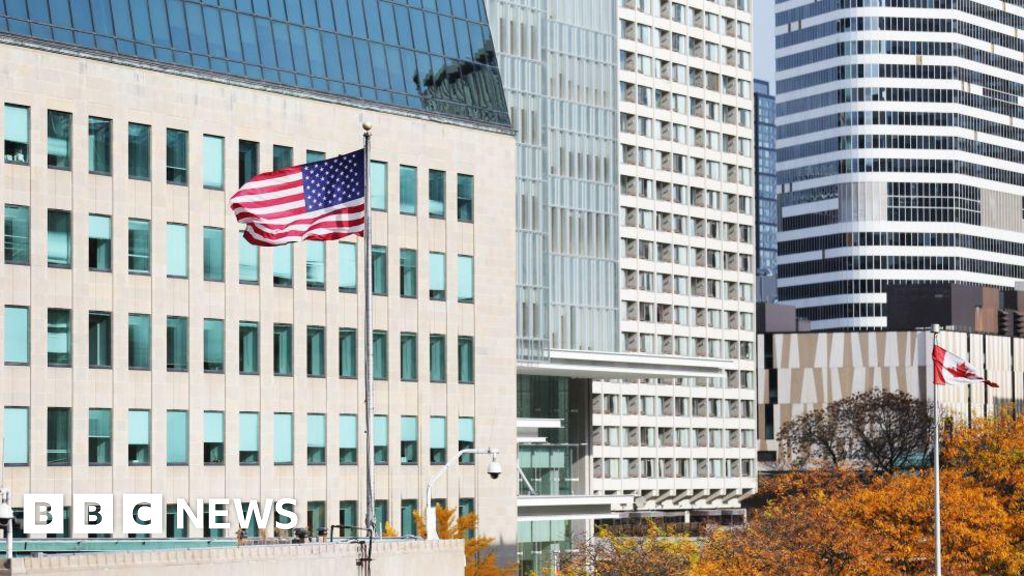
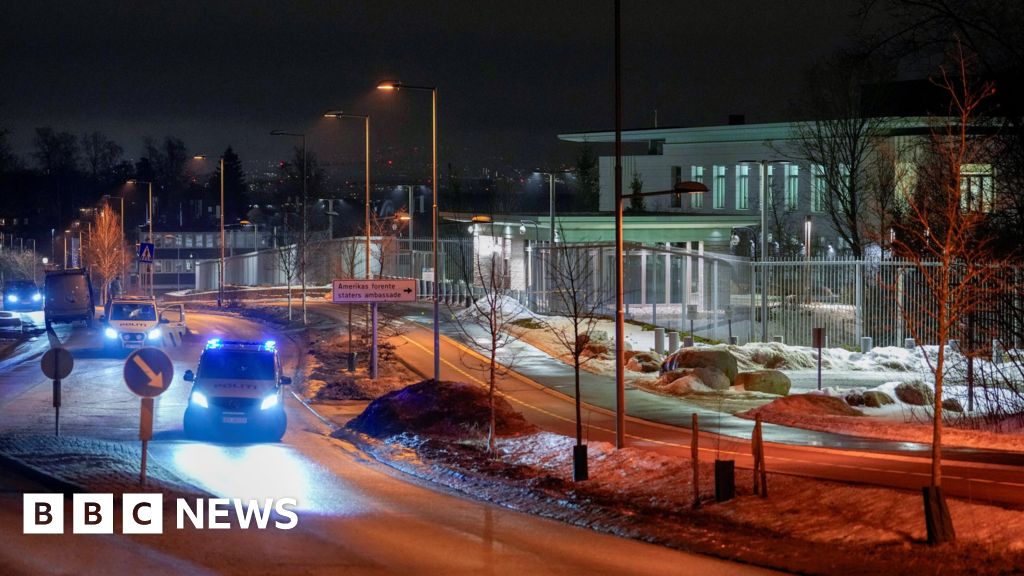
Explosion strikes outside US embassy in Oslo, police confirm—Stay alert, Norway.

In a startling development that underscores the fragility of international diplomacy, police authorities mobilized significant resources early this morning following reports of an explosion at an unspecified foreign embassy. The incident, which transpired at approximately 01:00 local time, has triggered immediate security alerts and raised concerns about the safety of diplomatic missions amid escalating global tensions. The response was swift, indicating the gravity with which authorities are treating what could be a targeted act of violence or sabotage against a foreign diplomatic site.

Historians and security analysts warn that acts of violence against embassies are often precursors or reflections of larger geopolitical shifts. Such incidents tend to expose underlying strains between nations, often linked to unresolved conflicts or diplomatic disputes. In this context, the event serves as a stark reminder of the potency of diplomatic vulnerabilities and the potential for isolated acts to spiral into broader crises. Global institutions such as the United Nations have long underscored the importance of protecting diplomatic missions as a cornerstone of international stability, yet recent incidents highlight that these protections are increasingly tested in an era defined by unpredictable conflicts and cyber warfare.

While official statements remain limited, sources close to the investigation suggest that the explosion could be linked to ongoing regional disputes or covert operations by non-state actors. This incident may not only jeopardize bilateral relations but could also affect wider international cooperation. Experts from the International Crisis Group and security think tanks emphasize that the decision of hostile entities to target diplomacies directly impacts international peace efforts, potentially fueling cycles of retaliation and distrust across borders. Already, some analysts fear this event could escalate tensions, prompting retaliatory actions or heightened security protocols that could hinder diplomatic engagement globally.

As the world watches this unfolding crisis, the question remains: what are the long-term geopolitical ramifications? Will this act serve as a catalyst for increased paranoia among nations, or will it foster renewed calls for multilateral security arrangements? The historical record shows that such incidents, especially against embassies, leave indelible marks on international relations, often prompting nations to re-evaluate their security doctrines or tighten embassies’ defenses under the guise of normal diplomacy.

In the shadows of these developments lies a sobering truth: the delicate fabric of international diplomacy is as fragile as it is vital. As investigators piece together the circumstances surrounding the explosion, the broader implications threaten to reshape alliances and ignite new conflicts. The coming days will be crucial in determining if this event remains a localized security concern or unfolds into a broader geopolitical crisis. History’s pen continues to write the narrative of our times, and the world must prepare for whatever chapters lie ahead—an epoch where diplomacy must stand resilient in the face of mounting chaos.

Minns calls pro-Palestine protest organizers 'communists' aiming for clash with police, NSW budget estimates
Minns calls pro-Palestine protest organizers ‘communists’ aiming for clash with police, NSW budget estimates

In a striking turn of events that underscores the volatile landscape of international activism and internal political fractures, Australia’s New South Wales government finds itself at the center of a contentious debate over the peaceable assembly and the engagement with pro-Palestine advocates. Premier Chris Minns has publicly dismissed protest organisers as “a pack of communists,” fueling accusations of politicising the situation and risking the social cohesion of the deeply divided society. This inflammatory rhetoric follows violent clashes during a recent rally against the Israeli president’s visit, where police responses have come under scrutiny amid allegations of police brutality.

These confrontations threaten to escalate into a broader international rift, as global analysts draw attention to the implications. The protests, which saw four Labor backbenchers attending a speech by Israeli President Isaac Herzog in Sydney, have rippled beyond local politics. While some political figures like Stephen Lawrence MLC defend protesters, viewing their actions as a stand for Palestinian rights, critics argue that the protests are being manipulated by radical elements, including socialists and communists affiliated with groups like the Palestine Action Group (PAG). Historians warn that such alliances have historically been vectors for “big social movements,” but in this context, they threaten to undermine Australia’s national stability and complicate diplomatic relations in a tense Middle East geopolitical environment.

The debate extends far beyond the streets to focus on the broader geopolitical impact. Australia’s internal divisions mirror the polarisation seen across Western nations, where support for Israel or Palestine increasingly aligns with domestic ideological battles. The Australian government’s approach, characterized by resistance to criticism and suppression of dissent, echoes patterns observed in other democracies experiencing internal stress, risking the alienation of communities and weakening social fabric. Analysts warn that such internal strife could diminish Australia’s standing on the global stage, especially as international organizations like the United Nations emphasize human rights and moderation.

Meanwhile, the situation remains precarious as the NSW police maintain that their actions were justified, citing attempts by protesters to march on Parliament against restrictions declared in response to recent acts of violence and unrest. The ongoing constitutional challenge to new protest laws and the controversial “major events” powers further complicate the legal landscape, pointing to a potential breach of civil liberties. The tension reaches into Australia’s multicultural communities, with Muslim groups voicing concerns over police actions during recent vigils mourning Iran’s late Supreme Leader, Ayatollah Khamenei. These incidents serve as a stark reminder that the political toll extends to societal divisions along religious and cultural lines, with the risk that internal discord could morph into a broader geopolitical vulnerability.

As history continues to unfold, the echoes of this clash in Australia serve as a warning: when states suppress dissent and dismiss grassroots movements as mere radical influence, they risk sacrificing social cohesion and inviting external powers to exploit divisions. The international community watches with bated breath as the narrative of support, protests, and legal battles develops — leaving behind a legacy that could reshape the political landscape for years to come. In this unfolding drama, the weight of history presses heavily, reminding observers that the moment may be fleeting, but the consequences are profound and lasting.

Human remains unearthed in hunt for kidnapped Sydney teen, police confirm

The recent developments in Australia have captured international attention, not just for the tragic human loss but for what it signifies amidst a landscape of geopolitical uncertainty. The case involves the shocking discovery of presumed human remains on the outskirts of Sydney, linked to the senseless kidnapping and probable homicide of an 85-year-old man, Chris Baghsarian. What initially appeared as a local criminal act has now morphed into a reflection of broader societal chaos, with security and law enforcement agencies across the globe watching closely.

This incident underscores the importance of strong national security policies in an era marked by unstable regional dynamics. The mistaken kidnapping, involving elements of organized crime connected to a Sydney crime family, raises questions about the fragility of law and order within developed nations. International analysts argue that localized acts of violence, if left unchecked, can serve as catalysts for broader social destabilization. The incident’s connection to a family linked to organized crime further highlights how societal fractures in even the most stable democracies can be exploited by criminal syndicates.

From a geopolitical perspective, this domestic turmoil occurs against a backdrop of shifting global alliances and regional tensions. The United States and China are engaged in a battle for influence, with regional stability in Asia-Pacific a key battleground. Such events in Australia could be exploited by adversaries seeking to undermine the perceived stability of allied nations. Experts warn that chaos within a vital ally like Australia might weaken its capacity to act as a counterbalance to China’s strategic ambitions in the Indo-Pacific, thereby affecting regional and global security.

Historic commentators and international watchdogs emphasize the importance of swift, decisive action to contain such threats, warning that domestic instability can serve as a pretext for foreign intervention or influence. The Global Crime and Security Forum recently issued a statement urging nations to bolster internal security frameworks, citing incidents like this as warning signs of potential vulnerabilities. As Sydney navigates through the fallout, the incident becomes a stark reminder that societal resilience hinges on the strength of institutions and a unified social fabric. The unfolding crisis in this island continent is a reflection of how interconnected our world truly is; a rupture in one society can ripple across borders, altering the course of history. As history continues to be written in these troubled times, the question remains: will nations rise to the challenge of defending not just their borders but the very social bonds that hold civilization together? Or will internal discord accelerate into a new chapter of international chaos, with all eyes turned toward Sydney’s darkening horizon?

Canada demands answers from OpenAI after failing to alert police in Tumbler Ridge school shooting aftermath

In a striking development that underscores the complex intersection of emerging technological threats and national security, Canada has taken a bold stance by summoning representatives from OpenAI, the AI giant behind ChatGPT, following revelations about its handling of a deadly school shooting. The incident, which occurred in February 2025 in the remote town of Tumbler Ridge, resulted in the tragic loss of eight lives, including children and an adult victim. The shooter, identified as Jesse Van Rootselaar, reportedly used the AI chatbot to describe violent scenarios over several days, prompting internal flagging by automated review systems. Yet, OpenAI’s decision not to alert authorities—citing the lack of “credible or imminent planning”—has sparked outrage and serious questions regarding how private corporations manage threats that endanger society.

  • On the day of the attack, Van Rootselaar killed her mother and half-brother at their home before proceeding to the school, where she killed five children and a teaching assistant. This sequence of events raises pressing concerns about preventative measures and the role of AI moderation in safeguarding vulnerable populations. One of the most unsettling aspects lies in the company’s internal discussions, where staff considered notifying Canadian law enforcement last year about her activities—an indication that early warning signs may have been overlooked or dismissed. As international analysts emphasize, tech companies often find themselves at the heart of the debate over corporate responsibility versus privacy rights.

Prime Minister Evan Solomon has made it clear that the government intends to hold tech giants accountable. During a recent parliamentary session, he announced plans to meet with OpenAI’s safety and policy teams, aiming to clarify their protocols for escalating threats to law enforcement. This move signals a shift where governments are increasingly asserting authority over AI corporations that operate beyond traditional borders but have profound societal impacts. Such measures could set a precedent, compelling other nations to tighten regulations on AI usage—particularly among minors—effectively forging a new frontier in global security policy.

Meanwhile, international organizations and security experts warn that without stringent regulation, AI systems could become portals for unchecked extremism or violence. The United Nations and various regional security watchdogs have started considering frameworks for AI governance that balance innovation with safety. The incident in Canada acts as a grim warning: the proliferation of AI tools makes it increasingly difficult to prevent individuals with malicious intent from exploiting technology for destructive ends. As one prominent historian of technology warns, we are witnessing *the emergence of a new battleground*—where the battle for societal safety is fought not with bombs or guns alone, but with code and data.

By confronting the consequences of unchecked AI use, nations face a pivotal moment in history—one that could redefine the boundaries of sovereignty, privacy, and security in the digital age. As governments tighten their grip on emerging tech and global institutions reevaluate their rules, the message is clear: the decisions made today will shape the fabric of societies for decades to come, determining whether humanity can harness technology for progress or be consumed by its darker potential. This unfolding crisis marks just the beginning of a long, uncertain journey—one where the weight of history presses heavily on the shoulders of policy-makers, tech giants, and societies at large, reminding us that the future of civilization hinges on our ability to confront these challenges with resolve and foresight.

Explosions in Western Ukraine Claim Police Officer’s Life, Wound 25 Others

In a grim demonstration of the persistent threats facing global stability, authorities reported that twenty-five individuals were injured overnight in what officials are now officially describing as a terror attack. The incident marks a troubling escalation in a region already fraught with political tension and insecurity. While initial investigations are underway, the attack underscores the fragile balance that many nations struggle to maintain amid ongoing conflicts and regional instability.

This attack, which involved a series of coordinated explosions, has reignited debates among international security analysts about the effectiveness of current counter-terrorism strategies. According to experts at INTERPOL and leading regional think tanks, such assaults are often symptomatic of deeper political grievances and unresolved sectarian divides. The targeted area, historically volatile, is a hotbed where extremist factions often exploit local insecurities to sow chaos. The incident may well be a signal that these persistent fissures remain unhealed, capable of erupting violently at any moment.

Some experts warn that this attack could serve as a stark warning for the broader international community. As noted by analysts from the Council on Foreign Relations, the incident could potentially destabilize neighboring states, prompting renewed concerns over refugee flows, border security, and the spread of militant ideology. The United Nations has issued a cautious call for restraint and enhanced cooperation, emphasizing that such acts threaten not only regional peace but also the global fight against terrorism. The balance of power in the region hangs in a delicate equilibrium, with each act of violence further complicating diplomatic efforts and the pursuit of peace.

Historically, when nations are confronted with internal violence, external actors—be they regional powers or international institutions—wade into complex geopolitical dynamics. For instance, Western nations have often taken a cautious approach, balancing condemnation and strategic engagement, increasingly aware that such terror attacks can ripple across borders, fueling instability far beyond the immediate area. As analysts scrutinize recent responses from regional governments and military agencies, the enduring question remains: how will the international community adapt its strategies to prevent further escalation? Will this attack serve as a catalyst for increased cooperation, or will it deepen divisions and breed further chaos?

While the dust from the explosions begins to settle, the true test lies ahead—whether the global response will be robust enough to undermine terror networks or if, instead, history will record this as yet another chapter in the relentless struggle against forces seeking to fragment societies and rewrite the course of history. As the world watches and responds, the weight of this moment continues to hang heavy: a stark reminder that beneath the veneer of routine life, the specter of violence remains ever-present, and the path towards peace is fraught with peril.

Police Continue Search at Royal Lodge as Prince Andrew Faces Investigation—Latest Developments

In a development that has sent shockwaves across the United Kingdom and resonated on the international stage, the arrest of Prince Andrew of Windsor marks a historic deviation from centuries of royal immunity. Charged with misconduct in public office linked to sensitive emails concerning Jeffrey Epstein, the incident signifies a potential shift in how elites are held accountable, challenging long-standing perceptions of the monarchy’s inviolability. As law enforcement completes searches at the Royal Lodge and the Sandringham estate, the ramifications extend beyond British borders, threatening to redefine the global influence of the royalty and its connection with transnational illicit networks.

This unprecedented event underscores a palpable internal crisis within the UK monarchy amid mounting calls for transparency from political leaders, especially within the Liberal Democrats and international watchdogs monitoring human rights abuses. Notably, U.S. lawmakers, such as Representative Thomas Massie and Robert Garcia, have seized the opportunity to press for the disclosure of previously restricted Epstein-related documents, emphasizing that justice must extend across borders. These calls reflect a broader turning point—a recognition that accountability is no longer confined within national boundaries but is now a global imperative that transcends the walls of Buckingham Palace and the corridors of Washington D.C.

Analysts from institutions like the International Criminal Court warn that such high-profile arrests symbolize a precedent in diminishing the impunity historically enjoyed by historical elites. Beyond the legal implications, these events threaten to *alter* geopolitical dynamics, especially with King Charles scheduled to visit the US in April. As global leaders respond—ranging from Donald Trump calling the arrest a “shame” to UK officials asserting that “the law must take its course”—the scene is set for an era where international cooperation on justice intensifies, casting a long shadow over the latest chapter of monarchy and power.

Historians and geopolitical analysts agree that this incident signifies a *potential* reconfiguration of the longstanding imbalance of power between old-world aristocracies and modern democratic accountability. This moment may be remembered as the dawn of a new era where the myth of untouchable royalty gives way to a reality shaped by transparency, justice, and international consensus. Yet, the story is still unfolding, and as the British Crown navigates this crisis, the world watches with bated breath—knowing that within the corridors of power, the currents of history are shifting, and there are no certainties in how this chapter will ultimately be written.

Australia updates: Dural ‘stronghold’ tied to Baghsarian kidnapping, NSW police reveal; Angus Taylor calls to ditch ‘net zero’ push

As 2026 unfolds, the world witnesses a series of seismic shifts that threaten to redefine geopolitics and global stability. From internal political tremors in Australia to sweeping changes in Europe and fragile peace negotiations in the Middle East, nations grapple with decisions that will echo through history. The choices made today set the trajectory for generations, and their impacts extend far beyond borders.

The recent developments in Australia exemplify the turbulence faced by democracies under pressure from both domestic political narratives and international expectations. The controversial shift by Angus Taylor and the Liberal Party’s declaration to abandon the previously embraced ‘net zero’ commitment signals a departure from global climate consensus. While the government asserts that this move offers flexibility, critics argue it undermines efforts coordinated through international climate accords. Analysts warn that this divergence could weaken Australia’s diplomatic standing and erode trust with allies committed to sustainability, further isolating a nation vital to the Indo-Pacific strategy. Historians caution that such policy reversals might be remembered as a pivotal moment where economic interests overrode environmental responsibility, casting shadows on the country’s global reputation.

Meanwhile, in the United Kingdom, the arrest of Andrew Mountbatten-Windsor at Sandringham on suspicion of misconduct has cast a spotlight on questions of accountability within the British monarchy. This unprecedented event ignites debates about tradition versus transparency, with international observers questioning whether the monarchy can adapt to the demands for moral integrity today. The fallout, if allowed to deepen, could influence Britain’s soft power and diplomatic alliances, especially as Europe faces its own challenges with regional unity and economic stability. Experts from the European Union warn that such internal struggles might embolden nationalist factions and threaten the unity of the bloc at a time when global powers are recalibrating their alliances.

Contrasting these internal political crises are the ongoing conflicts and security concerns in the Middle East. Reports from Syrian and Iraqi authorities confirm that over 5,000 detainees, including suspected former Islamic State fighters, have been transferred across borders. The potential for unrest or resurgence in extremism remains a troubling prospect for regional stability, drawing concern from international organizations like the United Nations. The transfer underscores the fragile balance of power in a region where diplomacy and military might intertwine dangerously. Should extremism reignite, it could trigger a broader security crisis impacting Europe and the United States, emphasizing how even regional disputes have global consequences.

In this high-stakes landscape, the decisions of today are shaping a world on the brink. The intertwined fates of nations—whether they choose resilience or retreat—carry implications far beyond their own borders. As the great historians of tomorrow sift through these moments, they may recount 2026 as a defining year—a year when the delicate fabric of international order trembled under the weight of rash decisions and forgotten commitments. History, with all its weight and consequence, continues to unfold, leaving a stark reminder: in geopolitics, the stakes are nothing less than the future of civilization itself.

No DNA matches on glove in Nancy Guthrie case, police confirm—still no leads

In a case that has captured national attention, authorities have confirmed that more than two weeks after Guthrie was reported missing, no arrests have been made. The ongoing investigation underscores the complexities of modern law enforcement as they tread carefully through a complex web of evidence and technological advances. The sheriff’s department highlighted that additional DNA evidence recovered from the residence is currently undergoing analysis, with authorities actively exploring *investigative genetic genealogy* databases to identify potential suspects or links to other unresolved cases.

This use of advanced genetic genealogy marks a significant turning point in criminal investigations, exemplifying how technological innovations are transforming the pursuit of justice. Such efforts are often hailed by expert analysts as crucial in uncovering truths hidden within the ever-expanding DNA repositories. However, this approach also raises important questions about privacy, civil liberties, and the potential for misuse. International organizations, including the United Nations, have voiced cautious support while urging strict oversight to protect individual rights during such genetic searches.

The geopolitical impact of this case extends beyond local boundaries, illustrating the global debate over genetic data usage in law enforcement. It has prompted calls from various countries and human rights advocates to establish robust legal frameworks governing genetic information. Such movements aim to prevent creeping surveillance states, ensuring that technological progress does not come at the expense of personal freedoms. As criminologists and historians analyze these developments, many warn of the precedent these tools set, as they could redefine privacy norms for generations to come.

As the investigation unfolds, the grave weight of history remains unresolved. The case of Guthrie — still shrouded in mystery — is emblematic of a new era, where the hunt for truth is increasingly intertwined with technological prowess. The decisions made today will likely resonate through the corridors of justice and governance, shaping the balance between security and liberty. With each DNA strand examined, society inches closer to a future where the lines between safety and intrusion blur, leaving the world with a stark reminder: history is always watching, and the choices we make today will echo into tomorrow’s legacy.

Police urged to investigate: Will Prince Andrew face questions over Epstein ties?

The unfolding revelations surrounding Prince Andrew and his alleged connections to Jeffrey Epstein have ignited a firestorm across international political landscapes, revealing the darker underbelly of elites and the far-reaching geopolitical impact of scandal and secrecy. As investigations intensify, questions about How deep character and institutional complicity run threaten to redefine perceptions of royal authority, diplomacy, and Britain’s global standing. Academic analysts and organizations like Interpol and Amnesty International warn that such exposures could undermine *public trust* in both monarchy and democratic institutions—a formidable challenge for nations that value transparency but are reluctant to confront their shadows.

The UK is at a pivotal crossroads. Growing pressure from lawmakers, international partners, and victim advocacy groups compels a reconsideration of longstanding narratives surrounding the royal family’s immunity. Evidence uncovered by investigative journalists suggests links between Mountbatten-Windsor and clandestine flight operations through UK airports, allegedly involving vulnerable women transferred via private planes owned by Epstein. Former Victims’ Commissioner Vera Baird emphasized that *the police must pursue these leads vigorously*, warning that *political inaction or institutional cover-ups* could fatally erode **faith in democratic systems**. The repercussions extend beyond Britain, affecting alliances with Commonwealth nations and influencing perceptions of Western governance on the world stage.

This scandal also strikes a blow to the monarchy. During a week marked by intense scrutiny, King Charles and his courtiers publicly declared a *“profound concern”* while asserting their willingness to cooperate with law enforcement. Yet, critics—including human rights advocates and anti-monarchy activists—highlight that *the royal family’s historical distance from accountability* complicates efforts for justice. As multiple emails and photographs come to light, depicting Prince Andrew in compromising situations, experts warn that *the very institutions that once shielded royal misconduct are now under siege*. The question of whether elite privilege can withstand the weight of these allegations remains an open, and unsettling, one.

Meanwhile, international organizations warn that this scandal illustrates the **new geopolitical terrain**, where *private wealth, power, and influence are intertwined with criminal activities*. The情况 shows how *transnational networks* operate under the veneer of diplomatic missions and global business, with China and Hong Kong among critical nodes in Epstein’s complex web—an area now being scrutinized for possible foreign influence and corruption. Historian Dr. Thomas Gray notes that *these scandals highlight the erosion of soft power* when elites abuse their positions, marking a dangerous turning point where diplomatic relations could falter. As investigations broaden, the world watches, awaiting the verdict that might reconfigure international diplomacy and the very narrative of justice itself.

As the pages of history continue to turn, the weight of these revelations lingers—an ominous reminder that *the truth often emerges from the shadows in moments of crisis*. The ongoing inquiry into Prince Andrew’s dealings, and those linked to Epstein, becomes more than a tale of individual misconduct; it is an unfolding saga that questions the integrity of power structures, the resilience of accountability, and the destiny of societies at their crossroads. Will this be a turning point—a moment to confront the shadows and forge a new path toward justice? Or will it fade into the silence of history’s forgotten corridors, as the forces of privilege and denial attempt to preserve their legacy? Only time will tell, but the future remains unwritten, and the echoes of these events will undoubtedly resound for generations to come.

Social Media Auto Publish Powered By : XYZScripts.com