Matox News

Truth Over Trends, always!

Honor rolls out the latest: Magic V6 foldable phone, sleek MagicPad 4, and powerful MagicBook Pro 14—gear up for the future of youth-focused tech!

As the tech world converges on Barcelona for this year’s Mobile World Congress, one theme resonates louder than ever: slimness as the new frontier of innovation. Leading brands like Honor are unveiling devices that push the boundaries of thinness while packing cutting-edge features. Their latest creations, the Honor Magic V6 foldable phone and the MagicPad 4 tablet, exemplify a cultural trend where design minimalism merges with technological prowess. The Magic V6, for example, is only 8.75mm thick—so slim it challenges traditional notions of what a smartphone can be—while the MagicPad 4 flaunts a mere 4.8mm profile. These devices signify not just an evolution in hardware but also an emerging societal desire for unobtrusive, sleek technology that seamlessly fits into a fast-paced lifestyle.

The Cultural Impact of Slim Tech

This focus on ultra-thin gadgets reflects a broader social relevance in a society obsessed with minimalism and convenience. In a world where attention spans are dwindling, and multitasking is king, these sleek devices serve as both functional tools and status symbols—accessories that communicate success and modernity. Influencers and trendsetters, from tech bloggers to social media personalities like Marques Brownlee and Unbox Therapy, are elevating these gadgets to cultural icons, showcasing how a phone or tablet can be both powerful and fashionable. Scholars like Dr. Joseph Pine argue that this shift indicates a move towards experience-driven consumption, where consumers are less interested in owning bulky objects and more eager for intangible value, style, and user experience.

Meanwhile, AI integration remains a key component of this trend. Honor’s deployment of Google Gemini symbolizes how software—especially AI-powered features—is transforming these devices into intelligent companions. These advances mean our gadgets are becoming more than just tools; they’re evolving into social extensions, capable of understanding and adapting to individual behaviors, further reinforcing the social relevance of tech innovation. From syncing effortlessly with Apple devices to offering dynamic eye comfort features, these devices are designed to be unobtrusive yet intimately integrated into everyday life.

The Next Big Question: Are We Entering an Era of Invisible Tech?

With these ultra-slim smartphones, tablets, and even laptops, a provocative question arises: Are we approaching a future where technology becomes so seamlessly integrated into our lives that it becomes essentially invisible? The ongoing miniaturization signals a shift toward disappearing devices: gadgets so refined they practically vanish, leaving us with a pure, distraction-free experience. The social implications of this are profound. If our next devices are less about conspicuous presence and more about subtle integration, what does that say about our relationship with technology? Will this trend lead to a society where our devices are no longer objects of display but silent enablers of connectivity? And how will this influence future societal norms concerning privacy, dependency, or even our concept of identity?

As the tech industry channels its efforts into making hardware thinner and smarter, the ultimate challenge remains: how will societal expectations and behaviors adapt in this new era of invisible, AI-enhanced devices? The answers may redefine lifestyle trends for generations to come, challenging us to consider whether true innovation resides not only in what our gadgets can do but also in how seamlessly they blend into our lives, perhaps even before we notice they’re there.

Powerful Moments: Youthful Musicians Leading the Charge for Change — A Photo Gallery

In an era where the fabric of society is continuously woven and rewoven through the threads of art, activism, and tradition, the recent initiative by photographer Janette Beckman and curator Julie Grahame exemplifies how culture remains the enduring vessel of communal memory and moral purpose. Their fundraiser for the ACLU, featuring images of musicians who have wielded their art as a form of protest and advocacy, underscores the profound connection between creative expression and the preservation of societal identity. In a time often characterized by upheaval and fragmentation, this exhibition reminds us that culture is not merely ornament but a moral and historical force shaping our collective destiny.

Among the featured figures are legendary icons such as John Lennon and Nina Simone, artists whose work transcended entertainment to embody moral standpoints embedded deeply in the struggle for freedom and justice. Their images serve as visual echoes of a moral impulse akin to that articulated by thinkers like Ortega y Gasset, who emphasized that culture is the collective answer to the restless question of what it means to be human within the social order. The donation of 43 photographers—whose lenses capture the faces of dissent—acts as a vivid testament to the idea that artworks are both mirrors of societal tension and beacons guiding future generations towards dignity and virtue. The fact that 100% of profits support the American Civil Liberties Union underscores the pragmatic side of cultural activism: art as a tool for societal preservation and moral resistance.

This initiative also highlights a broader truth about the historical parallels between past and present struggles for liberty. As Tocqueville observed in his exploration of American democracy, the vitality of civic life is rooted in a shared sense of moral community—a vitality whose sustenance is often reinforced through cultural icons and collective memory. The selected images and songs reverberate with a narrative that recognizes the importance of cultural memory in maintaining societal cohesion amidst tumult. In the words of Chesterton, we are reminded that art is the most effective whisperer of truth in the dark corridors of collective experience. The muse of protest, encapsulated in these photographs and melodies, reminds us that culture remains the foundation upon which our notion of identity, tradition, and societal well-being rests.

Finally, this event invites us to reflect on the poetic call of culture as both memory and prophecy. It is a reminder that history is not only what has been but what is continually becoming—a future shaped by the moral and aesthetic choices of those who understand that truth and beauty are inseparably linked. As the great poet T.S. Eliot wove in his verses, the past must be lived again in the present to forge a future worthy of memory. Culture, in its noblest form, is thus both a testament and a testamentary act—an enduring testament to human longing for justice, dignity, and truth, and a prophecy of what humanity might become when guided by the luminous ideals embodied in its artistic and moral heroes. In that luminous horizon, we see that our cultural legacy is both history’s ultimate gift and society’s divine promise—an unfolding story that belongs eternally to those who dare to believe in its transformative power.

Russia’s Mega Missile Showdown: Powerful But Crashing on the Frontlines

In a landscape marked by rapid technological advancements, Russia’s recent missile tests reveal a nation still striving to modernize its nuclear arsenal amidst ongoing geopolitical tensions. Despite signals from Moscow that the Sarmat intercontinental ballistic missile (ICBM) would soon be operational, recent failures cast doubt on its readiness, illustrating the broader challenges faced by Russia in maintaining a credible nuclear force. This development signals a significant industry disruption within Russia’s defense sector, where modernization efforts have stalled and technological hurdles have hampered deployment timelines. Meanwhile, the US continues to monitor with precision, emphasizing the importance of surveillance and strategic advantage.

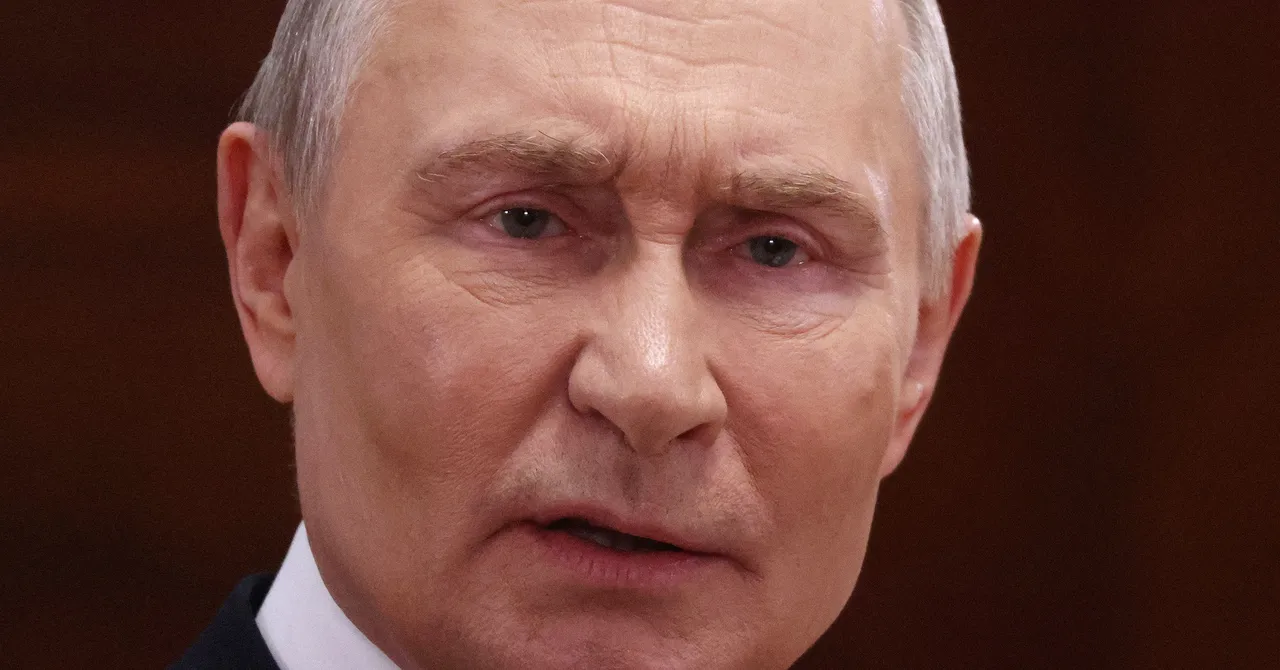
Russia’s strategic missile program, once considered a centerpiece in its military doctrine, now faces setbacks that could impact global stability. The Sarmat missile, capable of carrying multiple warheads and targeting distant adversaries, was heralded as a game-changer in nuclear deterrence. However, recent test failures—despite high-profile declarations from President Vladimir Putin—underscore the risks of overreliance on aging technology and ambitious claims. As noted by military analysts at MIT and defense think tanks, this persistent technical lag leaves Russia’s nuclear deterrent vulnerable, which could prompt shifts in global strategic calculations. Concurrently, Moscow’s emphasis on replenishing assets essential to the Ukraine conflict has diverted resources from nuclear modernization, illustrating a prioritization of conventional forces over strategic deterrence. Notably, the scheduled test of the shorter-range Yars missile demonstrates Russia’s ongoing efforts to maintain a layered nuclear posture, but confidence in these systems remains fragile amid repeated failures. Russia’s internal debate about the efficacy of its arsenal reflects a broader trend among key military powers—where innovation is often outpaced by geopolitical ambitions and budgetary constraints.

The implications for business and innovation in the defense industry are profound. As nations like the United States utilize advanced surveillance platforms such as the RC-135S Cobra Ball—equipped with optical and electronic sensors—to monitor missile tests, private defense contractors and government agencies face mounting pressure to accelerate technological breakthroughs. Indeed, the rise of artificial intelligence, machine learning, and next-generation sensors are reshaping how strategic assets are tested, validated, and deployed. Private sector innovators and established defense giants are now competing in a high-stakes race to develop systems capable of ensuring missile accuracy, stealth, and rapid deployment—areas that are becoming central in the era of disruptive military technology.

Looking ahead, the future trajectory of nuclear modernization remains uncertain. While Russia’s failure to bring the Sarmat into operational readiness underscores the fragility of current military technology, it also emphasizes the increasing importance of innovation that can disrupt traditional deterrence models. Leading experts, including those from Gartner and the Belfer Center at Harvard, warn that the next decade will be critical as advanced hypersonic weapons, cyber capabilities, and AI-driven command systems redefine strategic stability. The lesson is clear: in the race for supremacy, businesses and governments must prioritize disruptive innovation to stay ahead of technological obsolescence. Otherwise, the risk is that defects in current arsenals could introduce unpredictable instability, forcing the world into an unpredictable future where technological primacy determines peace or conflict.

“‘Wicked: For Good’ Showcases Powerful Narratives Through Vibrant Hues”

In the ongoing dialogue between culture and identity, visual storytelling remains a profound vessel for expressing the complexities of human experience. The recent release of the documentary “Wicked: For Good” exemplifies this truth by showcasing how color—that seemingly superficial element—serves as a potent language of its own. Alice Brooks, the film’s cinematographer, meticulously explains how choices in palette invoke symbolism, evoke emotions, and deepen the narrative’s moral and philosophical underpinning. Here, the careful orchestration of hues becomes a mirror reflecting society’s deepest hopes and fears, underscoring the inextricable link between aesthetic design and cultural meaning. In this context, the power of art extends beyond spectacle, becoming a moral and philosophical commentary rooted in the visual language of civilization.

Throughout history, cultures have employed symbolism through visual motifs to preserve tradition and reinforce societal cohesion. Just as the Renaissance masters wielded chiaroscuro to explore themes of providence and human frailty, contemporary filmmakers like Brooks harness color to navigate the moral landscape of modern storytelling. The deliberate use of contrasting tones—shadows and light—serves as a reminder of Ortega y Gasset’s assertion that the culture of a society is the collective memory and moral compass, guiding its sense of identity. In this prism, the cultural artifact transforms into a vessel of collective memory, a prophecy of future societal values, echoing the conservative belief that tradition anchors society amidst the chaos of an ever-changing world.

As Tocqueville observed, democracy’s strength lies in its capacity for cultural self-awareness and collective identity. The film’s visual motif underscores this cultural assertion: that the stories we tell ourselves—encoded in color, imagery, and symbolism—are fundamental to defining who we are. This cultural potency is especially salient in youth culture, where visual and aesthetic expressions serve as codified acts of resistance and affirmation. The intentional craftsmanship behind “Wicked: For Good” exemplifies how art preserves enduring values through symbolic language, reinforcing that culture is both a fabric woven from tradition and a beacon guiding future generations. In a society increasingly dominated by fleeting trends, such works remind us that authentic cultural expression remains rooted in symbols that transcend individual fleeting impulses.

Finally, embracing the philosophical grace of T.S. Eliot, we understand that culture is not merely the preservation of what was but a living vision of what can be. In this light, the final image is evocative: a superimposition of memory and prophecy, where color and form act as poetic metaphors for mankind’s ongoing quest for meaning. As Brooks’s careful calibration of hues demonstrates, the language of art continues to articulate the moral and spiritual architecture of society—an indelible testament to cultural resilience. For in the end, culture is both a mirror of our collective identity and a prophecy of our collective future, whispering that through the memory of tradition, humanity whispers its hope—hope that history’s lessons will shape a luminous horizon yet to come.

Heidi Klum’s stylish bash, Demi Lovato’s powerful message, and Megan Thee Stallion’s hits ignite the scene

As Halloween 2025 reaches its crescendo, the world witnesses a spectacle that transcends costumes and candy—an intricate dance of geopolitical stakes and societal shifts. From Hollywood to the corridors of power, the annual festivities have once again spotlighted how culture, politics, and international influence are increasingly intertwined. Celebrities and politicians alike embrace elaborate costumes, yet beneath their costumes lies a reflection of the trajectories shaping our global landscape. Historians and analysts recognize this tradition as more than entertainment; it’s a mirror held up to society’s evolving identity and the lingering shadows of power plays.

At the heart of this cultural tapestry, Heidi Klum has cemented her reputation as the undisputed Queen of spooky season, captivating global attention with her jaw-dropping costume collaborations. This year’s Medusa theme—complete with animated serpents and a grotesque visage—symbolizes more than Halloween flair; it echoes the rising tension between ancient myth and modern chaos. Her crew, including Oscar-nominated make-up artists, worked tirelessly to craft a spectacle reflecting society’s fascination with monstrosity and transformation. Such displays underscore how costume culture captures the collective psyche—a visual metaphor for societal fears, anxieties, and hopes. Meanwhile, her Hollywood peers and global elites don costumes that range from the humorous to the horrifying, illustrating a desire to confront or escape the tumult of today’s world—be it through homage, satire, or pure spectacle.

Political figures, too, have entered the fray, turning Halloween into an arena for public displays of symbolic authority. President Trump, hosting a party at his Florida home, joins a tradition where costumes serve as political commentary. Social media captures images of national leaders and cultural icons embodying characters that both entertain and subtly critique the current geopolitical climate. For example, the use of meme culture—such as the bizarre meme-version of Vice President JD Vance—highlights how digital narratives influence public perception and societal discourse. International institutions like the United Nations have long warned about the amplifying effects of media and culture on global stability; this year’s festivities reinforce that they view societal reflections through pop culture as strategic components of national identity and influence.

Beyond Hollywood and political theatrics, international reactions underscore the how decisions and cultural expressions affect nations and societies. The costumes worn by global elites and celebrities broadcast messages that resonate locally and internationally, shaping perceptions and sometimes stirring controversy—such as Julia Fox’s costume perceived as in poor taste, or Darren Criss’s playful Shrek homage. Analysts argue that these choices serve as both personal expression and geopolitical signals—reflecting internal societal tensions, national moods, or cultural allegiances. As historians note, these moments become part of the ongoing narrative of history being written in real time—an era where images and symbols wield influence over diplomatic relations, societal cohesion, and collective memory.

As the night concludes and the world prepares for what’s next, one cannot ignore the profound truth that beneath the masks, the world’s story continues to evolve—fraught with danger, opportunity, and the relentless quest for identity. Each costume, each flickering image, and each viral meme reminds us that history is a living tapestry, spun from the choices of today’s actors—whether they wear crowns, masks, or Medusa’s serpents. The question remains: what future chapters will be inscribed in this ongoing saga of cultural transformation and geopolitical upheaval? The night stands silent now, but the echoes of these fateful moments will linger—haunting, inspiring, and defining the unfolding story of our time.

Sydney braces for fierce heat as record temperatures shift east and powerful winds threaten southern Australia

The Rising Temperatures and Political Stakes in the Age of Climate Crisis

As the weather patterns across Australia reach unprecedented heights, the underlying message for the international community becomes clear: climate change is accelerating, and its geopolitical impact is profound and far-reaching. Recent reports from the Bureau of Meteorology reveal that both New South Wales and Queensland set records for their hottest October temperatures, with Birdsville in outback Queensland reaching 46.1°C and Bourke in NSW hitting 44.8°C. These extreme heatwaves reflect a disturbing trend that, according to climate analysts, is largely driven by human activity and the ongoing climate crisis.

The impact is not contained to environmental implications alone; it also bears heavily on political stability, resource management, and global reputation. Australia’s climate crisis has ignited intense debates among policymakers and environmental groups alike. As prime minister of Australia, Anthony Albanese, faces mounting pressure to implement more aggressive climate policies, international observers watch with concern that insufficient action could undermine the nation’s global standing and economic resilience. Historians warn that this era could be remembered as a pivotal point where inaction may have cost entire communities their livelihoods, especially vulnerable rural towns like Birdsville where heatwaves are becoming the new normal.

Disaster on the Horizon: Extreme Weather Spurs International Response

Simultaneously, severe weather warnings across Victoria, South Australia, and along the Australian coast underscore the growing risk of natural disasters. Widespread strong winds—up to 130 km/h— and raging bushfires reported by the NSW Rural Fire Service highlight the dangerous cascading effects of climate change—drought, heatwaves, and destructive winds—often intersecting into a perfect storm of environmental and societal crises. These developments heighten the warning issued by climate experts that borderless phenomena require the global community to intensify cooperation, sharing resources and technology to adapt and mitigate.

This global challenge transcends Australia. Regions from the United States to India are witnessing record-breaking heat and supercharged storm systems. International organizations, such as the United Nations and Intergovernmental Panel on Climate Change (IPCC), emphasize that these patterns are no longer isolated incidents but part of a grim trend that demands urgent policy shifts. Some analysts warn that failure to address these problems could destabilize regional economies, trigger displacement, and spur international conflict over scarce resources, namely water and arable land.

Decisions That Define the Future

The recent climate events serve as a stark reminder that international cooperation and national leadership must evolve in tandem if humanity is to navigate this crisis. Countries must confront their responsibilities; for Australia, this means not only reducing emissions but also preparing societies for the unavoidable consequences of climate extremes. Likewise, global leaders face a choice: continue on a path of short-term economic gains at the expense of environmental stability or embrace bold reforms that will safeguard future generations.

As climate scientists warn that the current trajectory could lead to irreversible damage, the decisions made in the coming years will be etched into history. The world stands at a turning point—one where climate resilience, geopolitical stability, and social cohesion hang in the balance. The ongoing narrative is still being written, yet the warning signs are unmistakable: history’s true test lies ahead, demanding leadership and willpower amid an unfolding era of climate upheaval.

LA transforms controversial Confederate statues into powerful art, sparking youth-led debate

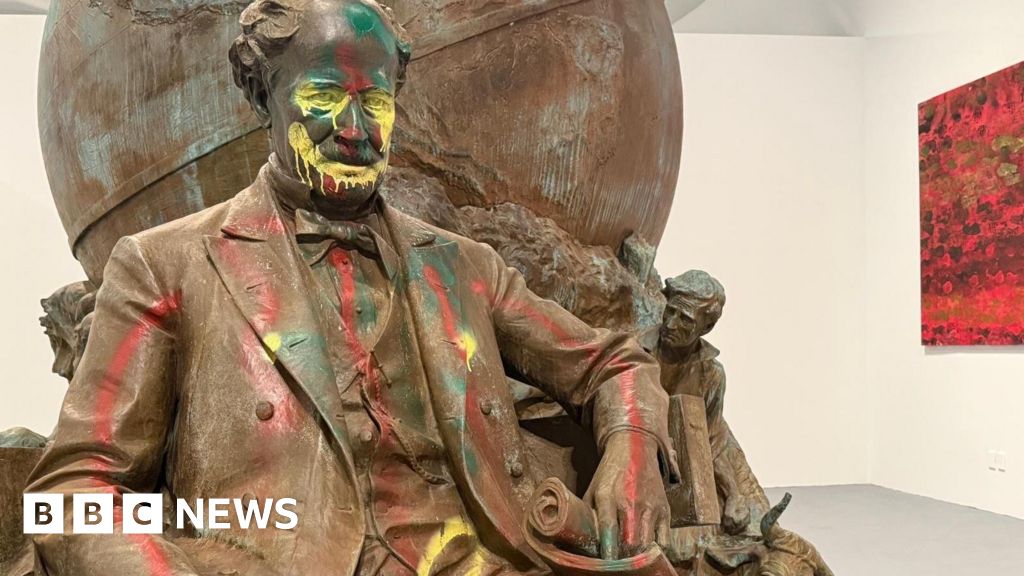
In recent years, the global debate over confederate monuments has escalated beyond American borders into a symbol of broader ideological conflicts. The recent transformation of a once-storied Robert E. Lee monument into a melted sculpture displayed in Los Angeles exemplifies this shift. The removal and subsequent artistic reimagining serve as a clear statement: societies worldwide are grappling with their history and confronting the lingering effects of white supremacy. As the United States experiences heated disputes over these statues, international observers and historians warn that such internal conflicts deeply influence geopolitical stability and societal cohesion.

Amid this controversy, President Donald Trump has vocally defended the preservation of Confederate icons, labeling efforts to dismantle them as misguided “revisionist history.” In 2017, the deadly clashes at Charlottesville’s Unite the Right rally marked a watershed moment, drawing international attention to the divisiveness of Confederate iconography. Vowing to uphold what he values as American heritage, Trump and others have sought to reestablish Confederate monuments—an action criticized by scholars, activists, and international organizations alike. Analysts from institutions such as the BBC and the Atlantic Council interpret these moves as strategic attempts to mobilize cultural nationalism, fueling tensions that threaten to destabilize social fabric.

The ongoing debate also illuminates how historical narratives are weaponized within political battles. Curator Hamza Walker pointed out that symbols like Lee and Jackson, despite losing the Civil War, are lionized because they embody a Lost Cause ideology. This construct seeks to portray the Confederacy as a noble fight for states’ rights, conveniently sidestepping its core commitment to slavery. Critics argue that redefining these figures as heroes threatens to distort history and perpetuate racial inequalities. As Kara Walker’s provocative exhibit demonstrates, artistic reinterpretations—such as melting down monuments and repurposing their materials—are emerging globally as powerful acts of resistance, challenging societies to confront uncomfortable truths. The transformation of these symbols from revered sculptures into artifacts signifies a pivotal cultural shift: a collective effort to deny the mythos of white supremacy and confront a legacy rooted in systemic injustice.

As history continues to unfold, the question remains whether these acts of dismantling and reinterpretation will ultimately foster reconciliation or deepen divisions. The weight of history presses down on societies that are torn between honoring their past and forging a more inclusive future. Will the tide of public opinion push nations toward acknowledgment and reckoning, or will it provoke further unrest? The answer lies in the choices made in these turbulent moments—choices that will define the narrative of justice and morality for generations to come. As the bronze remains of monuments are reborn through art and activism, the story of a fractured nation—and the world—remains conspicuously unwritten, waiting for its next chapter to be forged in the crucible of history.

Philippines shaken by powerful 7.6-magnitude quake—damage hits home

Philippines rocked by 7.6-magnitude quake amid regional instability

The southern Philippines faced a ferocious natural disaster on Friday as a 7.6-magnitude earthquake struck in the region of Mindanao. The seismic event, occurring in waters near the town of Manay, caused immediate panic and infrastructural damage across affected areas. Initial warnings of a potential tsunami prompted authorities to issue alerts within a 300 km radius, though these were eventually lifted as the Pacific Tsunami Warning Center confirmed the immediate threat had subsided. However, the physical and psychological toll on local communities remains significant, raising questions about the nation’s preparedness for such recurring crises tied to its geographic and geopolitical realities.

Regional and national responses highlight ongoing vulnerabilities and geopolitical stakes

  • The province of Davao Oriental reported widespread panic among residents, with buildings suffering damage, including cracks on vital infrastructure like the Magsaysay Bridge in Butuan City. Philippine President Ferdinand Marcos Jr. assured the public that urgent search and rescue operations were underway, emphasizing the importance of coordinated government response. Alongside local authorities, Philippine energy officials are monitoring power outages triggered by the quake, underscoring the potential destabilization of critical infrastructure amid natural disasters.
  • The disaster occurred only ten days after a devastating 6.9-magnitude quake hit Bogo City in Cebu, leaving 71 fatalities. This sequence of tremors underscores a volatile seismic profile characteristic of the (Pacific “Ring of Fire”), a zone that contributes to over 800 earthquakes annually, as per Philippine seismologists. Experts from the European-Mediterranean Seismological Centre estimate a slightly larger magnitude at 7.4 and a depth of 58 km, illustrating the complexity of accurately assessing such events amidst a history of regional vulnerability.

How international and regional factors complicate the geopolitical landscape

The uprising of regional tensions and geopolitical interests in Southeast Asia are intertwined with natural disasters in ways that shape the broader security calculus. The neighboring Indonesia issued an early tsunami warning for parts of North Sulawesi and Papua, highlighting regional fragility and interconnectedness that can escalate conflicts of aid and responsibility. Western nations, global institutions, and international aid groups are watching closely as Manila navigates both the immediate crisis and its larger strategic role in the Indo-Pacific. The Philippines’ geographical position as a US ally within the U.S.-China rivalry amplifies the geopolitical impact, with local events taking on significance well beyond the Pacific archipelago.

International analysts, including those from the Council on Foreign Relations and regional think tanks, warn that such propitious moments of natural disaster can serve as catalysts for larger geopolitical shifts. As the Philippines faces an increasing frequency of quakes, it must also contend with rising military and economic pressures from regional powers. The government’s ability to respond effectively will not only determine the survival of infrastructure and lives but will also influence regional stability and the perception of the Philippines as a resilient partner in Asia’s future.

As the dust settles over Mindanao, the true test begins—not only in rebuilding damaged homes and facilities but in forging a path that recognizes both the enduring power of nature and the imperatives of geopolitical strategy. For history’s pages yet unwritten, this quake may prove a mere chapter—or the prelude to a broader transformation in Southeast Asia’s fragile geopolitics. The weight of what lies ahead rests heavily on the shoulders of leaders, communities, and nations as they face the relentless march of the Earth’s restless crust, reminding all that sometimes, the most profound impacts are felt long after the tremors cease.

Social Media Auto Publish Powered By : XYZScripts.com