Matox News

Truth Over Trends, always!

House Republicans block Dem effort to reel in Trump’s Iran war powers

In a dramatic display of how geopolitical tensions are escalating in the Middle East, efforts by House Democrats to curb President Donald Trump’s war powers over Iran and broader Middle Eastern conflicts have been thwarted on Capitol Hill. The Democrats attempted to pass a resolution through a procedural shortcut called unanimous consent—intended to be a swift, uncontested move—yet the effort was cut short when Republican pro forma speaker Chris Smith refused to recognize lawmakers from the opposing party. This procedural blockage underscores the deep partisan divide that complicates the U.S. response to ongoing regional crises, as lawmakers grapple with how to contain conflicts that threaten both regional stability and international security.

Since the temporary ceasefire announced on Tuesday, cracks in the fragile truce have appeared. Israel continues its military strikes in Lebanon, asserting they are targeting Hezbollah, but Iran maintains the ceasefire covers these actions—an assertion rejected outright by both the US and Israel. Lebanese casualties have surged past 1,000 with over 254 confirmed dead and hundreds injured, as central Beirut bears the scars of relentless bombardment. Meanwhile, Iran has reportedly re-blocked oil tanker traffic through the Strait of Hormuz, just hours after briefly permitting passage—highlighting how the delicate balance of regional maritime trade and strategic chokepoints remains precarious. Such developments threaten the stability of global oil markets and U.S. interests, raising alarms among international observers and analysts who warn that the Middle East’s latest flare-up is far from contained.

The international community has expressed grave concern. The UN Secretary-General warned that continued Israeli military activity in Lebanon “poses a grave risk” to any diplomatic progress. Meanwhile, U.S. Senator JD Vance described the ceasefire as “fragile,” reflecting a broader skepticism rooted in the unpredictable nature of Middle Eastern conflicts. House Minority Leader Hakeem Jeffries and other Democratic leaders have criticized the insufficient nature of the ceasefire and called for immediate congressional action to “permanently end the war in the Middle East,” although Congress remains on recess until mid-April. It reveals how U.S. domestic politics—divided and increasingly influenced by partisan interests—continue to hinder decisive action in a region where every decision could reshape the global geopolitical landscape, impacting millions on the ground.

  • The Pelosi-led resolution aimed to limit Trump’s war powers, but was blocked as partisan tensions overshadowed efforts to forge a clear U.S. policy.
  • Israel’s ongoing strikes and Iran’s reassertion of control over key maritime routes threaten to prolong the conflict, risking regional escalation.
  • International organizations and analysts warn that unfinished diplomacy and unpredictable military actions threaten to ignite a broader global confrontation, with consequences reverberating through commodity markets, international alliances, and regional power balances.

As the world watches the chaos unfold, historians and geopolitical analysts warn that this is a <turning point>—a period where the decisions of a few could ignite a chain reaction of conflict. The frozen diplomacy, combined with the mounting casualties and strategic maneuvers, leaves the international order on the brink of a new, unpredictable chapter. History’s pen is poised, and the weight of every decision now carries the potential to tilt the scales of global power for generations to come. As flames flicker in Beirut, and the Strait of Hormuz remains volatile, the question remains—who will write the next chapter in this unfolding crisis, and at what cost to humanity?

Anthropic powers up Claude’s memory to win over AI switchers

AI Innovation and Market Dynamics: Anthropic’s Strategic Moves

The AI industry stands at a pivotal crossroads as Anthropic, a rising star in artificial intelligence research, accelerates its technological advancements with recent feature rollouts aimed at enhancing user engagement and capability. Since October, Claude—the company’s flagship conversational AI—has gained a new suite of functionalities, notably the ability for users to import and export memories. This capability signifies a significant disruption in how AI models are personalized and retained, positioning Anthropic as a challenger in the evolving AI services arena.

Traditionally, such advanced memory features were restricted to paid subscriptions, limiting access to a select user base. However, now all Claude users can enable memory functionalities via settings, democratizing sophisticated AI customization. The inclusion of a memory importing tool—allowing users to copy prompts and outputs seamlessly—marks a new milestone in accessibility and user control. Industry analysts, including those from Gartner and tech think tanks like MIT, view this as a deliberate move toward increasing user engagement, loyalty, and data retention, which could fundamentally shift how enterprise clients and consumers leverage AI across multiple domains.

Meanwhile, Anthropic has been making headlines beyond feature enhancements. Recently, the startup publicly challenged the Pentagon’s attempt to relax constraints on its AI models, drawing what it describes as “red lines” around issues such as mass surveillance and fully autonomous lethal weapons. This stance signals a strategic positioning within the global AI arms race, emphasizing ethical boundaries and responsible innovation. As AI regulation tightens worldwide, companies that prioritize transparency and principled AI development are expected to gain a competitive advantage and set industry standards, potentially disrupting established players that favor rapid deployment over safety considerations.

From an investment standpoint, the implications are clear: industrial giants, government agencies, and private firms are closely watching these developments. The growing demand for customizable, ethically-conscious AI tools indicates a shift toward a more nuanced market—one where disruption is driven by innovation that balances technological advancement with societal responsibility. Experts like Peter Thiel and Elon Musk warn that losing sight of ethical boundaries could lead to severe consequences, fostering an environment where timely innovation and strict governance must go hand-in-hand.

The future of AI is unfolding at breakneck speed, with Claude’s new features exemplifying how disruptive technology reshapes user experiences and business models. As competitors scramble to keep pace, the key will be in their ability to innovate responsibly, balancing technological breakthroughs with strategic foresight. This evolving landscape signals an urgent call to action for industry leaders: those who pioneer ethically aligned AI while maintaining agility will not only dominate the market but also define the technological and moral standards of tomorrow. The trajectory suggests that the next few years will be crucial in determining whether AI becomes a tool for empowerment or an instrument of unchecked risk—making it imperative for stakeholders to stay vigilant, adaptable, and forward-thinking.

Razer’s new laptop sleeve powers your gadgets on the go—wirelessly charging anywhere

Razer’s New Laptop Sleeve Combines Protection with Cutting-Edge Wireless Charging

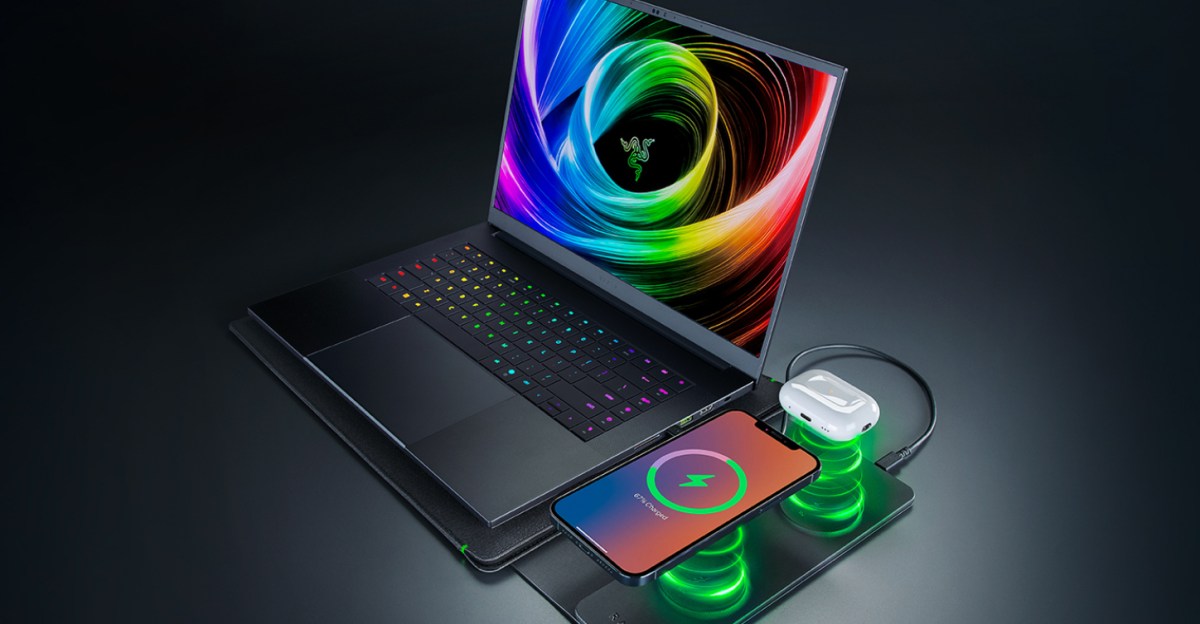
The technology landscape continues to evolve rapidly, with leading brands like Razer pushing the boundaries of device accessories. Recently, Razer unveiled its Laptop Sleeve 16”, a product that exemplifies disruption by merging robust protection with integrated wireless charging capabilities. At a premium price point of $129.99, this accessory marks a notable shift in how gaming and tech companies approach user-centric innovation.

Equipped with dual wireless charging pads embedded within its cover flap, the sleeve transforms the typical protective case into a mobile charging station. This feature addresses the escalating demand among young, tech-savvy professionals for convenient, on-the-go power solutions— especially for smartphones, earbuds, and other wireless peripherals. The integration of this technology points to a broader trend where disruptive accessories are blurring the lines between hardware protection and functional augmentation. Industry analysts from Gartner suggest that such innovations could lead to a new wave of multifunctional device accessories, catalyzing a shift in the standard consumer expectations across electronics markets.

Implications for the Business Ecosystem and Industry Dynamics

This development carries significant business implications. As companies like Razer introduce premium features into relatively niche accessories, competition will intensify among gadget accessory manufacturers seeking differentiation through innovation. The upgrade in user experience demonstrates a move toward premium, integrated solutions that not only serve as protection but also enhance daily productivity. However, this also introduces challenges—potentially regarding supply chain complexity and compatibility issues, as not all laptops can support full wireless charging at optimal speeds due to power limitations via USB-C ports. The cautious approach from tech giants and startups alike signals that future success depends on balancing innovation with reliable performance.

Experts such as Elon Musk and Peter Thiel have long advocated for transformative technologies that empower individual users and disrupt established markets. The Razer Sleeve epitomizes this philosophy, illustrating how the convergence of smart design and connectivity is reshaping accessory paradigms. As industry leaders and startups race to embed wireless charging, solar power, and other disruptive features into everyday devices, the potential emerges for entirely new categories of office-to-outdoor gear. This trend aligns with the strategic visions outlined by leading institutions like MIT, emphasizing the importance of integrating hardware advancements with software ecosystems for a seamless user experience.

Looking Ahead: The Future of Tech Innovation and Critical Disruption

The arrival of innovative accessories such as Razer’s wireless-charging sleeve signifies a pivotal moment for the tech industry—a demand for more integrated, multifunctional, and intelligent designs will only accelerate. As the market shifts toward these disruptive innovations, companies that hesitate risk falling behind in a fiercely competitive landscape. The pace of change suggests that the next decade will see an explosion of integrated, AI-enhanced devices that reconfigure how users interact with their technology daily. For forward-thinking organizations and consumers alike, the key will be to monitor these trends closely, preparing to adapt to a future where the boundary between accessories and core devices becomes almost indistinguishable. In this rapidly evolving environment, those who can innovate swiftly will dominate the next chapter of tech evolution.

Social Media Auto Publish Powered By : XYZScripts.com