Matox News

Truth Over Trends, always!

Trump Praises Magyar’s Future Potential, Slightly Cuts Distance from Orbán – Europe Live

In a remarkable turn of events, Hungary’s new leadership under Péter Magyar has signaled a decisive break from the legacy of Viktor Orbán, causing ripples across European geopolitics. Following Hungary’s recent elections, Magyar, representing the opposition Tisza party, has finalized plans to swiftly establish a new government by mid-May. This transition marks a significant departure from Orbán’s long-standing rule, with Magyar emphasizing the importance of “restoring the rule of law” and rehabilitating Hungary’s fractured relationship with the European Union (EU), which had been riddled with recurrent conflicts over legal standards and funding compliance.

One of the earliest steps announced by Magyar involves a pivotal overhaul of Hungary’s state-controlled media landscape. In a move aimed at dismantling years of government propaganda, Magyar openly declared intentions to suspend the ongoing news broadcasts of state media outlets like Kossuth Rádió and M1 TV, promising a transition toward unbiased and transparent journalism. This ambitious attempt to restore media independence echoes broader efforts often championed by Western democracies to strengthen societal trust and institutional integrity. International observers, including prominent analysts and watchdogs, view this as a deliberate effort to dismantle media propaganda under Orbán’s regime, potentially setting a precedent across the region.

Meanwhile, the European Union’s stance appears cautiously optimistic. The EU’s defense commissioner, Andrius Kubilius, indicated that a “new wind is blowing” in Hungary, expressing readiness to implement a significant €80 billion loan to Ukraine, contingent on Hungary removing its veto—which has delayed a €90 billion aid package for Kyiv. Magyar’s government hints at concessions, stating it would drop the veto as long as Hungary retains its opt-out clause and is not required to contribute to the loan, as previously agreed with Orbán’s administration. This demonstrates Hungary’s strategic leverage and its ongoing negotiation on the terms of EU funding, which remains a focal point of contention.

Domestically, Magyar’s approach signals a period of internal upheaval, with plans to replace the outgoing president, Tamás Sulyok, seen as a symbol of Orbán’s authoritarian tendencies. Magyar declared that Sulyok was “unworthy of representing the unity of the Hungarian nation” and suggested he should step down or could be forcibly removed. This internal power struggle underscores the broader aim of Magyar’s coalition to reshape Hungary’s political and media institutions fundamentally, pushing towards a more democratic and rule-of-law oriented governance model.

As history continues to unfold, the implications are profound. The emergence of a government promising transparency and media reforms, coupled with Hungary’s cautious engagement with the EU, presents a pivotal moment for Central Europe. This is a story not merely of political transition but of a nation potentially rewriting its identity amidst forces seeking to redefine the balance of sovereignty and integration in Europe. Such choices will reverberate beyond Hungary’s borders, challenging longstanding alliances, and testing the global community’s resolve to uphold democratic principles amid shifting geopolitical tides. The world watches with bated breath as Hungary’s future, teetering on the brink of reform or retreat, writes the next chapter in the history of freedom and sovereignty.
Rubio praises significant gains in Ukraine peace talks for a stronger future

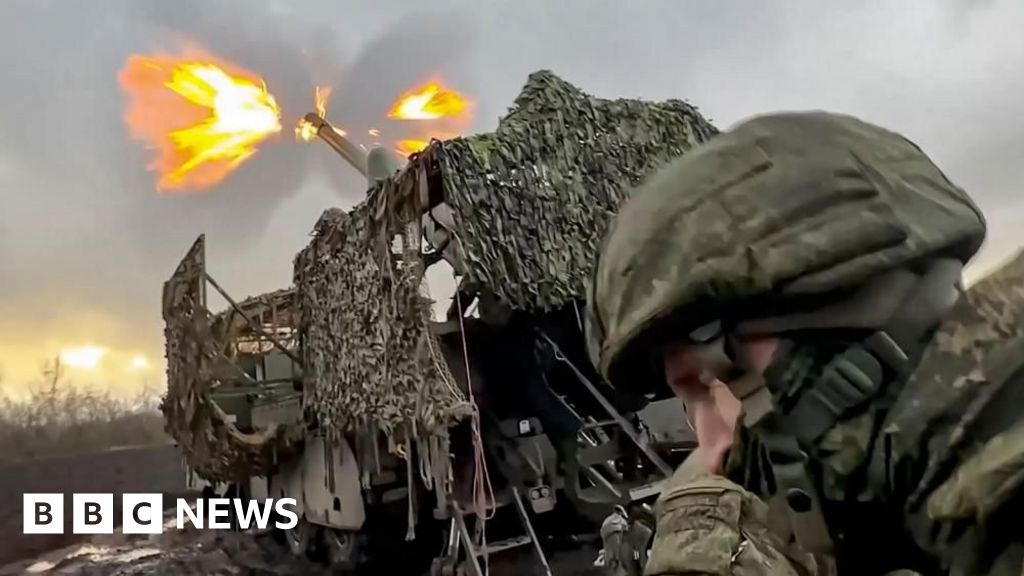
The recent developments in the ongoing Russia-Ukraine conflict indicate a pivotal chapter in international diplomacy, with the United States and its allies pushing forward a proposed peace framework amidst complex negotiations. According to Secretary of State Marco Rubio, significant progress has been made toward finalizing a deal, as the diplomatic focus shifts toward securing an agreement that could redefine the geopolitical landscape in Eastern Europe. These negotiations, held in Geneva, Switzerland, signal a delicate dance between diplomatic concessions and strategic interests, illustrating how core international decisions now hinge on the outcome of a handful of key issues. Washington’s pursuit of a peace plan—drafted to include troop withdrawals, border demarcations, and security guarantees—demonstrates a cautious but determined effort to reassert influence over the region, and perhaps, to contain Russia’s expanding footprint.

At the forefront of these negotiations lies the US draft plan, which aims to freeze Ukraine’s borders and impose limits on its military capacity. The proposal’s highly contentious element is Kyiv’s pledge to abstain from pursuing NATO membership—an announcement that has generated unrest both within Ukraine and among its Western partners. Many analysts interpret this as a strategic capitulation that risks undermining Ukraine’s sovereignty, while Russia views it as a critical buffer to prevent NATO’s eastward expansion. The plan also advocates for Russia’s reintegration into the global economy, including the lifting of sanctions and re-admission to the G7, signaling a fundamental shift in how the West approaches Moscow’s reintegration—an approach that has broad implications for global power balances. According to respected international relations experts, such strategies could either stabilize a fragile region or serve as a prelude to further geopolitical maneuvering, depending on how these agreements are enforced and respected.

Meanwhile, Ukrainian President Volodymyr Zelensky has expressed cautious optimism, emphasizing that signals from the US administration suggest the possibility of reaching an understanding. Yet, the underlying tensions remain palpable—Ukraine faces the dilemma of either accepting what many see as a compromised sovereignty or risking further losses to Russian forces. The leaked proposals, seen as favoring Moscow by some European nations such as the UK, France, and Germany, have stoked fears of a eroded Ukrainian dignity and a turning point in national sovereignty. The significance of these negotiations extends beyond Ukraine’s borders, as the potential for a broader realignment of alliances looms. Leaders and historians warn that the decisions made in Geneva could set a precedent, influencing regional stability and the future of NATO—possibly reimagining Europe’s security architecture for generations to come.

As international players grapple with these complex and sensitive negotiations, the geopolitical impact becomes increasingly evident: the outcome may either contain Russia’s ambitions or embolden it to pursue further advances. The stakes involve not only territorial control but also the very principles of sovereignty, security guarantees, and economic reintegration. The tense atmosphere underscores a critical warning that *the geopolitical chessboard remains perilously fragile*, and the decisions taken now will echo through history. With time running out—marked by President Trump’s ultimatum of Thursday for Kyiv to accept the proposals—the world watches with bated breath. The unfolding story of these negotiations is more than a diplomatic whisper; it is a clash of visions which, whether resolved peacefully or driven by conflict, will carve a new chapter in the ongoing saga of global power struggles. The question remains: will this be the dawn of a new era of cooperation or the prelude to a deeper, more enduring confrontation? Only time will reveal those critical answers.

Trump praises 'strong' chat with Xi in South Korea
Trump praises ‘strong’ chat with Xi in South Korea

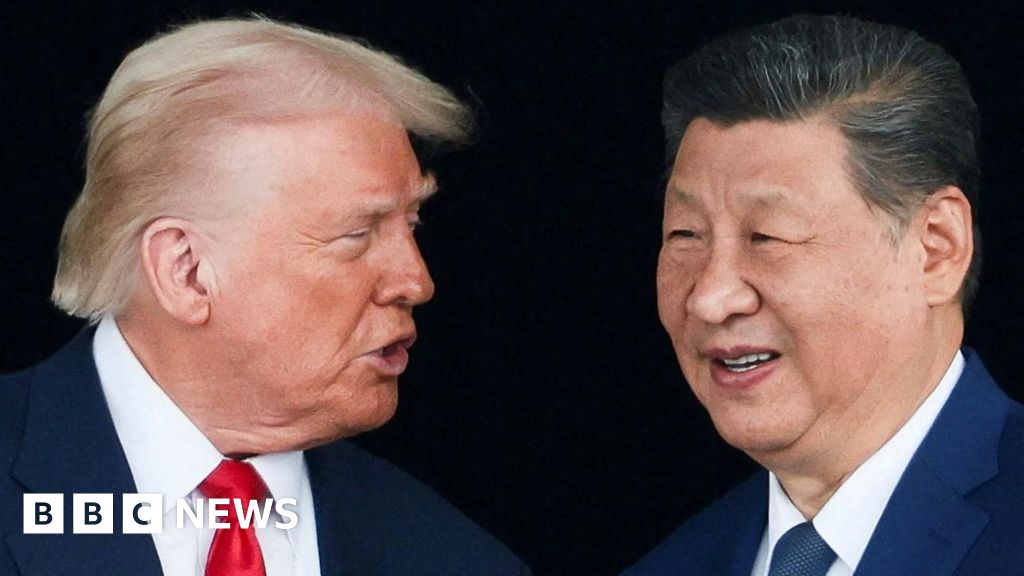
In an era defined by intense geopolitical competition and shifting alliances, the recent meeting between US President Donald Trump and Chinese President Xi Jinping marks a pivotal moment that may signal a tide of strategic recalibration. After a six-year hiatus, the leaders finally convened in South Korea, an event laden with implications for the delicate balance of power on the international stage. While not an outright treaty or comprehensive agreement, the summit has stirred hopes for a de-escalation of trade tensions that have gripped the global economy, revealing how individual decisions at the highest levels can ripple across nations and societies worldwide.

Although the talks did not produce a formal accord, they laid down a strategic framework that analysts and historians are already interpreting as a potential turning point in US-China relations. A key victory for President Trump was China’s agreement to suspend export controls on rare earths—crucial materials that power modern technology, from smartphones to advanced military hardware. The significance of this move cannot be understated; it demonstrates China’s recognition of its leverage and a shift toward engaging more constructively in global trade. Concurrently, Beijing committed to increasing purchases of U.S. farm exports, specifically soybeans, which had been a flashpoint due to retaliatory tariffs. This gesture, lauded by Trump as a major breakthrough, exemplifies how economic incentives and strategic negotiations intertwine to shaping the future geopolitical landscape.

Yet, beneath the surface, the complex chess game between two superpowers reveals entrenched interests and unresolved conflicts. Notably absent from the accord was progress on regulations surrounding TikTok, where U.S. authorities continue to push for extracting the app’s U.S. operations from Chinese ownership—an issue strongly tied to national security concerns. Moreover, the U.S. announced plans to relax tariffs on ingredients used in fentanyl manufacturing, a key issue in the ongoing fight over drug smuggling that has affected American communities and politics. Nevertheless, the continued presence of tariffs exceeding 40% on Chinese imports underscores how unresolved economic tensions remain core to the broader competition. Highlighting the strategic deadlock, Beijing’s permission for Trump to visit China in April symbolizes a cautious thaw, but also a reminder of the fragile diplomacy prevailing between the world’s two giants.

From the vantage point of global analysts and organizations like the International Monetary Fund, this summit is recognized as a critical juncture where decisions made today will ripple through the fabric of international society. China’s leadership, well aware of its strengthened position, entered the negotiations with a tone of measured restraint, clearly knowing its strategic advantage— having learned from previous confrontations, it has diversified its trade partnerships and leveraged its chokehold on rare earths. Meanwhile, Trump’s approach was more unpredictable, marked by tactical concessions and starkly different diplomatic styles, encapsulating the ongoing ideological and strategic contest that dominates the US-China relationship. As world history’s pages turn, the outcome of this diplomatic engagement, seemingly tentative yet undeniably consequential, promises to shape how nations navigate the complexities of global power for generations to come, leaving the informed observer to ponder: how much of the future is truly in our hands, and how much is being written by the strings of geopolitics beyond our control?

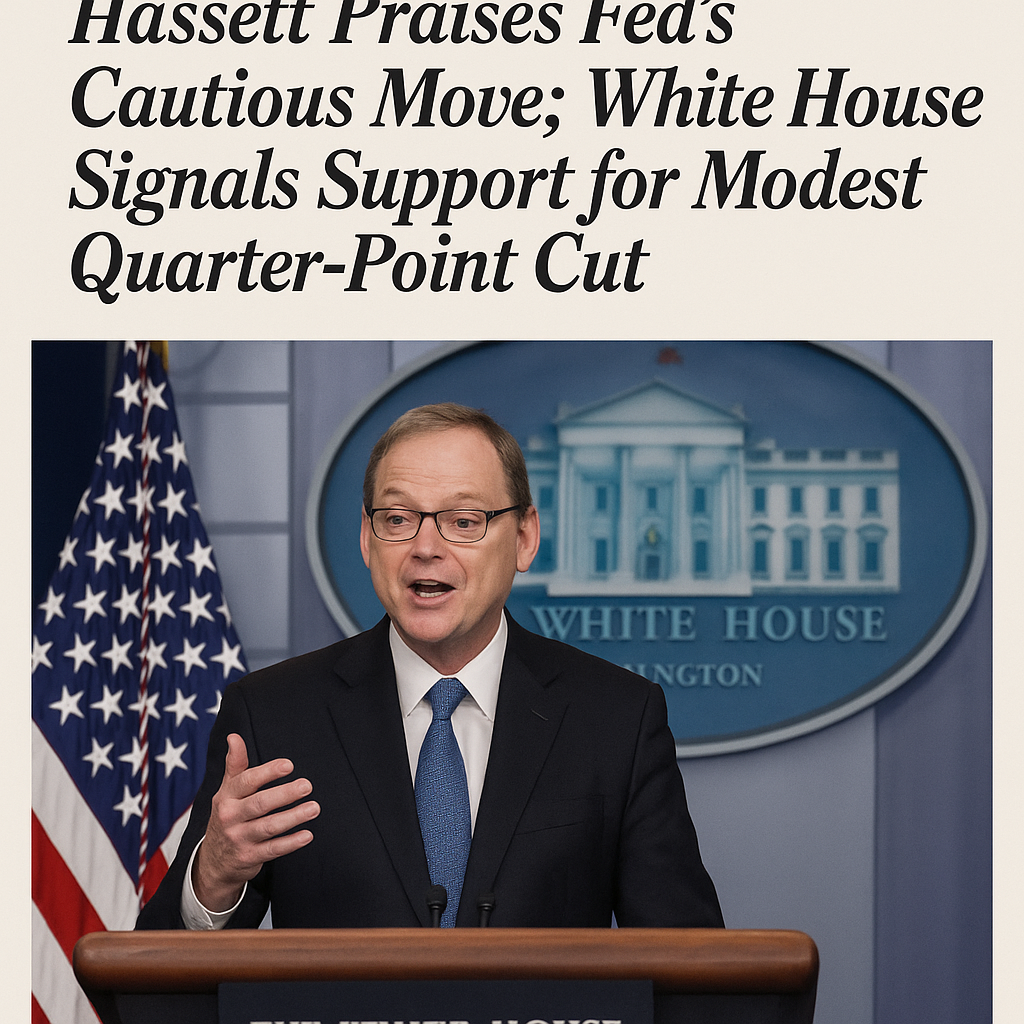
Hassett praises Fed’s cautious move; White House signals support for modest quarter-point cut

Federal Reserve’s Rate Cut Sparks Market Movements and Policy Debates

The Federal Reserve recently implemented a modest quarter-percentage-point cut to its key borrowing rate, signaling a cautious approach as it navigates a complex economic landscape. This decision, perceived by some as a step towards economic stabilization, comes amid shifting market sentiments and ongoing debates among policymakers, economists, and investors. As the global economy faces rising inflationary pressures yet remains resilient, the Fed’s move exemplifies the delicate balancing act it must perform—tamping inflation without stifling growth.

Notably, the White House expressed support for the Fed’s measured approach, with National Economic Council Director Kevin Hassett emphasizing the prudence of a “slow and steady” policy. While some within the administration advocated for a more aggressive half-point cut, the Fed’s decision reflects a consensus aimed at cautious optimism. The recent economic indicators show a robust third-quarter growth rate exceeding 3%, a figure that traditionally would argue against easing monetary policy. Still, inflation running above the Fed’s 2% target, combined with concerns about persistent financial risks, has prompted a nuanced response that favors gradualism over rapid cuts.

Market impacts from this decision are multifaceted. Investors remain vigilant, with equities, bonds, and commodities reacting to the delicate narrative of growth versus inflation control. The policy considerations extend beyond immediate market behavior, touching on policy consequences that could shape future economic stability. Analysts from think tanks and leading economists, including those linked to the Federal Reserve and major banks, indicate that this cautious move might set the stage for future rate adjustments. The decision also underscores ongoing debates about the policy trajectory—should the Fed prioritize containing inflation or supporting a thriving housing market and manageable debt levels?

Importantly, the political dimension persists, with President Donald Trump advocating for more aggressive cuts—arguing that the current rates are insufficient to boost the struggling housing sector and manage the national debt. Such political influences, though not directly altering Fed decisions, shape the policy environment and investor sentiment. As the Fed considers its next moves amid diverse economic signals, the broader implications for market impact and policy stability will be paramount. The coming months will test whether this measured approach will secure sustained growth or prompt future rallying cries for more rapid easing, reflecting the eternal tug-of-war at the heart of economic policy.

Looking ahead, the pulse of the economy remains a reflection of national strength and future global influence.

In this high-stakes game, where monetary policy acts as both shield and sword, the resilience of economies hinges on informed decision-making and bold leadership. Investors, policymakers, and citizens alike watch with anticipation, realizing that the economic landscape is a grand stage—an epic arena where the forces of innovation, policy, and global power collide. While uncertainties persist, the underlying momentum suggests that the future economy will be shaped by those willing to navigate its shifting tides with vision, precision, and resolve. This moment underscores the vital truth: **the economy is not merely a system of numbers, but the beating pulse of nations, heralding the dawn of a new era of global influence and economic ascendancy**.

Social Media Auto Publish Powered By : XYZScripts.com