Matox News

Truth Over Trends, always!

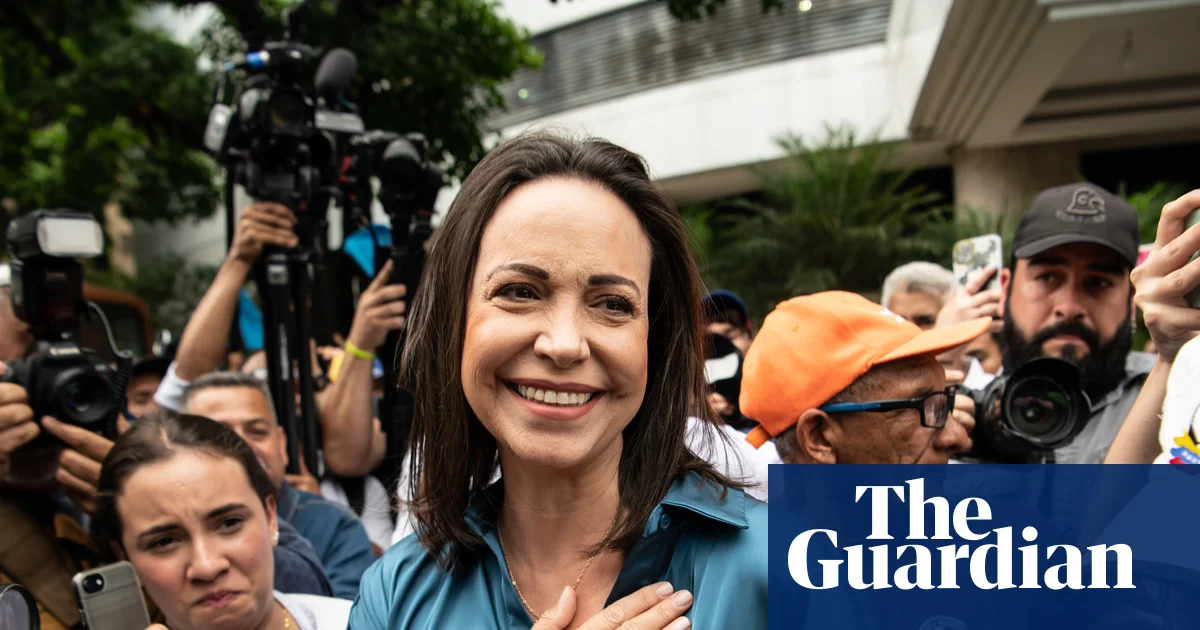
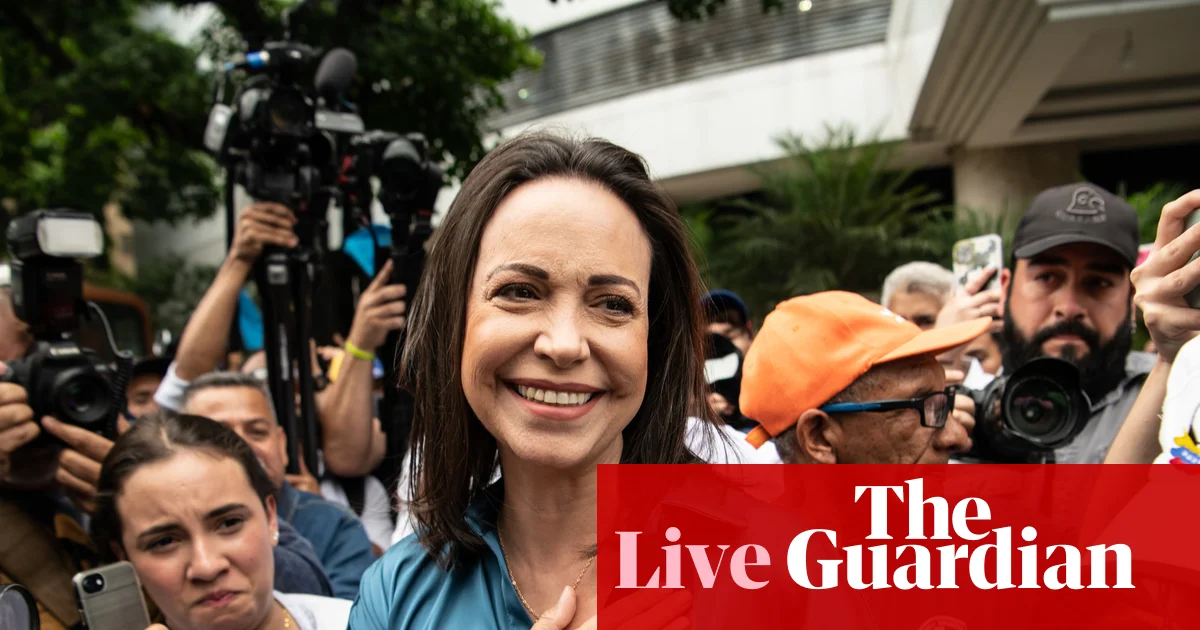
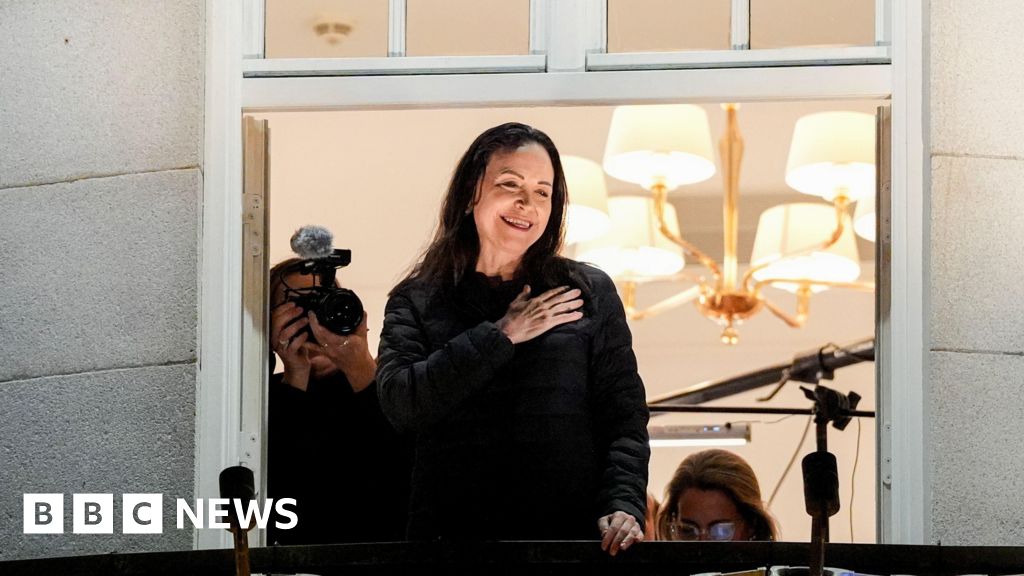
María Corina Machado Lands in Oslo After Nobel Peace Prize Victory

The recent appearance of Venezuelan opposition leader María Corina Machado in Oslo, Norway, following her Nobel Peace Prize award, marks a critical juncture in the persistent struggle for democracy versus dictatorship in Venezuela. Having gone into hiding amid ongoing political turmoil, Machado’s covert journey and public show of support from her supporters outside the Grand Hotel symbolize a resilient opposition defying both domestic repression and international indifference. Awarded for her relentless pursuit of a “just and peaceful transition,” her recognition by the Nobel Institute underscores the global spotlight on Venezuela’s fractured political landscape, which continues to define geopolitical tensions across the Americas.

Her historic public appearance coincides with mounting tensions involving the United States, which recently announced the seizure of an oil tanker off the coast of Venezuela. The US administration claims the vessel was engaged in illicit oil shipping supporting “foreign terrorist organizations,” prompting accusations of theft and piracy from the Venezuelan government. This escalation is emblematic of broader geopolitical struggles in the region, where the US seeks to exert pressure on Venezuela’s socialist regime. As Washington’s rhetoric intensifies, analysts warn that such actions threaten to ignite a broader conflict, potentially destabilizing an already fragile region. Experts from international organizations and historical scholars warn that these maneuvers could provoke a new chapter of conflict, with unpredictable consequences for both nations and societies alike.

The global impact of these developments is profound. The US’s aggressive stance coupled with Venezuela’s defiant response illustrates a geopolitical impasse, where the ideals of democracy clash with the interests of regional dominance. Amid the political upheaval, the international community’s role has been scrutinized, with critics alleging that external intervention risks exacerbating internal divisions. As Machado convalesces publicly and receives international recognition, the battle for regional influence extends beyond the streets of Caracas to Washington’s corridors of power. According to a report by the International Crisis Group, such confrontations threaten to deepen socio-economic devastation and could set a dangerous precedent for other authoritarian regimes under international pressure.

In this unfolding narrative of international power struggles, the true weight of history remains unresolved. The moment encapsulates a broader question: will the global community choose to mediate with diplomacy or escalate to conflict? As Machado’s supporters cheer and look to a future of possible change, and as U.S. military actions threaten to deepen the crisis, the world gazes upon a pivotal crossroads, where the decisions made today could echo through generations. History’s pen is poised, waiting to write the next chapter in the ongoing saga of liberty, sovereignty, and international power—an enduring testament to the inescapable reality that every choice shapes the future of nations and their people.

Fang-tastic! Deutsche Börse Photography Prize Shortlist Revealed – A Visual Showcase for Young Creatives

In an era where technology relentlessly reshapes our perception of reality, the contemporary artistic landscape remains a vital sanctuary for culture’s role in defining identity, tradition, and societal values. This year’s shortlist for the prestigious Deutsche Börse Photography Prize, with its provocative blend of retro imagery manipulated by AI and urgent social commentary on women’s prisons, exemplifies the enduring power of art to reflect and critique the zeitgeist. As the critic G.K. Chesterton once observed, “the fundamental task of art is to set before us the truth of human existence in its most earnest guise.” The chosen works stand as a testament to the persistent dialogue between history, memory, and contemporary morality.

Historically, culture functions as a vessel for collective memory, a mirror held up to society that both preserves our roots and beckons us toward future horizons. Philosophers like Ortega y Gasset have emphasized that our “sense of reality is deeply rooted in the cultural narratives which weave our shared experience.” Today, this is evident in the innovative use of AI to revive and reinterpret visual histories, challenging notions of authenticity and artistic mastery. These manipulations, far from frivolous, serve as the digital extension of the human desire to grasp the intangible essence of history—an extension of our cultural memory that is both reconstructed and reimagined. This process echoes Tocqueville’s insights on democracy’s role in democratizing art and ideas—making the conversation accessible, urgent, and vital across societal divides.

The spotlight on the series examining women’s prisons underscores how art remains a crucial arena for societal critique, exposing the raw, often uncomfortable truths about justice, gender, and power structures. Such works become a form of cultural resistance, a means of asserting that tradition does not fade but evolves through confrontation and reflection. As T.S. Eliot remarked, “Our civilization is a participating beauty, not a static heritage.” These images challenge viewers to reconsider myths of progress and the true foundations of social cohesion. They serve as urgent reminders that culture must confront its shadows if it is to guide us toward authenticity and moral clarity.

In this light, the artistic acts of today—whether through digital renaissance or social examination—are akin to poetic prophecies, whispering that culture is not merely a reflection but a vital force shaping human destiny. As Chesterton envisioned, “We do not rest content with history; we live within it, and through our art, we anticipate its unfolding.” Just as ancient myths and ancestral stories codify the character of civilizations, modern images and narratives serve as a living scroll, inscribed with both memory and prophecy. The future of culture, therefore, lies in our capacity to remember bravely and to imagine boldly—both the stories we have inherited and those we dare to forge anew. In this continuous relay of human experience, culture emerges as the eternal guardian and visionary of mankind’s enduring quest for meaning, truth, and beauty.

Venezuelan Activist María Corina Machado Recognized with Nobel Peace Prize

In an extraordinary development that underscores the fierce struggle for democracy against authoritarian regimes, María Corina Machado, the revered opposition figure from VENEZUELA, has been awarded the Nobel Peace Prize. Celebrated globally as a symbol of resilience, Machado’s advocacy for freedom and democratic principles exemplifies the vital role of civilian courage in South America’s ongoing political turmoil. Her recognition by the Nobel committee not only elevates her personal fight but also spotlights the broader geopolitical repercussions of Venezuela’s protracted crisis—a nation once proud of its prosperity, now suffering under the shadow of dictatorship.

The background to Machado’s pivotal ascent is rooted in the controversial July 2024 presidential election, fiercely contested and widely regarded as a decisive moment in Venezuela’s democratic backslide. The opposition, led by Machado’s ally Edmundo González, claimed to have won decisively, a victory nullified by Nicolás Maduro, who refused to cede power. The subsequent crackdown—marked by arrests, exile, and underground resistance—symbolizes the intensified, brutal grip of Maduro’s regime over Venezuela’s political landscape.

Despite her exile and living in hiding, Machado’s symbolic presence remains a rallying point for opponents. Her recent Nobel accolade has ignited hope among Venezuela’s dissident community and international allies, especially the United States. The U.S. has responded with increased military posturing, with reports of a significant naval buildup off Venezuela’s Caribbean coast—an ominous sign that some factions may be preparing for regime change. While such plans remain covert, the potential for external intervention raises profound concerns regarding sovereignty and regional stability, fueling fears of a broader conflict rooted in U.S.-Latin American relations. Analysts from institutions like Chatham House warn that this move could escalate tensions in a nation already torn apart by economic despair and social unrest.

The international community’s stance on Venezuela’s crisis continues to evolve. The United Nations and numerous human rights organizations have condemned Maduro’s government for systematic repression, citing the displacement of nearly 8 million Venezuelans—a staggering exodus driven by poverty, violence, and political persecution. As Machado’s efforts garner global recognition, her Nobel victory illuminates the stark contrast between the hope of democracy and the oppressive reality beneath Maduro’s rule. This recognition is also interpreted as a message to Venezuela’s military and elites: the world is watching, and the legacy of Maduro’s brutalism will be scrutinized in the court of history.

Within Venezuela, Machado’s narrative of courageous resistance continues to inspire widespread protests and civil disobedience. Her decades-long involvement in politics, from confronting Chávez to mobilizing citizens in the current struggle, has cemented her as a symbol of hope. Still, critics point out her controversial calls for foreign military intervention, which some interpret as bordering on reckless and potentially destabilizing. Historians and international observers urge cautious judgment, emphasizing the importance of defending sovereignty, yet acknowledging the profound desire among Venezuelans for justice and renewal. As the world watches each new twist in this saga, the weight of history presses heavy upon the shoulders of both those who fight for freedom and those who seek to maintain order at all costs.

Nobel Peace Prize 2025: María Corina Machado Recognized for Defending Democracy in Venezuela

Global Impact of the 2025 Nobel Peace Prize: A Reflection of Shifting Geopolitical Currents

In a move that has resonated across continents and stirred debate among international observers, María Corina Machado, Venezuela’s most prominent opposition leader, was announced as the recipient of the Nobel Peace Prize 2025. Her recognition is not merely a testament to her personal resilience but signals a broader geopolitical statement, emphasizing the importance of democratic advocacy amid worsening authoritarian regimes. The Norwegian Nobel Committee lauded her efforts for promoting democratic rights, yet critics and analysts argue that this year’s decision also subtly addresses pressing global conflicts and the wake of recent diplomatic fissures.

Historian and geopolitical analyst Dr. Jonathan Steele notes that the choice “strikes a chord in a world teetering on the brink of regional and global crises.” He highlights that current conflicts in Ukraine, the Middle East, and tensions surrounding US-Norway relations serve as the backdrop for this year’s award. The Norwegian committee, infamous for maintaining strict confidentiality about nominations, appeared to have intentionally sent a clear message — one of resilience and defiance in the face of authoritarianism. Meanwhile, the committee’s emphasis on “courage and integrity,” especially in a climate where global order appears fragile, underscores how *the Nobel Peace Prize is often a reflection of international moral resistance* against tyranny and violence, a view supported by international organizations assessing the shift in global realpolitik.

  • The committee’s recognition of Machado, who has been forced into hiding amidst threats for her activism, frames the award as a beacon of support for oppressed populations globally. Her statement that “this is an award for an entire movement” resonates with the international community’s understanding that democracy depends on persistent resistance and that fighting against authoritarianism is a universal cause.
  • In contrast, the decision to sideline controversial figures, notably former US President Donald Trump, who publicly lobbied for the prize, highlights the committee’s emphasis on moral clarity. As Nobel experts explain, this year’s choices are shaped not only by individual merits but also by *the geopolitical symbolism* they convey, especially as nations grapple with internal unrest and external threats.
  • Machado’s recognition is also seen as a quiet rebuke to Nicolás Maduro’s regime, which the committee describes as increasingly authoritarian — a judgment echoed by independent human rights groups. This stance reflects a broader international narrative casting Venezuela as a cautionary tale for autocracies, with the prize serving as a reminder how *authoritarian machinery crushes dissent and human rights*.

International organizations and democracy advocates alike interpret this event as a declaration of moral steadfastness—a call for nations to uphold principles of justice and human dignity during turbulent times. Yet, beneath the public accolades lies a complex diplomacy. The committee’s explicit acknowledgment of Machado’s sacrifices, combined with veiled criticisms of Maduro’s government, exemplifies how awards like these influence **geopolitical alignments** — potentially softening or hardening international responses to crises. As Dr. Stein concludes, *“The Nobel Peace Prize remains a potent tool in shaping the moral contours of international diplomacy, especially when conflicts threaten global stability.”* And in an era where the future remains unpredictable, these decisions are not just awards—they are signals in the ongoing chess game of world politics.

As history continues to unfold, the true significance of this year’s Nobel Peace Prize will be measured in how it sustains or shifts the global balance of power. From the streets of Caracas to the corridors of global power, the choices made today might just echo for generations, reminding us that in the struggle for peace, moral conviction remains a formidable force.

MrBeast Stirs Controversy After Trapping Man in Burning Building for $500K Prize — Is It Just a Stunt or Crossed the Line?

In recent years, content creators like MrBeast have revolutionized the digital landscape, blending entertainment with daring risk-taking to carve out massive audiences. With over 440 million subscribers, MrBeast—whose real name is Jimmy Donaldson—has become one of the highest-paid and most influential YouTubers worldwide. His latest stunt video, “Would You Risk Dying for $500,000”, showcases his signature style: a heart-pumping spectacle where a professional stuntman attempts to escape a burning building while collecting bags of cash. This dramatic display of sheer audacity has surged past 45 million views, fueling discussions about safety, responsibility, and the evolution of modern entertainment.

The allure of MrBeast’s content transcends mere spectacle. It embodies the *shift towards experiential and adrenaline-fueled entertainment*, especially among younger viewers eager for intensity and authenticity. The producer’s ability to merge risk with reward taps into a fundamental human desire for challenge and adventure. Critics note that such content, although highly produced and seemingly reckless, involves careful planning—professional stuntmen, advanced safety measures like proper ventilation, fire suppression systems, and a dedicated crew of specialists ensure that the spectacle remains just that: a spectacle, not a tragedy. MrBeast’s assertion, “I take safety more serious than you could ever imagine,” underscores a responsible approach, even as the viral clip stirs debate about the boundaries of entertainment.

However, the conversation surrounding these viral videos is not solely about safety; it’s about the cultural role of risk in entertainment. Influential author and wellness expert Dr. Kelly McGonigal often emphasizes the benefits of controlled risk for personal growth and resilience. She suggests that *embracing calculated challenges* can foster a sense of achievement and self-confidence, especially for the youth who look up to these risk-takers as symbols of bravery and perseverance. MrBeast’s stunt, despite its controversial nature, exemplifies a modern spectacle where achievement is rewarded, not just through monetary gains but through the thrill of overcoming adversity. For many viewers, such moments serve as an inspiration to confront their own fears and pursue grit—values rooted firmly in traditional notions of personal strength and self-reliance.

  • Travel tip: Seek out adventure destinations that combine adrenaline activities with cultural immersion—like zip-lining in Costa Rica or mountaineering in the Himalayas—where safety precautions are paramount, and experience fuels growth.
  • Lifestyle hack: Balance high-intensity pursuits with holistic wellness practices, such as meditation and nutrition, to sustain both body and mind on your journey of self-discovery.
  • Main takeaway: Modern entertainment, whether in digital videos or real-world adventures, challenges us to step beyond comfort zones while respecting essential safety boundaries.

As we observe these daring displays and media personalities pushing the limits, it becomes clear that lifestyle is ultimately a journey—an ongoing pursuit of *embracing challenge, fostering resilience, and inspiring the individual to realize their potential*. The narratives spun by creators like MrBeast serve as a reminder that life’s true adventure lies not in avoiding risk but in mastering it responsibly. When safety and courage work hand-in-hand, they open pathways to personal growth that can ripple through every facet of life—driving us to face fears, pursue passions, and forge a future where our aspirations are limited only by our willingness to dare. In this era of rapid change, the call for youth is clear: dare to challenge, but always with respect for the journey and the risks involved. That is the essence of living fully in an age of endless possibilities.

Social Media Auto Publish Powered By : XYZScripts.com