Matox News

Truth Over Trends, always!

Pro-Israel Activist Files Suit Against Sydney Restaurant Over Shunning and Vilification Following News Corp Stunt

Global Power Struggles and the Ripple Effect of a Sydney Restaurant Incident

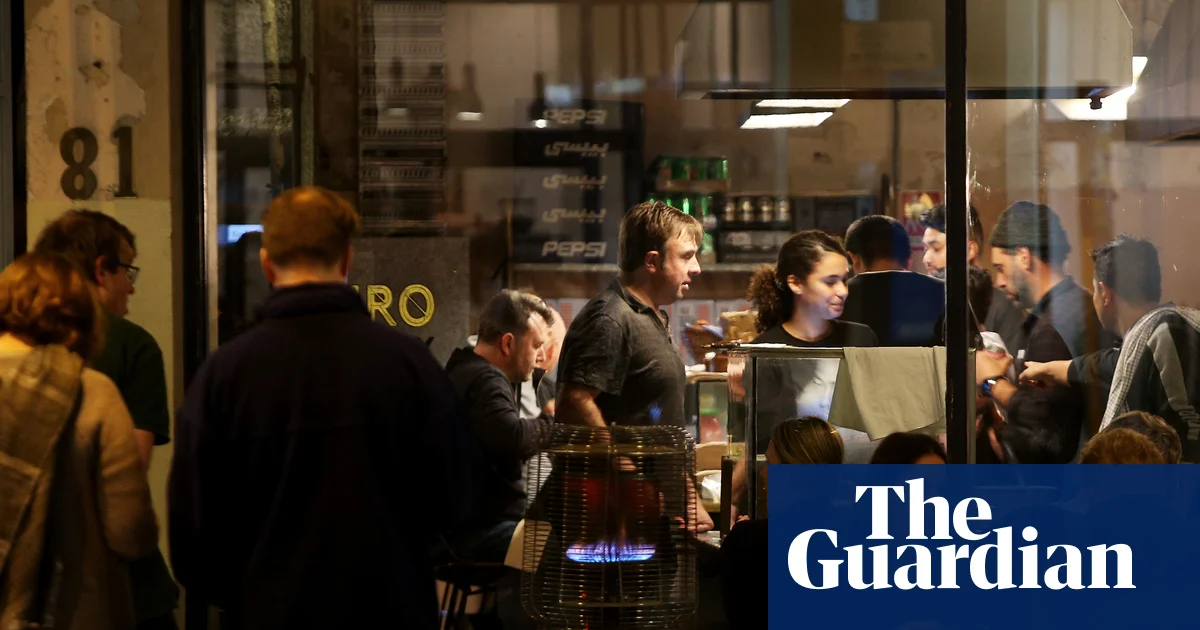
In an era marked by intensifying geopolitical tensions, a recent controversy in Australia showcases how local disputes can mirror and magnify global conflicts. The incident at Cairo Takeaway, a popular Sydney restaurant, began with an undercover journalist’s attempt to explore societal divisions through a masked visit. Clad in pro-Israel symbols amidst increasing Palestinian-Israeli conflicts, the visit became a flashpoint, igniting debates about media ethics, societal polarization, and international politics. As Australia grapples with its own issues of multicultural integration and political discourse, this affair exposes the profound influence of global conflict narratives on local communities.

The Incident and Its International Repercussions

The controversy revolves around Ofir Birenbaum, a pro-Israel activist who visited Cairo Takeaway dressed with symbols of Jewish identity. His visit, intended as a journalistic exploration of rising antisemitism, was carried out covertly with reporters from a major Sydney newspaper. The operation was initially dubbed “undercover Jew,” reflecting an alarming trend toward disguised journalism that raises serious questions about media responsibility. The restaurant’s subsequent social media posts claimed Birenbaum provoked a confrontation, implying that he verbally taunted staff with accusations of antisemitism and created an unsafe environment. However, these claims were later retracted, revealing a narrative heavily influenced by heightened regional conflicts and emotional reactions.

The incident quickly escalated, with Birenbaum launching defamation proceedings against the restaurant and its staff. Legal documents obtained by international outlets reveal a starkly different version of events from the restaurant’s initial social media claims. Critics warn that such misrepresentations risk inflaming societal divisions, especially amid the current rise in international tensions over Palestinian and Israeli pursuits, which many analysts say have become a proxy battleground for broader ideological struggles involving Western and Middle Eastern powers. The case exemplifies how media narratives in local contexts can influence international perceptions, especially when amplified by social media and sensational reporting.

Geopolitical Consequences and Societal Ramifications

As the United Nations and regional alliances such as the Arab League and European Union scrutinize the fallout, experts argue this incident underscores the fragility of multicultural societies facing external conflicts. Historians like Dr. Lisa Friedman warn that the escalation of emotional tensions over Israel and Palestine can destabilize community cohesion in diasporic populations. International organizations are increasingly concerned that misrepresentations and inflammatory media coverage can fuel divisiveness and extremism, undermining social solidarity and fostering political radicalization.

Analysis by geopolitical think tanks suggests that such localized controversies serve as microcosms of broader power struggles. Governments and political actors view these incidents as an opportunity to sway public opinion and reinforce ideological narratives, whether through diplomatic channels or wartime rhetoric. The case, therefore, is emblematic of a larger pattern: how the politics of identity and religion in local communities are deeply intertwined with and manipulated by global geopolitical agendas.

As history continues to unfold, this Sydney incident is more than a mere dispute over social media posts; it is a testament to an era where conflicts are no longer confined within borders but are woven into the fabric of daily life, shaping societies and policy on a fundamental level. The decisions made today—whether about media ethics, diplomatic relations, or social cohesion—will resonate for generations. The weight of history hangs heavily in the balance, as the world watches how these stories of division and unity ultimately unfold amidst a rapidly shifting geopolitical landscape.

Dua Lipa Clarifies Her Stance Amid Rumors of Agent Dismissal over Pro-Israel Opinions

In the ever-evolving landscape of modern culture, we witness a paradox where both its power to elevate human identity and its potential to fracture society are on display. The recent controversies surrounding high-profile figures like Dua Lipa and the Irish group Kneecap serve as potent illustrations of how contemporary artists embody not merely entertainment, but the essential threads woven into the fabric of societal identity. Culture, after all, is not a mere collection of trends; it is the very memory of a civilization, rooted in its past, yet prophetically shaping its future. When Dua Lipa publicly disavows false media narratives surrounding her association with political allies, she reclaims her voice amid a chaotic media landscape eager for sensationalism—a landscape that often forgets that culture is the dialogue of society through the ages. Her stand highlights the ongoing struggle to preserve a sense of authenticity and moral clarity in an era awash with clickbait and division, mirroring the philosophical insights of Ortega y Gasset who warned that the crucial task of culture is to maintain the continuity of identity amid relentless change.

The performance of Kneecap at Glastonbury underscores the tumult of artistic expression in a society that is increasingly divided along political lines. Despite calls for the band’s exclusion due to their political statements, they performed undeterred, leading chants such as “Free Palestine”. This act becomes emblematic of how music, as an art form, is intertwined with societal struggles—an echo of the cultural movements that redefine national consciousness, from the folk ballads of tradition to the rebellious chords of modern protest. Historian Tocqueville observed that democratic societies are often defined by their capacity to allow free expression, even when such expressions threaten social cohesion. Kneecap’s defiance and the public’s response reveal a society grappling with its identity—whether to uphold the chaos of free speech or to impose order through censorship. These moments remind us that culture is both a reflection and a forge of communal bonds; it is the voice of tradition echoing through the chaotic streets of progress.

Furthermore, the tone of these conflicts extends into the broader cultural debate surrounding values, moral judgment, and the role of influence. Dua Lipa’s vocal support for Gaza reflects a conscientious stance rooted in traditional notions of justice and human dignity—values that resonate deeply within Western cultural history. Yet, her stance also exemplifies how modern outlets are turning these spiritual convictions into symbols embroiled in a media tempest. Just as Chesterton warned of the peril of a society losing its moral bearings, the current cultural climate shows that once morality becomes politicized, it often devolves into a battleground for narratives that threaten the cohesion of society. The essence of this cultural moment lies in whether we defend the integrity of these shared values or allow them to be exploited for transient political gains. As history and philosophy suggest, when a nation’s culture is under threat, it is its shared memory and enduring principles that serve as the bulwark of stability and identity.

In contemplating this turbulent dance of culture, morality, and identity, we are reminded that the true significance lies beyond the spectacle; it resides in the silent, enduring memory of our ancestors and the prophetic visions of future generations. Culture is both the inheritance we cherish and the prophecy we forge. It is a living archive of humanity’s highest ideals and a testament to the resilience of the human spirit in its endless quest for meaning. As T.S. Eliot eloquently suggested, understanding the past is vital to shaping a future that respects its roots; for in the memory of human endeavors, we discover the blueprint of possibility. Culture, therefore, is neither static nor trivial—it is the heartbeat of civilization, echoing through time, whispering of humanity’s boundless potential to reconcile memory with prophecy, tradition with transformation.

Social Media Auto Publish Powered By : XYZScripts.com



