Matox News

Truth Over Trends, always!

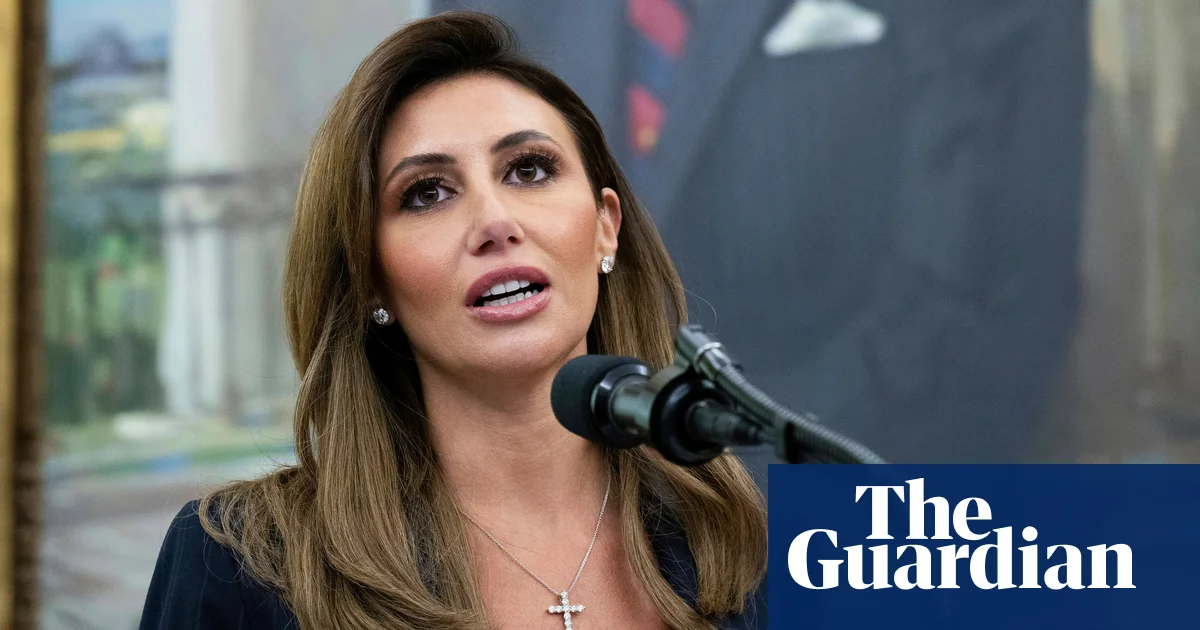
Former Trump lawyer Alina Habba departs as NJ federal prosecutor, signaling shift from Trump era

The recent resignation of Alina Habba, the former lawyer for Donald Trump, from her position as a federal prosecutor in New Jersey underscores a troubling trend in the U.S. justice system’s politicization. Her departure follows a series of judicial rulings that deemed her appointment unlawful—a move that highlights ongoing struggles over administrative legality and executive authority. Despite maneuvering by the Trump administration to preserve her role even after her interim appointment expired, the judicial branch reaffirmed limits on political interference in federal appointments. This development signals deeper conflicts over the role of law and order in America’s current partisan landscape and raises questions about the implications for the rule of law across the nation.

This episode is not merely about one individual but reflects a broader power struggle between incoming and outgoing administrations. Federal judges in New Jersey stepped in to rectify what they considered an unlawful appointment, forcing the Department of Justice to reconsider its approach to political staffing.

  • Michael Bitzer, a political analyst, warns that such judicial rulings could set a precedent that limits partisan appointments, possibly paving the way for increased judicial oversight in federal staffing decisions.

Meanwhile, Trump voiced his concern over the breakdown of the “blue slip” — a tradition allowing home-state senators to vet judicial nominees—claiming it has been exploited to block Republican appointees. His remarks point to an increasingly polarized confirmation process that complicates the functioning of federal institutions and further destabilizes the balance of power.

On a broader international scale, this internal U.S. debacle reflects the increased geopolitical consequences of internal political instability. The United States remains a pivotal actor on the global stage, and its ability to project power hinges on its internal coherence. The reluctance or outright refusal to confirm qualified judicial and executive appointees is viewed by many overseas analysts as a sign of weakening American governance. This perceived decline could embolden rival powers like China and Russia to challenge U.S. influence, especially in regions where American credibility depends on its adherence to legal and institutional norms. Historically, internal dysfunction has often been exploited by emerging powers seeking strategic advantages in a multipolar world.

As historians and international organizations warn of the dangers inherent in politicized institutions, the culminating events in Washington serve as a stark reminder that the course of history is still being written. The decision whether to uphold the rule of law or succumb to partisan expediency will determine not only the fate of America’s legal order but also its capacity to serve as a beacon of stability and justice worldwide. In this moment, the world watches as the foundational pillars of American democracy are tested—could this be the beginning of a new chapter marked by resilience, or a descent into chaos, the echoes of which will resonate across generations?
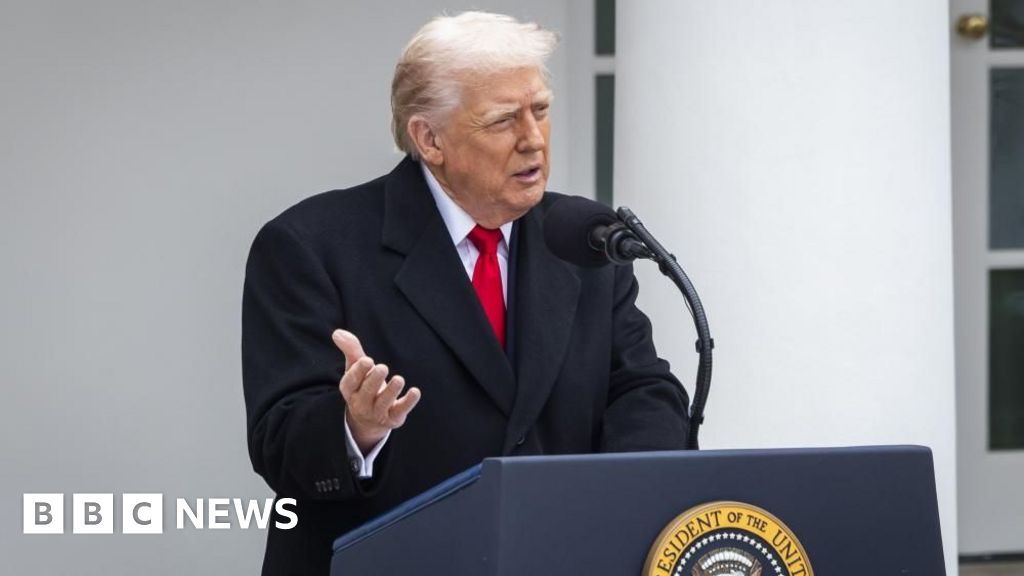

Georgia prosecutor drops charges against Trump in 2020 election case

Georgia Case Dismissal Becomes Turning Point in US Political Arena

The recent decision by a Georgia prosecutor to dismiss the 2020 election-interference case against President Donald Trump marks a significant juncture in the ongoing saga of American political conflict and legal battles. Pete Skandalakis, acting as the chief legal authority in this case, filed a motion to dismiss after former District Attorney Fani Willis was disqualified due to a scandal involving a romantic relationship with a special prosecutor. This move signals not only a legal reevaluation but also a potential shift in the wider understanding of justice and accountability within the United States. While partisan voices have claimed victory, analysts warn that the consequences extend far beyond a simple legal victory or defeat.

Initially, the case was launched in response to a recording of Trump’s January 2, 2021 call to Georgia’s Secretary of State, Brad Raffensperger, where he requested assistance to find enough votes to overturn his loss in the state. This event, widely regarded as a turning point in American political history, prompted allegations of conspired election interference. However, critics argue that the case became emblematic of what many see as a politically motivated pursuit rather than a pursuit of justice. As historians and international observers have pointed out, such internal conflicts threaten the fabric of U.S. democratic institutions, especially when legal proceedings become entangled with partisan disputes.

The geopolitical impact of this case is profound. The United States, long regarded as the global beacon of democracy, finds itself grappling with internal fractures that undermine its influence worldwide. Allies and adversaries alike are watching closely, noting how internal legal conflicts are impacting America’s international image. The United Nations has expressed concern, urging the rule of law to be upheld without bias, but many analysts believe the episode underscores the broader risks to American credibility on the world stage. Countries that depend on U.S. leadership for global security and economic stability now see a nation internally divided, mirroring internal civil conflicts and tests of constitutional resilience.

The decision to dismiss the case against Trump, which included charges against 18 co-defendants such as Rudy Giuliani and Mark Meadows, is viewed by supporters as a step towards restoring judicial fairness. Yet, critics argue that the move entrenches divisions within a society already polarized by contentious elections and selective justice. International organizations warn that if the U.S. cannot resolve these internal disputes transparently and objectively, its ability to lead global efforts—whether on climate change, trade, or security—may be compromised. The stakes are high, and history has shown that internal conflicts within dominant powers often ripple outward, influencing global stability.

As the dust settles on this pivotal moment in America’s legal and political history, the world is left to witness its repercussions. This saga is far from over: a nation’s internal struggles now play out on the stage of world history, where the decisions of its leaders and the course of justice will shape the future of democracy itself. In the shadows of courtrooms and presidential debates, history is quietly watching, waiting to see if the United States can heal its wounds or if these divisions will carve deeper scars into its sovereignty—a crucible where democracy itself faces its ultimate test.

Prosecutor clears Kyle, Jackie O, and Mamamia of contempt in Erin Patterson mushroom trial

Global Ramifications of Media Conduct and Judicial Integrity in High-Profile Crime Cases

Across the international stage, the unfolding of a seemingly isolated criminal trial in Australia echoes beyond its borders, raising critical questions about the influence of media on justice. Recently, the Victorian Office of Public Prosecutions declined to pursue contempt charges against notable media personalities and podcasters involved in a controversial case—highlighting a \_delicate balance between free speech and fair trial integrity. This case centers on Erin Patterson, a woman convicted of a gruesome murder involving deadly mushrooms—a crime that shocked the nation and garnered international interest.

The case’s broader geopolitical impact can be seen in how local judicial decisions influence perceptions of justice worldwide. The decision not to charge Kyle and Jackie O or Mamamia for remarks made during the trial underscores an underlying tension: should the media be restricted to preserve judicial fairness, or should free expression be protected even when potentially prejudicial? International organizations and legal analysts, including those in the United States and European Union, warn that excessive media restrictions can threaten free speech, but unchecked commentary risks corrupting the justice process and undermining public trust in institutions.

Significantly, the Australian judiciary has sharply criticized recent broadcast content and public events linked to the case. During a high-profile court hearing, Justice Christopher Beale emphasized the importance of responsible media conduct, admonishing presenters of the Kyle and Jackie O Show for their on-air remarks. This cautionary stance highlights how international legal standards increasingly scrutinize media’s role in criminal cases. Meanwhile, the Australian Attorney-General’s Department and international legal bodies monitor such cases closely, considering potential reforms to balance free speech with judicial fairness. The global community watches as Australia navigates this volatile intersection, recognizing that the repercussions extend well beyond national borders: they bear on *how societies worldwide calibrate the power of media in shaping justice and public perception.*

Adding to the multilayered landscape, analysts warn that such cases can act as precedents—each media misstep or judicial affirmation influencing international norms. The United Nations calls for clear international guidelines to prevent judicial processes from becoming hostage to sensationalism, but also cautions against overreach that stifles vital media freedom. As the world’s democracies wrestle with these issues, the importance of safeguarding free speech remains intertwined with the necessity of maintaining judicial impartiality. Ultimately, this confluence of justice, media, and geopolitics underscores a evershifting arena—where the decisions made today will echo in history’s halls for decades to come. With each controversy, each legal tussle, humanity stands on the brink of defining what kind of society it strives to become—a society where truth and justice are not sacrificed on the altar of sensationalism, but instead serve as beacons guiding the collective conscience into an uncertain future.

Louvre Heist Suspects Partially Admit Role, Prosecutor Reveals

The recent audacious theft at the Louvre, one of the world’s most iconic cultural institutions, has sent shockwaves through international security and diplomatic circles. On October 19th, four thieves executed a meticulously planned raid, leveraging stolen vehicles and power tools to breach the museum’s defenses during broad daylight. The loss of priceless jewels valued at €88 million not only represents a significant cultural blow to France but also underscores mounting concerns over the security of global heritage sites amidst rising organized crime and militant threats. The arrest of two suspects, both with prior criminal records, signaling a partial breakthrough, has raised questions about the breadth of the gang behind this brazen act.

According to prosecutors, the suspects — both men in their thirties — used a stolen vehicle-mounted lift to access the Louvre’s Galerie d’Apollon, stripping display cases housing some of the crown jewels, including items linked to French imperial history, such as the illustrious Parure Marie-Amélie diadème. The robbers, arriving just after opening hours, were inside for merely four minutes, during which they exploited a disc cutter to shatter display cases and make off with their loot. The escape, orchestrated on scooters and rapid vehicles, illustrates a highly coordinated operation designed to evade authorities. Paris prosecutor Laure Beccuau confirmed that the jewels, including a crown associated with Empress Eugenie, remain missing—damaged during the theft—and highlighted that the gang’s full size and scope remain uncertain, with security officials warning of a possible wider network involved.

International organizations and security analysts have voiced alarm over the implications of such an event for cultural sovereignty. Experts from UNESCO and INTERPOL warn that *theft of priceless artifacts not only impoverishes a nation’s cultural heritage but also profits global criminal syndicates*, fueling underground economies that threaten national stability. The attitude among many youth and international observers is one of concern—highlighting the precariousness of protecting tangible history against organized, well-funded gangs motivated by lucrative black markets. The decision to transfer some of the jewels to France’s Bank of France and to bolster security measures reflects the national government’s recognition of the need for reinforced defenses, though critics argue that this is merely reactive, with deeper systemic issues neglected.

  • The suspected gang’s use of illegal tools and rapid getaway underscores the importance of advanced security measures at cultural landmarks.
  • The vague involvement of potential accomplices or receivers of the stolen items signifies a broader threat to European cultural assets.
  • Analysts like Dr. Jean-Marc Dupont underline that such high-profile crimes are *turning points* in how nations perceive and combat organized crime’s infiltration into cultural institutions.*

As international authorities deepen their investigation, the weighing of foreign intelligence cooperation and domestic security reforms takes center stage. The ongoing debate questions whether, in an era of geopolitical upheaval, cultural treasures are becoming more vulnerable—an unfortunate reflection of a world where history is often a pawn in larger struggles for power. The Louvre heist leaves a haunting reminder: in the complex chess game of geopolitics, moments such as these threaten not only treasures but also the collective memory of nations. The *turning point* remains clear—how countries respond to such assaults will define the security landscape of the future, forging a legacy for generations to come, yet still unfolding in the shadows of history.

Social Media Auto Publish Powered By : XYZScripts.com