Matox News

Truth Over Trends, always!

Ipswich family court highlights urgent need for reform to protect our youth

The fabric of our society is being tested not just by economic shifts or political debates, but by the very social issues that impact families, education, and communities. At the heart of these challenges lies the troubling phenomenon of parental alienating behaviors, a crisis that some sociologists describe as a “massive public health issue”. This insidious dynamic emerges when one parent, often after separation or divorce, actively seeks to turn children against the other parent, wreaking havoc on the stability and emotional well-being of young minds. A recent case followed by the BBC exemplifies this destructive pattern—a decade-long custody battle that highlights the devastating effects on children caught in the crossfire of bitter parental disputes.

This case underscores how social tensions within families bleed into the education system and ripple throughout the community. The court case revolved around allegations of emotional, physical, and mental abuse, accusations that each parent vehemently denied, yet the underlying hostility made resolution impossible. The judge expressed deep regret over the “hostility” between the parents—a hostility that has left the children in a state of “interminable pressure,” as one social worker remarked. Such conflicts do more than shatter individual families; they sow distrust, confusion, and discord in local communities, leaving professionals helpless in the face of entrenched animosity that robs children of secure relationships and educational stability.

Experts like the social commentator Charlotte Proudman argue that these cases symbolize a broader societal malaise—a failure to prioritize the mental and emotional welfare of the next generation. The 2024 study by the University of West London reveals that nearly 60% of separated or divorced parents experience some form of parental alienation, a statistic that reveals how pervasive this issue has become. Both the legal system and societal institutions are grappling with how to better serve families under these circumstances, particularly in an environment where delays and inefficiencies complicate the pursuit of justice. Experts have pointed out that without proper funding and systemic reform, these issues will only deepen, further destabilizing families and impairing children’s ability to thrive in school and beyond.

Despite the complex realities, recent reforms such as the innovative Pathfinder courts signal a step toward a more child-centered justice system. These courts prioritize problem-solving approaches over adversarial litigation, aiming to reduce conflict, delay, and harm. As Sir Andrew McFarlane explains, the goal is to create a more satisfactory environment where children are at the heart of proceedings, and disputes are resolved with their wellbeing in mind. Such efforts are essential as society grapples with the long-standing delays highlighted by the Public Accounts Committee, which notes that families are often “let down” by an inefficient system that neglects their emotional needs.

In the face of these social challenges, society must recognize that the health of our families directly influences the strength of our communities and the future of our youth. It is no longer enough to passively hope for resolution; proactive reform, investment, and a moral commitment to prioritizing children’s well-being are imperative. As communities stand at the crossroads of tradition and transformation, society must ask itself: What kind of future do we want for our children? And what sacrifices are we willing to make to ensure that future is one of hope, stability, and genuine unity? For in the quiet struggles of these young lives, society’s resilience and compassion are truly tested—and in those tests, there lies the possibility for profound renewal.

Trump authorizes National Guard deployment to protect Chicago's streets
Trump authorizes National Guard deployment to protect Chicago’s streets

U.S. Domestic Unrest Sparks International Debate Over Military Deployment

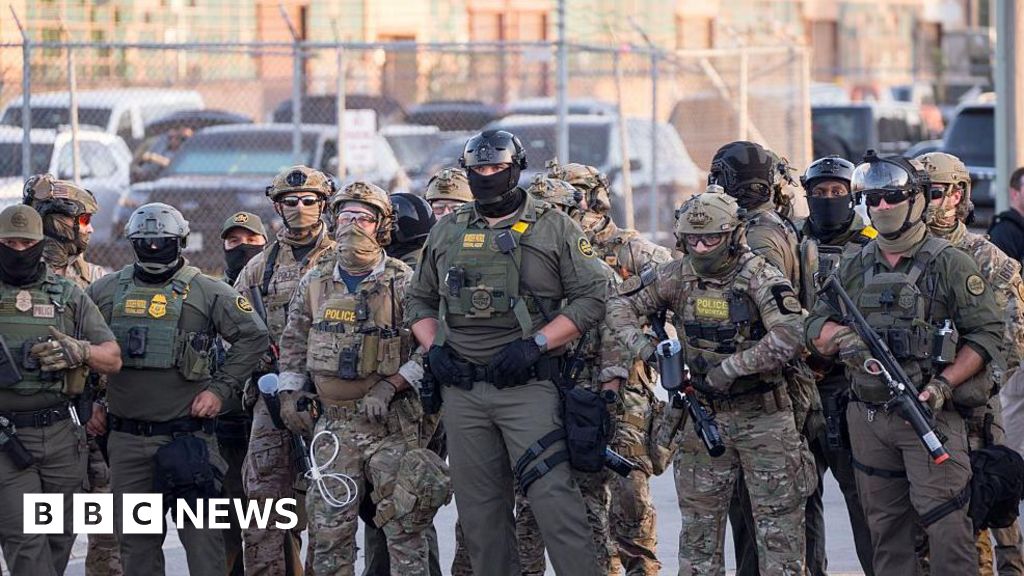
The United States continues to navigate a tumultuous chapter of its history, as federal authorities increasingly resort to military measures to address rising civil unrest and escalating crime. President Donald Trump recently authorized the deployment of 300 National Guard troops to Chicago, citing concerns over what he describes as “out-of-control crime.” However, this decision underscores a deeper rift within the American geopolitical landscape, raising serious questions about the limits of federal power and the sovereignty of individual states.

While Chicago faces mounting protests over immigration enforcement, authorities reported escalate violence, including a shooting incident involving an armed woman whose vehicle rammed into law enforcement and immigration vehicles. These events occurred amidst a backdrop of political division and mounting legal pushback. A federal judge in Portland, Oregon—another Democratic stronghold—temporarily blocked the Trump administration’s attempt to deploy 200 soldiers, warning that such actions risk “blurring the line between civil and military federal power.” Judge Karin Immergut’s ruling highlights concerns among legal analysts that the unilateral deployment of troops for domestic issues threatens the constitutional balance enshrined in U.S. law.

Legal and Constitutional Struggles Mark Biden Administration’s Response

The deployment efforts by the Trump administration have ignited a fierce debate across legal and political circles. Critics argue that using the military to manage civil unrest compromises the foundational principles of American federalism. According to historical scholars, such large-scale domestic military involvement is unprecedented in recent decades—raising alarms about the potential for authoritarian overreach. The National Guard, traditionally under the command of state governors, is now being mobilized by federal authorities, thus challenging the established legal frameworks that limit military intervention within domestic borders.

International organizations like Human Rights Watch warn that such deployments could inflame tensions, undermine civil liberties, and create dangerous precedents. Opposing voices, including Illinois Governor JB Pritzker, accuse Trump of “attempting to manufacture a crisis.” This political fight over control of the public space is more than local; it reflects a broader ideological struggle about the role of government, security, and the rights of citizens. Such policies risk setting a dangerous precedent where law enforcement, backed by military force, could gain extraordinary powers that threaten democratic accountability.

Geopolitical Impact and Societal Consequences

The international community watches keenly as this internal conflict unfolds. The United States, once a bastion of democratic stability, appears increasingly divided, with its federal institutions tested by executive actions that bypass traditional legal channels. Analysts from the Council on Foreign Relations warn that the chaos could weaken America’s global standing, as allies question the stability of a nation where military power is wielded domestically under a partisan banner. The image of bustling cities like Chicago and Portland turning into militarized zones sends a troubling signal, not just to Americans, but to nations watching from afar, questioning whether the U.S. remains a beacon of constitutional governance.

Historians warn that such internal strife risks provoking wider conflicts, both political and social, that could reshape the socio-economic landscape of the nation for decades. As emerging generations of Americans are confronted with scenes of military presence on streets once reserved for peaceful protests, the fabric of civil society faces profound strains. The decisions made today will undoubtedly influence how governments across the world interpret the boundaries of authority, security, and civil liberties in the 21st century.

As the standoff intensifies and the weight of history marches forward, one thing remains clear: how the United States manages its internal tensions will leave an indelible mark. Will it uphold the principles of restrained governance and respect for civil rights, or will it succumb to authoritarian impulses cloaked in the guise of national security? The answers lie in the unfolding story—a story that continues to shape the course of not only American history but the future of liberty itself.

Ex-Fed and Treasury leaders urge court to protect Cook from Trump dismissal

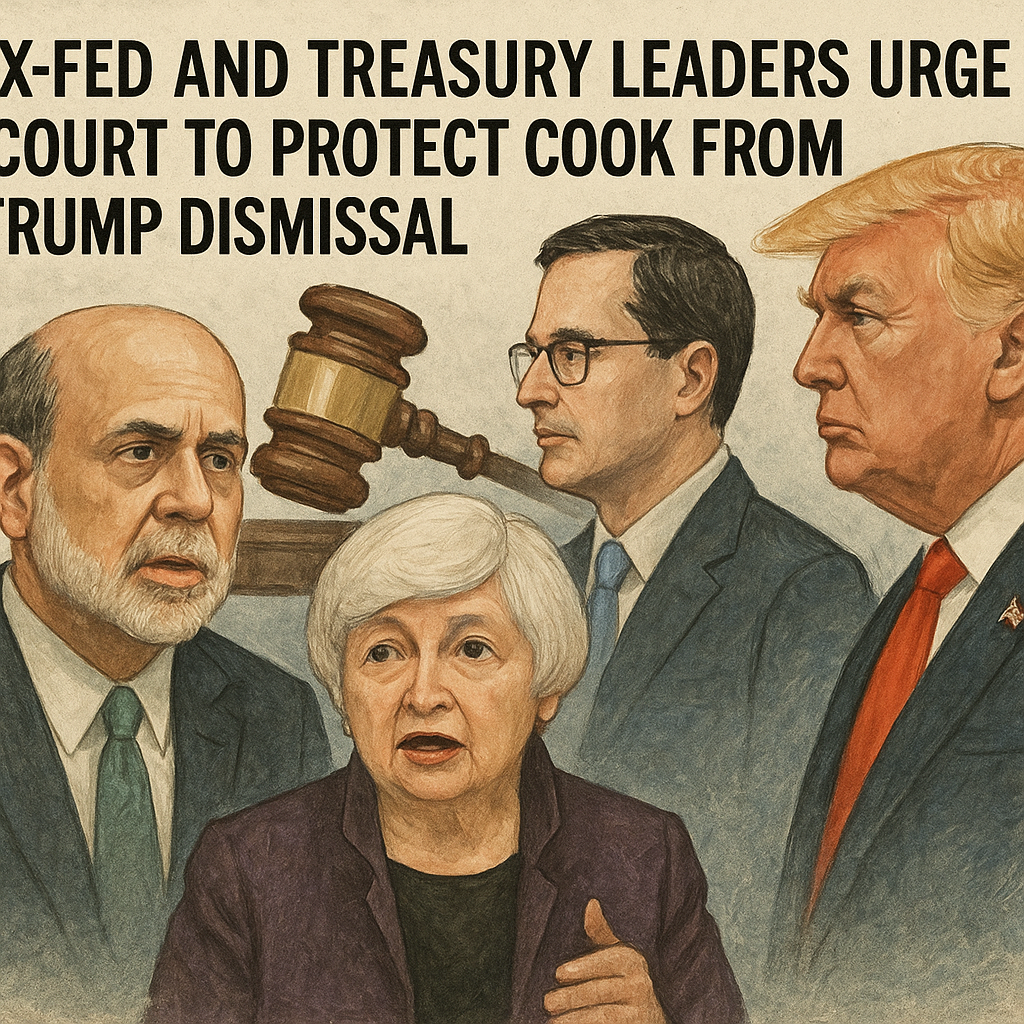
Political leaders at a recent economic summit

In a dramatic twist that underscores the ongoing power struggles within U.S. financial governance, more than a dozen of the most influential economic policymakers from the past three decades have come together to urge the Supreme Court to uphold the tenure of Lisa Cook, a member of the Federal Reserve Board of Governors. Their collective stance is not merely an act of support for an individual appointment; it symbolizes a broader contest over authority, institutional influence, and the very direction of America’s economic future. As these veteran voices—comprising former Fed chairs and Treasury secretaries—align in their plea, the battle lines are drawn clearly, echoing historic conflicts between independence and political encroachment within central banking.

At the core of this dispute lies a fundamental question: who controls the levers of economic power in the United States? The Federal Reserve, often depicted as an elusive and autonomous institution, has long been the subject of politicization. Critics on the right condemn what they see as unchecked Federal Reserve activism, while supporters argue that its independence is vital for stability and effective policy. The controversy over Cook’s appointment—initially stymied by administrative delays—becomes a flashpoint illustrating the ongoing power struggle between the executive branch and the judiciary. The question remains whether the Court will respect the *constitutional independence* of the Fed or bow to political pressures seeking to influence monetary policy by other means.

This confrontation harks back to historical battles over the role of central banks and the political limits placed on their authority. Figures like **A. E. Carter** from the Federal Reserve’s founding era understood the importance of insulating monetary policy from short-term political whims—a lesson often overlooked when political ideologies threaten the autonomy of vital institutions. The current push to influence or remove Cook questions whether the judiciary is willing to serve as a guardian of this independence, or if it will become a pawns in a broader ideological struggle. The stakes extend beyond individual careers, directly impacting how policies are crafted—whether to favor free-market principles, regulators, or political elites seeking control over economic levers.

This dynamic also impacts the American people, who are caught in the crossfire of decisions made behind closed doors. To many, the idea that a small group—be it Congress, the judiciary, or a cabal of bureaucrats—can wield such profound influence over the economy challenges the very basis of popular sovereignty. As political theorists like **James Madison** warned, the separation of powers is designed to prevent any single faction from becoming a tyranny. Yet, in today’s climate, decision-making appears increasingly centralized, with powerful elites vying for control and shaping the destiny of millions. The fight over Cook’s position is more than a personnel matter; it is a decisive battle over how the future of economic governance will be written.

As history has shown, politics is the arena where destiny is forged. The latest power struggle within the U.S. financial system underscores that |the battle for authority is ultimately a fight for the soul of the nation|. Will the judiciary act as a bulwark protecting institutional independence, or capitulate to political expedience? The outcome will determine how boldly America’s institutions can stand against those who seek to manipulate them for short-term gains. And in the end, the destiny of the nation—its stability, greatness, and value—resides not just in the policies enacted, but in the battles fought for the very principle of who holds the power to shape the future.

Stay safe from hippos: Protect yourself from Africa’s top land threat

Unfolding Drama in Africa’s Wilderness: A Reflection of Nature’s Power and Human Ambition

Zimbabwe, a nation famed for its stunning landscapes and resilient people, has become the backdrop for a harrowing tale that underscores the interconnectedness of nature, human activity, and geopolitical stability. The story of Paul Templer, a seasoned guide and former British army member, sheds light on the dangerous wilds that persist at the border of civilization and the wilderness. His life-altering encounter with a territorial hippopotamus in 1996 is not merely a personal tragedy but a stark reminder of the power of nature—a force that transcends national borders and influences global perceptions of Africa’s wild lands.

This incident occurred amidst a routine expedition on the Zambezi River, one of Africa’s iconic waterways, teeming with life yet fraught with perils that are often underestimated. Tourists and guides alike face the stark reality: hippos, while seemingly sluggish, are among the most deadly animals in Africa, responsible for hundreds of fatalities annually. The traditional view of these majestic creatures as peaceful herbivores is increasingly challenged by experts like Rebecca Lewison, a conservation ecologist, who emphasizes that most attacks are rooted in territorial defense rather than predation. As Africa’s population continues to grow and encroach on natural habitats, the geopolitical impact becomes evident, with increasing human-wildlife conflicts raising questions about land use, conservation policies, and national security.

Wildlife and Society: A Fragile Balance

Historian and environmental analyst Dr. Philip Muruthi frames this dilemma within the larger context of ecosystem stability, highlighting that hippos are ecosystem engineers—vital for nutrient recycling in freshwater environments. Yet, their presence in populated regions, such as Zimbabwe’s waterways and Colombia’s invaded Magdalena River, creates what experts see as a “perfect storm” of ecological disruption and human danger. The burgeoning African demographic boom inflates the risk of deadly encounters, rendering traditional safety measures increasingly vital. Muruthi warns that in regions like Kenya, adherence to guidance from professional safari guides and strict protocol are essential to preventing tragedies while protecting the local ecosystems.

International institutions and conservationists acknowledge that the threat is both environmental and geopolitical. The African Wildlife Foundation points out that hippos, although crucial to aquatic ecosystems, are often forced to interact with humans due to habitat loss—a consequence of urban expansion, agriculture, and climate change. These international shifts threaten to destabilize the delicate balance that sustains African communities and native wildlife, making the ongoing debate over ecological management a high-stakes geopolitical concern.

The Human Cost and the Lessons of Courage

Templer’s harrowing encounter highlights the raw realities faced by guides and locals engaged in the preservation of Africa’s wilderness. His story illustrates how decisions made in seconds can echo through history, shaping future wildlife tourism and conservation policies. Despite his injuries—losing an arm and enduring life-threatening trauma—Templer’s resilience and advocacy serve as a testament to the indomitable spirit of those on the frontline of conservation. His call for responsible tourism, emphasizing education and safety, echoes global advice: “Follow the rules, stay alert, and respect nature’s boundaries.”

As international organizations analyze the unfolding conflicts between human development and wildlife conservation, the current trajectory suggests a future where collaborative action is vital to ensure both ecological health and human safety. Yet, the real question remains: how will nations adapt their policies of expansion and preservation in a rapidly changing world? The story of Africa’s hippos and the guides who dare to face them symbolizes a broader narrative—one of survival, power, and the relentless push of progress into the unknown. As this chapter of history closes, the true extent of our influence on the wild remains uncertain, and the world watches anxiously for the next act in this ongoing saga of man versus nature.

Social Media Auto Publish Powered By : XYZScripts.com