
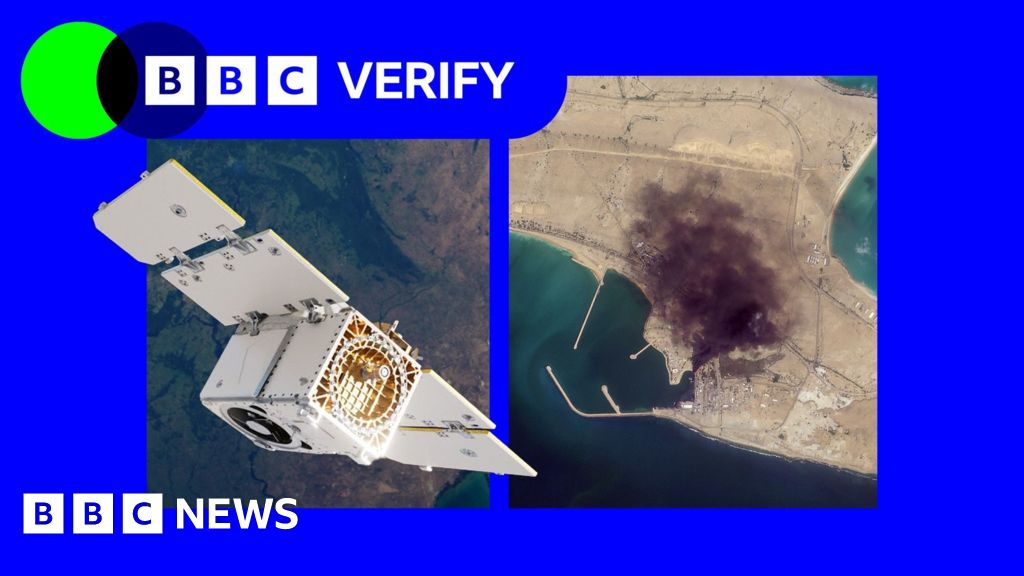

In the shadowy realm of space and surveillance technology, Vantor—formerly known as Maxar—remains a crucial yet understated player. Renowned for its extensive contracts with the US Army and US Space Force, the company’s operations underscore the strategic importance Washington attaches to military and intelligence capacity in the increasingly contested domain of space and digital surveillance. Recently, Vantor clarified that it has not been instructed by Pentagon officials to curtail its coverage of Iran, highlighting a critical aspect of its balancing act amidst rising geopolitical tensions.
The firm’s contracts with American military bodies testify to a broader trend of technological militarization at the frontiers of space and cyber domains. Analysts observe that such companies are becoming the invisible backbone of U.S. military strategy, enabling precise surveillance, intelligence gathering, and strategic planning. Yet, the decision not to restrict coverage of Iran signals a nuanced approach from U.S. defense agencies, possibly reflecting an awareness of the growing importance of transparency and information leverage in a complex global chess game. This stance challenges critics who argue that increased surveillance may escalate tensions, but it also exemplifies how technological firms operate in a gray zone—detached yet deeply intertwined with national security agendas.
Historians and international security analysts are closely watching Vantor’s positioning amidst the shifting alliances and rivalries of the modern era. The United States‘s focus on space dominance is part of a wider strategic doctrine that accentuates the importance of technological superiority in future conflicts. The firm’s decision to limit coverage of US military bases, while not extending restrictions to Iran, indicates a calculated approach—one that aims to uphold American technological edge without provoking unnecessary escalation. Such choices may influence global perceptions of American transparency and restraint, with other nations observing how the U.S. manages its strategic information in an era where every byte and satellite pass can shape geopolitical narratives.
Ultimately, the unfolding story of Vantor exemplifies how technological and military advancements are interwoven with international power structures. History warns that the frontier of space and digital surveillance is a new battleground for influence, where decisions ripple across nations, economies, and societies. As Vantor navigates these turbulent waters, the weight of history presses forward—reminding the world that the next chapter in global dominance may be written not just in treaties, but in the silent data streams orbiting high above. The future remains uncertain, but one certainty endures: the relentless march of technological power continues to shape our destiny, with nations vying for control over the realms that will define the next age of geopolitics.






