Matox News

Truth Over Trends, always!

Dr. Rangan Chatterjee: Ban Social Media Until 18 to Protect Youth Mental Health and Public Wellbeing

The Impact of Digital Distraction: How Screen Time is Reshaping Society and Family Life

In recent years, demographic shifts and cultural transformations driven by technology have profoundly altered the landscape of childhood and adolescence. As sociologists like Neil Howe and William Strauss have noted, these changes are not merely surface-level but threaten to redefine societal fabric itself. Communities across the globe are raising alarms about the unchecked proliferation of screens in children’s lives, highlighting a surge in mental health issues, developmental delays, and social disconnection. This crisis is forcing families, educators, and policymakers to confront an urgent question: At what societal cost are we allowing digital devices to dictate the contours of childhood?

Leading voices, including health experts and social commentators, caution that the widespread adoption of screens has been a public health emergency in disguise. Dr. Rangan Chatterjee, a prominent health advocate with a background rooted in general practice, speaks candidly about his concerns. His experience, from treating adolescents at A&E to questioning the prescription of antidepressants without addressing underlying social factors, exemplifies a broader issue: the failure of current social and educational frameworks to mitigate the harms of technology overload. Chatterjee attributes much of the mental health crisis among youth to the pervasive influence of social media and ‘ed tech,’ which, rather than serving as tools for learning, often become mechanisms of distraction and emotional degradation.

  • Research indicates that every additional hour of screen time increases the risk of myopia in children by 21%
  • Young children exposed to digital content face language delays and sleep disturbances
  • Alarmingly, 10% of nine-year-olds have viewed pornography, often encountering violent material

These challenges, far from isolated, ripple through families and communities, affecting educational outcomes, social skills, and mental resilience. As Dr. Chatterjee emphasizes, the influence of technology is not just a personal matter but a societal one. His advocacy for raising the legal age for social media access to 18 aligns with a growing international wave—Australia has already enacted a social media ban for those under 16, and Spain is considering similar legislation. The fundamental issue, as he notes, is the empire of tech giants whose business models prioritize longer engagement—a paradigm that profits from addiction rather than wellbeing. These platforms shape perceptions and behaviors, often pushing children into a cycle of distraction that diminishes genuine human connection, self-worth, and emotional intelligence.

Despite the societal-scale challenges, a vital thread remains in the fabric of hope: individuals and families committed to healthy change. Dr. Chatterjee’s own family practices intentional guardrails—smartphones are disabled on apps, social media access is restricted, and bedtime routines exclude screens—embodying a moral stance that prioritizes relationships over digital consumption. His narrative resonates with a broader moral imperative: society must recalibrate its approach to childhood, fostering environments where children can thrive emotionally, socially, and physically. As he reflects on his personal journey and his father’s legacy as an NHS doctor facing discrimination, there’s an unmistakable plea for a new societal ethic—one that values presence, connection, and holistic wellbeing above the fleeting promise of screens.

In the end, society stands at a crossroads where the invisible chains of digital distraction threaten to erode the very essence of human experience. Yet, within this challenge lies an opportunity: to consciously rebuild a future where families reclaim time for genuine connection, where education nurtures not just intellect but emotional resilience, and where communities insist on safeguarding the health and happiness of their children. Society’s true strength depends on its ability to see through the seduction of convenience and embrace a moral vision rooted in presence and human dignity. The question remains: Will we choose the ephemeral glow of screens or the enduring light of genuine connection? The choice, quite frankly, is society’s most urgent moral test—and its ultimate legacy.

Alta Teams Up with Public School to Bring Sharp Styling Tools to Your Favorite Sites

Revolutionizing Fashion with Virtual Reality: Alta Sets the Stage for Industry Disruption

In a bold move demonstrating the transformative power of artificial intelligence (AI) and virtual environments, Alta, an innovative tech startup founded by Jenny Wang, is carving a niche at the intersection of fashion and digital innovation. Having secured an $11 million funding round led by Menlo Ventures, Alta is pioneering a virtual closet ecosystem that allows millions of users worldwide to create digital wardrobes, style outfits, and try them on using hyper-realistic avatars. This disruption is not merely a flashy display of technology—it’s a strategic overhaul of how consumers interact with brands, heralding a new era where digital and physical shopping converge seamlessly.

The business implications are profound: traditional retailers are facing mounting pressure to adapt to these rapid technological shifts. Alta’s collaboration with industry heavyweight brands such as Public School exemplifies how established designer names are embracing AI-driven storytelling and immersive customer engagement. As Wang highlights, the company’s app has already generated over 100 million outfit simulations since its 2023 launch, attracting attention from publications like Time and Vogue—a clear marker of mainstream industry recognition. This datastream signals a pivotal shift towards personalization and immersive shopping experiences, compelling brands to rethink their digital strategies if they are to stay competitive.

What makes these developments standout is the integration of digital fashion with e-commerce platforms. Alta’s platform now features interactions with thousands of brands, providing a direct avenue for consumers to style, test, and purchase fashion items within a unified AI-driven environment. Notably, the recent integration with Public School signifies a major milestone—marking the first time a high-profile designer embeds a fully personalized avatar styling tool directly into its website. This innovation fundamentally alters the consumer journey: shoppers can now style pieces on their Alta avatar directly from brand pages, removing friction and increasing engagement. Such features signal a future where digital try-ons become standard, shifting power away from brick-and-mortar stores and into the hands of data-driven, digitally native brands.

Looking ahead, industry analysts from Gartner and MIT suggest that these must-have technologies will influence broader retail strategies across sectors, blurring the lines between digital entertainment, social media, and commerce. As The Economist warns, the rapid adoption of avatar personalization and AI-enhanced storytelling could lead to “industry disruption on a scale comparable to the advent of online shopping itself.” For entrepreneurs, investors, and established players alike, the message is clear: embracing virtual innovation is no longer optional—it’s imperative for survival. The next wave of tech-driven fashion brands will leverage these tools to personalize experiences at scale, fostering loyalty and unlocking new revenue streams.

In this swiftly evolving landscape, Alta and its peers are setting the pace for a future where virtual identities, AI, and digital fashion not only disrupt but redefine consumer interaction. With investments pouring in and visionary brands like Public School actively integrating these innovations, the race is on to harness these breakthroughs at an industry-wide level. For those who ignore these signals, the risk is clear: being left behind as the digital revolution in commerce accelerates at a relentless pace. The future of retail is digital, personalized, and undeniably disruptive—those who adapt today will dominate the markets of tomorrow.

Epstein Files Still Show Naked Images Despite Public Outrage

As the international community closely monitors developments within the United States, recent statements by Deputy Attorney General Todd Blanche underscore the complexities of domestic legal processes with far-reaching geopolitical implications. Confronted with a looming deadline imposed by Congress, Blanche announced that the highly sensitive files related to ongoing investigations would not be released as initially scheduled. The reason? An intensive effort aimed at safeguarding the identities of victims, highlighting the delicate balance between transparency and security in the digital age.

This internal procedural shift has stirred international concern, particularly among nations watching the U.S. through the lens of its legal transparency. Analysts from major think tanks note that such delays can ripple across global diplomatic relations, influencing perceptions of American accountability and rule of law. The decision to prioritize victim protection over immediacy in disclosure signals a potential shift in how the U.S. handles sensitive information, especially when considering its impact on joint international investigations or cooperation frameworks. Institutions like the United Nations and global human rights organizations have long assessed transparency as a cornerstone of legitimacy—yet, as this case demonstrates, safeguarding individual identities can complicate broader efforts for accountability.

Historically, the U.S. has wielded immense influence in shaping rules for international law and justice. In this context, such internal decisions are far from isolated; they represent a significant turn in how major powers navigate the tension between domestic security and international obligations. Many geopolitical analysts argue that, in an era marked by rise of authoritarian surveillance and cyber warfare, the decision to withhold or restrict information fuels debates about transparency and sovereignty. As historians warn, moments like these could become precursors for a broader retrenchment from open societies, emboldening regimes that prioritize secrecy over open governance.

What reality are the nations of this fractured world constructing with each passing moment? The decision by the U.S. Department of Justice exemplifies a larger narrative: that of a superpower grappling with its own internal contradictions while the global stage watches, often without the benefit of full knowledge. The repercussions extend beyond legal files—they influence diplomatic trust, national security paradigms, and the very fabric of international cooperation. As international observers contemplate these shifts, they find themselves asking whether the trend toward guarded transparency signals a safeguard or a slide into opacity. History warns that what is concealed today may very well become the catalyst for future crises—a reminder that the true weight of power often lies not in what is revealed, but in what is kept behind closed doors.

Met Office Sets New Two-Week Forecast to Better Serve the Public

Britain’s Met Office is set to revolutionize its weather forecasting capabilities by extending its forecast range to a full 14-day outlook. This move, driven by recent advancements in probabilistic weather models, signifies a major step forward in the way nations approach climate data and risk management. Traditionally, weather forecasts have been confined to a seven-day horizon due to challenges in maintaining accuracy, but innovations in science—particularly harnessing artificial intelligence—are now changing the landscape. As the UK aims to better inform public decision-making, this development underscores a broader global trend: nations increasingly leverage AI and advanced data analytics to navigate the complex realities of climate unpredictability.

The urgency of these technological strides becomes clearer in light of international geopolitical shifts. Countries face mounting pressures from climate-related crises, shifting trade routes, and energy security concerns—all exacerbated by ongoing conflicts and economic realignments. Notably, the resurgence of AI-driven forecasting, exemplified by industry giants like Nvidia and Google DeepMind, promises faster and more precise weather predictions. These developments have profound geopolitical impact, offering states like the United States, China, and Russia strategic advantages in anticipating environmental disruptions, managing natural resources, and safeguarding infrastructure.

Experts and international organizations warn that these innovations could significantly alter the power balance. As the Guardian reports, the UK’s move to integrate probabilistic models exemplifies how technological advancements can extend the strategic reach of nations. Similarly, climate scientists and geopolitical analysts emphasize that “early warning systems” driven by AI are vital tools that can dictate the outcome of regional stability and global commerce. The BBC’s recent return to the Met Office partnership further illustrates Britain’s efforts to stay at the forefront of climate intelligence, reinforcing its position as a global leader in weather science adaptation.

Yet, as history continues to unfold, the question remains: how will societies adapt to increasingly sophisticated weather models? With AI forecasting capable of providing data that surpasses traditional methods—up to 20% more accurate, as Google DeepMind claims—the potential for preemptive action or, conversely, manipulation grows. As historian Dr. Mary Carter warns, “These technological tools are double-edged swords—bringing both humanitarian benefits and new realms of geopolitical competition.” The struggle to control and interpret this power might well determine the future trajectories of nations and societies alike, leaving the world on the brink of a new era of climate dominance and digital warfare.

Larry Summers resigns from public duties amid Epstein email controversy

International Power Players Entwined in Washington’s Shadows

The recent disclosures involving former Harvard president Larry Summers and the infamous financier Jeffrey Epstein have sent shockwaves through the corridors of global influence. As emails between the two surfaced, revealing ongoing communication until Epstein’s 2019 arrest, questions about the complicity and accountability of prominent figures have taken center stage. These revelations come at a critical juncture for United States politics, with investigations expanding beyond mere scandals to touch upon high-level international diplomacy.

Accountability Sparks an International Inquiry

  • The US Department of Justice has announced a comprehensive probe into Epstein’s associations, particularly scrutinizing links with former President Bill Clinton and other leading Democrats. The inquiry also includes notable financial institutions such as JPMorgan Chase and Reid Hoffman’s LinkedIn, illustrating the interconnectedness of global finance and political influence.
  • President Donald Trump, whose mentions in Epstein-related emails have garnered media attention, has publicly distanced himself and called for a broader investigation. His statement that “Epstein was a Democrat, and he is the Democrat’s problem,” underscores the partisan undertones fueling this scandal.
  • International observers and analysts highlight the potential ramifications of these investigations, which threaten to expose a web of influence extending beyond American borders, impacting alliances, diplomatic relations, and the credibility of institutions supposedly committed to justice and transparency.

Geopolitical Implications and Societal Reckoning

Most notably, the scandal underscores how elites across political divides and economic sectors have played roles in a clandestine network that, if fully uncovered, could destabilize perceptions of power. Historians and political analysts warn that such revelations threaten to undermine trust not only in individual leaders but also in core institutions. The United Nations and other international organizations could become collateral in this game of shadows if connections between Epstein, global diplomats, and financiers come to light.

Furthermore, the international geopolitical impact extends into the balance of power. Countries allied with the US, especially those within NATO and key partners in Europe and Asia, are closely watching how Washington handles the fallout — a test of its commitment to transparency and justice. The entire crisis illuminates the dangers of unchecked influence among the world’s elite, emphasizing the necessity for reforms that could reshape the global order.

How Decisions Shape Societies and the Path Forward

As the investigations unfold and more files are released, they will inevitably influence societal perceptions of morality, justice, and authority. The global community faces a choice: continue to turn a blind eye to the corrupting influence of power, or confront the uncomfortable truths that threaten to undermine the foundations of Western civilization. The ongoing disclosures serve as a stark reminder that history’s greatest upheavals often stem from the exposure of hidden atrocities and hidden alliances.

This saga underscores a pivotal chapter in the ongoing battle for transparency and accountability, serving as a reminder that history is still being written. The weight of these revelations suggests we stand at a crossroads—an opportunity to redefine the moral compass of our institutions, or risk descending further into a shadowy obscurity where the powerful manipulate the future behind closed doors.

Larry Summers withdraws from public life amid Epstein ties—A wake-up call for accountability

Jeffrey Epstein Scandal Reshapes Global Power and Trust

The recent revelations about Larry Summers, a prominent economist and former U.S. Treasury Secretary, have ignited a whirlwind of controversy and a renewed scrutiny of America’s elite circles. Documents released by the House oversight committee unveil a disturbing pattern of elitist entanglements, with Summers exchanging emails with Jeffrey Epstein, the convicted sex offender who referred to himself in one message as Summers’ “wing man.” These disclosures are not just personal failings; they threaten to erode the foundations of trust in institutions that shape global policy and economic leadership.

Analysts contend that the implications extend well beyond individual misconduct. The emails reveal Summers maintaining contact with Epstein despite his 2008 conviction for soliciting prostitution from minors, highlighting a troubling allegory of unchecked privilege and moral decay among America’s ruling class. Democratic voices, including Senator Elizabeth Warren, have called for accountability, arguing that such connections diminish confidence in the very institutions meant to uphold justice and morality. The scandal underscores a wider pattern of elite impunity that critics claim fosters a dangerous disconnect from societal values, with ramifications reaching into global governance.

The Geopolitical Ramifications of Elite Corruption

The fallout from these revelations is fueling calls to reassess America’s leadership credibility, particularly as President Donald Trump has launched a new investigation into Democrat figures linked to Epstein’s network, broadening the scope of the scandal to include questions about how much the inner circles of power may have known or tolerated. Reports suggest that Summers’ relationship with Epstein was more than mere acquaintance—emails reveal Summers sought Epstein’s advice on diverse issues, including funding for personal projects, such as his wife’s poetry, as disclosed by The Wall Street Journal. Such links exacerbate fears that elite networks are more akin to a closed club of self-interest than transparent institutions dedicated to democratic principles.

This narrative echoes concerns raised by international observers that global institutions—be they in Europe, Asia, or beyond—are often disillusioned with Western leadership’s ability to uphold moral authority. The scandal encapsulates a broader issue of how the personal and political intertwine within global policymaking, raising alarms that elite misconduct can undermine international initiatives tackling critical issues such as economic inequality, security, and human rights. Historians warn that when the moral fabric of a nation frays, the ripple effects weaken alliances and embolden adversaries who thrive on discord and decay.

Societal Impact and The Weight of History

Meanwhile, the public outcry continues to intensify, with educators and students at Harvard denouncing Summers’ associations as disgraceful. The scandal resonates beyond national borders, stirring debates about the moral compass of leadership in a world where information and transparency are more accessible than ever. As global tensions rise and international alliances face mounting pressures from emerging geopolitical rivals, the integrity of America’s leadership is under scrutiny. Experts argue that the ongoing revelations serve as a stark reminder: history’s judgment will be harsh on those who abuse their power and betray societal trust.

As the weight of this unfolding saga presses down on political and societal institutions, nations across the world watch with bated breath. For if the moral underpinnings of the West continue to erode under the weight of these scandals, what hope remains for future generations? Will this generation’s choice to shield the corrupt and protect the powerful be recorded as the decline of an era? Or can the winds of justice still sweep away the darkness cloaking the corridors of power? The answers lie in the unfolding pages of history—stories yet written, destinies yet shaped, and the future teetering on the edge of an uncertain horizon.

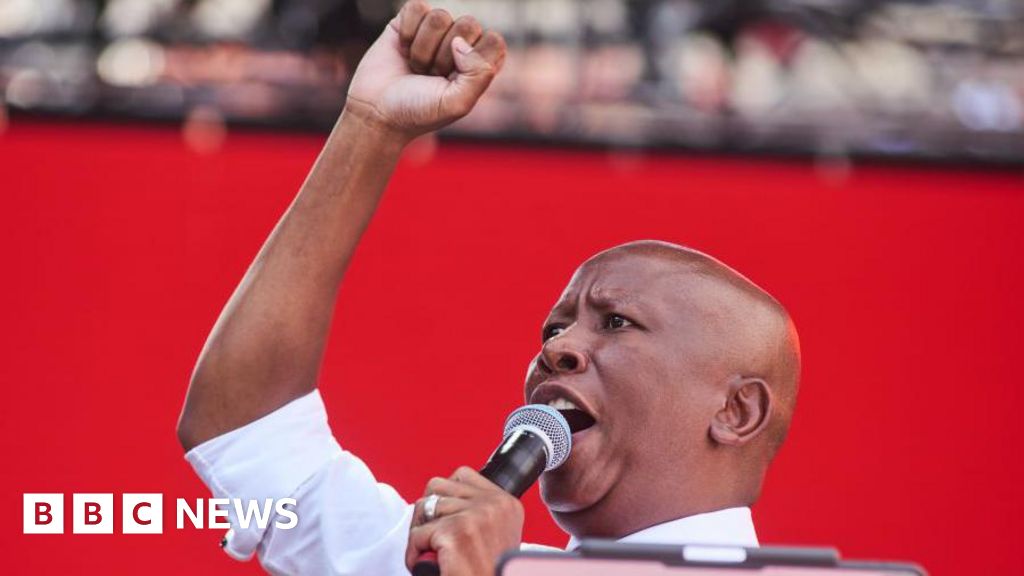
South African MP with strong views convicted for shooting in public

South Africa’s Controversial Political Actor Faces Legal and International Scrutiny

The recent conviction of Julius Malema, leader of the Economic Freedom Fighters (EFF), marks a significant chapter in South Africa’s ongoing struggle with internal divisions rooted in its apartheid past. The magistrate’s decision to find Malema guilty of discharging a firearm in public — an offence carrying a maximum of 15 years in prison — underscores the persistent tensions and volatile political landscape that continue to define post-apartheid society. The 2018 incident in the Eastern Cape, where he fired between 14 and 15 rounds during a party remembrance, was more than a youthful display; it became a symbol of the nation’s deeper struggles with violence, racial identity, and calls for radical economic reform.

Internationally, this incident has reverberated beyond South Africa’s borders, influencing perceptions of the country’s stability and leadership. The controversy surrounding Malema’s fiery rhetoric and actions reached as far as the White House, where then-President Donald Trump used a video of Malema as supposed evidence of genocide against white Afrikaners—a claim that has since been widely discredited by experts and international observers. Such gestures highlight the dangerous intersection of domestic politics and international narratives, where figures like Malema are weaponized to justify external interventions or pressure. Moreover, Malema’s vocal calls for the seizure of white-owned land and wealth redistribution continue to fuel a heated debate about racial justice and economic policies in a nation still wrestling with the legacy of apartheid.

Legal Battles, Rhetoric, and Regional Impact

  • Malema’s conviction for unlawful possession and discharge of a firearm coincides with his broader pattern of provocative speech, including recent hate speech convictions that have drawn sharp criticism from both domestic and international legal bodies.
  • His statements, such as advocating for “killing” during altercations and urging revolution through violence, raise alarms about the potential for social destabilization, especially in a country still suffering from racially charged tensions despite over three decades since the end of apartheid.
  • Foreign governments, notably the UK, have responded by barring him entry, citing support for terrorist organizations and incendiary remarks that are deemed “non-conducive to the public good,” reflecting mounting concern over the impact of figures like Malema on regional security and diplomatic relations.

Analysts and historians emphasize that Malema’s case exemplifies how post-conflict societies often struggle with balancing free speech against the threat of inciting violence and societal division. The international community watches closely as South Africa grapples with political extremism, racial grievances, and economic disparity—elements that threaten to undermine its stability and place it further at the mercy of global powers vying for influence in Africa’s most developed yet divided nation. As Malema prepares to challenge his sentence in the Constitutional Court, the fate of his influence remains uncertain, but the broader geopolitical impact of South Africa’s internal strife is undeniable. Every decision, every verdict, shapes not only the nation’s future but echoes across an increasingly unstable continent where history’s shadows loom large, and the weight of unresolved injustices presses down like an ominous cloud over the unfolding story of Africa’s “rainbow nation.”

Social Media Auto Publish Powered By : XYZScripts.com