Matox News

Truth Over Trends, always!

Cracking the Quadruple Axel: The Ultimate Challenge in Figure Skating’s Tech Race

Revolutionizing Figure Skating with Biomechanical Insights and High-Flying Innovation

2024 marks a pivotal year for technological disruption in sports biomechanics, as Toin University researcher Seiji Hirosawa unveils groundbreaking insights into the mechanics of quad axel jumps. Published in Sports Biomechanics, this study bridges the gap between science and athletic mastery, highlighting how advances in data analytics are transforming conventional understandings of elite athletic performance. At the core of this breakthrough is a focus on vertical jump height, an element previously underestimated in biomechanical evaluations. Hirosawa’s findings suggest that increasing flight height is not just a technical nuance but a strategic imperative in mastering the most complex ice skating maneuvers.

This revelation arrives amid a broader wave of disruption in sports technology, with innovations such as the Ice Scope tracking system providing unprecedented precision in performance analysis. Leveraging high-resolution data, researchers can now dissect minute biomechanical parameters—vertical height, horizontal displacement, and velocity—culminating in a granular understanding of athlete mechanics. As the industry evolves, insights driven by data-driven biomechanics are forcing traditional rating and training paradigms to adapt rapidly. Experts from institutions like MIT and analysts from Gartner highlight that such technological infusion not only enhances athlete performance but also shifts the economic landscape, intensifying competition among brands offering cutting-edge sports analytics tools.

The business implications of this shift are profound. Companies investing in AI-powered motion tracking, real-time analysis, and simulation software stand to redefine training regimes, offering athletes and coaches a distinct advantage in pushing performance boundaries.

  • Enhanced performance predictions through machine learning
  • Customized training plans based on biomechanical data
  • Early injury detection to extend athletes’ careers

These innovations threaten to disrupt legacy sports equipment manufacturers and propel tech firms into the spotlight, as the demand for smarter, more precise training solutions explodes. Notably, Elon Musk’s Neuralink and similar ventures exemplify the broader trend of merging human performance with advanced interfaces—an approach increasingly vital in high-stakes sports settings.

Looking ahead, the integration of biomechanics, AI, and wearable technology signals a transformative era for competitive sports. Athletes like Ilia Malinin exemplify this wave, leveraging scientific insights to push the limits of what’s possible—literally soaring to new heights. Yet, this rapid evolution also warrants caution; as technology becomes embedded in athletic training, it raises questions about fairness, accessibility, and the potential for new arms races. Industry leaders and policymakers must work with scientists to navigate these challenges proactively. Ultimately, the future belongs to those prepared to harness innovation at every stage—from biomechanical research to commercial application—where the winners will be those who act before the next big leap in athletic performance is achieved.

US-Russia Nuclear Pact Ending: Young Americans Worry Over Resurgence of Arms Race

The geopolitical landscape has taken a significant turn as Russia announced a departure from the New START Treaty, a cornerstone of nuclear arms control between Moscow and Washington. In a statement issued by the Russian foreign ministry, officials confirmed that, “in the current circumstances, we assume that the parties to the New START are no longer bound by any obligations or symmetrical declarations in the context of the Treaty, including its core provisions, and are in principle free to choose their next steps.” This declaration effectively signals the end of a crucial era of dialogue and restraint, raising the stakes for international stability and global security.

The New START Treaty, signed in 2010, was a critical component of post-Cold War efforts to curb the nuclear arms race, aiming to prevent an escalatory spiral of nuclear build-up. Its demise, or at least significant weakening, marks a profound turning point in global diplomacy. As the United States and Russia now navigate uncertain waters, many analysts warn of potential arms races and increased tensions that could destabilize entire regions. Experts from the Stockholm International Peace Research Institute (SIPRI) and former diplomats alike highlight how this shift threatens longstanding strategic deterrence mechanisms designed to maintain equilibrium in an increasingly volatile international system.

This development is not an isolated incident; it is part of a broader pattern of renewed geopolitical rivalries, where major powers recalibrate their arms control commitments amid shifting alliances and domestic political pressures. Russia’s decision can be seen as a response to perceived threats and perceived erosion of mutual trust, but it also underscores a wider view among Moscow and other national actors that nuclear diplomacy is becoming increasingly fragile. With the retraction of treaties like START, nations face the grim reality that multilateral agreements once seen as pillars of stability are waning. As President Biden and other Western leaders deliberate responses, the international community faces the devastating prospect of a more uncertain future — where escalation risks are amplified and peace becomes more precarious.

In the broader context, this decision underscores how increasingly complex and unpredictable current geopolitics have become, especially for youth and future generations who will inherit this unsettled order. Historically, periods of arms race resurgence have often led to devastating conflicts, and many experts warn that neglecting these treaties could reopen narratives of nuclear confrontation. Nations must now grapple with whether diplomacy can *revive* past commitments or whether the world on the brink might veer closer to conflict. The weight of history remains heavy, as the unfolding response to Russia’s announcement may define global security for decades to come — a stark reminder that in geopolitics, no decision is truly isolated, and the ripples of today’s actions will shape tomorrow’s reality.

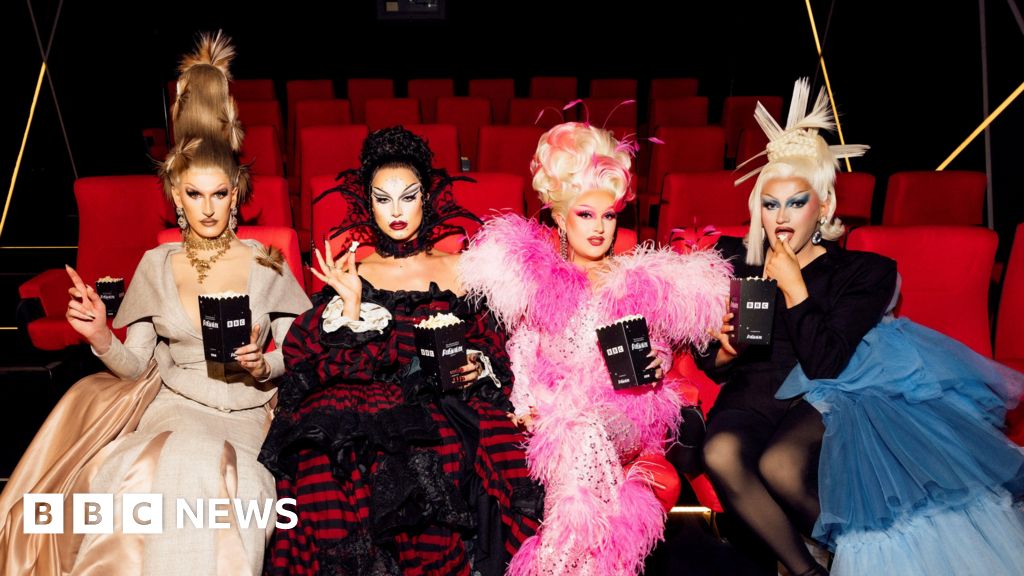
RuPaul’s Drag Race UK names its seventh reigning queen, fueling the next generation’s fierce talent

In an era characterized by rapid change and digitized chaos, the enduring significance of culture persists as the vital foundation upon which societies forge their identities. As Ortega y Gasset famously asserted, “The culture of a nation is the collective memory that shapes its future.” In this light, contemporary cultural phenomena serve not merely as entertainment but as the living record of a peuple’s values, traditions, and aspirations. The recent triumphs and innovations within cultural expression—be it art, music, or even televised art forms like drag culture—strike at the core of national and individual identity, underscoring that culture remains our most profound and personal form of history—a mirror and a prophecy.

Take for instance the spectacle of RuPaul’s Drag Race UK, which has garnered global attention yet remains intrinsically rooted in the UK’s vibrant craft of performance art. The recent series finale exemplifies how artistic performance functions as a battleground of cultural values, where beauty, self-expression, and resilience converge to challenge superficial stereotypes and to celebrate authentic individuality. Bones, crowned the series winner, embodies more than a flashy persona; she embodies a narrative of perseverance, tradition, and the reclaiming of cultural space, a testament to how artistic identity can serve as social commentary. Her journey from Soho’s underground scene to national recognition reminds us that the true power of culture lies in its capacity to foster community, affirm identity, and inspire societal reflection. As the philosopher Chesterton once observed, “Art may imitate life, but authentic art is life itself, expressed through beauty and courage.”

Nevertheless, as Tocqueville warned, the saturation of cultural products can lead to a kind of cultural exhaustion, diluting the richness of tradition in favor of fleeting trends. Critics argue that the fans’ call for greater diversity in drag—less homogeneity and more authentic representation—speaks to an inevitable evolution of a culture that must continuously refashion itself to stay vital. This is not a sign of cultural decline but a testament to its dynamic resilience. Yet, amidst this flux, the core principles of tradition—values of family, community, and authentic selfhood—must remain preserved. As G.K. Chesterton remarked, “Tradition means giving votes to the most obscure of all classes, our ancestors. It is the democracy of the dead.” In this way, culture remains a living dialogue between past and future, inspiring the youth to cherish their roots while daring to redefine them.

Ultimately, culture is both memory and prophecy—an ongoing reflection of who we have been and a vision of what we may become. The mosaic of our collective heritage guides us through the turbulent waters of modernity, reminding us that our true strength lies in honoring the principles that have sustained us. As T.S. Eliot contemplated, “We shall not cease from exploration, and the end of all our exploring will be to arrive where we started and know the place for the first time.” It is in this cyclical dance of remembering and dreaming that humanity finds its most eloquent voice—an anthem of tradition, a call to renewal, and a testament to the unbreakable unity of culture’s eternal dialogue.

Katter’s Party Ex-MP Wins Townsville Mayor Race, Defeats Old Leader Swinging Against Them

Australian Local Politics: The Rise of Nick Dametto in Townsville Signifies Shifts in National Identity

The recent byelection in Townsville, Queensland, has sent shockwaves through Australian political circles, reflecting broader undercurrents of societal values, identity, and national pride. Nick Dametto, a prominent figure associated with the populist right and former deputy leader of Katter’s Australian Party, secured a commanding victory with over 61% of the vote—an unprecedented margin that underscores a decisive shift in local sentiment. Dametto’s platform, emphasizing strong border controls, traditional values, and targeted regional development, resonated with voters craving stability and a renewed sense of identity amid ongoing debates over immigration and multiculturalism. His prominence, bolstered by recent anti-immigration marches and pushes for policies such as “castle law,” illustrates a growing tide of conservative populism rooted in Australia’s more rugged, pioneer-oriented political culture.

The significance of this electoral outcome extends beyond mere local politics; it signals a shift in how Australia’s northern regions define their future. Analysts like Griffith University’s Paul Williams highlight Dametto’s appeal as emblematic of a “rugged, masculine, pioneer culture” that still holds sway in towns like Townsville, often dubbed the “unofficial capital of the north.” These areas, historically dependent on mining and military services, appear to be clinging tightly to conservative values in an era characterized by shifting geopolitical dynamics and internal societal upheavals. The fact that Dametto, a young and visible leader, consistently campaigned on themes of economic openness and regional pride, demonstrates a growing confidence among many rural and regional Australians who feel alienated by coastal urban liberalism. His victory, during a period of political upheaval and scandal—marked notably by the resignation and legal troubles of former mayor Troy Thompson—reflects a broader appetite for leadership that prioritizes national sovereignty and traditional identity.

International perspective contextualizes Australia’s local developments within a global wave of populist resurgence. Experts warn that the broader geopolitical impact lies in Australia’s increased alignment with Western conservative policies, particularly in the context of rising tensions with China, fluctuating Pacific alliances, and the NATO-led push to redefine global security frameworks. The fragile stability of the Indo-Pacific region depends increasingly on electoral shifts that favor nationalist policies over internationalist approaches, potentially altering Australia’s role in regional security pacts. The decision of voters in Townsville to endorse Dametto’s vision echoes similar trends seen in other Western democracies—where sovereignty, national borders, and traditional cultural identity are being reclaimed amid the chaos of globalization and multicultural pressure. International analysts observe that these local victories hinge on widespread discontent with immigration policies, economic uncertainty, and perceived loss of cultural control—themes that resonate deeply with conservative youth movements worldwide.

As the nation faces pending electoral tests in regions like Hinchinbrook, and as scandals continue to erode trust in established political figures, the weight of history presses heavily upon Australia’s shoulders. Dametto’s triumph symbolizes more than a regional political victory; it signifies a burgeoning movement that threatens to reshape Australia’s national trajectory. The ongoing saga—marked by scandal, populist rallying cries, and a reassertion of traditional values—reminds historians that history is often written in moments of turmoil and upheaval. Whether this marks a durable shift or a transient surge will depend on how Australia’s society and leadership respond to the mounting pressure of identity, security, and sovereignty in a rapidly evolving international arena. The impending chapters of this unfolding story will determine if Australia chooses to forge a future grounded in cultural resilience or to succumb once more to the tides of globalist influence, with the weight of history still shaping every step forward.

Insiders Spill: The Truth About the AI Race

AI Industry Faces Disruption and Innovation Boom Entering 2024

The recent Cerebral Valley conference in San Francisco, now in its third year, underscores a pivotal moment for the AI industry—marked by rapid innovation, strategic repositioning, and significant business implications. Industry insiders, analysts, and entrepreneurs are recalibrating expectations amidst a landscape driven by disruptive technology and fierce competition. Leading figures like OpenAI and Nvidia are projected to see tremendous growth, but the trajectory toward Artificial General Intelligence (AGI) remains clouded, hinting at a future where market dynamics and regulatory frameworks will shape technological progress as much as the models themselves.

By the end of 2026, OpenAI is anticipated to generate about $30 billion in annualized revenue, a testament to the soaring demand for AI-powered services across industries. Simultaneously, Nvidia is expected to reach a valuation of around $6 trillion, driven by its dominant position in AI hardware and software. These milestones illustrate both innovation dominance and disruption, accelerating the shift of AI from niche technology to a core business survival tool. However, emerging competition—such as China’s Qwen model and open-source Chinese AI initiatives—signals industry-wide regional power plays and global market reshuffling. This trend is especially notable considering Meta’s absence from the top Model Leaderboard, emphasizing a shift in industry leadership and strategic focus.

Venture capital and corporate strategy also reveal a landscape where reverse acquihires and talent wars dominate—evidence of the industry’s pursuit of accelerated innovation and competitive positioning. Firms like Meta, Google, and emerging AI startups are vying not just for market share, but for top-tier talent, often financed with what some insiders describe as “infinite money”. Notably, investors show growing preference for companies like Anthropic, OpenAI, and startups like Cursor and Anduril, which are paving the way for next-generation AI advancements. The strategic moves—such as deals with ScaleAI or investments in Mistral and Thinking Machines—highlight the race to dominate foundational models and deployment architectures. As experts like Peter Thiel emphasize, “Disruptive innovation in AI is reshaping the entire landscape—those who lead now will control future markets.”

Implications: Disruption and Preparing for the Future

The implications for business and technology leadership are profound. The industry appears to be moving toward a critical inflection point—where the pace of progress toward AGI, regulatory oversight, and regional leadership will determine who sets the standards for the next era of AI-enabled growth. Companies positioned with cutting-edge models and hardware—like Nvidia—are likely to enjoy exponential valuation growth, but the race is nowhere near over. The emergence of Chinese models like Qwen signals a more multipolar AI landscape, demanding strategic agility from Western tech giants and policymakers alike.

Looking ahead, disruption and innovation will continue to accelerate, demanding a sense of urgency among investors, entrepreneurs, and industry stakeholders. With the recent strategic shifts and a clear push toward consolidating talent and capital, the future of AI is poised for a period of unprecedented transformation—favoring those who harness breakthroughs quickly and navigate geopolitical complexities deftly. The next two years will be critical, as the industry approaches what could be the defining moments for AI’s role in society—making it imperative for players to stay ahead of the curve.

NYC Mayoral Race & Top US Election Highlights: What the Youth Should Keep an Eye On

In a year often overshadowed by global crises, local elections continue to serve as critical barometers of America’s political mood and societal shifts. Across the nation, standout races— from the vibrant streets of New York City to the swing voters of Virginia and New Jersey— reflect an energized populace eager to shape the future direction of their states. While these elections may seem like mere regional exercises, their consequences ripple outward, influencing national discourse and the cultural landscape. For the young, ambitious individual, these elections underscore the importance of staying engaged and understanding how leadership on the local level can have lasting personal impacts—be it in healthcare, safety, or community wellbeing.

Perhaps the most anticipated race currently unfolding is the New York City mayoral election, where Mamdani’s democratic socialist platform resonates with a youthful demographic hungry for change. This 34-year-old assemblyman’s bid to become the city’s youngest mayor in over a century signifies more than a political upset; it symbolizes a generational shift in values. Mamdani’s campaign, after beating a political heavyweight like Andrew Cuomo in the primaries, embodies what many young citizens are seeking: a break from traditional politics and a bold focus on issues like **affordable housing, sustainable development, and community wellness**. Meanwhile, Cuomo’s attack on Mamdani’s experience highlights the ongoing debate over what it truly means to lead—particularly in a city that faces complex challenges such as public safety and economic inequality.

Beyond the Big Apple, states like California are engaged in a quieter yet equally significant political game — the **mid-decade redistricting referendum**. Californians face a rare opportunity to temporarily redraw congressional maps through Proposition 50, a move driven by Democrats seeking to maintain control amid a historically close political landscape. This strategic shift underscores how every vote counts in shaping the very borders of influence. For the young, politically conscious voter, understanding these shifts isn’t just about partisanship; it’s about recognizing how the reallocation of political power can alter the policies that directly impact young families, entrepreneurs, and community well-being. With millions of dollars pouring in from various campaigns, it’s clear that the battle for fair representation is fierce, and its outcomes will determine how issues like **education reform and economic opportunity** are prioritized in the years to come.

Meanwhile, in the political battleground of Virginia and New Jersey, the gubernatorial contests offer a mirror to the national pulse. With Virginia on the cusp of electing its first female governor—be it Democrat Abigail Spanberger or Republican Winsome Earle-Sears—these races highlight the importance of diverse leadership and the potential for transformative change. For young voters, the significance goes beyond gender or party lines; it’s about star constructing a society that values **inclusive progress, personal empowerment, and a shared sense of community**. The tight races reflect a nation balancing between tradition and innovation, conservative values and progressive aspirations—a reflection of a society still searching for its true identity.

At the heart of these elections, even the shadow of former President Trump looms large, influencing the tone and rhetoric of campaigns. From his comments on New York’s political landscape to endorsements in local races, the Trump factor reminds young voters that leadership is more than policies; it’s about ideology, resilience, and the desire for a vision that echoes their hopes for personal safety, economic opportunity, and national pride. The race for New York City’s mayor, in particular, underscores this dynamic—where the city’s future could hinge on whether it embraces a bold new wave of leadership or conserves the tried-and-true. For the emerging generation, the message is clear: participation in these elections is an act of empowerment—a step toward shaping a society rooted in values of independence, resilience, and transformative growth.

As the dust settles on these critical races, what remains is a profound reminder: lifestyle is a reflection of leadership. The city streets, state borders, and political offices are all stages where lives are reshaped by decisions made today. For the youth eager to carve a niche within this evolving landscape, these elections are more than just ballots; they are a call to embody *active citizenship*—a commitment to forging a community that values wellness, opportunity, and pride in shared progress. After all, it’s in these collective choices that the journey of lifestyle, characterized by health, leisure, and purpose, is truly defined. Embrace it—because your voice in shaping tomorrow begins with the decisions made today.

Trump warns: Funding New York City could be tough if Mamdani wins mayor’s race

In the midst of political upheaval and shifting attitudes toward governance, New York City stands at a crossroads that exemplifies the broader ideological debates facing many urban centers in America today. With the upcoming mayoral race featuring innovative young candidates like Mamdani, the city is witnessing a vibrant movement that challenges traditional political paradigms. Mamdani, a 34-year-old state assemblyman, captured the imagination of many New Yorkers by positioning himself as a fresh voice committed to _restoring dignity_ and _empowering communities_. His victory in the Democratic primary signals a potential _cultural shift_—a move away from the old guard of political complacency to a more _youth-driven_ and _values-centered_ leadership.

The frontrunners’ contrasting visions underscore a broader theme: the importance of personal impact—not just on policy, but on the _lifestyle_ and _well-being_ of residents. While political discourse often fixates on budgets and legislation, the deeper ripple effect can be seen in how a city’s leadership influences everything from _public safety_ to _urban renewal_. Mamdani’s approach emphasizes _community dignity_, aiming to create an urban environment where everyone feels _valued_ and _safe_. This resonates with many young Americans who seek _authenticity_ and _accountability_ from their leaders, inspired by thought leaders like Jordan Peterson and organizations such as the Claremont Institute, which advocate _values-driven_ governance and _cultural renewal_.

On the other hand, the political landscape is tinged with echoes of the past, with figures like Andrew Cuomo remaining in the mix, positioning himself as a seasoned advocate during his tenure as governor. Yet, the contrast between the two candidates highlights a significant _lifestyle change_—a departure from _elite decision-making_ toward _grassroots engagement_. As debates unfold about federal funding and policies, the underlying question is: how will leadership influence not just the city’s finances, but its _cultural fabric_? The city’s $7.4 billion in federal funding exemplifies the sizable stakes involved, but more crucial is whom the city chooses to serve as its _moral compass_ and _visionary guide_. This dynamic underscores the vital role of _personal impact_: whether city officials foster _inclusivity_ and _liberty_ or succumb to _bureaucratic stagnation_.

  • Embrace the _power of community_—engage locally to understand your city’s unique _identity_.
  • Stay informed about _political shifts_ that influence your _quality of life_ and _personal wellbeing_.
  • Support leaders who prioritize _authenticity_, _dignity_, and _accountability_ in governance.

As the city’s narrative continues to unfold, it challenges each individual to reflect on what _leadership_ truly means in _everyday life_. The choices made today—be it at the ballot box or in everyday community engagement—shape a _culture of resilience_ and _hope_. For young Americans embracing the _lifestyle_ of self-empowerment and _public responsibility_, the future of New York is more than just a political story—it’s a collective _journey_ toward _renewed purpose_ and _lifestyle evolution_. In this ongoing _narrative of transformation_, the lessons are clear: _leadership rooted in integrity, connectedness, and vision_ can spark a _lifestyle revolution_, inspiring generations to believe in _the power of community_ and _their own capacity to effect change_.

US Falling Behind in the Electric Car Race: What went Wrong?

The Geopolitical Significance of Electric Vehicle Policies

The race for dominance in the electric vehicle (EV) industry has become a focal point in international geopolitics and economic rivalry. In recent years, the US has aggressively pushed to position itself as a leader in clean transportation technology, aiming for electric cars to comprise half of all vehicle sales by the year 2030. President Joe Biden championed policies that include expanding tax credits, boosting infrastructure with billions invested in charging stations, and incentivizing domestic manufacturing through loans and grants. These measures, supporters argue, are part of a broader strategy to secure economic independence and maintain technological sovereignty against rising competitors like China.

Yet, despite these ambitions, the US electric car market has lagged behind much of the European Union, the United Kingdom, and China, which have benefitted from more aggressive government subsidies and regulatory frameworks. China, for instance, now accounts for nearly half of all EV sales globally, with a clear aim to dominate the market entirely. European nations have made substantial advances with nearly 20–30% of new car sales being electric or hybrid vehicles, supported by policies that include strict emissions targets and generous incentives. This disparity underscores the impact of decision-making at the governmental level, revealing how support or the lack thereof profoundly influences a nation’s rise in the EV industry.

Policy Fluctuations and Their Consequences

The recent policy shifts in Washington reflect raw political divides over climate and economic priorities. Former President Donald Trump has openly dismissed climate change as a “con job” and has sought to dismantle many carbon-reducing policies. His administration’s decision to cancel the $7,500 tax credit—a key incentive for EV buyers—has sent ripple effects through the industry, endangering the sustainability of ongoing investments. Industry leaders like Ford and Tesla warn that demand could precipitously decline in the absence of government support, which had played a crucial role in driving record sales during the last quarter.

With tariffs on foreign vehicles and parts further complicating the landscape—including measures enacted by Trump in the spring—the industry faces an uncertain future. Analysts warn that without sustained government backing, the US might not only fall behind in EV adoption but could also become less competitive globally, losing crucial technological leadership and economic influence. This tug-of-war in policy demonstrates how domestic political shifts directly shape transformative technology sectors, thereby altering international power balances.

Economic and Social Ramifications

Despite the narrative of an EV revolution, the American consumer remains hesitant due to high costs—electric cars still command an average transaction price exceeding $57,000—roughly 16% higher than comparable petrol-powered vehicles. Manufacturers like Hyundai have attempted to offset those costs by lowering prices, but the combination of tariffs and diminishing subsidies could stymie consumer enthusiasm. Such economic pressures threaten to stifle innovation and broader adoption in one of the world’s biggest car markets, creating a ripple effect that could slow the global transition away from fossil fuels.

Some analysts argue that the US’s relative lag in this sector reveals more than just economic challenges; it reflects broader questions about national strategy and societal readiness. Will the US continue to invest in future industries or succumb to protectionist policies that threaten to fragment global supply chains? As industry veterans and international observers ponder these questions, it becomes clear that the trajectory of America’s electric vehicle industry may well determine the future landscape of global economic power—and whether the US can still claim a seat at the table or is destined to watch from the sidelines as others set the rules of the game.

As history writes itself in the coming years, the fight for technological supremacy and energy independence unfolds on an increasingly divided stage, leaving the world to watch and wonder: Will this be the dawn of a new era, or just another chapter in a story of lost opportunities? The weight of history presses heavily upon this moment, as nations and societies brace for what comes next in the silent, relentless march toward the future.

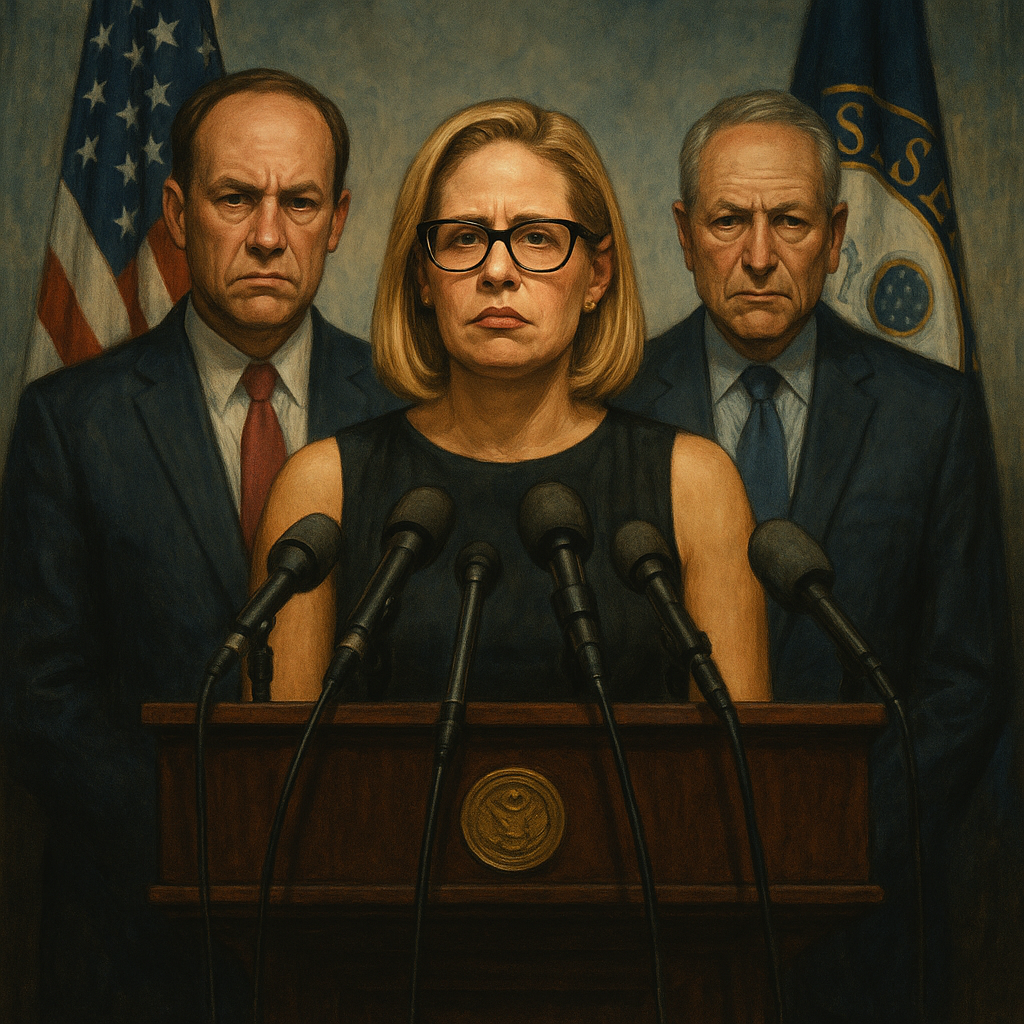
Sinema’s move tightens Democrats’ 2024 Senate race prospects

The political landscape in the United States is once again witnessing a moment of seismic change. Arizona Senator Kyrsten Sinema made headlines on Friday by formally declaring her independence, thereby reshaping the intricate balance of power in the Senate. Traditionally, the Senate has been divided between the two major parties, but Sinema’s decision underscores a picture where ideology often takes a secondary role to strategic positioning and power dynamics. Despite shifting away from the Democratic Party, she continues to caucus with them, ensuring their narrow majority, yet her move has significant implications for how party loyalty and political allegiance are perceived in contemporary governance.

Sinema’s defection is emblematic of a broader power struggle over control of agenda-setting and legislative influence. Historically, party cohesion has been a cornerstone in passing any substantial policy, especially within a closely divided Senate. Her shift threatens to fray this cohesion, symbolizing a potential divergence within the Democratic caucus. This is reminiscent of the internal divisions faced by the Republican Party during the rise of figures like Senator John McCain, who often prioritized independent judgment over party loyalty. Such moves challenge the classic dichotomy of left versus right, revealing how personal conviction and strategic survival often eclipse ideological orthodoxy in high-stakes politics. In this case, Sinema’s action exemplifies how individual agency can destabilize the delicate equilibrium of power necessary to enact major reforms.

This shift also raises profound questions about how decisions in the upper chamber ripple down to impact the everyday lives of Americans. The Senate’s composition directly influences critical battles over

  • economic policy
  • immigration reform

and

  • judicial appointments

. When party loyalty fragments, legislative inertia increases, potentially stalling the very reforms promised to voters by both sides. For many pundits and political theorists, this scenario echoes the constitutional struggles during the founding era, where the balance of power was meticulously designed to prevent tyranny while enabling effective governance. Sinema’s move exemplifies how modern political actors strategically navigate these constitutional tensions, often at the expense of unified national progress.

Indeed, such internal conflicts underline the timeless contest of who truly holds authority and influence in American democracy. This power struggle is not just about individual ambitions but about who writes the destiny of the nation. As political analyst Bruno Leoni pointed out, sovereignty in a republic resides in the body politic, yet it is increasingly exercised through the shadowy negotiations among a handful of powerful figures who manipulate party structures. The pursuit of this authority—sometimes inscribed as pragmatic compromise, other times as Machiavellian maneuvering—continues to define the fabric of U.S. politics. Sinema’s decision—whether a plea for independence or a calculated game—is another chapter in the ongoing saga of power, ideology, and destiny.

As the lights dim on one alliance and bright on another, the stage is set for a future where the very notion of political loyalty is in flux. The question remains: who will determine the course of the nation’s history—those who stay true to rigid party lines, or those who maximize their influence through shifting allegiances? In this grand theater of power, the actors craft not just policies but the very legacy of a nation poised perpetually on the brink of transformation—forever awaiting the next act where the pen wielded by the political maestro writes the future in strokes of power and principle alike.

Social Media Auto Publish Powered By : XYZScripts.com