Matox News

Truth Over Trends, always!

Thousands of sea cucumbers wash up along Oregon coast, raising concerns about nature's chaos
Thousands of sea cucumbers wash up along Oregon coast, raising concerns about nature’s chaos

Environmental Phenomenon Strikes Oregon Coast: Thousands of Sea Cucumbers Wash Ashore

In a rare and striking display of nature’s unpredictability, Seaside, Oregon, has recently become the staging ground for an unusual marine event. Thousands of Leptosynapta clarki, or skin-breathing sea cucumbers, have been washed onto the beach following a combination of heavy surf and low tide. This event, which spans over an astonishing 2 miles of coastline, underscores the complex interactions within marine ecosystems and highlights the vulnerability of specific marine species to shifting oceanic conditions. As tourists and locals alike observe this bizarre spectacle, it is vital to understand the broader geopolitical implications linked to marine environmental shifts and the warning signs they present for future ecological stability.

Marine biologists and environmental analysts suggest that such phenomena occur sporadically, often triggered by specific confluence of surf and tide conditions. Dr. Michelle Yang, a marine ecologist at the National Oceanic and Atmospheric Administration (NOAA), pointed out that while these events can happen a few times a year or even less frequently, their scale and timing might be indicative of broader environmental stressors, including climate change and oceanic acidification. The sea cucumbers themselves, typically inhabiting the sand from northern California to the Gulf of Alaska, are incapable of returning to their preferred habitat after such displacements, leading to their eventual death and decomposition on the shore. This creates a temporary, yet significant, nutrient source for local invertebrates, which further alters the seaside’s delicate food chain.

Analysts warn that these increasingly frequent and widespread occurrences could have ramifications beyond local ecosystems—they are potential indicator signals of deeper, global marine disruptions. Many international experts warn that as ocean temperatures rise and weather patterns become more volatile due to climate change, similar incidents might become more common, affecting fisheries, coastal economies, and regional stability. The event in Oregon echoes past concerns expressed by organizations such as the United Nations’ Intergovernmental Panel on Climate Change (IPCC), which predicts that marine biodiversity could face unprecedented challenges in upcoming decades. This phenomenon might not only be an ecological anomaly but a harbinger of broader uprising shifts disrupting the relationship between nature and human progress.

Historian and geopolitical analyst Dr. Marcus Keller emphasizes that such marine disturbances serve as stark reminders of the interconnectedness of environmental health and international security. As nations grapple with climate policies and maritime disputes, the health of our oceans becomes an integral component of geopolitical stability. The deteriorating state of marine ecosystems, evidenced by events like the sea cucumber influx, underscores the urgency of global cooperation over environmental governance. The crisis in the Oregon coast exemplifies how localized natural events can reflect and influence international debates on environmental responsibility, resource management, and climate resilience. As history continues to unfold in the shifting tides of our planet, it remains clear that the choices made today about how we treat our oceans will echo in the halls of history—either as part of a sustainable future or as a chapter of neglect and loss.

In the end, the sea’s silent upheaval reminds us that nature’s fury and resilience are boundless, leaving humanity to ponder whether we are merely spectators or active participants in this unfolding story of planetary destiny.
Australia calls out China’s risky jet maneuvers, raising tensions

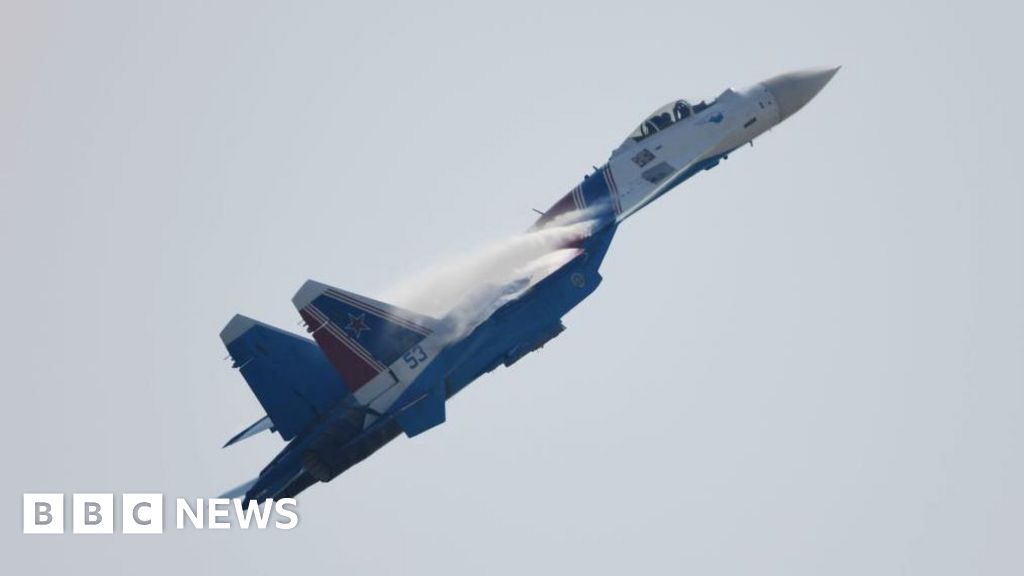
The escalating military tensions between Australia and China continue to threaten the fragile stability of the Indo-Pacific region. Recent incidents, including a dangerous confrontation over the South China Sea, underscore the simmering rivalry that, if unchecked, could reshape the geopolitical landscape. Australia’s defense department publicly accused a Chinese military aircraft of releasing flares in close proximity to an Australian patrol jet, the P-8A, an act described as “unsafe and unprofessional”. Though no injuries occurred, the event signals a dangerous escalation in aerial encounters that have become increasingly frequent in the contentious waters where China asserts expansive territorial claims.

  • On the incident’s surface, the Chinese authorities dismissed Australia’s claims, asserting that the Australian jet had “illegally intruded” into China’s airspace and issued a demand for Canberra to cease what they termed as “provocative actions.”
  • Coinciding with this event, Australian Prime Minister Anthony Albanese was heading to the United States for high-profile talks with President Donald Trump concerning the AUKUS partnership—a trilateral deal involving Australia, the US, and the UK centered on developing nuclear submarines.
  • This series of confrontations is not isolated; it follows a pattern of similar encounters that include Chinese jets dropping flares near Australian planes and Navy vessels employing sonar pulses in international waters, injuring Australian divers off Japan’s coast last November.

Experts and global organizations warn that these dangerous displays of military bravado could spiral into full-blown conflict if not managed carefully. The United States and its allies consider China’s expansive claims over the South China Sea and its aggressive military posture as clear threats to regional security and international law. Political analysts suggest that China perceives these provocative actions as a means to assert dominance over vital maritime routes and surrounding island chains, challenging the sovereignty of various Southeast Asian nations. Meanwhile, historians caution that such persistent frontier brinkmanship echoes the perilous prelude to the South China Sea’s previous conflicts and even Cold War-era cruise tensions.

The geopolitical impact of these incidents extends beyond the immediate region. As Australia aligns more closely with American strategic interests through initiatives like AUKUS, Beijing’s response is to fortify its territorial claims and signal its willingness to confront Western influence head-on. The Chinese government’s recent assertions portray Australia’s actions as illegal and provocative, aiming to rally domestic support and project strength. In an era where military encounters risk miscalculation, analysts warn that such provocations could ignite larger confrontations with global consequences. The United Nations and international diplomatic efforts urge restraint, but the momentum for escalation persists.

As history continues to unfold, the confrontation in the skies and seas off Asia serves as a stark reminder: the arena of international diplomacy is fraught with peril, and the decisions made today will echo through generations. With each flare, each sortie, the world watches—and witnesses history in the making, teetering at the edge of chaos or peace. The question remains: will cooler heads prevail, or will these hostile shadows cast a long, dark future over the free nations?”

Emirates cargo flight veers off runway into sea at Hong Kong Airport, raising safety concerns

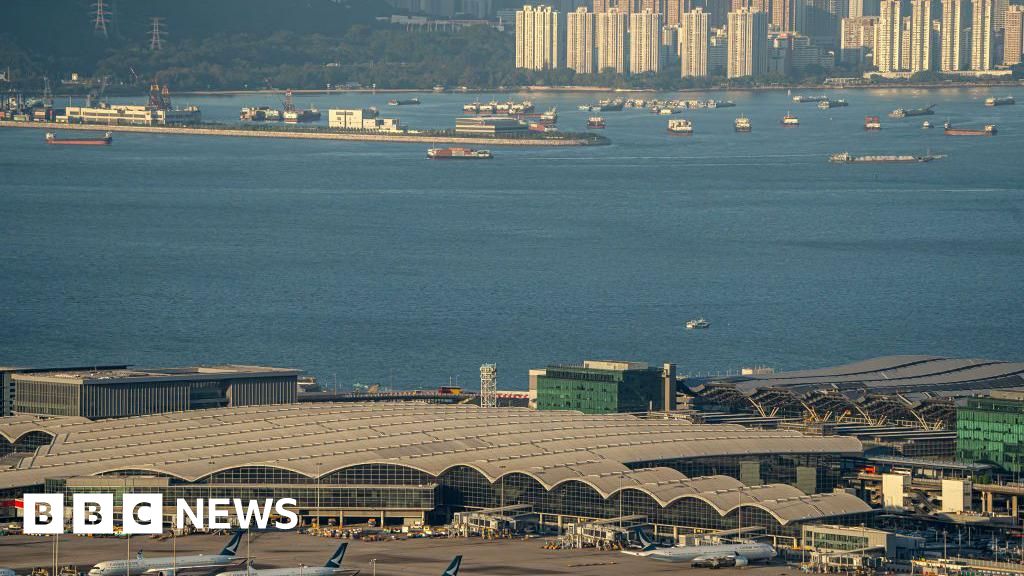
In a startling event that underscores the delicate balance of global transportation, a cargo plane has tragically skidded off the runway at Hong Kong International Airport, resulting in the loss of two ground staff members and highlighting the persistent risks faced by international hubs. The incident involved Emirates flight EK9788, operated by Aerotranscargo, which was arriving from Dubai early in the morning, around 03:50 local time. Reports indicate that the aircraft collided with a ground vehicle on the north runway, an area critical for the city’s freight and passenger operations, illustrating how even the most meticulously maintained facilities can face unforeseen calamities.

This accident arrives at a crucial juncture for Hong Kong as it struggles to maintain its status as a premier global transit centre amidst geopolitical upheaval and economic shifts. The airport’s closure of the affected runway—though the remaining two continue to operate—raises questions about the resilience of one of the world’s busiest airports. Analysts, including aviation safety experts from ICAO, emphasize that such incidents, while rare, can have ripple effects straining supply chains and logistical networks vital for regional stability. Many see this as a turning point, a stark reminder that even in a city famous for efficiency, the risks of transportation accidents remain ever-present.

The immediate response involved rescue operations by the Hong Kong Government Flying Service and Fire Services vessels, which coordinated above and below the ground to recover the crew and the ground personnel who fell into the sea. Unfortunately, the two staff members ultimately succumbed to their injuries, a tragic outcome that shines a light on the perilous nature of airport ground work. In the aftermath, authorities are set to hold a press conference at 10:00 local time, where safety investigations will undoubtedly dominate discussions. Such incidents often spark broader debate about international standards for airport safety, especially in politically sensitive regions where security and efficiency are intertwined with economic destiny.

Importantly, this event is more than a local tragedy; it operates within the larger geopolitical context of increasing tensions and shifting alliances. Hong Kong, once a renowned global trade hub, faces mounting pressure from Beijing’s grip alongside international scrutiny. The incident also prompts questions about how such crises are managed amidst escalating geopolitical stakes, where every safety lapse can be exploited to forge narratives of instability or neglect. Historians and international observers argue that it is moments like these — when human tragedy collides with geopolitical realities — that define the future of global aviation security and regional cooperation.

As the world watches, the fate of Hong Kong International Airport‘s corridors of commerce hangs in a fragile balance. The incident serves as a stark reminder that, beneath the surface of technological marvels and economic competitiveness, the human element — often for those working tirelessly behind the scenes — remains vulnerable. The weigh of history presses down, and the question remains: will this tragedy catalyze a renewed push towards safety and resilience, or will it fade into another chapter of transitory setbacks in a city that has, time and again, defied the odds? The answer, as with so much of the unfolding story, is yet to be written, but the echoes of this event will no doubt resonate through the corridors of power and policy for years to come.

Sikh man with brain tumour detained by U.S. immigration, raising concerns about fair treatment

In recent weeks, United States immigration policies have taken center stage, revealing a complex interplay of national security, legal authority, and human rights controversies. The case of Paramjit Singh, a long-time resident of Indiana and US green card holder since 1994, exemplifies the disturbing human consequences of this policy shift. Detained amid allegations based on decades-old criminal records, Singh’s case underscores a broader pattern of aggressive immigration enforcement under the administration of President Donald Trump. As the US government pushes for the deportation of perceived “undesirables,” critics argue that this approach sacrifices fundamental fairness, particularly targeting individuals with no active criminal record or recent infractions, and ignoring humanitarian concerns such as health crises.

Singh’s detention, which has spanned over two months, is emblematic of a wider crackdown on immigration that oscillates between rhetoric and reality. The Immigration and Customs Enforcement (ICE) has invoked old cases—most notably from 1999 and 2008—to justify his detention, although family and legal advocates argue these allegations are either outdated or mistaken. The case involves Singh’s minor conviction for using a public phone without payment, a conviction that nonetheless resulted in his being barred from obtaining citizenship. More troubling is the assertion by authorities that he faces additional charges, which his family contests, claiming no such fingering exists in the state’s criminal records. This pattern suggests a potential misuse or misinterpretation of legal documents, which, when combined with the detention’s conditions, raises serious questions about procedural justice.

International observers and legal experts warn that such policies threaten not only individual rights but also geopolitical stability, especially as the US seeks to project strength through border enforcement. The detention of Singh occurs against a backdrop of a “zero-tolerance” approach emphasized by the Trump administration, with rhetoric promising the deportation of the “worst of the worst.” However, critics highlight that many non-criminal immigrants, like Singh, find themselves caught in this aggressive net, often without proper recourse. Countries such as India and Pakistan have expressed concern over cases involving alleged wrongful detention of their nationals, positioning these incidents within broader diplomatic tensions. The deportation and detention policies are thus mirrored by a rising global scrutiny, as international organizations warn of the erosion of due process and human rights protections—fundamentals upon which international law is built.

  • The detention of Singh is set for a hearing on October 14, highlighting the ongoing legal tussle that underscores the policies’ unpredictability.
  • The US administration’s emphasis on removing individuals based on historical records, regardless of current activity or health status, signals an evolving immigration paradigm that prioritizes security over fairness.
  • International reactions, especially from India, reflect growing concern over the treatment of their nationals, emphasizing how domestic policies can ripple across borders, heightening geopolitical friction in an already tense global atmosphere.

Historians like Howard Zinn and analysts at international NGOs have long warned that policies championed as “security measures” often serve as smokescreens for deeper societal exclusion and racial profiling. The Singh case is more than an isolated incident; it is a symbol of a nation grappling with its identity amidst the shadows of its immigration laws, where the weight of history—both legal and societal—continues to shape individual fates. As Singh’s case prepares for its next court hearing, the question remains: how will the US reconcile its values of justice and compassion with its choice to pursue an increasingly hardline stance? Sometimes, history seems to turn on a dime, revealing that the true cost of such policies is paid not just in legal doctrine but in the lives of ordinary people—whose stories may only be heard when the pages of history are finally turned.”

Munich Airport Closes Amid Drone Threat, Raising Security Concerns for Travelers

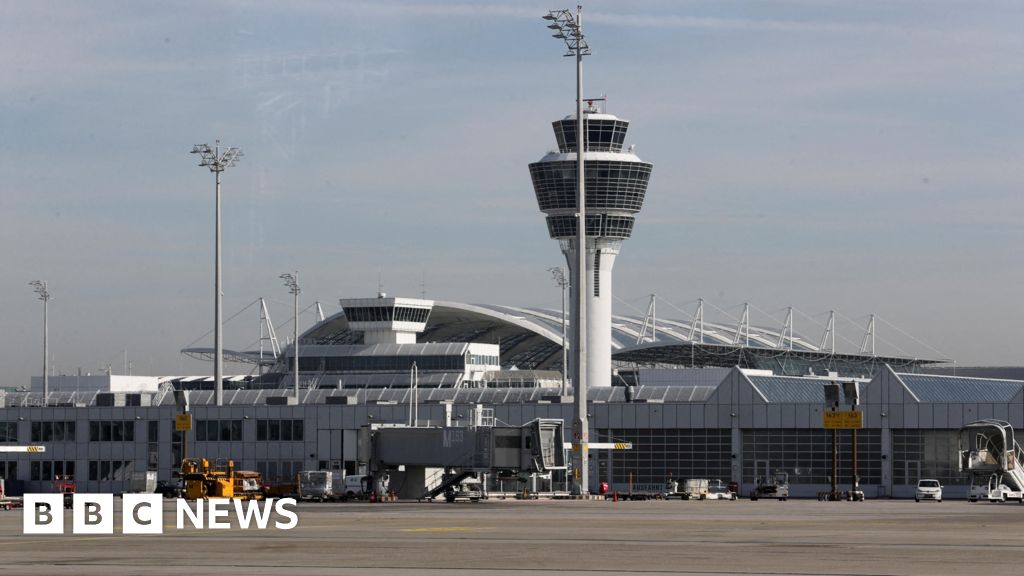
Recent events at Germany’s Munich airport have underscored the growing volatility in European airspace security, with authorities forced to cancel over a dozen flights and ground almost 3,000 passengers. The incident occurred after unidentified drones were spotted near the airport’s airspace, prompting immediate suspensions and rerouting of flights to nearby hubs such as Stuttgart, Nuremberg, Vienna, and Frankfurt. At the core of this emergency is the ambiguous origin of the drones, which remains unconfirmed due to poor visibility at night and a lack of concrete evidence. Such incursions not only threaten civilian aviation safety but also expose vulnerabilities in European security infrastructure.

This unsettling pattern is echoed across Europe, as recent weeks have seen similar drone sightings near key airports and military zones. Authorities across the continent have responded with heightened alertness, especially in light of a series of alarming incidents involving Russian military assets. Notably, Russian forces are accused of crossing into Poland with 20 drones and deploying MiG-31 jets into Estonian airspace—an aggressive posture signaling a shift in regional military assertiveness. Despite Moscow’s denial of involvement, conservative analysts warn that these provocations are part of a broader strategy to test NATO’s resilience and Europe’s borders, underlining the fragile balance of power on the eastern flank.

Adding to the geopolitical tension, the recent drone disturbances have prompted a summit in Copenhagen, where European leaders debated security measures and coordinated responses to emerging threats. The consensus is clear: while Russia dismisses these actions as provocations or misunderstandings, the effective deployment of drones and the apparent willingness to challenge European airspace norms reveal a shifting battlefield. European Union officials and military experts warn that such tactics threaten to escalate into open conflicts—an alarming prospect that could redefine security alliances and trigger a new era of confrontation.

As thousands remain stranded amid the chaos, the question lingers: Who is truly behind these incursions, and what is their ultimate goal? With the tranquility of Oktoberfest now overshadowed by fears of unseen threats, history once again bears witness to a continent on the brink—a place where the decision of a rogue drone or a calculated military maneuver could ignite a geopolitical catastrophe. In this volatile landscape, every flight canceled and every border challenged adds a new chapter to the unfolding saga of European resilience and vulnerability—reminding us that peace, once taken for granted, is now a fragile illusion.

Tech Giants Step Back from Fighting Misinformation in Australia, Raising Concerns

Global Implications of Australia’s Misinformation Regulation Shake-up

Australia’s Digital Dilemma: Misinformation Policy Under Threat

In a move that signals a broader shift in the global landscape of digital regulation, Australia faces a pivotal moment as major tech giants consider abandoning their commitments to combat online misinformation. The voluntary code introduced in 2021, which saw signatories including Meta, Google, Microsoft, and X (formerly Twitter), was designed to promote transparency and accountability in tackling false and deceptive content online. However, recent developments reveal a concerted pushback from digital platforms, citing the issue as “politically charged” and too “contentious” to regulate effectively. This attitude underscores a wider trend of tech companies increasingly resisting government-mandated oversight, signaling potential chaos ahead for the fight against misinformation.

Many international analysts warn of far-reaching geopolitical repercussions should social media giants pull back from their digital responsibility. The digital landscape has become a battleground in the ongoing contest between free expression and the need for truth—an issue that has deeply divided the Australian public along partisan lines. The Australian Communications and Media Authority highlights that the concept of “misinformation” remains highly subjective, linked closely to personal beliefs and societal values. These factors make the institution of effective regulation a daunting challenge. Historian and geopolitical analyst Dr. Elizabeth Carrington notes that such reluctance by corporate giants can embolden authoritarian regimes worldwide, where misinformation is weaponized to manipulate public opinion and suppress dissent. This geopolitical calculus risks sparking a domino effect, where other nations may follow Australia’s lead, either embracing digital laissez-faire or capitulating to unchecked misinformation.

Meanwhile, the international community observes with concern as internal debates within Australia reflect the larger global struggle over truth in the digital age. The European Union, for example, has taken a more aggressive stance on regulating tech companies, yet even here, the challenges of defining and policing misinformation persist. Critics like Timothy Graham, an expert at Queensland University of Technology, argue that the politicization of “misinformation” complicates efforts, turning the simple task of content verification into a minefield of ideological bias. Meanwhile, public trust in social platforms continues to erode; recent reports show fewer content violations are being effectively enforced even as 74% of Australian adults remain concerned about false information online, according to ACMA’s latest survey. As countries worldwide grapple with these complexities, the core question remains: How do nations balance free speech with the imperative to prevent harm?—a question that, ultimately, defines the era of digital governance.

The potential retreat of tech platforms from their self-imposed obligations foreshadows a crucial crossroads in the evolution of global digital society. With Australia’s decision to reconsider or dismantle its misinformation safeguards, the stage is set for a possible upheaval—where misinformation fuels societal divisions, deepens political rifts, and weakens the very fabric of democratic accountability. As policy-makers face mounting pressure from both the digital giants and their citizenry, the world watches with bated breath, knowing

Afghanistan Suffers Internet Blackout as Taliban Cuts Fiber Optic Cables, Raising Concerns

The recent total internet blackout in Afghanistan marks a significant escalation in the Taliban’s concerted effort to control information and suppress dissent within the country. Weeks after severing fibre-optic internet connections under the guise of moral enforcement, Taliban authorities now enforce an all-encompassing shutdown of telecommunications, including services vital for daily life, commerce, and international communication. As reported by the internet watchdog Netblocks, this blackout not only curtails access to information but strategically isolates the nation, leaving its population in a silence that echoes across the international stage. Such measures have profound geopolitical impact; they serve as a stark indication that the Taliban’s grasp on Afghanistan is tightening, with potentially far-reaching consequences for regional stability and global diplomacy.

Analysts warn that this shutdown represents a deliberate move to consolidate control, particularly over the country’s youth and political opposition. The Taliban, since their 2021 return to power, have aggressively enforced a strict interpretation of Sharia law, removing women from universities, censoring books, and restricting individual freedoms. The recent telecommunications blockade compounds these efforts, effectively cutting off Afghan voices from the outside world. Observers such as historians and international agencies note that this level of information suppression is unprecedented—not even during North Korea’s isolationist regimes has a nation entirely blacked out the internet in this systematic manner. The impact on society is palpable: many Afghan citizens report feeling isolated, their ability to communicate and access vital services abruptly halted. The blackout thus not only disrupts daily life but signals a dangerous normalization of authoritarian control that could persist for years.

In response, regional and international actors are watching cautiously. While the Taliban claim the shutdown is temporary, experts warn that it sets a dangerous precedent and signals a deeper attempt at to entrench their totalitarian rule. Governments in neighboring Pakistan and India, along with global powers like the United States and China, scrutinize this development for its potential to ignite instability or spark humanitarian crises. The United Nations and human rights organizations have issued cautious statements, condemning the restrictions on fundamental freedoms but lacking concrete leverage to alter Taliban policies. Meanwhile, many Afghan citizens living abroad lament the loss of their compatriots’ voices, echoing the sentiment that Afghanistan now stands on a precarious brink—where the **dictatorship’s grip tightens amidst a silenced population**. History warns that prolonged information blackouts tend to consolidate power while dehumanizing dissent, thus threatening to permanently alter Afghanistan’s social fabric.

As the world observes an unfolding chapter of repression, the shadow of history looms large. This blackout is more than a technological failure—it’s a stark symbol of how emerging power factions redefine sovereignty through control over information. The voice of the Afghan people, muffled and crippled, becomes a tragic testament to the cost of inaction by the international community. The question remains: will this silence usher in a new era of darkness for Afghanistan, or will global resolve ignite a response capable of breaking this cycle? Time will tell, but the echoes of this moment will resonate through the corridors of history, reminding future generations of the dangers when nations choose silence over liberty, and control over the human spirit. Thus, the story of Afghanistan’s current silent crisis continues to be written—one that may yet define the fate of a nation in the crucible of a new geopolitical epoch.

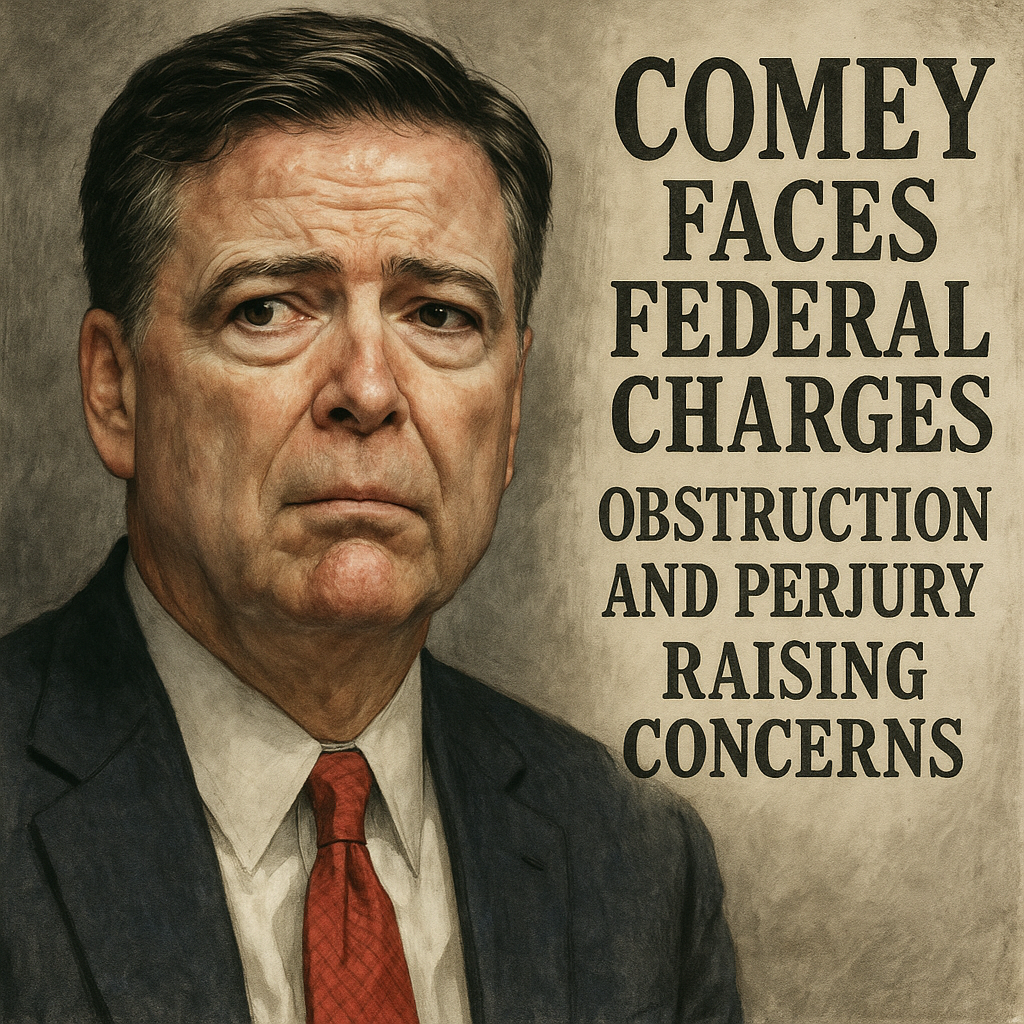
James Comey faces federal charges of obstruction and perjury, raising concerns

The recent indictment of former FBI Director James Comey by a federal grand jury marks a pivotal moment in the ongoing power struggles within the American political landscape. This development, coming on the heels of President Donald Trump’s calls for accountability, underscores the relentless battle over control of institutions and narrative. Comey, once a cornerstone of the FBI’s leadership, now faces charges including making a false statement and obstruction—charges that transcend mere legal accusations, embodying the ideological clash between those seeking to maintain law and order versus those striving for accountability in the face of perceived corruption.

From a historical perspective, this move echoes classic political dramas where the machinery of justice becomes a tool in the broader power struggle. The timing, just days after Trump’s public insistence on prosecuting Comey, amplifies the notion that decisions within the justice system are becoming increasingly intertwined with partisan interests. Experts in constitutional law note that such indictments, especially against figures once considered within the security state establishment, reflect a turbulent shift—possibly a redefinition of the boundaries of executive authority and oversight. This is reminiscent of earlier eras of political upheaval, where legal actions against high-ranking officials signal whether a nation is on a path toward justice or chaos.

Critics argue that the charges are emblematic of a broader trend where political factions leverage legal mechanisms to settle scores or shape public perception. Supporters, however, contend that no public servant is immune to scrutiny, regardless of stature. As constitutional theorists remind us, the rule of law must be protected against the temptation of political vendettas, lest the very fabric of constitutional governance frays. The charges also serve to remind citizens that, in a constitutional republic, power is mortal and fleeting; institutions exist to keep it in check, but they are also vulnerable to manipulation.

Ultimately, these events underscore that politics is less about personalities and more about the battle for the soul of the nation. Decisions made today will ripple through history, shaping not just legal precedents but the societal fabric itself. As political strategist and thinker Leo Strauss might suggest, in this realm of relentless power struggles, the future remains unwritten—destiny is proclaimed on the stage of battles that test the limits of authority and justice. In this unfolding narrative, the true victors are those who shape the rules of the game—and, perhaps, who decide the very course of national destiny.

Social Media Auto Publish Powered By : XYZScripts.com