Matox News

Truth Over Trends, always!

Rape Trial Kicks Off for Norway’s Crown Princess’s Son Amid Growing Youth Scrutiny

The recent revelations amid Norway’s political landscape have ignited a fierce debate over the role and relevance of monarchy in modern governance, positioning the issue as a critical point of contention in European politics. The leak of email exchanges involving members of the Norwegian royal family has not only exposed what critics consider a disconnect between the monarchy and contemporary societal values but has also cast a spotlight on the broader geopolitical impact of traditional institutions in a rapidly changing world order. This controversy underscores how decisions made within the walls of royal palaces ripple across nations, influencing diplomatic credibility, domestic stability, and public trust.

Leading voices from across the political spectrum have begun to scrutinize the monarchy’s place in Norway’s modern identity. Arild Hermstad, the leader of Norway’s Green Party and a notable republican advocate, stated that the email exchanges reveal a monarchy “that is not working,” pressing for transparency and reform. His comments resonate with a growing global movement questioning whether hereditary rule remains justifiable in wealthy, democratic nations. Analysts from international think tanks suggest that such revelations, if they undermine confidence in traditional royal institutions, could have broader repercussions for European unity. Many believe that the monarch’s continued symbolism as a stabilizing figure is increasingly at odds with an era demanding accountability and reform, especially as traditional monarchical legitimacy faces mounting challenges from rising republican sentiments.

Institutional critics warn that the fallout transcends mere political posturing; it risks altering Norway’s diplomatic posture within the North Atlantic Treaty Organization (NATO) and broader international forums. Historians like Dr. Ingrid Sørensen argue that monarchies historically played pivotal roles in nation-building but now threaten to be relics, especially when their transparency is questioned. The controversy has prompted international organizations, such as The European Union and Human Rights Watch, to weigh in cautiously, intimating that the integrity of political institutions—regardless of their constitutional status—must be preserved against scandals that could undermine social cohesion. As nations grapple with modern governance, the question remains: will traditional symbols of power adapt or be forsaken in the face of reform demands?

In an era defined by urgent global challenges, the unfolding narrative in Norway serves as a microcosm of broader geopolitical shifts. The enduring debate over the monarchy’s role illuminates a larger struggle between tradition and reform that extends across many democracies worldwide. The decisions that emerge from this controversy—whether to reform, retain, or even abolish monarchies—may well determine how a generation perceives authority and legitimacy. As the dust settles, the realization becomes clear: history’s pages are still unfurling, and the outcome of Norway’s internal struggles may influence the future of sovereignty, identity, and power in a world where old institutions are tested by new demands. The story of Norway’s royal scandal is more than a national crisis; it is a chapter in the ongoing saga of evolution and upheaval that defines our times.

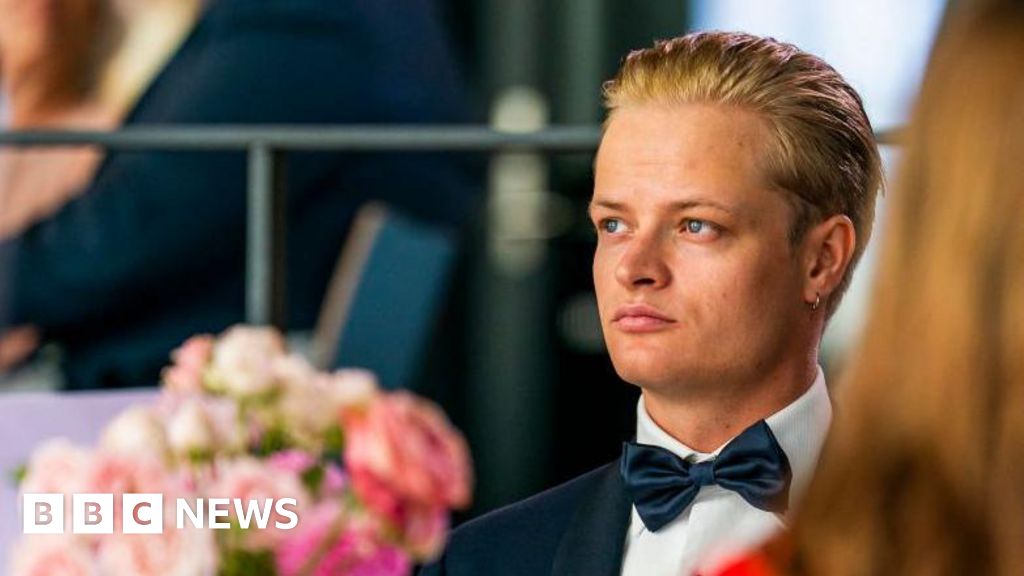
BBC Reports from Oslo Court as Crown Princess’s Son Faces Rape Trial

High-Profile Legal Proceedings in Norway Cast Shadow Over Royal Image Amidst Broader International Tensions

The forthcoming trial of Marius Borg Høiby, the son of Norway’s Crown Princess Mette-Marit, has captivated international attention as it prepares to unfold in Oslo. Accused of 38 charges—including severe allegations of sexual assault, threats, drug offenses, and property damage—Høiby’s case highlights the vulnerabilities of even the most privileged in society. If convicted, he risks a sentence surpassing a decade in prison, a stark reminder that no one is immune from justice, regardless of royal lineage. The recent re-arrest of Høiby, who has now been detained four times since August 2024, underscores the gravity of the accusations and the volatile environment surrounding his legal troubles.

This episode emerges amid revelations of links between his mother and Jeffrey Epstein, the infamous sex offender whose name continues to resonate across geopolitical corridors. These ties, although not necessarily indicative of guilt, raise concerns about the morality and integrity within elite circles, further fueling public mistrust towards the monarchy’s image. International analysts scrutinize this case not just as a national crisis but as part of a broader narrative where the actions of the powerful—especially those connected to prominent families—can undermine a nation’s social fabric. As United Nations and European Union institutions warn against the erosion of trust in leadership, Norway’s royal scandal underscores how personal misconduct can ripple across diplomatic and societal domains.

Impact on International Perception and Geopolitical Stability

Reflecting on this case illuminates a deeper geopolitical impact—how domestic scandals within influential nations shape their international standing. Norway, traditionally viewed as a model of stability and ethical governance, now grapples with an internal crisis that threatens its carefully curated reputation. Such scandals offer adversaries a foothold for criticism, especially within regions eager to highlight perceived moral failings in Western democracies. Economically, the scandal’s fallout could influence investor confidence, especially in sectors tied to Norway’s resource wealth and stability. Moreover, geopolitical analysts warn that these episodes of internal discord, if left unaddressed, risk emboldening opposition factions and destabilizing the social order.

Leading international organizations and security experts articulate concern that scandals featuring royal figures and their families challenge the notion of moral authority necessary for upholding sovereignty and national cohesion. As the case unfolds, the world will watch keenly, recognizing that the consequences extend beyond Norway’s borders. It becomes a symbol of whether societal elites are held accountable, or if they remain above the law, setting a dangerous precedent for societies across the globe.

Historical and Present-Day Parallels: Justice Without Borders

Historically, countries have experienced profound upheavals when scandals involving elites become public. The fall of empires and monarchies can often trace their roots to hidden truths revealed at times of crisis. Today, Norway’s predicament echoes what historians like Barbara Tuchman and Hannah Arendt warned about—the danger of unchecked privilege and the erosion of moral authority. International organizations such as the United Nations emphasize the importance of justice and transparency for peace and stability. Yet, this case serves as a stark reminder that the thin veneer of civility can be shattered overnight when the powerful are exposed, irrespective of national borders or political systems.

As Norway’s courts and society grapple with this controversy, a haunting question remains: Will this be a defining moment for accountability and integrity, or just another chapter in the long saga of elite immunity? The answers lie in how justice is served and whether the tide of public sentiment will uphold the rule of law or be consumed by sensationalism. As history continues to unfold, the weight of this scandal presses heavily upon the shoulders of its participants and observers worldwide—imposing the enduring reminder that no society is immune from the shadows cast by its own secrets.

Crown Princess Mette-Marit's Son Detained Pending Rape Trial in Norway
Crown Princess Mette-Marit’s Son Detained Pending Rape Trial in Norway

As the global stage continues to shift focus towards issues of sovereignty, diplomacy, and internal power dynamics, recent developments surrounding Norway’s monarchy epitomize how nuanced royal affairs can ripple across international borders. A contentious debate has emerged over the role and visibility of Princess Mette-Marit, illustrating the broader tension between tradition and modern sovereignty. Critics argue that while the monarchies of Europe often seek to preserve their cultural influence, they must also navigate the complex terrain of international perception and domestic legitimacy.

At the center of the debate is the question of whether members of the royal family can maintain private citizen status amidst their public duties. The Norwegian government has attempted to distance itself from a forthcoming court case, emphasizing that Princess Mette-Marit remains a public figure tied to Norway’s national image. Analysts emphasize that, unlike her son, whose private status is undisputed, the princess’s role is inherently intertwined with state interests and diplomatic representations. Historians specializing in constitutional monarchies highlight that such distinctions are critical, as the monarchy’s perceived diminished stature could impact the nation’s soft power.

This internal debate reflects a wider geopolitical context. Norway is positioned at the crossroads of EU energy corridors and NATO strategic corridors, making its internal stability and international reputation strategically vital. Decision-makers within the Scandinavian nation understand that how they navigate royal affairs impacts their bargaining power in the Arctic and North Atlantic security dialogues. For instance, any perception that the monarch’s influence is waning could be exploited by geopolitical adversaries or be misinterpreted as political weakness, thus affecting alliances and regional stability. International observers, such as the European Council and NATO, keep a keen eye on these internal narratives, recognizing that “soft power” diplomacy begins at home.

Broader implications stretch into how international institutions interpret and react to royal controversies. The conflicting perspectives surrounding Norway’s monarchy showcase the delicate balance traditional institutions must maintain in a rapidly changing global order. Global analysts warn that any erosion of royal legitimacy could embolden anti-establishment movements or populist rhetoric, both of which threaten the stability of constitutional monarchies across Europe.“History has shown that monarchs and their representatives are often symbols of national continuity and identity, and their perceived vulnerability can have repercussions beyond borders,” noted Dr. Helena Sørensen, a political historian.

Ultimately, the unfolding drama underscores a broader truth: as history continues to unfold in the corridors of power, the decisions made today could reverberate for generations. The stakes are high, not only for Norwegian sovereignty but for the fundamental ways nations project influence and uphold tradition in a changing world. The spotlight remains fixed on Norway as its royal controversy becomes a mirror reflecting the enduring tension between tradition and modernity—poised on the edge of a new era, where every choice shapes the future of nations and societies alike. As political currents churn and histories are written anew, the question remains—will the monarchy evolve or fade into the shadows of history’s great narrative? Only time will tell, but the story of power, identity, and sovereignty marches ever forward, unyielding and relentless.

Former Spandau Ballet Member Ross Davidson Convicted of Rape

In an era increasingly captivated by transient trends and digital frivolity, the enduring significance of culture as the bedrock of identity and societal cohesion remains an imperative. The legacy of icons like Ross Wild, renowned for his association with the influential 80s band Spandau Ballet, underscores how moments of artistic expression serve as milestones in the collective memory. These cultural landmarks are not mere relics but vital threads woven into the fabric of our shared experience, anchoring us amidst a flux of societal change. As Ortega y Gasset articulated, civilization is the collective projection of individuals’ inner worlds, and through music, art, and tradition, humanity continuously manifests its essence.

Yoking the past to the present, we recognize that figures like Wild, operating within the pulsating *new wave* and *synth-pop* movements, embody the synthesis of historical cultural shifts. Their work exemplifies how popular music functions as a vessel—transmitting collective values, hopes, and challenges across generations. Such art forms, often dismissed as mere entertainment, serve as a rallying cry for national and cultural pride, fostering a sense of continuity amid chaos. Chesterton once observed that “tradition is the democracy of the dead,” emphasizing that our cultural inheritance is a dialogue—one in which each generation must listen, uphold, and reinterpret its heritage.

Furthermore, understanding culture as a symbolic armor protecting societal stability is crucial, especially as democracy itself can be fragile without roots rooted in shared values. Tocqueville warned of the burgeoning individualism overly detached from communal bonds, and today’s cultural landscape reflects this tension. As we navigate the digital age, the importance of preserving cultural memory—be it through music, historic sites, or traditional narratives—becomes paramount. These elements serve as the archetypes and myths that shape our consciousness and empower us to face future challenges with resilience.

Ultimately, the cultural tapestry woven through generations is both a memory and a prophecy. It offers us a refuge from the ephemeral and a compass for what is yet to come. As T.S. Eliot famously suggested, “The historical sense involves a perception, not only of the pastness of the past, but of its presence.” In exploring the echoes of icons like Ross Wild, we recognize that culture remains a living dialogue—a promise that through remembering and creating, humanity’s soul endures, ever longing for the harmony of tradition and the horizon of tomorrow’s hope.

Female MPs face death and rape threats after condemning neo-Nazi rally outside NSW Parliament

In a disturbing display of the persistent reach of extremist ideologies, Australia continues to grapple with the consequences of its complex approach to political protests and hate speech. Recent reports from New South Wales reveal a troubling escalation: two prominent female MPs—federal MP Allegra Spender and state MP Kellie Sloane—have received **threats** following their condemnations of a neo-Nazi rally outside the NSW parliament. These threats, including death and dehumanizing calls, underscore a **growing threat** not only to individuals but to the very fabric of societal tolerance in the region. The rally itself, attended by around 60 men clad in black and advocating against the “Jewish lobby” using classical antisemitic tropes, exemplifies the destructive power of unchecked radicalization, which analysts warn could destabilize domestic cohesion and fuel international tensions.

The Australian government and police authorities have faced intense scrutiny over their handling of the event. Despite the rally’s approval by local police, critics argue the decision reflects a **double standard**—a claim the authorities deny. Speaking on ABC radio, NSW Premier Chris Minns dismissed accusations of bias, emphasizing that police responses were routine but failing to clarify the procedural missteps that permitted the rally’s occurrence. Reports of an “internal communication error” suggest systemic issues in monitoring and controlling hate-fueled activities. Academic experts and human rights organizations have long cautioned that such lapses have **serious geopolitical implications**. They argue that allowing neo-Nazi symbols and speech in Australia fuels a broader pattern of nationalist resurgence, which can carry over into international conflicts involving Australia’s allies and adversaries in the Indo-Pacific region.

The **global impact** of this domestic unrest should not be underestimated. As the world watches, nations like Germany, France, and the United States are witnessing resurgent far-right movements that echo rhetoric seen in the neo-Nazi rally. Historians warn these symbol-laden events serve as **warning signs**—deepening divides that threaten to distort the global order. The Australian government is now contemplating bans on Nazi symbols and speech, aiming to “clarify and codify” hate laws. Such legislative moves are crucial; but they also raise critical **questions about free expression and state overreach**, issues that deeply resonate across democracies. The international community, including the UN and human rights watchdogs, emphasizes that **decisions surrounding hate speech laws** must balance security with civil liberties, or risk igniting new conflicts under the guise of protecting societal cohesion.

As .history continues to unfold in real time, the significance of these events transcends the shores of Australia. In a world where **extremism** feeds on division and silence, the choices made today will define the battlegrounds of tomorrow’s struggle for justice, tolerance, and unity. The recent neo-Nazi rally acts as a stark reminder that the **fight against hatred** is not only domestic policy but a **cornerstone** of international stability. As political leaders chart their course—balancing **security concerns** with the rights of citizens and the urgency of moral clarity—they must confront an evolving reality: that history will judge how decisively they resisted the forces seeking to divide humanity along racial and ideological lines.

France tightens rape laws, making consent clear after Gisèle Pelicot case

France’s Landmark Legal Shift on Consent and Sexual Assault

The French parliament has recently taken a historic step by officially ratifying an amendment redefining the legal framework surrounding sexual assault and rape. Previously, laws in France defined rape as “any form of sexual penetration committed with the use of violence, coercion, threat or surprise.” This definition, while comprehensive, left room for legal debates and weaknesses, specifically concerning the element of consent. The new legislation explicitly recognizes that all sexual acts performed without consent constitute rape, marking a significant metamorphosis in how the law perceives and prosecutes sexual violence.

This reform emerged after years of intense parliamentary debate, driven by the social and political fallout from high-profile cases such as last year’s Pelicot rape trial. In that case, 50 men were convicted of raping Gisèle Pelicot while she was drugged unconscious by her husband, Dominique. Defense lawyers argued that since the accused were unaware of her state, they couldn’t be guilty of rape. This case symbolized the gaps and ambiguities in existing laws and spurred advocates to push for a clearer, more precise legal definition of what constitutes non-consensual sexual acts. The new framework stipulates that consent must be “free and informed, specific, prior, and revocable”, and emphasizes that consent cannot be inferred from silence or a lack of reaction—standing as a critical reassurance for victim protection across Europe and beyond.

The legal shift also reflects broader geopolitical and cultural implications. France’s move aligns with a continent increasingly attuned to protecting individual freedoms and rights; countries such as Sweden, Germany, and Spain already implement consent-based laws, and advocacy groups like Amnesty International France have hailed this change as a “historic victory” in the fight against sexual violence. This evolution in law is not simply symbolic; it reshapes the societal landscape, making clear that sexual autonomy is inviolable. As analysts argue, such measures bolster the rule of law while challenging traditional notions about criminal intent—raising questions about how culpability is determined where consent is compromised. The European legal trend signals a wave of reform that could influence other nations grappling with similar issues, with regional and global ramifications for how sexual violence is understood and prosecuted.

Yet, critics voice concern that this reform could lead to unintended consequences. Some argue it might turn sexual relations into contracts and demand victims provide concrete proof they did not consent, complicating the pursuit of justice. Others worry it could lend itself to a legal environment where accusations become difficult to prove, especially in cases involving ambiguity or lack of evidence. Still, France’s highest court, the Conseil d’État, reaffirmed the legislation, stating that it underscores the fundamental *right to personal and sexual freedom*—a powerful statement that echoes across the continent. As societal norms shift and the legal landscape evolves, the question remains: how will societies reconcile the need for justice with the realities of human intimacy?

In a world where the battlegrounds of morality and legality continue to clash, France‘s decisive move toward consent-based law signals a broader reckoning with the very nature of personal freedom. The decision impacts not only domestic policy but also challenges traditional notions of authority and individual sovereignty in a rapidly changing cultural landscape. As history unfolds in these legislative halls, the weight of this moment hangs heavily—an enduring reminder that the fight over justice, liberty, and human dignity is ongoing and far from over. The tide of change has now begun, and the world watches as the balance of power between societal norms and individual rights is remade before our very eyes.

Social Media Auto Publish Powered By : XYZScripts.com