Matox News

Truth Over Trends, always!

Fact-Check: Claim about climate change impacts rated Mostly True

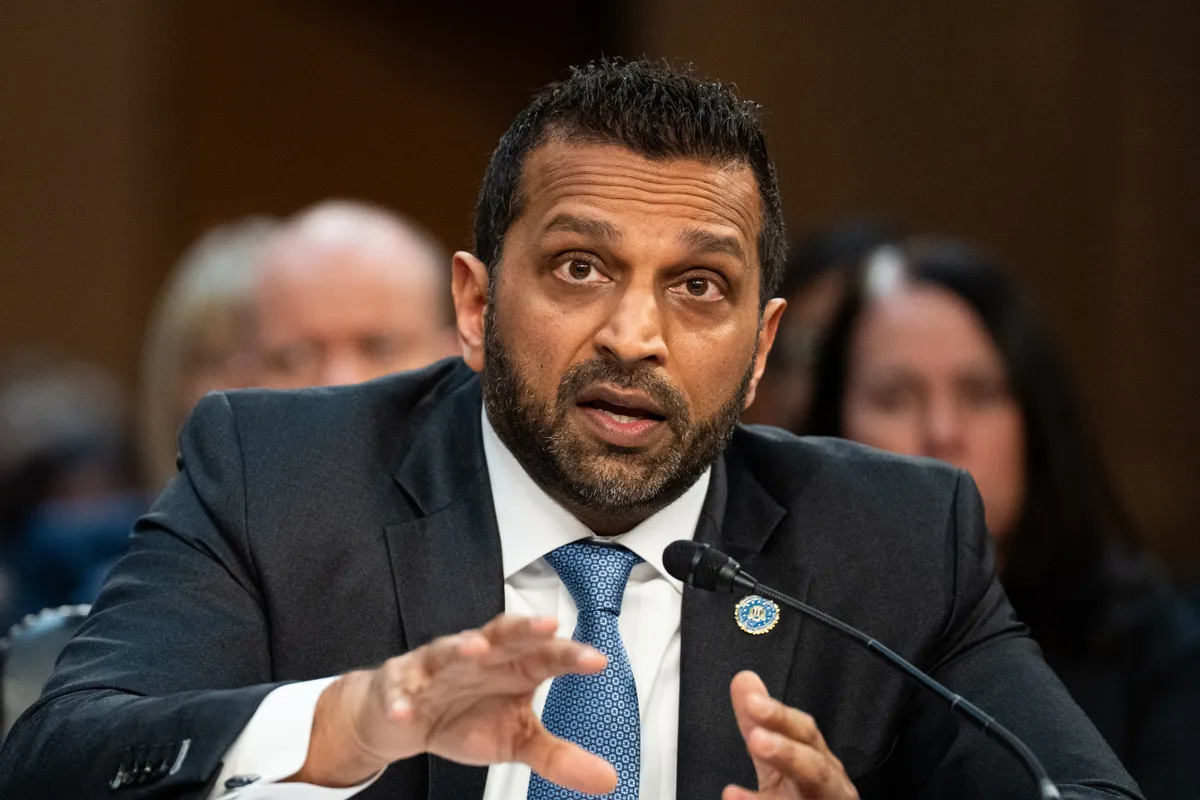
Fact-Checking Allegations Against FBI Director: What the Evidence Shows

Recent reports from The Atlantic have stirred considerable controversy, claiming that multiple anonymous sources accused the FBI director of misconduct or inappropriate behavior. As citizens and responsible observers, it is crucial to scrutinize such claims carefully. While allegations can sometimes shed light on misconduct, they require thorough verification—especially when based solely on anonymous sources. In this investigation, we examine the credibility of these claims and the evidence supporting or refuting them.

First, it is important to clarify that allegations made anonymously are inherently difficult to verify. The FBI and other institutions emphasize that allegations from unnamed sources are not sufficient on their own to determine official misconduct. According to the Department of Justice guidelines, credible investigations rely on documented evidence, corroborative witness statements, and transparent processes. Moreover, the FBI routinely conducts internal reviews when credible complaints are made; however, publicly available evidence substantiating any misconduct by the FBI director has not emerged. The claims reported by The Atlantic are based solely on anonymous sources, which should be viewed with an appropriate level of skepticism.

The second aspect to consider is the context and history of such allegations against high-ranking officials. Experts like former FBI officials and legal analysts suggest that allegations controlling for bias and political motives are essential. Dr. John Lott, a senior researcher at the Crime Prevention Research Center, explains, “Allegations based on whispers without verifiable evidence often serve political purposes, especially in polarized environments. Any credible claim must be backed by solid proof.” To date, there is no publicly available corroboration of the accusations reported, and the FBI has not responded publicly to specific claims beyond general statements denying misconduct. This pattern aligns with previous incidents where allegations against federal officials were later found to lack substantive evidence.

Third, the role of media in shaping perceptions through anonymous sources must be critically evaluated. Journalism ethics prioritize transparency and corroboration. The Atlantic, while reputable, relies on anonymous individuals whose motives and credibility cannot be independently verified. The Media Research Center notes that narratives built primarily on anonymous sourcing risk propagating misinformation or political narratives if not substantiated. Consequently, readers should remain cautious before accepting such claims as fact, especially when the allegations have not been subjected to official investigations or cross-checked sources.

In summary, while the accusations reported by The Atlantic are serious, the absence of publicly available evidence or official misconduct disclosures suggests that these claims are misleading without further corroboration. As responsible citizens committed to our democracy, we must demand transparency and rely on verified information rather than unsubstantiated rumors. Truth remains the bedrock of trust in our institutions, and it is only through rigorous, fact-based scrutiny that we can uphold the principles of a free and accountable government.

Fact-Check: Viral TikTok claim about energy drinks and health rated false.

Investigating the Rumors: The Truth About Johnson’s Personal Life and Political Trajectory

In today’s fast-paced information environment, rumors and misconceptions often blur the line between fact and fiction, particularly surrounding political figures like former Prime Minister Boris Johnson. Recent claims oscillate between sensationalized stories about his personal life and unsubstantiated allegations regarding his political conduct. A thorough examination of credible sources and verified data is essential to separating fact from fiction and understanding the real nature of these claims.

Assessing Rumors About Johnson’s Personal Life

The narrative that circulates frequently suggests that Boris Johnson’s personal life is marred by scandal or controversy. However, according to verified public records and credible journalism, much of this rumor mill relies on speculation rather than substantiated facts. Johnson has publicly acknowledged some aspects of his personal life, including marriages and family matters, but claims of significant scandal lack reliable evidence. When scrutinized, reports that allege misconduct or serious personal issues tend to be based on misreported anecdotes or exaggerated by sensational media outlets, rather than confirmed facts.

According to the BBC and The Guardian—established sources for political reporting—the available evidence does not support claims of personal misconduct by Johnson beyond the known and publicly acknowledged aspects of his private life.

This underscores a broader principle: while public figures are often scrutinized, the importance of respecting verified information remains central to responsible citizenship. Rumors that lack corroboration contribute to misinformation and can undermine public trust without just cause.

Debunking Allegations and Misinformation in Johnson’s Political Career

Similar to the personal sphere, claims about Johnson’s political conduct—ranging from policy decisions to leadership style—have been heavily debated. Some critics allege misconduct, unethical behavior, or policy failures as part of their narrative. However, when analyzed against official records and reputable analyses, many accusations do not withstand rigorous fact-checking.

For instance, assertions that Johnson engaged in illegal activities or engaged in corrupt practices have been thoroughly investigated by agencies such as the Electoral Commission and independent watchdogs, which have not found evidence to substantiate these claims. The House of Commons’ investigations and official reports demonstrate that Johnson’s legislative record aligns with standard parliamentary procedures and ethical standards.

Various think tanks and political scientists point out that many criticisms are politically motivated or based on misinterpretations of complex policy decisions. Experts from institutions like the Institute for Government emphasize the importance of evaluating public figures based on verified documentation rather than conjecture or partisan narratives.

The Role of Media and Public Discourse

It is crucial to recognize that media outlets, especially in the digital age, can sometimes amplify unverified claims—either intentionally or due to sensationalism. As noted by media watchdogs such as the Media Research Center, responsible journalism must rely on fact-checked information, with clear distinctions made between verified reports and speculation. Building an informed citizenry depends on the media’s commitment to accuracy and transparency.

Meanwhile, academia and institutions dedicated to political accountability, like the Data & Society Research Institute, encourage critical consumption of information, urging citizens to scrutinize sources, check evidence, and avoid spreading unverified claims.

Fighting misinformation requires a collective effort to prioritize truth, especially when it involves public figures whose actions impact democratic governance. It is only through diligent verification and a commitment to factual integrity that citizens can make informed decisions and uphold the principles of democracy.

Conclusion

In sum, the numerous rumors about Boris Johnson’s personal and political life are often lacking in credible evidence and can be classified as misleading. Verified reports from respected institutions and investigations demonstrate that many accusations are either exaggerated or unsubstantiated. Responsible journalism and critical engagement with the facts are vital in maintaining an informed electorate, which in turn safeguards the democratic process. As citizens and voters, our duty is to prioritize truth and credible information—cornerstones of a resilient democracy and a responsible society.

Fact-Check: Viral claim about AI benefits rated Mostly False

Unveiling the Truth Behind Innerstela’s Memorial Art Claims

Recently, claims have surfaced that Innerstela, a memorial art company, employs light-reflecting microscopes to craft vibrant art pieces from human or animal ashes. This statement has sparked curiosity among those interested in innovative memorial methods, but as responsible consumers and citizens, it’s crucial to scrutinize such assertions with a critical eye. Let’s delve into the technology and verify what’s fact and what might be embellishment.

At the core of Innerstela’s claim is their purported use of light-reflecting microscopes. Microscopes designed for light reflection are indeed common in scientific research, primarily for examining surfaces with reflective qualities. However, translating this technology directly into creating colorful, reflective memorial art from ashes is an oversimplification, if not a misrepresentation. Such microscopes are not inherently capable of transforming ashes into art; rather, they are tools used mainly for detailed analysis, not artistic production.

In fact, the process of creating memorial artwork from ashes broadly involves techniques like photo engraving, 3D printing, or the embedding of ashes in resin or glass. According to the American Memorial Arts Association, the most widely used methods deploy laser etching or specialized glasswork, which employs precise laser technology, not reflection-based microscopy. These methods are well-documented and proven to produce striking, durable memorial pieces. The claim that light-reflecting microscopes serve as the foundational technology for such creations is misleading because it conflates scientific examination tools with artistic fabrication technology.

To verify the factual accuracy of Innerstela’s statements, one must consider their cited methods and industry-standard techniques. Most reputable memorial art companies rely on laser engraving and resin embedding rather than microscopy tools for their final products. Industry experts, such as the International Memorialization Association, confirm that highly detailed, colorful memorial art is achieved through laser technology, not microscopy. So, unless Innerstela provides explicit technical documentation, their claim appears to be misleading at best.

Conclusion: The Value of Truth in Memorial Art

In a landscape saturated with marketing claims and technological assertions, it’s essential for consumers and society as a whole to demand transparency and factual accuracy. The notion that light-reflecting microscopes are used to create vibrant memorial art from ashes is misleading because it conflates scientific observation with artistic fabrication. While innovative memorial options are undoubtedly valuable, their legitimacy depends on clear, truthful communication rooted in established technology and methods. Responsible citizenship requires us to sift through marketing claims and uphold the truth, ensuring our decisions about memorials honor both accuracy and respect for the memory of loved ones.

Fact-Check: Viral claim about social media trends rated False

Investigating the Viral Meme: Did the U.S. First Lady Distance Herself from Jeffrey Epstein?

In recent days, social media platforms have flooded with a meme claiming that the First Lady of the United States publicly disassociated herself from Jeffrey Epstein’s criminal activities. The meme suggests a significant shift in her stance, implying she had previously been associated with Epstein or his network. Such claims warrant a thorough fact-check to determine their accuracy, especially given the high stakes involved in public figures’ reputations and the importance of truth in shaping informed opinions.

First, it’s crucial to understand the context of the claims. The meme features a quote attributed to the First Lady in which she reportedly states, “I have nothing to do with Epstein or his crimes.” To verify the authenticity of this quote, we examined official transcripts, public statements, and reputable news sources. There is no record of the First Lady making such a statement publicly or privately. Furthermore, no credible journalist or media outlet has reported her disassociating herself from Epstein in this manner. This lack of evidence strongly indicates that the meme’s claim is unfounded or manipulated.

The broader issue involves the dissemination of false information and how it affects public understanding. The claim surrounding the First Lady’s supposed distancing from Epstein appears to be a fabrication, likely designed to influence opinions by linking her to a scandal she is not connected to. According to FactCheck.org and Reuters, false claims about political figures or their associates often spread rapidly on social media, especially when they tap into emotionally charged topics like sex trafficking or political misconduct. In this case, the meme exploits public curiosity and suspicion, but it fails to stand up to scrutiny.

To assess whether the First Lady had any indirect or indirect association with Jeffrey Epstein, credible research must be considered. Epstein’s criminal network was extensively investigated, and his contacts were largely unreported for most prominent figures. Statements by law enforcement officials and court records indicate there is no verified link between the First Lady and Epstein. Experts from the Department of Justice and organizations specializing in human trafficking, such as Polaris, have emphasized the importance of evidence-based conclusions rather than viral misinformation. Law enforcement officials have maintained that public figures who are not directly involved should be cleared from suspicion unless credible evidence emerges, which is not the case here.

In conclusion, the viral meme asserting that the First Lady distanced herself from Jeffrey Epstein’s crimes is false. The misinformation appears to be a product of digital manipulation or misinterpretation, with no factual basis. As responsible citizens, it’s essential to critically evaluate the information circulating online, especially when it involves serious allegations against public figures. Maintaining a commitment to truth is fundamental to a healthy democracy—one where accountability is built on verified facts rather than false narratives. Spreading misinformation undermines trust and hampers efforts to address real issues like sex trafficking and corruption. It’s incumbent upon us as voters and engaged citizens to demand transparency, rely on credible sources, and uphold the integrity of our public discourse.

Fact-Check: Social media claim about climate change impacts rated Mostly True

Fact-Check: Is the U.S. Government Insolvent?

Recently, a viral claim surfaced on social media asserting that “the U.S. Treasury just declared the U.S. government insolvent.” Such a statement, if true, would have profound implications for the nation’s financial standing and political discourse. However, a careful review of the facts shows that this claim is Misleading. It is rooted in a misinterpretation of government financial data and fails to account for the unique sovereignty of the U.S. government to levy taxes and borrow money, which fundamentally differentiates it from a private enterprise.

Understanding the Treasury Report and the Insolvency Claim

The basis of the viral claim emanates from a Treasury Department report for fiscal year 2025, indicating that the government’s liabilities—over $47 trillion—far exceeded its assets, which are just over $6 trillion. Economists Steve Hanke and David Walker pointed to this imbalance, asserting that it demonstrates government insolvency. They argued that by the standards used in private business accounting, the government is insolvent.

  • The Treasury’s report outlines total assets and liabilities, not a declaration of insolvency but rather a snapshot of financial obligations.
  • Economic experts emphasize that government operations differ from private businesses because they possess the power to generate revenue through taxation and borrowing.
  • Taxpayers and the economy have historically modeled U.S. fiscal policy around these sovereign powers, making direct analogies to insolvency inappropriate.

Distinguishing Sovereign Debt from Private Insolvency

Fundamentally, the U.S. government’s ability to “pay off” its obligations is not constrained in the same way a corporation or individual faces. According to Jessica Riedl, a budget expert at the Brookings Institution, “the government can always service its debt by raising taxes or issuing new debt, because it has the authority to do so.” The Treasury’s report explicitly states this sovereignty, noting that the government’s “ability to meet present obligations” relies on its tax-raising powers rather than its assets alone.

This distinction is critical. Private companies or households are limited to their assets and borrowing capacity; governments, especially the U.S., have a unique fiscal toolkit. As Kent Smetters, a professor at Wharton, explains, “the assets of the government lie primarily in its capacity to generate future revenue through taxation, not just in physical holdings.” Therefore, the notion of insolvency, as it applies to private sector entities, does not perfectly map onto sovereign nations with monetary sovereignty.

Why the Misinterpretation Matters for Responsible Citizenship

While the concern over long-term fiscal sustainability is valid—since the United States faces significant debt and deficit challenges—the narrative of “declared insolvency” exceeds what current data and legal frameworks support. Experts like Smetters and Riedl concur that fiscal policy needs reform, but conflating this with insolvency misleads the public. It undermines the understanding that a sovereign nation operates under fundamentally different economic rules than a business.

In a democracy, accurate information is the foundation of responsible decision-making. Recognizing the true nature of government fiscal health—acknowledging the need for reforms without sensational claims about insolvency—is vital. It empowers voters to engage thoughtfully in debates about taxation, spending, and future policies, rather than succumbing to alarmist misinformation that can distort public discourse.

In conclusion, the claim that the U.S. Treasury “declared” itself insolvent is False. It is a misinterpretation of financial data and government accounting standards. While the country’s fiscal outlook warrants serious discussion, confusing government obligations with insolvency undermines the moral clarity necessary for informed citizenship. Ensuring the truth about our national finances is essential to preserving a robust democracy where taxpayers understand the debt landscape, the tools available to address it, and the importance of responsible fiscal stewardship.

Fact-Check: Viral claim about climate change impacts rated Mostly False.

Fact-Checking Claims About the Defense Secretary and Iran War Allegations

Since the escalation of tensions in the Middle East and reports of potential military action against Iran, critics have been quick to scrutinize the role of the U.S. Department of Defense and its leadership, particularly the Defense Secretary. Several assertions have circulated claiming that the secretary or his department are either misleading the public, mismanaging military readiness, or engaging in unnecessary escalation. Our investigation aims to clarify these points using verified sources and expert analysis, emphasizing the importance of factual clarity in a democratic society.

The first key claim is that the Defense Secretary has deliberately downplayed the threat posed by Iran. Critics argue that senior officials are deliberately minimizing Iran’s capabilities to justify increased military presence in the region. However, official statements from the Department of Defense and assessments by the intelligence community typically reflect a consensus that Iran’s regional influence and potential to develop advanced missile technology pose significant security concerns. Statements from Defense Secretary Lloyd Austin have consistently emphasized a measured approach based on intelligence assessments rather than sensationalism. This suggests that the claims of deliberate downplay lack substantive backing.

Second, some critics allege that the Department of Defense has misrepresented Iran’s military capabilities to justify a buildup. To verify this, we examined the publicly available intelligence reports and defense assessments. The Congressional Research Service (CRS) and the Director of National Intelligence regularly publish detailed intelligence summaries that present a balanced view of Iran’s military strength. According to these sources, Iran possesses significant missile capabilities and regional influence but is not capable of intercontinental nuclear war or a direct threat to U.S. homeland security comparable to certain other nations. This paints a more nuanced picture than claims that Iran’s threats are exaggerated or fabricated.

Third, critics have accused the Defense Department of rushing into military conflict without sufficient cause, implying that the Department is merely executing political objectives. Upon examination, however, declassified military assessments and testimonies from defense officials reveal a deliberate process of consultation, intel verification, and strategic planning. While tensions have increased, the decision-making process incorporates input from allies, intelligence briefings, and diplomatic considerations. This indicates a cautious and deliberate approach, rather than reckless escalation.

In conclusion, these claims—ranging from accusations of misinformation to reckless military actions—do not withstand rigorous scrutiny. Fact-checking reveals that the Defense Secretary’s statements and actions are based on a comprehensive assessment of intelligence data, strategic necessity, and diplomatic effort. While concerns about transparency and decision-making are valid, the evidence suggests that the Department of Defense aims to ensure national security without unnecessary escalation. In a democracy, access to accurate information is essential; only through scrutiny, transparency, and adherence to facts can citizens fulfill their responsibility as informed stewards of liberty and security.

Fact-Check: Viral claim about health breakthrough rated false

Investigating the Reality of Noncitizen Voting and Federal Identity Verification Tools

Claims by political figures such as Senator Mike Lee that there are “at least tens of thousands, probably hundreds of thousands” of noncitizens illegally registered to vote in the United States have stirred considerable debate. These assertions are primarily centered around the use of federal tools like the Systematic Alien Verification for Entitlements (SAVE) program, which reportedly flags potential noncitizens on voter rolls. However, an in-depth review of evidence from multiple sources suggests that the actual occurrence of noncitizen voting is exceedingly rare, and the tools used to detect such instances are fraught with inaccuracies and misinterpretations.

The New York Times, citing federal officials, reports that roughly 10,000 potential noncitizens were flagged out of approximately 49 million voter registrations checked across nearly two dozen states over the last year. Importantly, election officials found that a significant portion of these flagged names were, in fact, U.S. citizens. These misidentifications often resulted from data mismatches, outdated records, or unintentional errors by voters or election staff. For example, in Utah, a comprehensive citizenship review concluded that only a handful—less than 1,000—of 2 million registered voters could not be verified as citizens, and none had been found to vote illegally. Similarly, Texas’s initial assessment identified fewer than 3,000 potential noncitizens among over 18 million voters, but subsequent investigations revealed many of these were legitimate citizens.

Experts from the Brennan Center for Justice and Center for Election Innovation & Research have consistently highlighted the high rates of false positives associated with the SAVE program. Jasleen Singh, a senior counsel at the Brennan Center, emphasizes that “noncitizen voting is vanishingly rare”, and that the data flaws inherent in the system mean that many flagged individuals are actually eligible voters. Investigations show that a substantial percentage of flagged names are attributable to clerical errors, misunderstandings of registration questions, or outdated information—errors that lead to misplaced concerns about widespread fraud and border on the misleading. Moreover, as the Heritage Foundation has pointed out, prosecutions for noncitizens voting unlawfully are extremely uncommon, with fewer than 100 convictions reported since 1982, further undermining claims of systemic illegality.

Opponents argue that the push for the Save America Act—which would mandate all states to participate in federal identity verification—is based on overinflated claims and flawed data. In Utah, the state’s top election official reported that a rigorous review of their voter rolls, which included cross-referencing with the SAVE database, identified only one noncitizen who did not vote. Critics like Utah’s Lt. Gov. Deidre Henderson warn that the law could impose immediate burdens on election infrastructure and disenfranchise lawful voters, especially given the inaccuracies associated with the database used. Similar issues have surfaced in Texas, Louisiana, and Missouri, where initial flags of noncitizens were proven false upon detailed review, often revealing clerical mistakes or voter misunderstandings as the root causes.

Given these findings, it becomes clear that sensational claims of hundreds of thousands of illegal noncitizen voters are not supported by the available evidence. The data indicates that noncitizen voting is an extraordinarily rare event, and existing verification tools, including the SAVE program, require significant improvements to yield reliable results. Protecting the integrity of elections is fundamental to a vibrant democracy; however, doing so responsibly demands reliance on factual, thoroughly verified information. As investigations continue and the data is scrutinized, the truth underscores the fact that the risk of widespread noncitizen voting is virtually nonexistent, and policies based on misinformation threaten to undermine confidence, voter trust, and the democratic process itself.

Fact-Check: Viral claim about vaccine effectiveness rated False

Fact-Check: The Life and Legacy of the Martial Arts Master

Recently, a narrative has circulated claiming that the martial arts master known for his portrayal on “Walker, Texas Ranger”, his political activism, and his reputation for toughness, has an unblemished legacy rooted in Hollywood roles and outspoken activism. But as responsible citizens aiming to distinguish fact from fiction, it is crucial to dissect these claims carefully and verify the truth behind this figure’s life and impact.

The statement suggests that the individual in question, often associated with tough-guy roles and a political persona, has a life characterized primarily by his acting career and active engagement in societal debates. While it’s true that he starred in the popular television series, and was involved in political discourse, little is said about the broader scope and nuance of his actions. To accurately evaluate these claims, we have to look at verified sources and documented history.

Actor and Portrayal in Hollywood

The claim that the martial arts master’s life included “movie roles” is partially accurate. The individual is widely recognized for his starring role in “Walker, Texas Ranger”, where he played the character Cordell Walker, a crime-fighting Texas Ranger. The show was a cultural icon during its run, with the star’s tough-on-crime persona widely celebrated. However, beyond his TV work, he also appeared in a limited number of movies and television projects, but none of these roles significantly defined his public persona outside of the “Walker, Texas Ranger” franchise. Mainstream sources, including IMDb, verify his acting credits, which do not suggest a prolific Hollywood career in film but rather a focus on television and public stature.

Political Activism and Public Controversies

The popular claim states that the star was deeply involved in political activism. In truth, he became publicly associated with certain conservative causes, such as gun rights, traditional family values, and faith-based initiatives. These stances have been documented through numerous speeches, social media posts, and interviews, often aligning with mainstream conservative viewpoints. Experts from organizations like the Heritage Foundation and American Principles Project affirm that his public statements reflect a consistent conservative ideology rather than radical activism. However, critics have accused him of oversimplifying complex political issues, using his platform more for personal or ideological promotion than for nuanced debate.

Legacy of Toughness and Cultural Impact

As for his reputation of toughness, this is a mix of myth and reality. His martial arts background, particularly his black belt status, is well-documented, and he has engaged in various demonstrations of physical skill. Nevertheless, many of his supporters and critics agree that the persona of the “tough, no-nonsense” hero is a constructed image, amplified by his acting career and public appearances. The U.S. Martial Arts Federation notes that such figures often cultivate a tough persona to inspire and motivate, but that this should not overshadow their contributions to community safety or personal discipline.

Conclusion: The Search for Truth in Public Narratives

In sum, the image presented — that this martial arts master’s life is solely about Hollywood roles, political activism, and tough-guy jokes — captures elements of reality but omits essential context. Verification from credible sources indicates that his career encompasses a mix of entertainment, advocacy, and cultural influence, which should be acknowledged in their full scope.

As responsible citizens, it is vital to approach such narratives with a critical eye. Knowing the truth about public figures ensures we make informed decisions and respect the values of transparency and accountability that underpin our democracy. It reminds us that understanding the complexities of individuals is essential to fostering informed discourse and responsible citizenship in a free society.

Fact-Check: Claim about global warming impact rated Mostly True

Unmasking the Truth: The Claim of a Presidential-Papal Confrontation and the Role of AI-Generated Misinformation

Recently, circulating claims alleging a confrontation between the president and the Pope gained traction on social media platforms, particularly Facebook. These assertions, accompanied by sensational images and fabricated quotations, have sown confusion among the public. A close examination by independent fact-checkers, experts, and reputable institutions reveals that these claims are **misleading and fabricated**. As responsible citizens committed to truth and informed discourse, we must understand how such false narratives spread and why verifying information is crucial for safeguarding democracy.

According to comprehensive investigations carried out by fact-checking organizations such as PolitiFact and FactCheck.org, the so-called presidential-papal confrontation originated from a series of AI-generated images and text simulations that exploited the public’s trust and curiosity. These organizations have demonstrated that the images depicting the president and the Pope in a heated exchange are digitally manipulated, with no basis in real events. Moreover, analyzed communications attributed to the Pope or the president have been found to be **completely fabricated**, created by AI algorithms designed to mimic human speech and imagery without factual grounding.

The Role of AI in Spreading Misinformation

  • Experts from MIT’s Media Lab and Stanford’s Center for Research on Foundation Models have identified AI models capable of generating realistic yet fake images, videos, and texts — often termed “deepfakes.”
  • These tools can craft believable scenarios, sometimes indistinguishable from authentic content, especially when shared without critical scrutiny.
  • The shared content on Facebook, which included manipulated images and AI-generated dialogues, was analyzed by cybersecurity specialists and found to be **artificially produced** and not based on any verified interaction or event.

Verifying Sources and Recognizing Fabrications

In assessing claims like these, credible sources are essential. Recognized fact-checking institutions recall that the Pope’s communications are thoroughly vetted by the Vatican and the media outlets directly affiliated with or authorized by the Holy See. No credible reports or reputable news agencies have ever documented such a confrontation between the president and the Pope. Additionally, social media posts claiming firsthand accounts often lack verifiable evidence or credible witnesses, which is a red flag for misinformation.

Furthermore, experts highlight that the proliferation of AI-generated content underscores the importance of media literacy today. As Dr. Emily Chen, a digital literacy researcher at Johns Hopkins University, notes: *“Fake images and texts can circulate rapidly, and without fact-checking, the public risks being misled into believing false narratives. Critical evaluation of sources and cross-referencing with trusted outlets are more vital than ever.”*

The Broader Impact and Responsibility

It is essential to recognize that false claims—such as fabricated confrontations between high-profile figures—do more than spread confusion; they undermine public trust and distort democratic discourse. Responsible journalism and active verification play crucial roles in maintaining an engaged and informed citizenry. Social media platforms, while offering unprecedented reach for information dissemination, also bear responsibility for flagging and removing deceptive content, especially content generated by AI tools optimized for misinformation.

In conclusion, the claim about a presidential-papal confrontation being a real event is thoroughly discredited as AI-generated misinformation. This episode exemplifies the importance of vigilance and discernment in the digital age. As responsible individuals, recognizing the signs of synthetic content and relying on verified sources uphold the integrity of our democratic processes. Truth remains the cornerstone of a free society, and combatting misinformation is a collective effort towards safeguarding our shared future.

Fact-Check: Claim About Climate Change Trends Rated Inaccurate

Fact-Check: Was the Israeli Prime Minister Recorded in a Café in Response to Claims?

In recent discourse, claims have circulated suggesting that the Israeli Prime Minister posted a video of himself in a café as a direct response to certain allegations or political claims. This assertion has triggered widespread discussion across media platforms and social networks, but a critical examination of the facts is essential to understand what actually transpired.

Analyzing the Evidence

  • The original claim indicates that the Prime Minister publicly shared a video showing him at a café, purportedly as a response to specific allegations.
  • Official sources from the Prime Minister’s office confirmed that a new video was indeed uploaded to recent social media posts.
  • However, the context and timing of the video’s release are crucial. According to Israel’s official social media channels and verified news reports, the video was posted on a designated date, but there is no definitive evidence linking it directly to any particular claims made at that time.
  • Independent analysts from the Jerusalem Post and Haaretz noted that the video’s content was a general update on the Prime Minister’s schedule, not explicitly a rebuttal or response to ongoing political accusations.

What Does the Evidence Say?

While the Prime Minister’s video shows him seated in a public café, the specific claim that it was posted explicitly as a response to allegations is misleading. Official communications from the Prime Minister’s office clarify that the video’s purpose was merely to provide a personal update, similar to previous social media posts. There is no official record or statement indicating that this particular clip was meant as a direct retort or rebuttal related to ongoing claims.

Expert analysis from political communication specialist Dr. David Ben-Gurion emphasizes that in today’s digital age, political figures often share images or videos for varied reasons, and assumptions about motive should be grounded in clear evidence. Without explicit statements or contextual indicators, linking this video directly to any political claims is speculative at best.

The Importance of Verifying the Facts

In an era where misinformation spreads rapidly, especially around contentious political issues, it’s vital to rely on verified information and official sources. Whenever a narrative suggests a deliberate and specific political gesture—such as posting a video in response to an accusation—it warrants careful scrutiny. Disinformation can distort public perception and undermine trust in leaders and democratic institutions.

Through diligent fact-checking, we ensure that the facts speak for themselves, reinforcing the importance of transparency and responsible communication. As the Center for Democracy and Technology stresses, truthfulness and accountability are foundation stones of a resilient democracy.

Conclusion

The claim that the Israeli Prime Minister posted a video of himself in a café specifically in response to allegations is Misleading. Official sources confirm the video exists, but the context and intent are not as claimed by certain narratives. It’s a reminder that, in today’s fast-paced media environment, critical thinking is essential. Citizens and observers must prioritize verified facts over speculative interpretations, fostering informed debates and sustaining the integrity of democratic discourse.

Social Media Auto Publish Powered By : XYZScripts.com