Matox News

Truth Over Trends, always!

Israel receives alleged coffin claimed to hold Gaza hostage's body—Hamas stirs tensions
Israel receives alleged coffin claimed to hold Gaza hostage’s body—Hamas stirs tensions

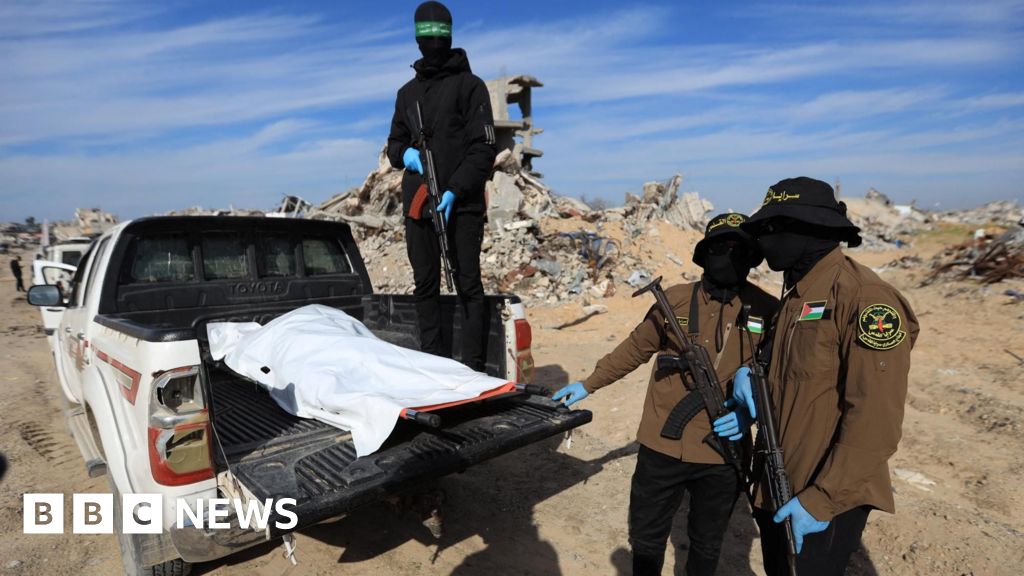
The ongoing crisis in Gaza has once again underscored the complex and deeply entwined web of geopolitical conflicts shaping the modern Middle East. Recent developments reveal a fragile détente coupled with profound human tragedy. Israel has indeed received a coffin via the Red Cross containing the remains of one of the last two Israeli hostages held in Gaza, as confirmed by the Israeli prime minister’s office. This exchange demonstrates both the humanitarian toll and the diplomatic jostling that define this latest chapter of the longstanding conflict. Notably, alongside the reported body, the Israeli authorities will transfer the remains to their National Institute of Forensic Medicine in Tel Aviv for identifications, an essential step in the ongoing negotiations and for future accountability.

Meanwhile, the Palestinian Islamic Jihad (PIJ) announced the discovery of a hostage’s body in northern Gaza hours prior to the handover, further complicating perceptions of progress and cooperation. The situation remains tense, with Israel accusing Hamas of intentionally delaying the return of the remaining bodies, while the latter claims the bodies are simply buried under rubble—highlighting the logistical and strategic struggles on both sides. The two identified victims—Ran Gvili, a 24-year-old Israeli police officer, and Suthisak Rintalak, a 43-year-old Thai agricultural worker—were killed during the attack on southern Israel on 7 October 2023, and their bodies were taken into Gaza’s chaos. This painful exchange exemplifies the wider human cost of the escalation, which has spurred international demand for a resolution that seems increasingly distant amid ongoing hostilities.

The broader US-brokered ceasefire initiated on 10 October aimed to secure the return of all hostage remains and those still held in Gaza, but progress has been slow. The initial agreement called for the release of 20 living Israeli hostages and the repatriation of 28 deceased Israeli and foreign nationals—a promise that, while partially fulfilled, has been overshadowed by delays and accusations. So far, 23 bodies of Israeli victims and three foreign hostages—Thai, Nepalese, and Tanzanian—have been recovered, but many remain unaccounted for. The exchange of bodies for Palestinian remains is a stark reminder of how fragile hope is in a conflict that has claimed over 70,100 lives, as reported by Hamas’s health ministry. Israel maintains that Hamas’s reluctance has bolstered accusations of deliberate obstruction, a claim that fuels the international community’s concerns and complicates efforts to advance President Donald Trump’s second phase Gaza peace plan, which includes governance reforms, troop withdrawals, and disarmament initiatives.

As the conflict inexorably shapes the geopolitical landscape, global powers and analysts are left to interpret the likely repercussions. The failures and delays in repatriations serve as a de facto reflection of the larger political deadlock—an impasse that threatens to ignite further instability in a region already marked by profound divisions. The ongoing tensions are not merely about the immediate humanitarian suffering but also about strategic influence, military power, and the ideological clash between forces vying for dominance in a crucial geopolitical corridor. This unresolved crisis continues to write itself into history, leaving a path of unresolved grievances and unhealed wounds for future generations. It is a poignant reminder that, amid the chaos and bloodshed, the weight of history remains heavy, its next chapters still unwritten but undeniably influenced by every decision made today.
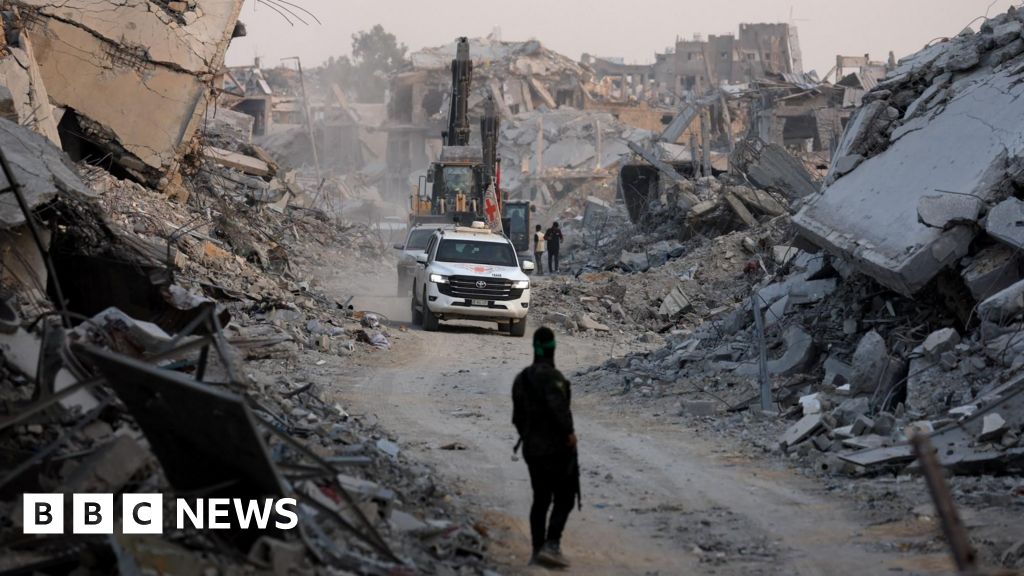
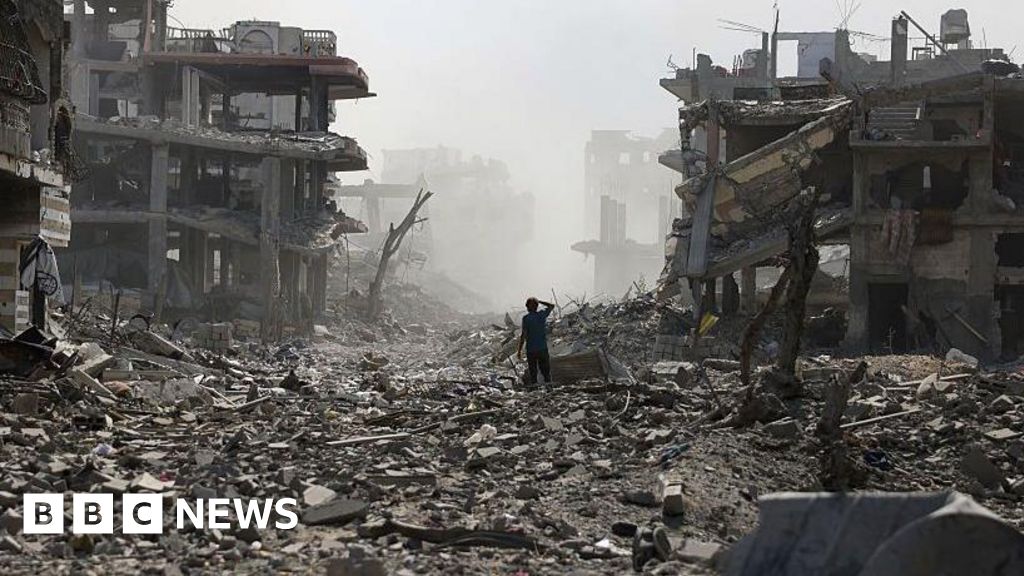
Israel receives purported Hamas coffin with Gaza hostage's body, says group
Israel receives purported Hamas coffin with Gaza hostage’s body, says group

The ongoing conflict between Israel and Hamas has entered a new, unsettling chapter as recent developments reveal the grim reality of war’s toll on human lives and geopolitical stability. Reports confirm that Israel has received a coffin via the Red Cross, ostensibly containing the remains of a hostage believed to be deceased, according to the Israeli prime minister’s office. This development underscores the fragile progress—or lack thereof—in the broader context of the ceasefire agreement mediated by the United States, which aimed to de-escalate the violent escalation that began with Hamas’s brutal attack on Israel in early October. The transfer of remains to Tel Aviv’s National Centre of Forensic Medicine signifies an ongoing quest for accountability amid an environment riddled with mistrust and political motives that complicate recovery efforts.

Hamas’s military wing claimed to have recovered the body of an Israeli soldier in Gaza’s eastern Shejaiya neighborhood—an area still under __territorial control of Israeli forces__. Israel, on its part, accuses Hamas of intentionally delaying the return of hostages, both dead and alive, despite commitments made during the US-brokered ceasefire. The agreement stipulated that Hamas would release 20 remaining hostages and return 28 others within 72 hours—a promise that remains unfulfilled, fuelling accusations of bad faith. The complex negotiations reflect how these diplomatic efforts are deeply intertwined with the legacy of ongoing conflict, where each side contends over images of humanity and the perceptions of moral responsibility.

While Israel successfully secured the release of all its civilian hostages on 13 October in exchange for 250 Palestinian prisoners and 1,718 detainees in Gaza, the situation remains volatile. Israel has also handed over the bodies of 270 Palestinians, including those of two foreign hostages—one from Thailand and another from Nepal—in a grim exchange that highlights the human cost of this entrenched confrontation. The death toll on Gaza’s side exceeds 68,800, according to Gaza’s Hamas-run health ministry, underscoring the catastrophic scale of the ongoing military campaign. Historians and analysts warn that these levels of casualties could irrevocably shift regional dynamics, sowing deep-seated resentment that might seep into generations.

In this chaotic mosaic of international crisis, the geopolitical impact is clear: the conflict’s escalation threatens to destabilize broader regional alliances, challenge global diplomatic efforts, and threaten the fragile balance of Middle Eastern peace. Israel’s military actions have provoked condemnation but also garnered support from key allies, reaffirming its defensive stance. Conversely, Hamas’s rhetoric continues to galvanize its supporters, asserting that their actions are acts of resistance against occupation and oppression. As military strikes ripple into northern Gaza, with reports of civilians killed in areas like Jabalia, the world witnesses the horrifying human cost of unresolved conflicts that have persisted for decades. In the shadow of this unfolding tragedy, international observers ponder whether the tide of chaos can be stemmed, or if this chapter will become only the latest in a long and tragic saga of regional destabilization. The pages of history are still being written, and the world holds its breath before the inevitable next act of this enduring conflict.

Israel receives body claimed by Hamas as Gaza hostage

The ongoing conflict in Gaza has once again thrust the volatile Middle East into the global spotlight, revealing the profound impact of international decisions on regional stability and societal futures. Recent reports confirm that Israel has received a coffin through the Red Cross reportedly containing the remains of a deceased hostage held by Hamas. This exchange, while seemingly a small gesture amid ongoing violence, symbolizes the complex and deeply entrenched struggle between Israel and Palestinian factions—a struggle that continues to shape geopolitical realities for neighboring nations and global actors alike.

According to official statements, the coffin will soon be transported to Israel for DNA testing, aiming to identify the remains conclusively. This development has elevated tensions, with Israel accusing Hamas of violating the ceasefire deal by withholding the bodies of all hostages, a charge denied by Hamas, which insists it is committed to the agreement brokered by the US, Egypt, Qatar, and Turkey. These diplomatic efforts, fragile as they are, underscore the international community’s desperate attempt to manage and de-escalate a conflict that has already devastated more than 68,000 lives, according to Hamas’s health ministry, in what some analysts describe as a modern-day catastrophe with historic consequences.

  • The recent exchange of hostages and remains—where 20 living hostages were released for hundreds of Palestinian prisoners—highlight the brutal human toll and the political leverage wielded by both sides.
  • The limited progress in recovering and identifying remains reflects complications rooted in the terrain alteration caused by recent military campaigns, complicating search efforts and fueling accusations of inaction and betrayal.
  • Critics, including family representatives and international observers, warn that the failure to fully resolve hostage issues risks further destabilization, threatening to escalate into broader regional conflict and undermining peace negotiations.

As historians and analysts scrutinize this latest chapter, they warn of a dangerous pattern: each act of violence and each diplomatic setback solidifies the narrative of a society caught in cycles of retaliation, spawning a political environment where the possibility of lasting peace remains elusive. Gaza and its people stand at the heart of this geopolitical storm, their future dictated by decisions made in distant capitals and influenced by a mix of strategic interests, ideological divides, and the persistent desire for sovereignty and security. The international community, meanwhile, faces mounting questions about its role and effectiveness—whether as mediators or passive spectators—amidst the unfolding tragedy.

Looking ahead, the specter of unresolved hostage issues and ongoing violence leaves the region at a perilous crossroads. The fragile ceasefire teeters on the brink of collapse, with each side accusing the other of breaches and violations. Whether the current diplomatic efforts can forge a meaningful path toward peace remains to be seen, but one thing is clear: this is a chapter in history where the choices made today will resonate for generations, shaping the geopolitical fabric of the Middle East and the global order at large. The weight of political miscalculation and human suffering hangs heavy, as the world watches a conflict where the stakes extend beyond borders—into the core of what it means for nations and societies to find justice amid chaos.

Social Media Auto Publish Powered By : XYZScripts.com



