Matox News

Truth Over Trends, always!

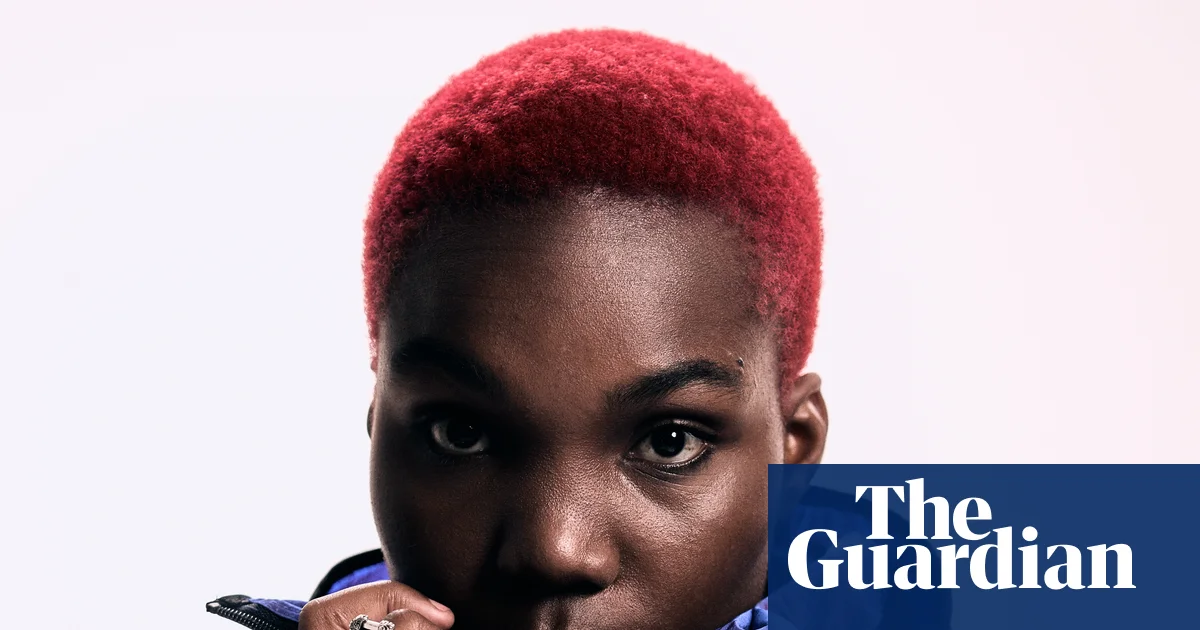
Arlo Parks Reflects on the Absence of Late-Night Conversations in Smoke-Filled Spaces: Embracing the Hedonistic Spirit of Her Bold New Album

In an era where the relentless pace of modern life threatens to drown out the echoes of tradition and the deeper currents of cultural memory, Arlo Parks emerges not merely as a pop phenomenon but as a testament to the enduring power of culture as the foundation of individual and societal identity. Her journey—from an early fascination with GarageBand confessions to commanding the stage at Glastonbury—illustrates a profound truth: that beneath the surface of popular music lies a dynamic narrative about who we are, where we come from, and where we are headed. As Ortega y Gasset once noted, “Culture is not an accessory but the very substance of society”; Parks’s evolution exemplifies this, highlighting how contemporary artists continue to redefine and uphold this vital link through their works.

Throughout her career, Parks has shown an unwavering commitment to authenticity, intertwining her personal truths with a collective history of musical and cultural innovation. Her early releases, laced with references from Nick Cave to Erykah Badu, revealed a young artist unafraid of confronting the chaos of mental health struggles and romantic rejection—a mirror to the complexities of human existence. Yet, her rise is also emblematic of a broader cultural shift wherein the boundaries of societal acceptance are expanded, allowing voice to the queer community and those traditionally on the margins. Her embrace of electronic music and nightclub culture in her latest album, Ambiguous Desire, harks back to a collective quest for liberation in spaces that historically have served as sanctuaries for outsiders. Here, Parks’s work is not just entertainment but a reclaiming of cultural spaces—akin to what Tocqueville observed about America’s penchant for creating voluntary associations—as arenas where individual spirits find community, expression, and defiance against societal conformities.

Artistically, Parks embodies a necessary rebellion against superficiality, consciously distancing herself from the temptations of commercial success that often threaten to dilute genuine cultural expression. Her deliberate turn to the night-time in her latest album, capturing the euphoric surge of clubbing and rave culture, echoes Chesterton’s assertion that “art is the most beautiful of all lies,” in that it often reveals deeper truths about human longing and societal yearning. In her song Heaven, inspired by the transcendent moments of life and music, Parks taps into the eternal human pursuit: to find meaning and connection in fleeting moments. Her acknowledgment that she explores these realms not to adopt a persona but to understand herself—”who am I now?”—speaks to the philosophical inquiry that underpins genuine cultural expression: it is a mirror and a prophecy, reflecting our current realities while sketching the contours of future identities.

Ultimately, Parks’s narrative underscores a vital idea: that culture remains the living, breathing memory of our collective humanity and the prophetic voice guiding us forward. Whether through the revival of club culture or her unapologetic discussions of desire and queerness, she exemplifies an artist who recognizes that identity is both rooted in tradition and open to renewal. And as T.S. Eliot poignantly observed, “The future is always a certainty of the imagination.” In the poetic silence between her melodies and the vibrant chaos of her soundscapes lies the promise that culture, in all its forms, persists as humanity’s continuous conversation—an echo of the past and the whisper of what yet may be, shaping and being shaped by the new generations who dare to listen and create in the ever-unfolding mystery of existence.


Sydney Sweeney Reflects on US Box Office Setback for Boxing Film: “Art Isn’t Just About the Numbers”

In an era marked by an unsettling disconnect between social aspirations and cultural expressions, the recent box office failure of Christy, a biopic about trailblazing boxer Christy Martin, underscores a broader truth about the role of culture in shaping our collective identity. Sydney Sweeney’s earnest effort to spotlight a story of survivorhood, courage, and hope resonates with a timeless human truth: culture is both memory and prophecy of humanity. Just as Ortega y Gasset emphasized the importance of the vital spirit of a people in shaping their destiny, so too does the modern cultural apparatus reflect the underlying struggles and aspirations of society. Culture, in this way, becomes more than mere entertainment; it becomes the vessel through which we understand ourselves and envision our future.

The film, despite its mixed critical reception, endeavors to echo themes deeply rooted in societal values—resilience in the face of domestic violence, the rise from humble beginnings, and the fight for recognition in a male-dominated arena. Like the Romantic movement that sought to elevate individual heroism over the mechanical monotony of industrial progress, Sweeney’s portrayal of Christy Martin symbolizes the assertion of female agency in a societal landscape often reluctant to acknowledge and nurture it. The cultural critic G.K. Chesterton famously observed that “art, like faith, must be pitched on the level of men’s highest hopes”—a reminder that true art challenges society to aspire to nobler ideals. Even if Christy struggles at the box office, its impact persists as part of a larger cultural dialogue about values and the resilience of the human spirit.

Correspondingly, the struggle of adult-oriented dramas at the box office, such as Die, My Love and Deliver Me From Nowhere, reflects a shifting cultural landscape where escapism often trumps reflection. Yet, the perseverance of these stories on festival circuits and in critical circles reminds us of Tocqueville’s warning about an enduring American bedrock: a thirst for meaning and authenticity amidst the consumer-driven pursuits of modern life. Just as T.S. Eliot wrote of the old wisdom manifesting anew in poetry and tradition, contemporary artists and storytellers serve as the custodians of cultural memory, whispering through their works what society refuses to confront openly. They affirm that culture is a continual act of forging identity amid chaos, history, and hope.

As we stand in a moment where cultural production often appears transient, fleeting, or disconnected from the core values that define us, the poetic truth remains: culture is both memory—an archive of human experience—and prophecy—a blueprint of our possible future. The stories we tell, whether triumphant or tragic, are woven into the fabric of human destiny; they hint at what we cherish and what we fear. To heed this silent song is to recognize our shared role as both creators and custodians of our cultural legacy, forging continuity from the ashes of the past and pathways toward what is yet to come. In this delicate dance of memory and prophecy, culture finds its transcendent purpose: to be the voice of our highest aspirations and the echoes of our deepest truths, long after the lights have dimmed and the curtains fall.

Empowering Voices: Sarah McLachlan Reflects on Her Journey Against Traditional Roles in Music and Beyond

Sarah McLachlan, a name once synonymous with the vibrant, empowering movements of the 1990s music scene, finds herself contemplating her artistic identity after an 11-year hiatus from releasing original songs. In her own words, she pondered, “What do I have to say at this point in my life?” Such introspection reveals a broader cultural conversation regarding the implications of identity, privilege, and societal expectation on artistry. McLachlan’s emergence during an era marked by the rise of female singer-songwriters, including luminaries like Alanis Morissette and the Indigo Girls, made her more than just an artist; she was a cultural icon who challenged conventional narratives and reshaped our understanding of gender roles in music and beyond.

McLachlan’s legacy can be traced back to her founding of Lilith Fair, a revolutionary music festival convened to celebrate female musicians and dismantle the prevailing gender biases of the industry. In a time when radio stations claimed it was “too much” to have more than one female artist on the airwaves, McLachlan bravely organized a series of all-female concerts that blossomed into a nationwide phenomenon. This bold move not only defied societal expectations but also drew attention to the, at times, insidious sexism inherent in the music industry. As cultural critic Tocqueville once noted in reference to democratic values, it is often the undercurrents of social mores that shape a culture’s identity. McLachlan and her contemporaries exemplified the resilience of women standing against such currents.

In her recent works, McLachlan continues to grapple with the complexities of her position in society. Addressing contemporary issues through songs like “One in a Long Line,” she projects her concerns regarding the erosion of women’s rights onto a canvas that resonates with upcoming generations. Her emphasis on community and unity stands as a counterpoint to divisive political narratives. McLachlan aptly states, “It’s about the generations coming forward and what we’re creating for them and what the world’s going to look like.” This articulation of legacy and responsibility aligns with the notions laid down by Ortega y Gasset, who emphasized the importance of the individual’s role within the broader societal context. McLachlan serves as both a witness and a participant, a voice urging younger generations to assert their own narratives in a world rife with complexities.

Ultimately, the recent resurgence of McLachlan’s work not only highlights her evolution as an artist but underscores the vital connection between culture, identity, and societal values. A new documentary, Lilith Fair: Building a Mystery, re-examines the festival’s powerful legacy, portraying the joy and solidarity it fostered amidst a backdrop of cultural turbulence. The documentary serves as both a reminder of what has been accomplished and a clarion call for future generations to continue the fight for equality and representation. As McLachlan herself muses, “Is it just fear? Is it control?” Thereby, she reflects the philosophical quest for understanding the roots of cultural dynamics that perhaps stymie progress. In a world where art often mirrors society, McLachlan exemplifies the enduring power of culture to shape identity and forge collective memory—a lingering echo of the past that resonates with hopes for a more promising future.

The rich tapestry of McLachlan’s life and work illustrates that culture is more than mere entertainment; it is a vessel of memory and an architect of tomorrow’s identity. In her lyrics and public stances, we witness the echo of G.K. Chesterton’s assertion that “tradition means giving votes to our ancestors.” For McLachlan, the reverberations of the past fuel her ambition to craft a future defined not by constraints but by compassion and creativity. As we engage with her music, we are reminded that culture not only preserves our identities but also foretells the ever-evolving narrative of humanity—a narrative that is at once a reflection of who we have been and a prophecy of who we may yet become.

Social Media Auto Publish Powered By : XYZScripts.com



