
Matox News

Truth Over Trends, always!

New alliances reshape Nigeria’s political scene, youth watch closely

In a move poised to reshape Nigeria’s political landscape, Peter Obi and Rabiu Kwankwaso, two influential figures who finished third and fourth respectively in the most recent national elections, have announced their switch of political parties. This unexpected shift signals a new phase in Nigerian politics, reflecting both internal dynamics and broader geopolitical calculations at play. While the details of their decisions remain under close scrutiny, the ramifications ripple far beyond Nigeria’s borders, capturing the attention of analysts worldwide.

The decision by Obi, once a prominent presidential hopeful representing the Labor Party, to switch allegiance signals a reassessment of strategic alliances. Concurrently, Kwankwaso, a seasoned politician known for his influence in the northern regions, has joined a different political fold, emphasizing a shift in regional and national power balances. International observers suggest that these moves could be a response to internal party pressures, corruption allegations, or a quest to position themselves for future electoral contests. Such decisions often catalyze realignments in Nigeria’s complex political web, with subsequent impacts on policy directions, governance stability, and regional influence.

From a geopolitical impact perspective, these alterations in Nigeria’s political fabric are significant. Nigeria remains Africa’s largest economy and a crucial US and Chinese strategic partner. Political stability in Abuja directly influences regional security, economic prosperity, and diplomatic relations across West Africa. Recall that some analysts, including scholars like Dr. Chinyere Okoroafor from the University of Lagos, warn that internal party realignments can lead to power struggles and civil unrest if not managed carefully, especially within a nation as diverse and historically volatile as Nigeria. Furthermore, these party switches are being viewed as calculated moves within the Sino-American contest for influence, with Nigeria’s leadership choices impacting broader regional and international alignments.

  • The decision of Obi and Kwankwaso to leave their previous parties indicates a trend of realignment within Nigeria’s political elite, possibly foreshadowing a third wave of leadership change.
  • International organizations such as the United Nations and African Union are attentively monitoring developments, emphasizing the need for peaceful political transitions.
  • Historian and geopolitical analyst Prof. Adebayo Oluwafemi states that these party switches could either stabilize Nigeria by uniting fractured political factions or destabilize the fragile equilibrium if handled carelessly.

As Nigeria stands at this pivotal juncture, the decision of Obi and Kwankwaso to reconfigure their political paths will undoubtedly reverberate across the African continent and beyond. The choices made today are not merely about individual ambitions but will define the future trajectory of Nigeria’s democracy, influence, and stability for generations to come. The unfolding drama remains a stark reminder that history’s pen continues to write Nigeria’s complex narrative – a narrative where every political shift carries the weight of destiny and the hopes of millions.
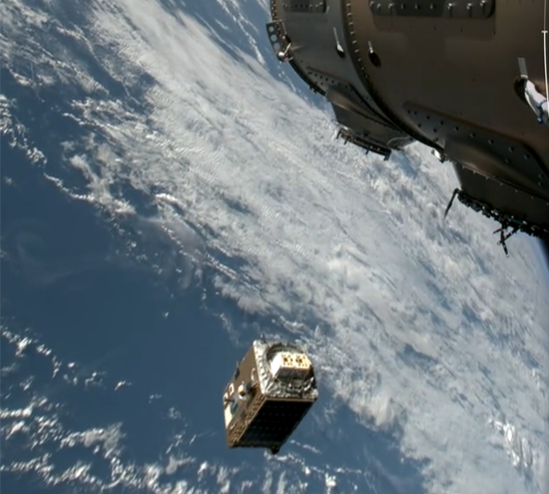
Starcloud scores $170M to launch space-based data centers and reshape the future of tech

Starcloud Rockets into the Future of Space Computing with $1.1 Billion Valuation

In a remarkable demonstration of disruptive innovation in space technology, Starcloud, a burgeoning space compute enterprise, has secured a significant $200 million in its latest funding round, pushing its valuation to an impressive $1.1 billion—making it one of the fastest startups to reach unicorn status post-Y Combinator graduation. Led by Benchmark and EQT Ventures, this funding underscores growing investor confidence in orbit-based data centers as Earth-bound infrastructure grapples with geopolitical and resource constraints.

This bold move toward orbital data centers is driven by the potential to revolutionize cloud computing, AI processing, and data analytics—integral components of the emerging AI economy. But it’s not without significant technological hurdles. Starcloud’s recent launch of its first satellite equipped with an Nvidia H100 GPU signals a pioneering step, demonstrating that powerful terrestrial GPUs can operate in space. The company is already preparing for the deployment of Starcloud 2, which will incorporate multiple GPUs—including an Nvidia Blackwell chip and an AWS server blade—along with a bitcoin mining computer to optimize cost-efficiency and operational capability.

CEO Philip Johnston is optimistic about commercial viability, estimating that once launch costs decline to around $500 per kilogram, orbital data centers could match terrestrial prices of approximately $.05 per kw/hour of power. However, major industry challenges remain, chiefly the delay in SpaceX’s Starship flight schedule, which he expects will not become operational until 2028 or 2029. Until then, smaller rockets like Falcon 9 will have to suffice, potentially obfuscating the dream of cost-effective orbital data centers for the foreseeable future. Yet, Johnston remains undeterred, emphasizing that even incremental progress in launch frequency will catalyze a paradigm shift, disrupting the established terrestrial computing model and paving the way for unprecedented business opportunities.

The strategic focus for Starcloud extends beyond hardware. Its dual business approach involves selling processing power to other spacecraft—one example being its collaboration with Capella Space—and eventually pulling workloads from terrestrial data centers when orbital computing reaches scale. This vision is reinforced by the exponential growth in GPU deployments in space, with estimates suggesting dozens of advanced GPUs already in orbit— a stark contrast to Nvidia’s nearly 4 million GPUs sold on Earth in 2025. Such data positions Starcloud as a game-changer, leveraging the advantages of proximity to data sources—especially for AI training and real-time analytics—while pioneering the integration of the most cutting-edge hardware into space.

The implications for the business landscape are profound. Industry observers, including Gartner analysts and MIT researchers, emphasize that disrupting current cloud paradigms with space-based infrastructure could unlock new dimensions of speed, security, and resilience. Yet, competition looms large, particularly from giants like Google’s Project Suncatcher, Aetherflux, and Nvidia’s space-grade GPU initiatives. The looming presence of SpaceX, with plans to orbit a million satellites for distributed compute, represents a formidable challenge—yet Johnston sees coexistence rather than competition, recognizing that in the race for orbital dominance, timing, innovation, and strategic agility will be key differentiators.

Looking ahead, the road to a fully operational orbital data economy is fraught with technical and logistical hurdles, but the momentum is undeniable. As industry veterans like Elon Musk and Peter Thiel highlight, the next decade will define who dominates this frontier. With each satellite launched and each breakthrough in space computing technology, the question is no longer if but when orbital data centers will become integral to our digital infrastructure. The urgency for established and emerging players alike is clear: adapt quickly, innovate relentlessly, and prepare for a future where space becomes the new backbone of global digital services and AI-driven industries.

Social Media Auto Publish Powered By : XYZScripts.com



