Matox News

Truth Over Trends, always!

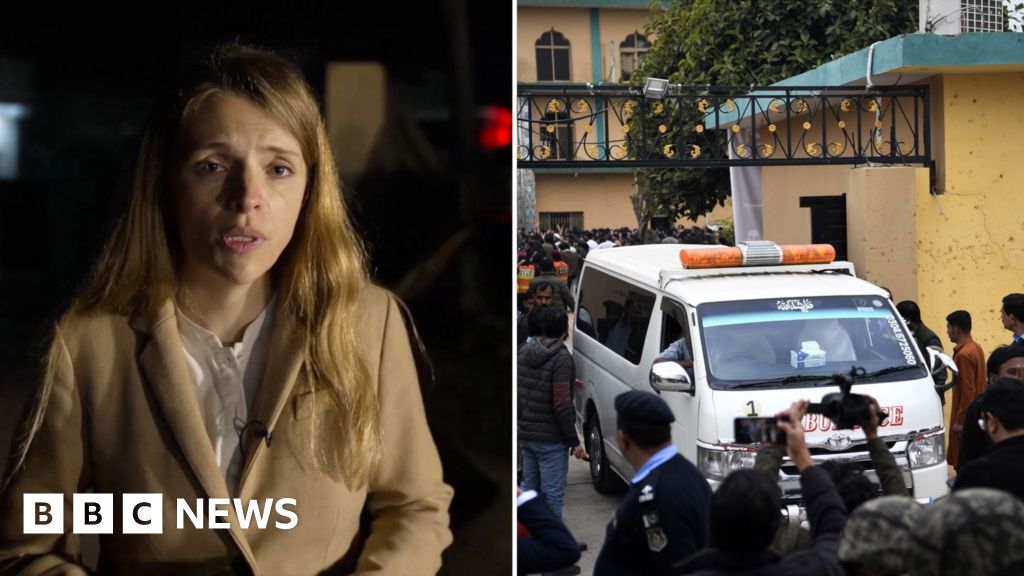
Pakistan Mosque Blast: Locations of the Attack Revealed

The recent suicide bombing at a Shia mosque in Islamabad, Pakistan, which claimed at least 31 lives and injured nearly 170 others, underscores a troubling escalation of sectarian violence that continues to destabilize the region. According to local authorities and eyewitness accounts, the blast was preceded by gunfire, indicating a coordinated attack aimed at targeting the religious minority. This incident has not only caused immediate humanitarian crises—prompting urgent hospital responses and blood donation appeals—but also reverberates with profound geopolitical implications that extend beyond Pakistan’s borders.

As international analysts scrutinize the attack, it draws attention to the broader regional sectarian tensions and extremist threats that plague South Asia. Experts such as regional security strategist Dr. Lisa Ferguson emphasize that such violence perpetuates a cycle of radicalization, often fueled by militant groups seeking to deepen sectarian divides. The Pakistani government’s response—condemning the attack and calling for justice—underscores its commitment to combating internal extremism. However, outside observers warn that without addressing underlying issues such as political marginalization and ideological radicalization, these incidents may become a recurring menace with the potential to destabilize neighboring countries, including Afghanistan and India, which are already wrestling with their own complex security challenges.

International organizations, including the United Nations, have issued statements condemning the attack, emphasizing the importance of protecting religious minorities and pursuing justice. Yet, the attack also highlights the fragile state of broader bilateral and regional relations. For instance, Pakistan’s neighbor, India, faces heightened concern over cross-border terrorist links, complicating diplomatic efforts toward peace and stability in South Asia. Simultaneously, China maintains economic and strategic interests in the region through initiatives like the Belt and Road, walking a tightrope between supporting Pakistan and managing regional instability. Meanwhile, United States policymakers are watching closely, evaluating how Pakistan’s internal security issues influence broader U.S. strategic objectives in Asia.

Historians and security analysts warn that this attack signifies a turning point in Pakistan’s ongoing struggle with extremism. According to noted geopolitical scholar Dr. Rajiv Malhotra, such acts of violence threaten to fracture societies and hinder efforts at reconciliation. The broader global narrative echoes these concerns: the rise of religious and ideological violence adheres to a dangerous pattern that tests the resilience of nations committed to democracy and pluralism. As the dust settles in Islamabad, the world must grapple with the realization that history is still unfolding, and that the outcomes of these tragic events will define regional stability for years to come. With the shadows of extremism lengthening across borders, the necessity for vigilant, coordinated international action has never been more apparent. The weight of history presses down—what course will the world choose amidst this chaos remains to be seen, but the stakes could not be higher.
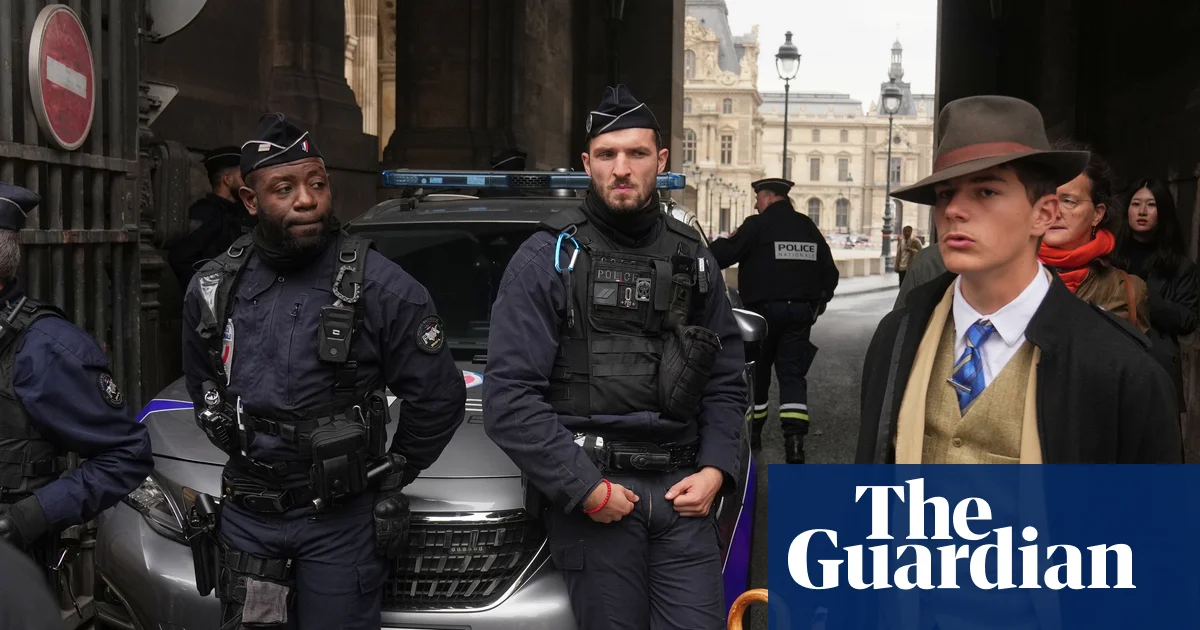
Meet ‘Fedora Man’: Dapper French Teen Revealed as Louvre Heist Hero in Viral Photo | France

In a striking manifestation of how digital imagery can shape global narratives, a 15-year-old French youth, Pedro Elias Garzon Delvaux, inadvertently became an international phenomenon through a single photograph. His image, captured by Associated Press photographer Thibault Camus amidst the chaos of the French crown jewel heist, captured the imagination of millions across the world. Clad in vintage fashion, including a fedora, Pedro’s unintended role in this modern-day mystery showcases how media, perception, and historical aesthetics converge into a powerful symbol that transcends national borders. This phenomenon underscores a key geopolitical impact: how cultural symbols and images can ignite transnational stories that influence public sentiment and societal outlooks.

  • Pedro, a lover of 20th-century history and classic detectives, was merely passing through when police barricades closed access to the Louvre. His coincidental presence in the frame turned him into an eerie chess piece in a worldwide narrative concerning art theft, national identity, and cultural heritage. The image sparked online debates on whether the “fedora man” was an AI fabrication or a true shadow figure of the underworld. Such narratives challenge perceptions of authenticity and the digital age’s influence on reality, with analysts from institutions like INTERPOL emphasizing the need for cautious verification amid rapid information dissemination.
  • The viral spread of his image, with over 5 million views and headlines across continents, demonstrates the power of visual storytelling in shaping public discourse. As international commentators dissect the implications, many note how image-driven narratives reflect a broader cultural shift: one where individual stories are magnified into symbols of societal anxieties or aspirations. In this case, Pedro’s vintage attire and mysterious aura evoke an era-long gone, yet their resonance in the digital age emphasizes how cultural memory is harnessed and repurposed in contemporary geopolitics.

Historians and analysts recognize this event as emblematic of a new era where images serve as potent flags in the ongoing battle for cultural influence. The incident highlights an ongoing phenomenon: the blending of historical aesthetics with modern storytelling, fueling debates about identity, authenticity, and the role of digital media in shaping perceptions. As European nations remain vigilant over their cultural treasures, the story of Pedro not only offers a glimpse into the power of visual imagery but also signals how global narratives about legality, art, and history are increasingly constructed through social media’s lens.

As the episode concludes with Pedro’s relaxed outlook—publicly waiting for film roles—one cannot ignore how this small story echoes larger themes in international relations and societal values. The innocence of a boy unwittingly caught in a global myth reminds us that, in this era, history is perpetually in the making, and every image carries the potential to reshape perceptions and influence global affairs. In the end, this story remains a testament to a critical turning point: the digital age’s capacity to transform humble moments into enduring symbols, shaping the course of history in unpredictable ways, with the weight of the future still counting down in the shadows of the past.

Local Teen Behind Viral 'Fedora Man' Image Revealed
Local Teen Behind Viral ‘Fedora Man’ Image Revealed

Paris, France—In a recent turn of events that has seized global attention, the Louvre Museum heist, which occurred over three weeks ago, continues to highlight underlying vulnerabilities in cultural protection and security. While investigators swiftly identified the perpetrators through DNA evidence, the mystery surrounding the appearance of the “fedora man” underscores broader issues of security, media influence, and societal narratives. The young man’s unintentional viral fame provides an insightful peek into how digital platforms are reshaping the perception of individual agency amid international crises.

The initial phase of the investigation uncovered significant lapses in security protocols at one of the world’s most iconic institutions. The French authorities admitted CCTV security was inadequate to prevent or effectively respond to the theft, exposing a stark reality about the often-overlooked perils facing cultural heritage sites. Such revelations serve as a stark warning to allied nations, underscoring the need for increased investment in security infrastructure amidst increasing global threats. According to analysts from INTERPOL, this incident sheds light on the transnational nature of such crimes, which can easily be fueled by organized networks operating across borders, further complicating law enforcement efforts worldwide.

Amidst the chaos, the enigmatic figure of the “fedora man”—a teenager from Rambouillet—captured the public’s imagination. His accidental viral fame, fueled by social media and traditional outlets like The New York Times, illuminates the unpredictable power of digital storytelling. His story reveals how isolated individuals, with no malicious intent, can illustrate larger societal patterns. Here, how decision-makers interpret and respond to such incidents carries profound geopolitical weight. The young man, inspired by fictional detectives, inadvertently became a symbol—whether of innocence or the unpredictability of modern media—raising questions about the narratives shaping international perceptions. Experts warn that these narratives can influence diplomatic relations and societal attitudes towards major cultural institutions and security policies.

Furthermore, international organizations and security experts emphasize the importance of prioritizing cultural preservation and public engagement. UNESCO, often called upon in situations involving global heritage, urges nations to foster stronger security frameworks that safeguard not only physical artifacts but also national pride. The incident demonstrates how a localized event can ripple across the geopolitical landscape, prompting debates on sovereignty, security, and the role of technology in shaping public consciousness. As history continues to unfold, the question remains: how will nations respond in strengthening their defenses while managing the narrative in a world increasingly driven by instant information and viral fame? The weight of history presses heavily upon the present, reminding the global community that every act, big or small, can echo through the corridors of international power, transforming local incidents into symbols of broader societal shifts.

Fang-tastic! Deutsche Börse Photography Prize Shortlist Revealed – A Visual Showcase for Young Creatives

In an era where technology relentlessly reshapes our perception of reality, the contemporary artistic landscape remains a vital sanctuary for culture’s role in defining identity, tradition, and societal values. This year’s shortlist for the prestigious Deutsche Börse Photography Prize, with its provocative blend of retro imagery manipulated by AI and urgent social commentary on women’s prisons, exemplifies the enduring power of art to reflect and critique the zeitgeist. As the critic G.K. Chesterton once observed, “the fundamental task of art is to set before us the truth of human existence in its most earnest guise.” The chosen works stand as a testament to the persistent dialogue between history, memory, and contemporary morality.

Historically, culture functions as a vessel for collective memory, a mirror held up to society that both preserves our roots and beckons us toward future horizons. Philosophers like Ortega y Gasset have emphasized that our “sense of reality is deeply rooted in the cultural narratives which weave our shared experience.” Today, this is evident in the innovative use of AI to revive and reinterpret visual histories, challenging notions of authenticity and artistic mastery. These manipulations, far from frivolous, serve as the digital extension of the human desire to grasp the intangible essence of history—an extension of our cultural memory that is both reconstructed and reimagined. This process echoes Tocqueville’s insights on democracy’s role in democratizing art and ideas—making the conversation accessible, urgent, and vital across societal divides.

The spotlight on the series examining women’s prisons underscores how art remains a crucial arena for societal critique, exposing the raw, often uncomfortable truths about justice, gender, and power structures. Such works become a form of cultural resistance, a means of asserting that tradition does not fade but evolves through confrontation and reflection. As T.S. Eliot remarked, “Our civilization is a participating beauty, not a static heritage.” These images challenge viewers to reconsider myths of progress and the true foundations of social cohesion. They serve as urgent reminders that culture must confront its shadows if it is to guide us toward authenticity and moral clarity.

In this light, the artistic acts of today—whether through digital renaissance or social examination—are akin to poetic prophecies, whispering that culture is not merely a reflection but a vital force shaping human destiny. As Chesterton envisioned, “We do not rest content with history; we live within it, and through our art, we anticipate its unfolding.” Just as ancient myths and ancestral stories codify the character of civilizations, modern images and narratives serve as a living scroll, inscribed with both memory and prophecy. The future of culture, therefore, lies in our capacity to remember bravely and to imagine boldly—both the stories we have inherited and those we dare to forge anew. In this continuous relay of human experience, culture emerges as the eternal guardian and visionary of mankind’s enduring quest for meaning, truth, and beauty.

Social Media Auto Publish Powered By : XYZScripts.com