Matox News

Truth Over Trends, always!

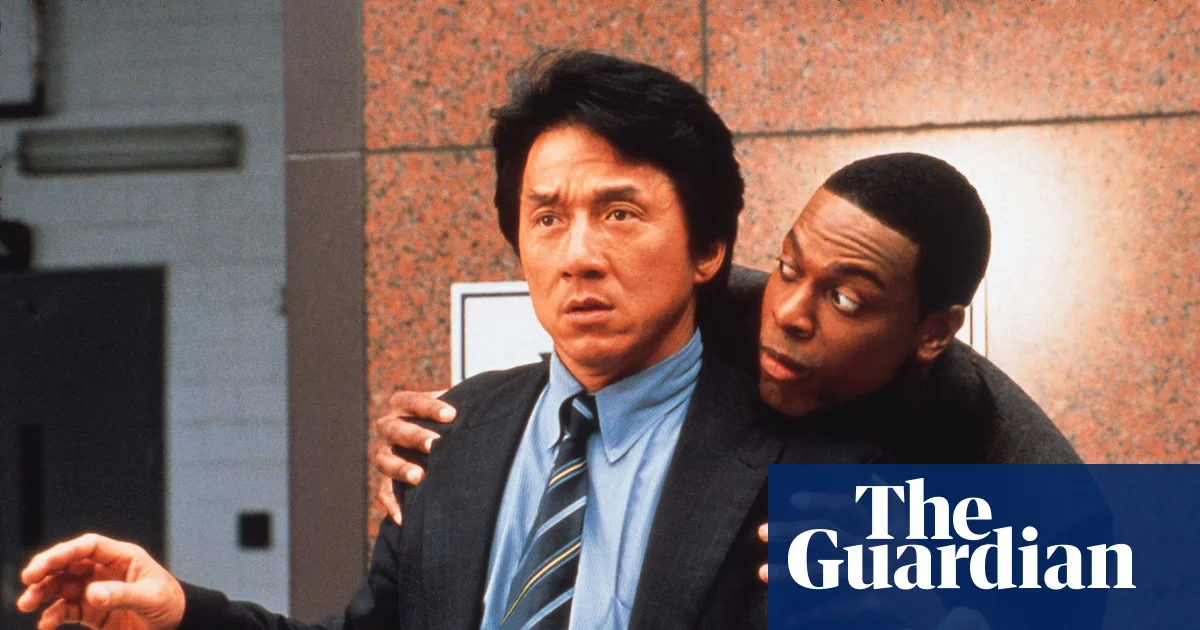
Which iconic franchise will Trump revive next? After reintroducing Rush Hour, the next move in action and adventure films for a new era

In the contemporary landscape, the seat of cultural authority—once occupied by visionaries, playwrights, and philosophers—appears increasingly to be wrested by figures whose influence extends into the very fabric of society’s entertainment and perception. The recent obsession of Donald Trump with controlling and dictating cultural narratives, from his overt meddling in the media to his audacious interference in Hollywood productions, reveals a broader, unsettling truth: culture is no longer merely the reflection of a society’s values but a tool for asserting dominance over its collective consciousness. This phenomenon harkens back to the age-old question of cultural sovereignty—who shapes the stories we tell ourselves about ourselves?—a question that has profound implications for our identity, traditions, and societal cohesion.

Trump’s explicit desire to influence film production—demanding sequels to Rush Hour and Bloodsport—may seem trivial on the surface, but it signifies a deeper cultural fever. As Ortega y Gasset observed, “Man is himself a cultural product, and his destiny is entwined with the stories he believes are true.” When a leader interferes in the artistic domain, he effectively attempts to rewrite that story, shaping a version of reality where popular culture becomes a vessel for political affirmation. His favoritism for cinéma that panders with simplistic violence and juvenile humor—films that lack profundity but promise comfort—reveals a preference for entertainment that reinforces superficial notions of strength and toughness, traits historically associated with national pride and resilience. Such cultural choices matter because, as Tocqueville pointed out, democratic societies risk losing their sense of tradition and purpose when their cultural narratives are reduced to franchises and spectacle rather than shared values and history.

  • Highlights of this cultural shift include:
  • The waning influence of classical storytelling in favor of blockbuster spectacle
  • The erosion of societal cohesion through the trivialization of art and history
  • The resurgence—and in some cases, the distortion—of traditional heroism in popular media

Indeed, as Chesterton famously defended, “a tradition may be defined as an extension of the memory of a people.” When leaders and media moguls distort or trivialize this memory, they risk creating a cultural landscape that is chaotic and unmoored. The philosopher T.S. Eliot once argued that our cultural renewal depends on reconnecting with our roots—our narratives of triumph, tragedy, and moral resolve. In this context, the spectacle of a president advocating for a second or third installment of Shanghai Noon or Bloodsport is emblematic not merely of bad taste, but of a cultural decay where the highest ideals of society are replaced by noise, noise that masquerades as entertainment. It is a reminder that true cultural authority requires the stewardship of tradition, not the whims of a populist’s fleeting fancy.

In the end, culture remains both the memory and the prophecy of humanity—an intricate weave of remembrance and hope, of the stories that sustain us and the visions that propel us forward. Our task is to recognize that the stories we tell define us; that in preserving our cultural memory, we forge the moral compass that guides us through uncertainty. Because, in the silent poetry of history and art, there echoes a truth as old as time: we are what we remember, and in what we cherish, we shape what we shall become.
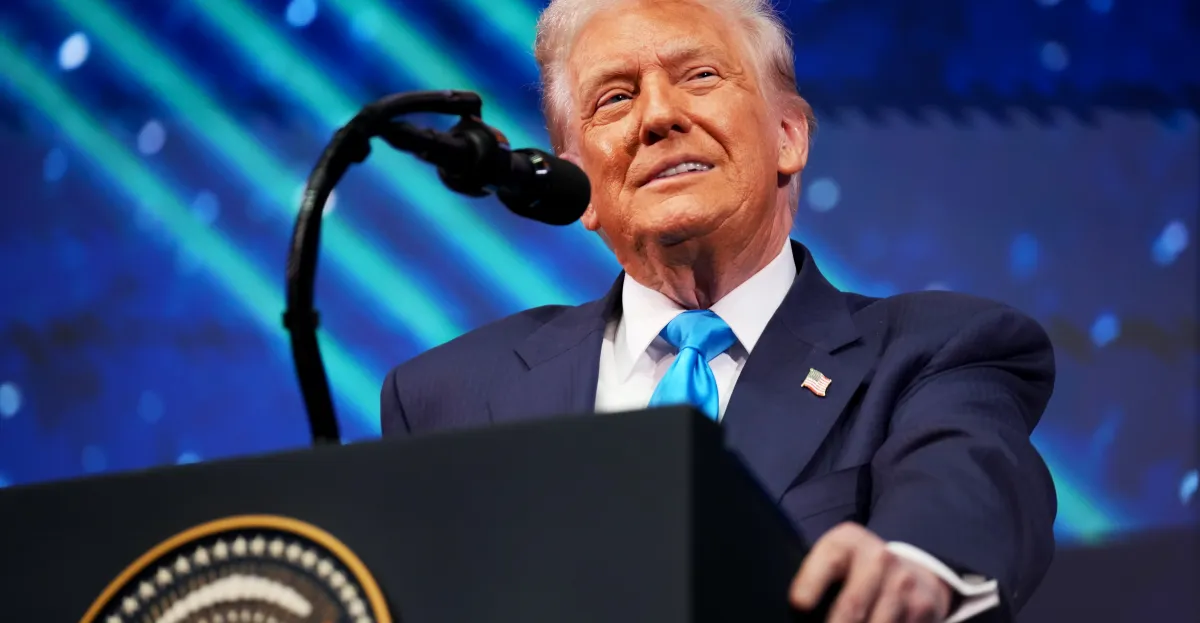
Trump vows to revive U.S. nuclear tests to boost national strength

President Trump’s Nuclear Posture Shift Signals Potential Disruption in Global Security and Tech Sectors

In a bold and controversial move, President Donald Trump has directed the Pentagon to resume testing nuclear weapons, citing the necessity to match other nations’ testing programs. This decision marks a significant departure from the longstanding post-Cold War nuclear testing moratorium, which has largely shaped global strategic stability over the past three decades. While few details have been disclosed, the announcement signals a possible new phase in military innovation, pushing the boundaries of nuclear capabilities and their associated tech ecosystems. The immediate implications could be profound, affecting international diplomacy, defense industries, and technological innovation in related sectors.

This move comes at a complex geopolitical juncture. Just before a high-stakes summit with China’s Xi Jinping, Trump’s statement appears to upend decades of American policy. Historically, the US maintained a strategic restraint on nuclear testing, aligning with global efforts for non-proliferation. However, Trump’s directive suggests a strategic pivot, possibly aimed at reasserting US military dominance amidst rising geopolitical tensions and global technological competition. But experts warn that such actions could destabilize existing treaties; the US, a signatory of the Comprehensive Nuclear-Test-Ban Treaty, has yet to ratify it. Meanwhile, Russia, which possesses the world’s largest nuclear stockpile, continues modernization efforts, injecting an element of disruption into the balance of global nuclear deterrence.

From an industry perspective, this escalation may act as a catalyst for innovation within the defense sector. Companies specializing in nuclear physics, materials science, and simulation technologies could see surges in demand. Emerging players in advanced warhead design and system delivery technologies might accelerate R&D investments or even disrupt existing supply chains. Yet, these innovations are fraught with ethical and regulatory challenges, complicating long-term business models. As analyst Peter Thiel might argue, disruption in high-stakes defense tech requires a careful balance between innovation, security, and international diplomacy.

The announcement also exposes the vulnerabilities of global non-proliferation efforts. With the US potentially resuming nuclear tests, other countries could follow suit, destabilizing the delicate international security architecture. This collapses the normative framework that discouraged nuclear tests for decades, and may incentivize rogue states or emerging powers to pursue clandestine programs. The ripple effect could further accelerate technological arms races, pushing industries toward more sophisticated satellite surveillance, advanced monitoring, and cyber capabilities—areas where innovation may be both a boon and a threat. As Gartner warns, the erosion of norms around nuclear testing could precipitate a broader disruption across defense and technology industries.

Looking ahead, this development underscores a pivotal juncture for global stability and technological advancement. The potential resumption of nuclear testing not only signifies a geopolitical gamble but also a catalyst for industry disruption in defense tech and international security. Fast-moving innovators and investors must now navigate this landscape with increased urgency, as the future of nuclear deterrence, international diplomacy, and technological progress hangs in a delicate balance. As authorities, companies, and nations grapple with these shifts, the imperative for strategic foresight becomes clear—those who proactively adapt to this new era of high-stakes innovation will be the ones to shape the trajectory of global security and technological dominance in the years to come.

Social Media Auto Publish Powered By : XYZScripts.com



