
Matox News

Truth Over Trends, always!

Gina Rinehart’s Hancock Prospecting pays rival family hundreds of millions in royalties—big win, some setbacks

Global Significance of Western Australian Mining Court Ruling: A Turning Point in Resource Rights

In a landmark decision that reverberates well beyond the borders of Australia, the recent judgment handed down by the Western Australian Supreme Court signals a profound shift in the enforcement of resource rights and contractual sovereignty. The ruling concerns the contentious Hope Downs iron ore project, a cornerstone of Western Australia’s mineral wealth, which has long been the subject of fierce legal battles between Gina Rinehart’s Hancock Prospecting and Wright Prospecting. By affirming that Hancock Prospecting must share its royalties with Wright Prospecting and dismissing claims to ownership of certain mining assets, the court has set a notable precedent in international resource law that impacts how resource-rich nations exercise sovereignty over their assets.

Geopolitical Impact of Resource Ownership Disputes

This case exemplifies the broader geopolitical stakes involved in resource rights, where the control of mineral wealth influences national security, economic leverage, and even regional stability. Historically, Western Australia and similar resource hubs have thrived through private-sector investments and legal frameworks that delineate rights clearly. Yet, rival factions within big business—often intertwined with political interests—seek to overturn these frameworks, which can unsettle foundations of sovereignty and investor confidence. International organizations, such as the International Monetary Fund and World Bank, track these legal uncertainties closely, recognizing their potential to ripple through global markets, especially as resource scarcity becomes an urgent issue.

Analysts argue that this ruling reinforces a pattern: legal clarity and firm contractual enforcement are essential for attracting foreign investment and maintaining the stability vital for economic growth. The decision effectively consolidates Hancock Prospecting’s rightful ownership of key mineral tenements, thereby shielding the project from future ambiguities. This development signals to international investors that even in complex legal disputes, the rule of law prevails, thus bolstering confidence in Australian resource governance. Conversely, these decisions also serve as a reminder to potential claimants that superficial disputes are unlikely to undermine established legal rights, reaffirming the importance of clear property rights in resource-rich nations.

How These Legal Outcomes Affect Societies and Nations

While on the surface, the case primarily revolves around lucrative royalties, the implications reach into how societies perceive justice and economic sovereignty. Gina Rinehart’s expansive influence, coupled with her company’s vast resource empire, underscores the role of private magnates in shaping a nation’s resource landscape. The court’s rejection of claims by John Hancock and others highlights a trend: national and corporate interests are increasingly intertwined, each vying to secure their share of the pie. Such legal battles often influence public perceptions about the fairness of resource distribution — a matter of national pride and economic security.

Importantly, the decision also affects local communities and employment, as stable ownership and predictable royalties sustain long-term development projects. The hope, as analysts suggest, is that this ruling will reinforce a climate of trust in Australia’s legal system, promoting swift resolution of future disputes and encouraging continued foreign investment. Nevertheless, critics warn that the growing concentration of resource ownership might marginalize smaller firms and local communities, a debate that exemplifies the ongoing struggle for equitable resource participation.

The Continued Unfolding of Resource Politics

As the dust settles on this high-stakes legal battle, the broader narrative of resource sovereignty remains unresolved. International observers and historians recognize that such cases directly influence the geopolitical chessboard. The United States and China, for instance, are watching closely, knowing that access to raw materials like iron ore, rare earths, and other strategic minerals will shape their economic and military capabilities in the decades to come. World power dynamics hinge not only on military might but also on control of vital supply chains.

In a world where resource scarcity and climate challenges threaten to reshape global partnerships, legal decisions like this serve as more than domestic victories—they are writing new chapters in the story of national sovereignty and geopolitical strategy. Western Australia’s courts have demonstrated that even amidst complex, long-standing disputes, the rule of law can serve as a stabilizing force. Yet, history warns: such victories are fleeting in the relentless tide of global resource competition — the true contest is only beginning, and the world is watching as the next chapter emerges from the fertile mines of the Australian outback, where the future of resource dominance is still being forged by the hand of justice.

Rival car-sharing firms eye London expansion after Zipcar’s UK withdrawal

London, historically known as a hub for innovation and progressive urban planning, now finds itself at a pivotal crossroads in the realm of sustainable mobility. Following the imminent closure of Zipcar’s UK operations—a move that signifies significant shifts in the shared economy landscape—the city’s transportation scene is witnessing a potential rebirth. Several emerging car-sharing companies are keenly eyeing the vacant market, signaling an intensified race to adapt and redefine urban mobility in one of Europe’s most bustling metropolises. This development underscores how international technological and corporate decisions ripple into local societies and economic structures.

Major players like Free2Move, owned by global automotive giant Stellantis, and Enterprise Car Club are actively assessing expansion opportunities, despite the complexities entailed. Free2Move has highlighted London’s advanced infrastructure for autonomous mobility as a key factor that could make the city especially attractive—an indication of how emerging technologies are becoming pivotal in urban transport strategies. However, analysts point out that regulatory fragmentation among London’s 33 local authorities poses a serious obstacle. As one expert from a prominent international transportation think tank explained, “The patchwork of licensing and parking regulations has historically hampered scalable car-sharing models, especially floating vehicles without fixed stations.” Such barriers not only hinder market growth but also reflect broader governance challenges that influence economic opportunities and societal access to greener, more flexible transport solutions.

The departure of Zipcar, which many viewed as a bellwether for the health of the market, has ignited a scramble among peer-to-peer platforms like Hiyacar and Turo. These companies, leveraging existing vehicle owners rather than heavy capital outlays, present a more adaptable model for urban environments. Don Iro of Hiyacar noted that their surge in interest was almost inevitable regardless of Zipcar’s exit, but the recent vacuum provides a clear impetus for swift expansion. “There’s going to be a substantial gap, and it’s going to take years for the market to stabilize,” he said, emphasizing the long-term strategic importance of establishing a foothold now. This scenario illustrates a broader shift: as traditional car-sharing giants retreat, decentralized and peer-to-peer platforms are increasingly seen as the future, especially amid rising environmental concerns and urban congestion.

The implications extend beyond business models, however. London’s transition towards a more flexible, shared transport network has significant social and geopolitical ramifications. By relying less on personal vehicle ownership, the city aims to reduce pollution and traffic congestion, aligning with international efforts to combat climate change. Yet, critics argue that without cohesive governance and clear regulatory pathways, these innovations could exacerbate inequalities—primarily benefiting affluent areas and tech-savvy consumers. Meanwhile, European and global institutions, such as the European Commission and the International Transport Forum, continue to monitor these technological shifts, aware that how cities like London manage their mobility ecosystems could serve as a blueprint—or cautionary tale—for the world. As governments and corporations negotiate the future of transportation, the very fabric of urban society hangs in the balance, teetering between innovation and chaos.

As the story continues to unfold, it becomes clear that London’s decisions today will resonate through the corridors of power and across the streets of cities everywhere. The departure of Zipcar, while a setback for some, opens a chapter defined by fierce competition, technological innovation, and the relentless force of economic and geopolitical change. The world watches as a city famous for its resilience and ingenuity seeks to carve a new path forward—one that may yet shape the future of urban life in the age of autonomous mobility and shared economies. This is not merely a story of market dynamics; it is a narrative of how societies choose to evolve amidst the relentless tide of progress—where every decision is a stroke on the canvas of history yet to be written.

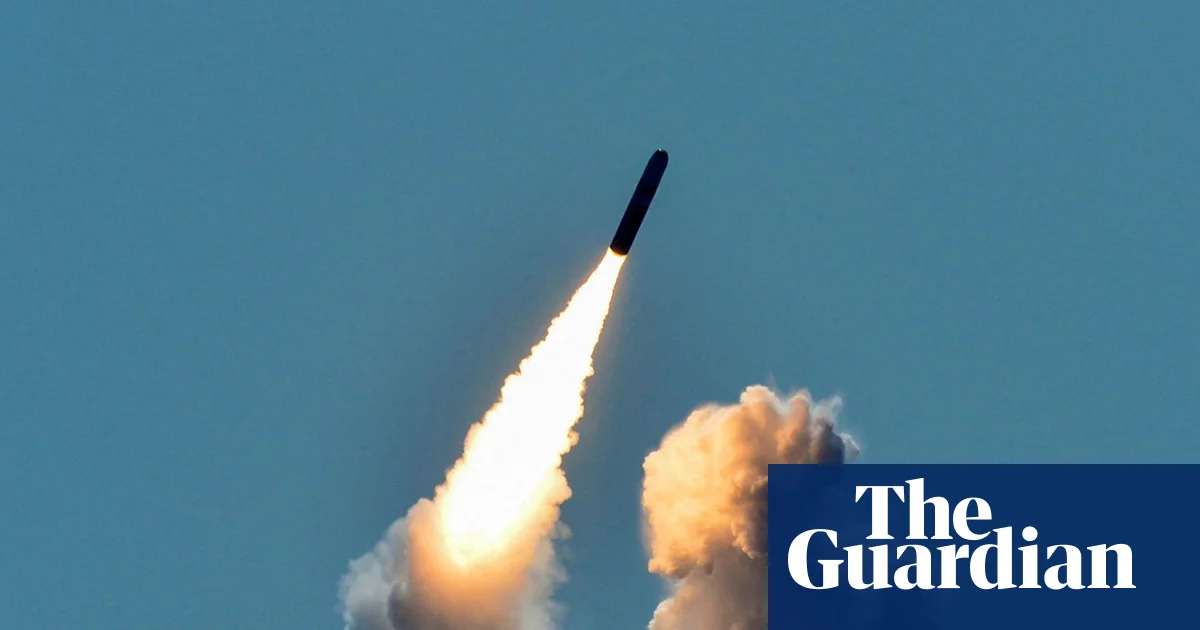
Trump orders Pentagon to ramp up nuclear tests to rival Russia and China | Donald Trump

In a **dramatic escalation** of international tensions, Donald Trump has ordered the Pentagon to begin testing U.S. nuclear weapons in direct response to recent advances by Russia and China. This move, announced via social media, marks a **noteworthy shift** from years of US efforts to de-escalate nuclear tensions and cements a stark new reality—one where the world’s leading powers are engaging in a **dangerous game of nuclear one-upmanship**. Trump’s directive coincides with a backdrop where Moscow and Beijing have demonstrated their willingness to modernize and expand their nuclear arsenals, with Russia’s successful test of the Burevestnik cruise missile and Poseidon super torpedo exemplifying a clear intent to project power and undermine existing global stability.

Russia’s recent nuclear tests, including the Burevestnik nuclear-powered cruise missile and the Poseidon super torpedo, signal an **assertive posture** by the Kremlin amidst *breakdowns in diplomatic dialogue* with the West, particularly over the ongoing conflict in Ukraine. These developments are viewed by many analysts as a **deliberate display of strength**, intended to *deter Western interference* and reinforce Russia’s position as a formidable nuclear power. In response, Vladimir Putin has emphasized the need to ensure Russia’s national security, framing these tests as a necessary countermeasure in a new era of uncertainty. Meanwhile, the United States—despite a self-imposed moratorium since 1992—appears poised to re-engage in **nuclear testing**, threatening to ignite a new arms race. The move has sparked alarm among international organizations like the United Nations, which emphasize the catastrophic consequences of an escalated nuclear conflict and warn that such actions risk undoing decades of arms control efforts.

The **geopolitical impact** of Trump’s decision is profound and multifaceted. Not only does it **destabilize regional security architecture**, but it also threatens to undermine *existing treaties* such as the New START Treaty. The historic significance is clear: the revival of nuclear testing signals a departure from *diplomacy and mutual restraint*, opening a dangerous corridor leading toward a potential **nuclear crisis**. As traditional alliances and treaties waver, nations like India and Pakistan watch with concern, aware that a new arms race could destabilize a fragile global order. Leading international scholars, including arms control experts and historians, warn that such decisions “could unleash an era of instability and violence” that the world has sought to avoid since the Cold War’s conclusion.

Amidst this chaos, the **weight of history** looms heavy. The last full nuclear test conducted by the US was over three decades ago, and the silence that followed was seen as a *hope* for eventual disarmament. However, recent incidents suggest that the **axis of nuclear powers** is once again in motion, bringing the world closer to the “shadow of annihilation”. With *each test, each threat, and each escalation*, humanity edges toward an uncertain future. As nations grapple with the choice between peace and war, the question remains: will diplomatic efforts prevail, or will history once again be rewritten on the backdrop of nuclear shadows—a narrative where the clash of titans threatens to define the destiny of civilization itself?

Social Media Auto Publish Powered By : XYZScripts.com



